Search This Blog

Wednesday, May 18, 2016

Camel: Harbour Of Tears

CAMEL: HARBOUR OF TEARS (1996)

1) Irish Air; 2) Irish Air (instrumental reprise); 3) Harbour Of Tears; 4) Cybh; 5) Send Home The Slates; 6) Under The Moon; 7) Watching The Bobbins; 8) Generations; 9) Eyes Of Ireland; 10) Running From Paradise; 11) End Of The Day; 12) Coming Of Age; 13) The Hour Candle.

Honestly, there's not much to say about Harbour Of Tears after what has been said about Dust And Dreams. Here is another concept album about people going out West — this time, not from the Dust Bowl to California, though, but from the coasts of Ireland to the American shores: a voyage more remote in time and more extensive in space, and thus, liable for a bit more grave­ness and epicness. Expectedly, we add some Celtic overtones here, most noticeable on the ope­ning ʽIrish Airʼ — a theme first sung accappella by Mae McKenna, then performed by Andy on the flute, and finally, with a mighty opening howl, reproduced by him on electric guitar. It's a nice gradual transition from tender prettiness to wailing desperation, but it doesn't seem to have much of an original melody, and so, from the very start, you have everything that is right and everything that is wrong about this record in its first three minutes.

Right: the whole thing is permeated with quintessential Camel gloom, expressed in guitar tones, keyboard tones, chord sequences, build-ups, guitar solos, and vocals that sing about little other than toil, trouble, and grief caused by family separation rather than joy at the perspective of finding better life in a faraway country. Particularly good is that the sound is dominated by Lati­mer's acoustic/electric guitar and flute rather than keyboards (although Andy's new keyboardist, Mickey Sim­monds, is not much of a step up from Scherpenzeel).

Wrong: the overall level of energy seems just as low as on the previous few albums, and the monotonous mood leaves little space for surprises. The Celtic flavour is a nice touch, but you will hardly surprise anyone with a traditional Irish air in 1996, and besides, the flavour itself is really limited to only a few tracks — in addition to ʽIrish Airʼ, there's ʽEyes Of Irelandʼ, a stereotypical waltz that could just as well have been Lennon's ʽWorking Class Heroʼ, and a few brief instrumentals that are really more New Age than Celtic folk. The rest is standard fare late Camel dirge-rock. The most «progressive» of the tracks is arguably ʽComing Of Ageʼ, a multi-section composition with some tricky time signatures, but even that one culminates in a «Camel wail», with a howling two-chord riff as its culmination.

The biggest problem is that the album presents itself as a gut-wrenching emotional journey, but by that time, it had become such a typical routine for Latimer that you'd have to forget everything you ever knew about Camel to have your guts truly wrenched out. Burn down all context, and you might actually want to shed some tears in the harbour. Put all the context back, and you might feel yourself too jaded and weathered to spare even a single drop of salt water, because everything here is so strictly formulaic and predictable — predictable to the point that even after three listens, I cannot single out a single song in my memory. Okay, I guess ʽWatching The Bob­binsʼ has that suspenseful pause before the final line in each verse, that sort of makes it a little special. What else is new? Nothing.

Granted, if you are a big fan of Latimer's guitar playing, ʽThe Hour Candleʼ and a few other in­strumentals here are a must-have. I'm not sure how many chord sequences he uses that have not appeared on earlier Camel songs, but the blues soloing on ʽHour Candleʼ is tasteful and wonder­fully showcases his skill with sustained notes. Still not a match for ʽLiesʼ, though: too anthemic and pompous to really cut to the bone, if you ask me.

Tuesday, May 17, 2016

Can: Can

CAN: CAN (1979)

1) All Gates Open; 2) Safe; 3) Sunday Jam; 4) Sodom; 5) A Spectacle; 6) Ping-Pong; 7) Ethnological Forgery Series No. 99 ("Can-Can"); 8) Can Be.

This is unquestionably a step up from Out Of Reach, but much too late anyway. Actually, it is not that much of a step up — all it does is correct that album's most blatant mistakes, such as letting Rebop and Rosko write their own songs and sing them, or dabbling too much in African and Caribbean musical textures with which the (still) predominantly German team cannot really do a lot of exciting things. Instead, they prefer to expand on the legacy of tracks like ʽNovemberʼ and ʽSeven Days Awakeʼ — moody instrumental jams with tightly controlled grim attitudes in­stead of shrill, passionate build-ups.

Already on the first track, ʽAll Gates Openʼ, Karoli returns as the band's primary vocalist, decla­ring rather than singing the sparse lyrics in a semi-robotic voice, trying to feed the aura of mystery wih it — and almost succeeding, considering that the aura is also helped out with bits of swampy-bluesy harmonica (is this the first and only appearance of a noticeable harmonica part on a Can album, or what?) and strange swings between ominous bluesy «verses» and psycho-pop guitar flourishes on the «chorus» (or maybe «bridge», I can never make head or tails out of these convoluted structures of theirs). Rosko and Rebop are downgraded here to providing a basic funky setup, and that's the one thing they do real well, so on the whole, the track is a success, even if it is still way too quiet and humble to make much of a lasting impression.

The problem persists through most of the record — all of these jams sound good while they're on, but never leave any strong aftertaste. ʽSafeʼ, for all of its eight minutes, is dominated by the oscil­lating electronic groove in the background that resembles the orbital circulation of some noisy alien device — it's impressive, but it pretty much neutralizes the effect of whatever it is they're playing or chanting in the foreground. ʽSunday Jamʼ is a tight quasi-disco groove with juicy rhythm and lead guitar tones, but no memorable riffs or exciting solos. ʽSodomʼ slows down the tempo for a sterner, more threatening groove, but still does not come close to justifying the title: as a reflection of the activities of Sodom's inhabitants, the atmosphere is too lazy, and as a ref­lection of their (upcoming) punishment, it doesn't have enough bombastic echo or other special effects to make it worthy of the Old Testament. And ʽA Spectacleʼ, once again, sounds like a preview of the Afro-European grooves of Remain In Light, but the rhythm section and the funky guitars never seem to settle upon a specific perfect note pattern, and the results are messy.

The final two tracks are a big surprise, of course — it's almost as if the band members listened to everything they just recorded, and had the same reaction as myself: "Hey, we sound pretty good, but there's really no kick to all of this!" So they went ahead and, feeling unable to come up with something real hooky on their own, decided to make the weirdest thing possible — generate a Can-ified version of Offenbach's Galop Infernal from Orphée aux Enfers, better known to all of us laymen, of course, as the «Can-Can Song» — get it? Can-Can? Well, it was only a matter of time before Can would have to capitalize on the pun, as inavoidable, I guess, as the Rolling Stones eventually having to do ʽLike A Rolling Stoneʼ. Shamefully, I admit that the result is sort of hilarious, and that Karoli in particular does a tremendous job finding just the right guitar tones for all of the tune's separate melodies (although I think he should have gone all the way and used the «agonizing pig» talkbox effect on the main galloping part). It's even better when they then offer their own variation, in the form of ʽCan Beʼ where Karoli just goes off his rocker and begins Chuckberrying all over the place. But yes, of course both parts are just a desperate musical joke, no matter how professionally and humorously it is carried out.

That the band just faded away, without any official announcements of splitting, after the self-titled album (later also appearing under the title Inner Space) failed to impress anybody, is hard­ly surprising. The worst thing about Can is not even a lack of progress as a whole — more like a lack of conviction and passion: this is the sound of a band that is no longer genuinely interested in this thing they're doing together, no longer trying to get the best out of themselves. Oddly enough, no matter how much Can helped usher in the New Wave era, they themselves felt at odds with that era — their strongest and most genuine connection was really with older styles of playing, such as blues rock and funk, and unlike, say, King Crimson, they did not express a strong desire to fit in with the new crowds. (I mean, if they did have any such desire, why the heck did they want to team up with two old geezers from Traffic when they could have easily picked some of the talented youngsters? Even Fripp had to have Adrian Belew to make him feel young again).

So all we have to console ourselves is the knowledge that at least they left behind a decent enough swansong (I am leaving the reunion record out of this, for the moment) and, keeping in touch with their regular sense of humor, checked out with an elaborate musical joke. Which is a fairly tasteful way to end a career, but hardly makes for a rewarding listening experience — no subtle epiphanies here, trust me.

Monday, May 16, 2016

Alan Price: Shouts Across The Street

ALAN PRICE: SHOUTS ACROSS THE STREET (1976)

1) Glass Mountain; 2) The Waste Land; 3) Leave It All To Me; 4) Hungry For Love; 5) I Know When I've Had Enough; 6) Shouts Across The Street; 7) I Just Got Love; 8) Don't Stop; 9) The World's Going Down On Me; 10) Cherie; 11) Don't Try; 12) Farewell Goodbye.

This next record from Alan seems almost deliberately «low key» and even plain regressive, com­pared to the vivid panoramas of provincial British life that he set up on his last three. I mean, being serious about your native country is fine and dandy, right? But you can't do it forever; a man needs a break every now and then, and so Shouts Across The Street is a much lighter and a much less inventive affair. Here, we see Mr. Price falling back on some good old blues-rock and R&B grooves, as well as retaining his passion for vaudeville, but throwing out most of the social realism and replacing it with simpler tales of love, lust, misery, and happiness.

Not that it's bad or anything — «low key» is fine by me if the grooves are strong and the front­man is attractive, and as long as Alan is not impersonating Billy Joel or Barry White, he's doing okay. Unfortunately, he does impersonate Billy (ʽLeave It All To Meʼ) and Barry (ʽDon't Stopʼ) at least a couple of times, and these songs just sound like uncomfortable attempts at sounding «modern» for 1976; ʽDon't Stopʼ is a particularly corny flop, with embarrassing falsetto "baby, baby, baby"s and a soft-romantic piano-embellished funk groove that would at least require the presence of a uniquely sexy vocalist (like Al Greene) before it could even begin fulfilling its pragmatic purpose (bedding hot chicks). All that's missing here is a gold medallion on a hairy chest, but we don't even know if Alan had enough hair for the purpose — and in any case, he always had it better with a bowtie on.

On the other hand, all of the tunes here that have a more «retro» sound to them work better: even silly-named tracks like ʽHungry For Loveʼ, with a fun blues-based pop-rock melody and a memo­rable guitar line (played on something that sounds very close to 10cc's "Gizmo" guitar), are ac­ceptable, not to mention happy barroom shuffles like ʽI Know When I've Had Enoughʼ or lusty romps like ʽThe Waste Landʼ. On most of these tracks, Alan plays a careless clown, but his vocal and musical charisma have sure grown since his mid-Sixties singles, and he is now much less shy and reserved when getting into character, which makes him fairly convincing when imper­sonating either the chauvinist gigolo on ʽI Knowʼ or the midnight stalker on ʽWaste Landʼ (okay, so neither of these set positive social examples, but it's tough to stay clean all the time).

For something more serious, keep your eyes and ears on ʽThe World's Going Down On Meʼ, starting out with a chord sequence not unlike Harrison's ʽIsn't It A Pityʼ (so you can slap the «epic» label on it without reservation), but never really diving into the depths of misery: instead, it tries for an optimistic-sounding chorus that contrasts lyrical lamentation ("I think the world's going down on me / You can't imagine what I've seen") with beautiful falsetto resolutions of the chorus melody and a wall of sound with soaring organs and guitars — works beautifully when you want to aggrandize your misery and raise it to the status of Universal Tragedy, thus offering yourself some consolation in the process.

Still, by the time you get to the end, those final lines of "Farewell, goodbye / I hope I didn't make you cry" might seem self-ironic — to fans eager for more musical tales of Geordie life and social allegories, Shouts Across The Street may well have been a solid disappointment, and, of course, it did absolutely nothing to revive the man's briefly successful commercial career. Granted, it may well have been a conscious move away from being stereotyped as a new «working class hero», but in any case, the deed was done: the album ended his flirt with fame and fortune once and for all, and from then on, nothing would help — not even the brief reunion with his former band a year later, which took place right in the middle of the «punk revolution» and was doomed from the start anyway. And yet, now that we've left those times far behind and feel ourselves free to judge musical records based just on their feel-good quotient rather than their throbbing relevance at the time, Shouts Across The Street does come across as a fun listening experience on the whole (ʽDon't Stopʼ and an occasional «cock-rock» misfire like ʽI Just Got Loveʼ aside), and I could hardly deny it a thumbs up — after all, it's only rock'n'roll and all that.

Sunday, May 15, 2016

Saturday, May 14, 2016

Andrew Bird: Echolocations: Canyon

ANDREW BIRD: ECHOLOCATIONS: CANYON (2015)

1) Sweep The Field; 2) Groping The Dark; 3) Rising Water; 4) Antrozous; 5) The Return Of Yawny; 6) Before The Germans Came; 7) The Canyon Wants To Hear C Sharp.

In 2015, Andrew Bird packed his violin and some recording equipment, travelled all the way to the Coyote Gulch canyons in Utah, and conducted a serious scientific experiment to answer the question: "If one plays a violin inside a canyon, will there be an echo?" The results would not only be self-sufficient on their own, but would also function as a part of an installation (of course) presented at the Boston Insti­tute of Contemporary Art for three months, during which any Bosto­ner unable to scrape up the money for a ticket to Utah could come visit and experience what it would be like if you had to spend fifty minutes in a canyon, playing your violin.

Needless to say, we here at Only Solitaire immediately had to alert the trusty Bullshit Patrol; but, either out of sheer respect for the hitherto illustrious career of Mr. Bird, or for some deeper rea­son, perhaps, the Patrol refused to make an arrest, stating that, although the album is definitely expe­rimental, it is (a) eminently listenable and (b) experimental in the good sense of the word, as in, «somebody who is genuinely searching for new sounds in hopes of tapping into some hitherto unexplored corner of one's emotions». Nobody can insist that the tapping actually took place, but the attempt is at least curious, and at most — pleasant.

Obviously, this is an ambient-minimalist record, with Andrew Bird presenting himself as the Brian Eno of the violin, using it as an impressionist tool while various nature sounds (wind and water, mostly — apparently, there's nothing like an Andrew Bird violin melody to scare all the actual coyotes away) are reverberating in the background. But it is not particularly dissonant, and the things he plays are, in fact, quite diverse — ranging from deconstructed elements of some baroque violin partita (ʽSweep The Fieldʼ, which begins that way and then turns into more of a modern classical piece for violin and whistle) to loops of pretty flourishes without a cause (ʽGro­ping The Darkʼ) to attempts at emulating an Indian, sitar-like sound with the violin (ʽAntro­zousʼ). ʽBefore The Germans Cameʼ, despite the title, sounds like the man's tribute to Bach; and while I am not positively sure if ʽThe Canyon Wants To Hear C Sharpʼ, not being in any way related to the canyon or anything, that last composition gives the impression of somebody trying to play a serious blues jam on solo violin, with more Eastern elements woven in for good measure.

Therefore, to avoid falling into the iron hands of the Bullshit Patrol, you'd probably be better off forgetting about the general setting of the recording — honestly, most of the time you'd have no idea that this was not recorded in a studio, and who really cares? — and just view this as a set of experimental violin pieces played by somebody who actually understands what he's doing. As an ambient record, the violin and particularly Bird's individualistic manner of playing it make it a somewhat unique experience, and somehow it still manages to remain permeated with his lonely, melancholic spirit. Well, as Jimi said, "If the Boston Institute of Contemporary Art fell in the sea — let it be, it ain't me, 'cos Andrew Bird got his own world to look through, and at least he ain't gonna copy Vanessa Mae". And since I'm in no position to disagree with Jimi, the worst I can do is not give this record a thumbs up, because I honestly did not enjoy it that much — and besides, it's only the first one in an announced series that promises to bring you even more of those «echolocations» before the industry runs out of violin strings (including Rivers, Cities, Dungeons, Dragons, and Donald Trump's Esophagus), so I'm saving up on thumbs in ad­vance. But it's got mood-setting potential, all right, and it is Andrew Bird, after all: one of the few modern musicians with near-impeccable taste, whether you hate it or love it.

Friday, May 13, 2016

Carbon Based Lifeforms: World Of Sleepers

CARBON BASED LIFEFORMS: WORLD OF SLEEPERS (2006)

1) Abiogenesis; 2) Vortex; 3) Photosynthesis; 4) Get Theory; 5) Gryning; 6) Transmission / Intermission; 7) World Of Sleepers; 8) Proton / Electron; 9) Erratic Patterns; 10) Flytta Dig; 11) Betula Pendula.

No, I'm really not comfortable with this «psybient» term. Or, tell you what: let us keep it, but let's spell it differently — let it be «sci-bient», because this is what these guys really are: they are using ambient landscapes to promote various (but connected) scientific concerns. Look at the track titles here — the very first one is ʽAbiogenesisʼ (a term that I personally abhor as a linguist, because it should literally translate to "birth of non-life" rather than the surmised "birth of life from non-life"), where the music is supposed to serve as a metaphor for... well, you know. (It's a little odd that life had to originate to such perfectly programmed trip-hop beats, but then again, you weren't there, and certain carbon-based lifeforms already were. It's also odd that Nature gave signals to "wake up" in perfect English, transferred over imperfect radio waves, but that's what you get when Anglo-Saxon revisionism of natural history eats up the minds of even the starkest Scandinavian resistants).

Birth and various ways of functioning of life, as seen not from a religious, but from a fully upda­ted modern scientific perspective — and all the attached ecological concerns as well — this is what constitutes the «philosophic core» of World Of Sleepers, and it's all fine and dandy, but if you only had the music and no titles (or occasional vocal samples) to proffer any guidance, I am not certain that the symbolism could be so easily decoded. With a stronger rhythmic base than last time, but without any ominously overwhelming bass lines, most of the tracks here are just soft synthesized sound patterns over potentially danceable beats; sometimes pretty, sometimes suspenseful, but not particularly suggestive of monumental natural processes.

Thus, I suppose that ʽBetula Pendulaʼ, for maximum authentic effort, should probably be listened to on a nice, warm, slightly cloudy day, within the confines of an actual birch grove, illustrating the slim, elegant grace of nature (rather than the artificial consequences of a slash-and-burn ap­proach to agriculture that usually results in the appearance of birch colonies, but that's sort of beyond the point). In this setting, the interaction between clouds, birch leaves lazily swaying in the breeze, and CBL's slowly overlapping synth loops, gradually pushing each other out of existence without any malicious intent, is bound to achieve its double purpose — make you un­consciously eco-conscious, and become analogously charmed by digital software.

Likewise, the best way to enjoy ʽPhotosynthesisʼ is get yourself a textbook, learn all the details of the process, and then try to correlate them with the various stages of the composition, which gradually builds up from the same soft waves of keyboard ambience to a dynamic groove with «acid» elements, while a concerned male voice keeps asking the question "what about the fo­rests?", probably sampled from some environmentalist documentary or other (doesn't really mat­ter). ʽVortexʼ must have your mind spinning around as the main keyboard line is looped around the usual electronic windwall, creating, if not a real vortex, then at least a spiral; with ʽProton / Electronʼ, you probably have to think of yourself as a neutron, caught without a charge in be­tween the negative high-pitched pipsqueaks of the electron and the positive satisfied bass grunts of the proton; and as for ʽErratic Patternsʼ, I honestly have not been able to notice any, so I guess this must be some sort of hint — maybe the erratic pattern is you, as opposed to the perfectly sequenced mid-tempo groove of the track.

In the end, even if common opinion usually selects World Of Sleepers as CBL's peak, my own impression is that the album is slightly weaker than its predecessor — the atmosphere is just too soft and snoozy throughout, with nothing to really shake you up like that Floydian bassline at the beginning of ʽCentral Plainsʼ; and also, it seems to be making much more of a compromise with contemporary electronics than they used to, which somewhat dulls the impact. On many of these tracks, they could have made the electronic veils more thick and imposing, rather than sticking to the same kind of thin, ghostly sound that makes everything sound the same in the end. But all that said, the results are still impressive — a long, humble ode to Life as an accumulation of patterns that organize system out of chaos and then, through ever-increasing complexity, create the sub­jective impression of chaos once again. I sort of get that, even if it takes a trip of reason rather than an impulse of the heart to do so. In any case, a thumbs up.

Thursday, May 12, 2016

Carcass: Necroticism - Descanting The Insalubrious

CARCASS: NECROTICISM - DESCANTING THE INSALUBRIOUS (1991)

1) Inpropagation; 2) Corporal Jigsaw Quandary; 3) Symposium Of Sickness; 4) Pedigree Butchery; 5) Incarnated Solvent Abuse; 6) Carneous Cacoffiny; 7) Lavaging Expectorate Of Lysergide Composition; 8) Forensic Clinicism / The Sanguine Article; 9*) Tools Of The Trade; 10*) Pyosified (Still Rotten To The Gore); 11*) Hepatic Tissue Fermentation II.

This is where they finally realized that a proper metal band has to have two guitar­ists in order to achieve real respectability — and at least one should preferably be of Scandinavian origin, cuz there's nothing like a shot of thick Viking blood to add that authentic berserk component to your metal riffage. Thus, enter Michael Amott, a natural choice since his own recently formed Swedish band was called Carnage, and was essentially the Swedish equivalent of Carcass. The result was obvious — a more «melodic» (so to say) form of the music, with a separate lead player capable of adding colorful flourishes to the brutal riffs and dutifully churning out speedy-flashy classical-influenced solos where deemed necessary. Now the band was finally set up to produce their equivalent of Slayer's Reign In Blood, if it really wanted to.

Indeed, the record is far more ambitious. The songs are lightly adorned with special effects (in­cluding occasional voiceovers that are probably sampled from obscure B-movies, or an occasio­nal atmospheric synthesizer backdrop, or even a tiny bit of acoustic guitar now and then), the song structures become even more complex and now regularly alternate between Sabbathy slow and ultra-fast, and then there's all that lead guitar. If not for the lyrics, this would have been just a regular speed-thrash-whatever-mash-up — the lyrics, however, stubbornly persist in this grotes­que fascination with the morgue, as the album is formally organized around the concept of fin­ding various ways of dispensing with corpses (both out of practical necessity and as a hobby).

The problem is that it is completely impossible to seriously praise the record in «layman» terms. The musical structures of these tunes, some of which now run for as long as six or seven minutes, clearly seem «progressive» — the band is now approaching their music as actual music, rather than mere noisy backdrop for staged offensiveness, and all the compositions work as composi­tions; in fact, sometimes I think I'd much rather listen to the instrumental versions without having to divert attention towards the growling vocals that really sound the same all the way through, not just in style and timbre, but even in simple phrasing. Compared to the vocals, the instrumental work is far more demanding — the riffs are more complex than Metallica's and the shifts between multiple sections are flawlessly executed. But the riffs also do not lend themselves easily to «visu­alization» — for the life of me I couldn't even begin to explain in what way the emotional impact of ʽPedigree Butcheryʼ differs from that of ʽCarneous Cacoffinyʼ.

At the same time, we should also keep in mind that Carcass were far from the only metal band experimenting with the limits of the genre — and if they did not have that particular anatomical-pathological schtick of theirs, chances are serious that Necroticism would have been completely lost in the sea of high-profile, technically accomplished metal releases from around the year 1991. So perhaps the best news here is that the original «spirit of Carcass», despite all the increased complexity, is still loyally preserved, and that it adds the necessary shade of theatrical gore to the music. No, scratch «gore» — it adds the necessary shade of macabre fun to the music, which is the perfect aural equivalent of indulging in your dark side when splattering your opponent's brains (or other parts) against the wall in a fighting video game. Of course, it goes without saying that, in the light of this, Necroticism should only be recommended for people with good mental health — so, if you happen to have Charlie Manson in your family history, please disregard this thumbs up and submit yourself to preventive therapy in the form of my Avril Lavigne reviews or something like that.

Wednesday, May 11, 2016

Camel: Dust And Dreams

CAMEL: DUST AND DREAMS (1991)

1) Dust Bowl; 2) Go West; 3) Dusted Out; 4) Mother Road; 5) Needles; 6) Rose Of Sharon; 7) Milk 'n' Honey; 8) End Of The Line; 9) Storm Clouds; 10) Cotton Camp; 11) Broken Banks; 12) Sheet Rain; 13) Whispers; 14) Little Rivers And Little Rose; 15) Hopeless Anger; 16) Whispers In The Rain.

Isn't it a bit too predictable that, upon moving to California in the late Eighties, Latimer got the idea to make his new album into a conceptual suite based on The Grapes Of Wrath? Maybe he, too, liked to imagine himself as an outcast, broken down by the capitalist system (as personified by Decca Records) and further battered by unfavorable circumstances? Oh well, at any rate he must have been well off enough so as not to resort to baling cotton or picking peaches — instead, inspired by his new beginnings and supported by his wife, Susan Hoover (who wrote a large part of the lyrics), he set up his own minor label (Camel Productions), got the Stationary Traveller band back together, and besieged his muse for comfort.

Theoretically, a Camel-style musical / rock opera / oratorio / whatever, based on The Grapes Of Wrath, could have been a humble masterpiece — had it been recorded an era ago. The problem with Dust And Dreams, though, is that in terms of overall sound it is exactly like Stationary Tra­veller. The two main ingredients are still Scherpenzeel's «adult-approved» synthesizers and Latimer's clean, tasteful, and all-too-polite electric guitar; in between the two, they keep on generating the exact same soft-pretty-melancholic mood on every single track, and the result is yet another record whose appeal will largely be restricted to fans of post-Waters era Pink Floyd and very late Alan Parsons Project.

It might seem like a very good idea that most of the tracks are instrumental: the first two thirds of the album shift between vocal and instrumental compositions, and the final third, beginning with ʽStorm Cloudsʼ, is a completely instrumental suite, with several movements illustrating different moments from Tom Joad's timeline. After all, Camel's best albums had always been associated with instrumental music, and the vocals were one of the major reasons why Stationary Traveller had that safe-and-bland adult contemporary look. Unfortunately, it's not quite that simple. While the final suite does sound unmistkably «Camelish», the instrumentation is too monotonous, and the melodic themes are too unimaginative, for it to even begin to match the peaks of Snow Goose or even Nude.

The most bold and «progressive» part of the suite is ʽHopeless Angerʼ, which does try to be louder, more dynamic and, indeed, angry than the rest of the compositions — and even goes as far as to incorporate some non-standard time signatures and multiple theme changes. But every­thing is just way too predictable — the big drum sound, the synth textures, the melodic guitar solos that always stop right on the brink of becoming exciting. There's no true memorability to these themes, and there's almost no personality; in fact, I think I'd easily pick contemporary Rush product over this, because at least Rush have always had the advantage of technically more im­pressive musicianship (well, Latimer might probably hold his own against Alex Lifeson, but the rhythm section on Dust And Dreams is not even worth talking about).

As for the vocal songs, well... I guess the only true low point is ʽRose Of Sharonʼ, which sounds like a cross between an ABBA ballad (courtesy of guest vocalist Mae McKenna, who is some­times compared with Enya but here sometimes dips into Frida's style) and a Disney musical number, but I am not really impressed with stuff like ʽMother Roadʼ (a MOR rocker with the usual boring pop metal rhythm guitars) or even with potentially poignant lyrical tracks like ʽGo Westʼ that seem to be trying way too hard to woo the listener with their «deep» sentimentality. Too clean, too polished, too Spiritual for a band that did not even have the budget to hire a proper orchestra, and had to model all of its Spirituality on awful plastic keyboards. (Okay, so one can­not really blame them for lack of budget — but, I dunno, one single classically trained cellist could have made more of a contribution than Tom Scherpenzeel and his array of electronics).

Overall, this is not a disaster — there's enough intelligent guitar playing here, and enough of reasonable musical ideas to at least let you know that this is no contract obligation we're talking about. But in terms of general sound, this record was frickin' dated before its time: production values are totally hickey for the likes of 1991 — more like 1987, when even Bruce Springsteen succumbed to such cheesiness on Tunnel Of Love. If Stationary Traveller was an odd concep­tual idea degraded to the level of total embarrassment, then Dust And Dreams is an improve­ment, as it's a fine conceptual idea degarded to the level of passable mediocrity. But that, unfor­tunately, is still not much of a recommendation.

Tuesday, May 10, 2016

Can: Out Of Reach

CAN: OUT OF REACH (1978)

1) Serpentine; 2) Pauper's Daughter And I; 3) November; 4) Seven Days Awake; 5) Give Me No Roses; 6) Like Inobe God; 7) One More Day.

Well, so much for any further extensions of good will. The problem here is not even the total absence of Czukay — that is more of a consequence than a cause. The problem is that Can simply lost the magic, now confined to but a few thin strands among a sea of unfocused, pointless con­fusion. As late as Flow Motion and Saw Delight, Can were still Can, and their grooves pulsated with that classic Can mystique, sounding like sincerely performed religious rituals for communi­cation with the spirits. At first, the addition of Rosko Gee and Rebop did not hurt this mystique too much — on the contrary, they «Africanized» the music to just the right degree. But as their role in their band expanded, and Holger's decreased, out came the inevitable: Can began a quick drift towards becoming just a normal jam band.

Out Of Reach has about as much excitement to it as a generic second-rate fusion album, even if it is not fusion (most of the tunes are funk- and disco-based). The players get into position and begin jamming, without bothering to come up with an emotionally resonant theme. The result is ʽSerpentineʼ, probably the most disappointing album opener on a Can record ever — other than the tightness (but not ferocious tightness) of the rhythm section, there is nothing here to be re­commended. The instrumental mix is messy, with no instrument ever taking the risk of stepping into the limelight and all keyboard and guitar solos playing at low volume, muffled and timid, so that the track never achieves any transcendental heights. Stuff like ʽNovemberʼ and ʽSeven Days Awakeʼ is only marginally better, with shriller, more harshly distorted Karoli solos that still do not rise to the ecstasy of days gone by, and essentially sound like Can on autopilot — let alone the fact that Rosko is constantly trying to sneak a disco bassline in ʽNovemberʼ for no apparent reason other than, well, playing what everybody else was playing at the time.

In addition to that, Rosko also steps forward as a songwriter, contributing two vocal numbers: ʽPauper's Daughter And Iʼ is a dull disco number, only slightly elevated by Karoli's psychedelic guitar solo, and ʽGive Me No Rosesʼ is a surprisingly straightforward pop song with echoes of ska — if you think it combines well with Can's acid guitar overdubs, feel free to take it, but the way I see it, Rosko and Karoli are going against each other's grain here, and the result is an in­coherent mess where a potentially fun pop song is messed up with a rambling arrangement, and a potentially cool psycho jam is dissipated within an imperfect pop song.

That said, both of these tunes are God-given masterpieces compared to ʽLike Inobe Godʼ, which is probably the worst thing ever committed to tape under the Can moniker. The backing track sounds like a theme for a low-budget blacksploitation movie, a fluffy soft-funk jam that goes nowhere in particular and does nothing interesting (and totally wastes Schmidt's talents on the piano) — and in the foreground, Rosko and Rebop add chaotic scatting vocals that, according to one review of the album, sound like «two rastas in the loo», a description with which I could not agree more. If you thought Mooney was too looney, and Suzuki was too spooky, then upon hearing ʽLike Inobe Godʼ, you will want to rush back to both as if they were Moses and Aaron in the flesh, because this is just... ridiculous. The track has as much to do with Can as a Mick Jagger/Lenny Kravitz collaboration has to do with The Rolling Stones.

If not for this disaster (and it goes on for six minutes! six minutes of your time not simply wasted, but raped and humiliated!), I might have refrained from a thumbs down — I mean, «boring» is not quite the same as «offensive», and even the boring stuff still has those Karoli guitar solos. But the thing is, this record really has no reason to exist. They are not even settling into some kind of predictable-acceptable formula — they are trying to modify the formula in such a way that it loses all possible effectiveness. Even Saw Delight, when you play it back to back with Tago Mago, has its own special charm; Out Of Reach just sounds like a band that, once upon a time, knew it all, but ended up forgetting everything. And don't blame this on Rosko and Rebop: those guys were just doing their Caribbean thing. It's the band's original creative management that is ultimately responsible for this travesty.

Monday, May 9, 2016

Alan Price: Performing Price

ALAN PRICE: PERFORMING PRICE (1975)

1) Arrival; 2) O Lucky Man!; 3) Left Over People; 4) Away Away; 5) Under The Sun; 6) In Times Like These; 7) Simon Smith And The Amazing Dancing Bear; 8) Poor People; 9) Sell Sell; 10) Justice; 11) Look Over Your Shoulder; 12) Too Many People; 13) Nobody Can; 14) Keep On Rollin'; 15) City Lights; 16) You're Telling Me / Is There Anybody Out There; 17) Hi-Lili, Hi-Lo; 18) Sweet P; 19) I Put A Spell On You; 20) It Takes Me Back; 21) Between Today And Yesterday; 22) Changes; 23) O Lucky Man! (reprise).

Another year, another pun. Actually, the price was right on the money here, because it's a double live album which now comes for the price of a single CD (provided you can find it at all) — and it captures the man at the absolute peak of his solo career, so much so that he plays pretty much the entire Lucky Man! soundtrack, and a huge huge chunk of stuff from Between Today & Yes­terday. Indeed, the setlist is the highlight of the show — 90% is from his last three records (apparently, Metropolitan Man was still in the works, so there's only four songs from that one as a preview of things to come), with three hit singles from the 1960s thrown in as golden oldie bonuses, and not a single Animals song in sight (I'm not sure he ever dared to do ʽRising Sunʼ on his own, no matter how much the public would probably love to hear him have a go).

The principal problem is predictable: all the songs are played relatively safe, sticking close to studio arrangements, and Alan is so busy trying to get the best out of his weak voice that he al­most completely concentrates on «getting it right». Which he does, most of the time, but as good as it must have been for the paying audience, I don't exactly see the performance opening any new dimensions for these tunes. I absolutely do not mind hearing the songs once again — they're all great, and getting them all assembled in one place is nice, and you can use it as extra confir­mation of the fact that at least for a three-year period, Alan Price somehow emerged as one of Britain's top-level songwriters, but that's about it.

Stage-wise, Alan is as humble as ever, usually cutting the banter down to regular thank you's and occasional brief explanations of what the next song is about; there's a little bit of audience inter­action for the chorus of ʽIn Times Like Theseʼ, but that's about it. There are no soloing or jam­ming detours whatsoever — the band obviously follows strict instructions to stick to the rules, and the rules are so strict that they even brought an orchestra along to reproduce all the lush string parts. (By the way, the concert was apparently held in January 1975 somewhere in London and parts of it were also transmitted for a TV show — you can easily catch a few glimpses on You­Tube these days). Eventually, it just leaves you in a situation where the only thing left to do is wonder, «what is he going to leave out anyway?» And he leaves out most of the weak stuff, yes, but for some reason they also don't do ʽThe Jarrow Songʼ — considering that it was one of his biggest hits, that's a tough one to explain.

On the whole, a nice, polite, gentlemanly, feel-good experience, but not really worth a thumbs up, unless one wants to specially elevate Mr. Price just for the sake of his overall nice vibe. On the plus side, the man loyally did his 1970s duty and left us with a double live LP, even despite never claiming to be a progressive rock or a heavy metal artist. (Actually, that should have been a triple live LP to satisfy all the conditions, but for somebody who never engaged in twenty-minute long symph-rock suites, that'd have been one real tough challenge).

Saturday, May 7, 2016

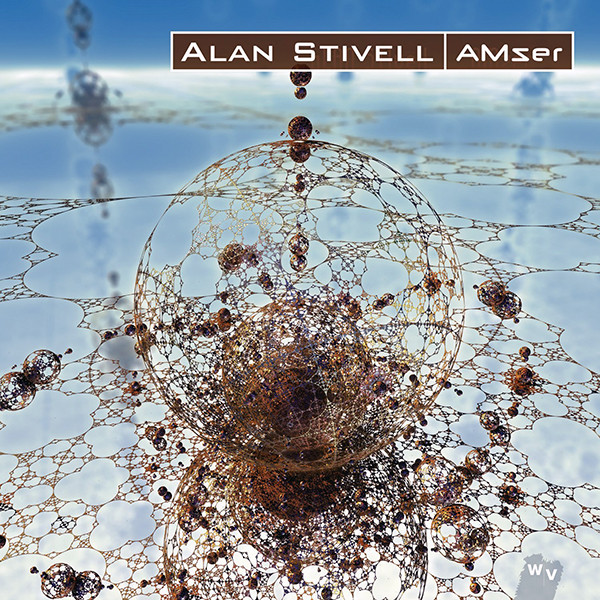
Alan Stivell: Amzer

ALAN STIVELL: AMZER (2015)

1) New' Amzer — Spring; 2) Other Times — Amzerioù All; 3) Matin De Printemps — Kesa-no Haru; 4) Mintin New' Hañv; 5) Au Plus Près Des Limites — Je Marcherai; 6) Purple Moon; 7) Postscript; 8) Kala-Goañv — Calendes D'Hiver; 9) What Could I Do?; 10) Kerzu — December; 11) Halage; 12) Echu Ar Goañv? — Till Spring?.

For several years, word has been leaking out about the preparation of a new Stivell album, but then the process became so stretched out that eventually everybody lost interest. When it was finally released in 2015, it was done to such tiny fanfare that even some of the regularly updated Internet databases failed to register the event — but yes, there it is, finally: a brand new Alan Stivell record that shows the man ready and willing to settle into very old age, but unwilling to abandon his dedicated search for the last cosmopolitan chord.

Once again, this is not so much a «Celtic» album as a fusion between several genres, or, at least, a «Celtic perspective» on different parts of the globe. In addition to the predictable vocal and musi­cal motifs of French, British, Brezhoneg, and Gaelic origin, Stivell now displays a fascination with traditional (and I stress — traditional!) Japanese culture, even inviting a couple of Japanese ladies to recite some classic haiku lines on some of the tracks. Actually, that's not really a lot of internationalization: musically, Stivell remains closely tied to his harp and the Celtic tradition, and he might be a little too old now to try and pick up the koto. On the other hand, it does count as a symbolic recognition of the close connection between all sorts of folk traditions, Eastern and Western, and the link between Celtic harp melodies and haiku recitals feels almost surprisingly natural. So, hey, if this is any help in getting some Japanese cultural fund to donate to the preser­vation needs of Brezhoneg culture... why not?

The problem with Amzer (which, by the way, is the Breton word for 'time, weather, season' and announces the rather obvious conceptual theme for the album) is that most of the actual music here is not very interesting. According to Stivell himself, it was largely based upon his improvi­sation routines, and also reflected a growing interest in studio experimentation — many of the tracks feature elements of «computer-assisted deconstruction-reconstruction», which sounds cool on paper, but in reality makes the whole thing very confusing and unfocused. There are really no memorable melodies, just a lot of atmospheric «harping» around, usually at low volume and with very little energy — bordering on sheer ambience most of the time, really. As atmospheric back­ground muzak, it's every bit as good as any Stivell product that remained unspoiled by silly tech­nology: pretty harp, chirping birds, cloudy synths, and Stivell's voice, despite the aging process, has not lost a shred of its friendliness or expressivity. But where even Emerald was, after all, a collection of compositions, some of them very memorable, this is a decorative piece — yes, like a cute little Japanese garden or something.

The only actual «song» is ʽWhat Could I Do?ʼ, a strangely un-cozy, blues-tinged dirge with bits of distorted guitar and wheezing synths cluttering the background and a general atmosphere of worry and even depression. It is not completely out of place, because it fits in rather naturally with the ensuing harsh coldness of ʽDecemberʼ, apparently illustrating a grim winter mood. But most of the time, the atmosphere is very light — not exactly joyful, but optimistic and spiritual-celebrational, right from the opening ʽSpringʼ and until the album closing instrumental ʽTill Spring?ʼ that brings us full circle. A quiet, unpretentious affair: despite all the digital experimen­tation, Amzer is first and foremost an album by somebody who's got absolutely nothing new to say, and does the next best thing — sits on his front porch and cooks up nice radiovibes, dissipa­ting as quickly as they are generated but leaving a pleasant aftertaste.

I do have to state that if this is really the best that the man can come up with over a six-year period, this means that he's largely finished as an artist. But then again, who at this time could expect a new Symphonie Celtique from him? These «front porch improvisations» are nice enough to serve as background music for the time being — and if it happens to really be his last album after all, who knows, maybe repeated listens in the future will make it seem like the perfect musical goodbye from an old tradition-cherishing geezer who decided to go out with a gentle breeze rather than a stunning bang of an album.

Friday, May 6, 2016

Carbon Based Lifeforms: Hydroponic Garden

CARBON BASED LIFEFORMS: HYDROPONIC GARDEN (2003)

1) Central Plains; 2) Tensor; 3) MOS 6581; 4) Silent Running; 5) Neurotransmitter; 6) Hydroponic Garden; 7) Exosphere; 8) Comsat; 9) Epicentre (First Movement); 10) Artificial Island; 11) Refraction 1.33.

There is nothing particularly revelatory about this album, but for once, this actually works in favor of the music rather than against it — Hydroponic Garden is not an exercise in technical innovation, where the listener spends more time trying to «get» the music rather than enjoy it, but just your old-fashioned attempt at creating a vibrant musical landscape. No wonder the opening bassline of ʽCentral Plainsʼ immediately reminds you of Pink Floyd's ʽOne Of These Daysʼ: Hed­berg and Ringström persist in drawing more influence from classic progressive rock and «vin­tage» electronica than from their modern day inheritors.

The record has been described as belonging to the «psybient» genre, whatever that means, be­cause, honestly, if that's a contraction from «psychedelic ambient», then most ambient music is psychedelic to some degree; and beyond that, there is nothing particularly «psychedelic» about Hydroponic Garden — «psychedelia» essentially means opening up an extra dimension of per­ception, usually through various studio trickery, and there's very little actual trickery here, just the standard array of tape loops and samples, all of them handled in a very straightforward manner. But the results are actually better than psychedelic — they're just... beautiful. Well, at least some of them are.

ʽCentral Plainsʼ is constructed out of that relentless bassline, which sounds like a thick, crackling electric wire caught in an eternal wind blast, and a limitless wheat field of synthesizers stretching across the horizon, with breezes and crickets and an occasional snow shower and no signs of man's presence — not a lot of ingredients, really, but the ones present suffice to build up an atmo­sphere of lonesome natural elegance and ominous tension at the same time. I could actually do without the percussive trip-hop rhythms that «enliven» the track towards the end, but I guess the genre somehow demanded that, even if it somehow detracts from the general ambience, unless you want to picture a robot-driven combine harvester rolling across the field as well.

Everything that follows largely falls in two classes of soundscapes — slightly dryer sci-fi abstractions like ʽTensorʼ and ʽNeurotransmitterʼ, clustering around staccato blips and bubbly bass, and warmer «naturalistic» panoramas like ʽExosphereʼ or the title track, with cloudy synthesizers, ghostly vocal harmonies, and nature sounds a-plenty (wind, water, chirping birdies, you know — everything in one's power to produce a convincing balance between manly digital and godly analog). My personal preferences clearly lie with the second kind of tracks, but even the first kind has its merits — particularly impressive is the expert way in which they build stuff up and tear it down, so that the music is static and dynamic at the same time: ʽNeurotransmitterʼ is a great example, with an exciting bass crescendo that gradually rolls upon you and then just as gradually fades away, like you've been lying on an imaginary railtrack and a steamroller was passing above you, inches away from crushing your skull into the ground.

There is, of course, the length issue — 76 minutes of this stuff might seem like overkill, but then we should all be accustomed by now that there is nothing unusual about a modern album sounding like a small chunk from some classic album thrown under a microscope and stretched as wide as it can be stretched. It's a perfectly acceptable length for contemplators of the minuscule and admirers of the little pimples and pustules on the belly of each individual note. It's not really «minimalistic»: despite the lengthy running times of individual tracks, most of them have themes that undergo development, usually by means of additional sound rings slowly penetrating the mix (ʽRefraction 1.33ʼ) or the appearance/disappearance of rhythm tracks. Which is nothing new un­der the sun, but Hedberg and Ringström make this «sonic plant growth» the primary focus of their art — indeed, the whole album is like one huge hydroponic garden, where meticulously generated artificial condi­tions cause luxuriant natural growth.

It's not immediately gratifying, and most people will hardly want to spend so much time trying to focus on all the minor details — but even as background muzak, Hydroponic Garden will still be creating a certain atmosphere of classiness, and, furthermore, this is the kind of electronic music that you can very safely play around people who have little tolerance for electronics, so ultimately traditional and emotionally accessible are its melodies and harmonies. For the lovers of microsound degustation, it might turn out to be a masterpiece; for everyone else, it might turn out to be boring, but not in the boring kind of boring, more like a moody, «there's-still-something-to-it» kind of boring. Personally, I prefer this by far to, say, almost anything by the far more popu­lar, far more overrated Boards Of Canada, and give it an unflinching thumbs up (not that there's any real reason for flinching — the whole experience is as aurally smooth as can be).

Thursday, May 5, 2016

Carcass: Symphonies Of Sickness

SYMPHONIES OF SICKNESS (1989)

1) Reek Of Putrefaction; 2) Exhume To Consume; 3) Excoriating Abdominal Emanation; 4) Ruptured In Purulence; 5) Empathological Necroticism; 6) Embryonic Necropsy And Devourment; 7) Swarming Vulgar Mass Of Infected Virulency; 8) Cadaveric Incubator Of Endoparasites; 9) Slash Dementia; 10) Crepitating Bowel Erosion.

Already they are beginning to evolve. Arguably the best thing about Carcass is that, while the basic ideology of the band remains consistent throughout their career, (almost) no two albums by them sound the same — unlike so many of their metal peers, these guys could apparently get bored with formula real easy, and found it more fun to keep on experimenting with various ways they could get their Coroner's Message through to us.

Here, we have the songs putting on some fat, sometimes expanding to gigantic, five-minute run­ning time periods, and, more importantly, a huge quantum leap in production values, so you can occasionally distinguish rhythm from lead guitar, and — oh horrors! — ever so often, even dis­cern a necrolyrical bit or two. And while this makes the experience somewhat less extreme and grotesque (a danger in itself, because the only way to take Carcass seriously is to lack the bare means to take them seriously), you actually get to appreciate their skills a bit more. There are passages here that are individually memorable — for instance, the slow, riff-based introduction to ʽRuptured In Purulenceʼ, one minute of intense thrash brutality with clever alternation of conti­nuous and «ruptured» (sorry) melody. Eventually, they pick up speed and launch into the usual messy pandemonium, but the introduction has already managed to plant a seed of respectability.

Or, if you take the opening number ʽReek Of Putrefactionʼ (add this to our ever-growing col­lection of song titles that did not appear on the album with the same title), you will find it intro­duced by a spooky guitar intro that borrows the Tony Iommi vibe, especially in that little vibrato bit that seems directly copped from ʽBlack Sabbathʼ. Later on, the riff reappears doubled with a high-pitched doom-laden lead guitar part — well worth waiting for as your ears are treated to the usual slash-and-burn speed gallop in the interim. And although not all the tracks feature these melodic elements, and none of the tracks are «melodic» through and through, we are still clearly dealing with a desire to add a little bit more individuality and expressivity to the tracks. You'd think that ʽEmpathological Necroticismʼ and ʽEmbryonic Necropsyʼ should sound completely the same, but they don't. Well, not quite completely.

That said, Symphonies Of Sickness is clearly a transitional album, and that's a risky state of affairs where, if the stars were lucky, you could satisfy everybody — or, if they weren't, nobody. The melodic bits really sound more like «teasers», sometimes entertaining you for very short bits as elementary separators of the sludgy verses; and the increased song length only rarely works for the better, because they aren't really expanding them into Metallica-style multi-part thrash an­thems or anything like that, and there is still no way that they can make the speed-based grooves too distinct from each other. Eventually, even though the record is only slightly longer than its predecessor, it wears me out a bit faster, and the last three or four songs become just a tedious blur. But I can also see where hardcore fans of extreme metal would call this their favorite — because it does completely retain the insane-grotesque-evil aura, while seriously improving on the production; already the next record could be judged as a serious betrayal of faith by some of these people. In short, this is their «cleanest dirtiest» album, if you need a really brief summary.

Wednesday, May 4, 2016

Camel: Stationary Traveller

CAMEL: STATIONARY TRAVELLER (1984)

1) Pressure Points; 2) Refugee; 3) Vopos; 4) Cloak And Dagger Man; 5) Stationary Traveller; 6) West Berlin; 7) Fingertips; 8) Missing; 9) After Words; 10) Long Goodbyes.

I imagine that after the blatant «sellout» of Single Factor, this was Latimer's attempt at repen­tance — another concept album on the issue of feeling lonely, oppressed, and rejected in a hostile world, only this time neither rooted in fantasy, as Snow Goose, nor in exotic reality, like Nude: Stationary Traveller deals with the everyday routine and escapist dreams of East Berliners, just five years before the demolition of The Wall, but still in a period when most people could hardly even dream about this event. A pretty decent topic for a Camel album, for sure, but the lineup assembled by Latimer for the sessions is questionable from the beginning — Ton Scherpenzeel on keyboards, a Dutch player who was the founding member of the occasionally pretty, but often bland and boring «soft-prog» band Kayak; and drummer Paul Burgess, whose main claim to fame was playing for the Godley-less and Creme-free version of 10cc.

Not that we should exclusively blame the keyboardist and the drummer for the fact that Statio­nary Traveller, for the most part, is a tedious, lifeless bore — a record that, dare I say it, is much worse than The Single Factor, because it pretends to a higher level of spirituality and a deeper level of, uh, depth, while at the same time fully embracing the safe, predictable, and sonically limp values of «adult contemporary». The sound has been compressed into a single monotonous texture of plastic synthesizers and Latimer's out-of-new-ideas weepy guitar solos, and all the songs produce absolutely the same emotional effect. Unfortunately, I just can't take any of this seriously — certainly not when even a Mel Collins guest spot on ʽFingertipsʼ takes on the charac­teristics of jazz muzak à la Kenny G.

What really kills the album is that its ultra-serious tone came at a very inopportune time. Take a song like ʽVoposʼ, which is supposed to brew up an atmosphere of fear, nay, dread at the per­spec­tive of being taken at night by the Volkspolizei — the atmosphere in question being repre­sented by a dark synth-bass line, a couple simple overdubbed synth loops, and a distorted power metal riff added in climactic moments. Not only do all those tones sound plastic and dated in the modern age, but the effort seems lazy and amateurish compared to emotionally similar work from, say, The Cure: Latimer is simply incapable of handling all that technology without making it obvious that he is doing it just for the sake of trendiness. Or ʽCloak And Dagger Manʼ — that's a classic example of «dinosaur prog gone pop», a steroid-muscular rocker that sounds more like post-Howe Asia than anything truly respectable... and, by the way, why is it trying to be so furious when it's about secret KGB agents?

It gets no better with the instrumentals, which uniformly lack memorable themes and just feature one dull keyboard or guitar solo after another. ʽPressure Pointsʼ is arguably the most interesting of these, compositionally, with Latimer taking after Mike Oldfield and delivering a strongly Celtic-influenced rather than blues-based passage — but the effect is still almost nullified by the awful backing synthesizers. As for stuff like the title track, it's largely conventional blues balla­deering (ʽHotel Californiaʼ style) with equally awful arrangements.

By the time we get to the grand finale of ʽLong Goodbyesʼ, your main concern might very likely be about how to make the actual goodbye shorter — at any cost possible. You were supposed to be drawn into a realistic atmosphere of fear, depression, and solitude, but the means chosen to express it all were so inept that, of all Westerners alive, I can only think of Barclay James Harvest as an even worse speaker for the freedom and happiness of German people. I have no idea of how well the album did on Western German charts at the time, but I do know that Decca never expressed any desire to go on with Camel's contract after it was released, and for once, I couldn't really blame them; so here we go, with the first definitive thumbs down in Camel history.

Tuesday, May 3, 2016

Can: Saw Delight

CAN: SAW DELIGHT (1977)

1) Don't Say No; 2) Sunshine Day And Night; 3) Call Me; 4) Animal Waves; 5) Fly By Night.

At this point, Can got caught in Traffic, and they sure saw so much delight in this that Holger Czukay was relegated to handling the «wave receiver» and «special sounds», whereas Rosko Gee, a Jamaican bassist who'd played with Traffic on their last album, replaced Holger on his native instrument — and at the same time, Ghanaian percussionist Rebop Kwaku Baah, from the same Traffic lineup, complemented Liebezeit as the band's second (and some disappointed fans might even say first) drummer. No wonder, then, that Saw Delight is sometimes presented as Can's first serious exploration of «world music», even though the band was really mixing all sorts of musi­cal traditions as early as the late Sixties, and had a Japanese vocalist with strong ties to his native culture for about four years.

In reality, Saw Delight is a very natural and logical continuation of the overall evolution of Can's sound — the difference from Flow Motion is that they are now living in the New Wave era, and so much of the record is influenced by contemporary rhythms, inherited from the funk tradition but tightened up and brought up to the required standards of nervousness and paranoia. Rebop's percussion does add some «tribal / primal» flavor, for sure, making the first several tracks here into a direct spiritual predecessor of Talking Heads' Remain In Light (but without the same level of catchiness in its grooves, which meant that Remain In Light could bear hit singles and Saw Delight couldn't, and wasn't even supposed to), but even with all those samba beats it is merely another step along the path that began with Future Days («otherworldly ambience» → «other­worldly rhythmic ambience» → «funky atmospheric nighttime journey» → «funky reggae voo­doo shit» → WORLD MUSIC!).

And despite the fact that in 1977, Can weren't exactly on the cutting edge, or at least weren't sup­posed to remain on the same cutting edge with so many new creative artists breathing down the necks of «progressive dinosaurs», Saw Delight is yet another excellent release from the band. They are still capable of holding down a simple, mesmerizing groove (ʽDon't Say Noʼ, with Karoli throwing out not one, but two new guitar tones, soloing with the same grim determination with which the groove is being propelled); finding a «cute» instrumental hook to which they could pin six minutes of studio jamming (ʽSunshine Day And Nightʼ is dependent upon a small acoustic phrase that wouldn't be out of place on a bluegrass album, giving the whole piece a decidedly sunshiny look); playing around with disco basslines so that they are only slightly chan­ged to give the whole tune a scary, apocalyptic sheen (ʽCall Meʼ, with some particularly crazy guitar workouts from Karoli that presage Adrian Belew's work with King Crimson by almost half a decade). And, last but not least, they can still take a pop formula and adapt it to their own pur­poses — ʽFly By Nightʼ, with a little bit of imagination, could be an Olivia Newton-John number from Xanadu, with a «soaring» hook produced by guitars and synthesized strings that offers you magical salvation. But not even Jeff Lynne could procure such strange guitar tones, or agree to have all the attention drawn to the music rather than the vocals — Karoli's singing on the track is barely audible, and is really only there to give you a few hints as to what sort of visualization they'd like you to accompany this with ("fly with me through space and time till we reach for­ever" — sure thing, it's one hell of a smooth, silky flight).

The mammoth centerpiece of the album is ʽAnimal Wavesʼ, a 15-minute long jam that sounds like Santana, Tangerine Dream, and a Sufi musician from Morocco having a good time together (ex-Traffic members provide the Santana part, Schmidt is invoking Tangerine Dream, and Ka­roli's electric violin sounds very «muezzinish» — not nearly as muezzinish as the wordless vocals in the middle of the track, which is the only passage on the album that makes me actively want to strangle something). I have to admit that I find it overlong — there's just not enough happening to keep up my interest for 15 minutes, and although Karoli's solos still rule (and due to all the Near Eastern overtones, are also significantly different from everything he'd played earlier), he takes too much time to let rip. But length issues aside, it is a very moody instrumental — don't forget to bring it along for your next scheduled ride on a magic carpet, although it probably works better in tempestuous weather rather than in times of smooth sailing. (For this, please choose ʽFly By Nightʼ, which by itself makes a great atmospheric counterpoint to ʽAnimal Wavesʼ).

As you can tell, this is yet another thumbs up for yet another unjustly overlooked record; I am seriously hoping that, with time, they will come to be regarded with as much respect as contem­porary Kraftwerk material, even if their charm (and innovation) are subtler and take more time to note and appreciate than something like The Man Machine.

Monday, May 2, 2016

Alan Price: Metropolitan Man

ALAN PRICE: METROPOLITAN MAN (1975)

1) Papers; 2) Fools Gold; 3) Nobody Can; 4) A Little Inch; 5) Changing Partners; 6) Mama Divine; 7) Too Many People; 8) Keep On Rollin'; 9) It's Not Easy; 10) Sweet P; 11) The Drinker's Curse.

The relative success of Between Today & Yesterday made Alan invest in an attempt to repeat the same approach, but on a slightly humbler scale — this, too, is largely a conceptual, and this time an even more personal album about the past and the present, but lacking the elements of grandeur that may have appealed to the «progressively trained» buyers in 1974. Actually, it is this low-key attitude that may explain why its predecessor sold reasonably well, whereas Metropoli­tan Man seems to have bombed, and even in retrospect remains totally obscure (not even a measly review at the All-Music Guide!) When in reality it is every bit as good as its predecessor and maybe even better — at least in terms of consistency.

The fact that there are no grand, stately compositions here in the vein of ʽJarrow Songʼ or ʽBe­tween Today And Yesterdayʼ might even be positive, because Mr. Price, with his passion for homely pubs, quiet provincial life, and cozy vaudeville, is far from your poster boy for Grand Statements — he has neither the compositional nor the vocal talent for that. But he'd honed his compositional and vocal talents well enough to ensure that Metropolitan Man has not a single bad, or, more precisely, not a single unattractive song on it. It's a wonderful combination of diverse melodies, stretching across several distinct genres, tasteful arrangements, clever lyrics, and a rainbow of joyful sadness and optimistic melancholy that arches all the way from Tyneside to Randy Newman's Brooklyn.

Song-by-song, it might easily be his single best set. Even if the man never succeeded in inventing his own sub-genre or anything, here he excels at practically every genre. On the dynamic side, ʽPapersʼ is a brilliantly multi-layered power-pop piece, with an ecstatic slide guitar lead part ruling over a bedrock of pianos, synthesizers, and brass as the man himself launches into a biting condemnation of the yellow press; ʽNobody Canʼ is somewhat of a musical and lyrical answer to Elton's ʽCrocodile Rockʼ, every bit as catchy as the latter but not as superficially corny; and ʽChanging Partnersʼ is a hilariously loving parody on Fifties' rock'n'roll, with Alan going all Jerry Lee Lewis on the piano, mock-stadium applause mixed in for «authenticity», and the guitar man going expectedly batshit crazy on the solo.

Things are subtler and much more moving on the ballad side — ʽFool's Goldʼ, at the least, should have been a classic, with a really choking chord change introduced in the long solo organ intro and then reprised in the vocal melody; this is, once again, Price taking a lesson from the sad side of Paul McCartney and Badfinger, and matching it to his own memories and experiences accu­mulated during his musical career. For ʽA Little Inchʼ, his lead guitarist, whoever he is, borrows the «weeping slide» style of George Harrison and uses it admirably in combination with Alan's own weepy tale of an unsuccessful love affair. Even the orchestrated schmaltz-pop of ʽIt's Not Easyʼ creeps under your skin, by means of Price's weak, gently trembling voice.

In addition to all that, you get a fun calypso romp with a supercatchy chorus (ʽMama Divineʼ), a tight, slightly Exile On Main Street-ish R&B/gospel groove riding a cooler-than-hell bassline (ʽToo Many Peopleʼ), a dark New Orleanian blues shuffle with swampy harmonica (ʽKeep On Rollin'ʼ), a 100% Randy Newman rip-off that should by all means be reserved for some future Pixar movie (ʽSweet Pʼ), and a plaintive «me and my piano» coda that should, of course, be played by the pianist late at night when the only clients left at the bar are those unable to leave the place on all fours (ʽThe Drinker's Curseʼ). Lascivious, spiritual, ominous, empathetic, depressed but unyielding — there's your emotional variety contained in this little bunch alone, and there's more: the album brings a whole new dimension to the understanding of what it is to be a true «metropolitan man».

Why this whole thing is not considered a timeless classic is understandable — a low-key perso­nality like Price, without a lot of brazenly original ideas, is not going to attract a lot of attention. Why the album is so completely neglected is a different question — even though it has been re­leased on CD, I don't exactly see lost treasure hunters flocking towards it in sufficient numbers. In such situations, even a measly, but strong thumbs up on a «maverick review blog» can be of a little help, and we here at Only Solitaire are happy to provide, particularly since most of us, I'm sure, will find an easy way to relate to at least parts of this record.

Sunday, May 1, 2016

The Beatles: Sgt. Pepper's Lonely Hearts Club Band (IAS #18)

This week's entry might seem a bit too familiar... but what can I do? You don't just slam the door in the face of greatness.

The Beatles: Sgt. Pepper's Lonely Hearts Club Band