Search This Blog

Showing posts with label Bon Jovi. Show all posts

Saturday, January 14, 2017

Bon Jovi: This House Is Not For Sale

BON JOVI: THIS HOUSE IS NOT FOR SALE (2016)

1) This House Is Not For Sale; 2) Living With The Ghost; 3) Knockout; 4) Labor Of Love; 5) Born Again Tomorrow; 6) Roller Coaster; 7) New Year's Day; 8) The Devil's In The Temple; 9) Scars On This Guitar; 10) God Bless This Mess; 11) Reunion; 12) Come On Up To Our House; 13*) Real Love; 14*) All Hail The King; 15*) We Don't Run; 16*) I Will Drive You Home; 17*) Goodnight New York; 18*) Touch Of Grey.

And by "this house", I am assuming, they mean "our safe New Jersey home", because on this first proper post-Sambora album, Bon Jovi move closer to Bruce Springsteen than they ever did before — and considering how Bruce Springsteen, on his past few albums, also moved somewhat uncomfortably close to Bon Jovi, I would not be surprised to eventually hear a joint statement from the two, especially in this upcoming Trumpian universe of ours. The problem is, there is exactly one area in which Jon Bon Jovi's skills might sometimes stand up to the Boss's - the concoction of anthemic, powerful, memorable vocal hooks. Everything else, be it lyrical sophistication, or the ability to sound like a man possessed and infect the listener with a quasi-religious drive, or the massive, multi-layered, super-tight sound of the E Street Band, remains an unattainable standard of quality. So who is it that you would allow yourself to be enlightened by: a former hair metal icon who used to have the looks or a street poet who used to have a bandana? Tough choice for 2016.

Nevertheless, This House Is Not For Sale is Bon Jovi's best album since at least Crush. It's not a good record at all — there is nothing particularly fresh or unusually appealing about it — but it is smart enough to concentrate on the band's strongest aspect, the one I already mentioned. For the most part avoiding over-sentimentalized power ballads and rootsy country-rock excursions, and also, perhaps, striving to show that Bon Jovi's music was not all about Richie Sambora (who has not returned, and now Phil X is taking over his place on a permanent basis), Jon and the re­maining company write a set of tight, catchy, and, dare I say it, occasionally inspired pop-rock songs: traditional, musically conservative, and with an attempt at introspection rather than arena-rock swagger. Could be awful, but it's... tolerable. At the very least, in terms of class they are now fully comparable with contemporary U2 (not that big of a compliment, because it says more about U2's decline than Bon Jovi's ascent — still, ever imagine me putting Slippery When Wet and The Joshua Tree on the same shelf? By the way, speaking of U2, one of the songs here is called ʽNew Year's Dayʼ, and no, it is not a cover, but it does look like a tribute because the guitar parts are quite... edgy, if you know what I mean).

Most of the songs have a philosophical slant... most? Heck, all of them: even ʽLabor Of Loveʼ, the record's only patented love song, puts a poor-boy-Wagnerian slant on boy-girl relations — although leave it to Jon Bon Jovi to dig his own grave with awful lines like "if I need some sugar, I'll get it from your lips" (is it really such a long way to the local store, or does his partner suffer from sugar cravings?) and vocal modulation that places too much emphasis on his high register, by now creaky, croaky, and irritating. Apart from that song, though, it's all about coming to terms with whatever there is to come to terms with: modern times, politics, disillusionment, personal mistakes, or changing hairstyles.

The sound... well, if you happened to hear the title track, you've heard it all. The big rhythm guitar crunch is back, as is the thunderous «split-that-log-in-one-blow» drum sound of Tico Torres. New lead guitarist mostly plays short, reserved, traditional solos, possibly not wishing to compete with the departed Sambora, so the point is that you should headbang to these songs (drummer boy helps you out with this) and sing along. Like: "I'm coming ho-o-o-ome! Coming ho-o-o-o-ome!" Because you want to come home. Or: "I ain't living with the ghost! No future living in the past!" Because you... uh... don't want to come home. Or: "Here comes the knockout! My time is right now! I'm throwing down!" Because whether you want to come home or not, you gotta fight for the right to come home. Or not to come home. Or: "God bless this mess, this mess is mine!" Because your home actually looks like shit, but it's your shit, and if you can't be proud of your shit, then who can?

I don't think it would make sense to discuss any of these songs seriously: the more I do, the more cringeworthy it all becomes, so, fair moment, linger awhile and don't let me give this record a thumbs down when I actually had some fun listening to it. In fact, I will say something cringe­worthy myself: as Bon Jovi inevitably mutate into the category of «elder statesmen», Jon's output begins to show some deeply human qualities that transcend the simplicity, cheesiness, and con­servatism of the band's musical values. This here is a survivor's record, and behind the shallow catchiness, there's a glimpse of determination and power that I cannot help admiring, if only a little. I have no reason to doubt the man's sincerity, and sometimes even a simple cliché may not be so boring if it is delivered with full force. So when the man finishes the record with a formally bland gospel waltz (ʽCome On Up To Our Houseʼ — again, nothing in common with the Tom Waits song of nearly-the-same-name), I cannot not acknowledge the real emotion behind it; I do not know if "all are welcome at our table" indeed, but it does not bother me — let alone the fact that I'd never volunteer to sit at Bon Jovi's table in the first place, the real issue is why he is singing that? I'm pretty sure the man is on a good will spree this time, and that the whole record is a noble try to offer some musical consolation in a very shaky, uncertain, insecure period of our being (yes, even if the album was released several days before the presidential elections).

Anyway, if, to you, the pop and the power aspects of Bon Jovi had ever had some significance, do not be afraid to pick this one up (you can even go for the deluxe edition, which adds six extra songs, all in the same style). But if you've never cared about the band even one bit, and would rather accept ghost writing for Ann Coulter than having to hear ʽLiving On A Prayerʼ just one more time, then this house is very much for sale: there is absolutely no sense in getting it unless you are somewhat familiar with the band's history and are able to evaluate it in context.

Sunday, September 20, 2015

Bon Jovi: Burning Bridges

BON JOVI: BURNING BRIDGES (2015)

1) A Teardrop To The Sea; 2) We Don't Run; 3) Saturday Night Gave Me Sunday Morning; 4) We All Fall Down; 5) Blind Love; 6) Who Would You Die For; 7) Fingerprints; 8) Life Is Beautiful; 9) I'm Your Man; 10) Burning Brid­ges; 11*) Take Back The Night.

The title of this album refers not to the split between Jon and Richie Sambora, as could have been easily suggested, but to the split between Bon Jovi and Mercury Records, the label with which the band had been associated from the very beginning. Apparently, their long-term contract ran out, and both sides agreed not to renew it — and, well, I can sort of understand Mercury Records, be­cause what do you do with a band that so decidedly does not belong in the 21st century, not to mention one that hasn't produced even a semi-decent record in more than a decade? And, on a more objective note, whose sales have been on a steady decline ever since the world discovered Britney Spears? (Not that there's any direct connection... or is there?).

Anyway, I'd like to say that Burning Bridges is their worst album in a long, long while, but in a way, it is not even an album — it is a hasty assemblage of songs culled from various vaults, with just one or two new numbers, released as a contractual obligation to facilitate the band's transition to a new label. This probably explains the presence of Sambora on the credits to at least one song (the bouncy pop rocker ʽSaturday Night Gave Me Sunday Morningʼ) and the lack of Desmond Child on any other credits, because everything written with Child was released on the spot (okay, not really, but whatever Child-cowritten outtakes they had were already issued on the 2004 box­set). This is also a gallant explanation for why almost everything on here is so shitty, and why you needn't even be aware of this album's existence unless you are forty-three years old and still remember that fateful day when your elder sister took you along to your first...

...okay, never mind. In terms of upbeatness and catchiness, there are two songs here with so-so hooks — the already mentioned ʽSaturday Nightʼ (disco meets alt-rock and fuses with it to be­come arena-era Taylor Swift as sung by Jon Bon Jovi; I don't think you'll meet a more precise description of this anywhere) and ʽI'm Your Manʼ, because falsetto woo-woos are a terrible wea­pon even in the wrong hands. The title track, an acoustic-and-accordeon dance number, is a rather rude goodbye to Mercury Records, but since it does not mention Mercury Records by name, they apparently had no choice but to let it go. It's at least mildly amusing if you know the context.

Everything else is mainly just power ballads, with the usual Bon Jovi aplomb and pretense — soulfulness, echoes, power chords, some more fresh bleeding from a heart that's been punctured so much, it's hard to believe it could not be made out of plastic. Largely awful production, too, with synthetic guitars, heavily processed vocal harmonies, and lifeless percussion, particularly on the single ʽWe Don't Runʼ. ʽA Teardrop To The Seaʼ is at least slightly redeemed with an unusu­ally noisy, distorted, hystrionic guitar solo (played by producer John Shanks?), but later on the scales are tipped to the other side with the awful «blues de-luxe» soloing à la late Gary Moore on ʽFingerprintsʼ (remember ʽStill Got The Bluesʼ? that's what I'm talking about, the pathetic gypsy-blues style for people who have no feeling for the real blues). But yes, on the whole, it's all in quintessential Bon Jovi style, so if you're a fan, Burning Bridges will not disappoint. If you're not a fan, though, join me in my thumbs down, and don't forget to send a congratulations card to Mercury Records. Better late than never — and now they can finally reassign some of their budget to promoting Iggy Azalea. 

Saturday, May 2, 2015

Bon Jovi: What About Now

BON JOVI: WHAT ABOUT NOW (2013)

1) Because We Can; 2) I'm With You; 3) What About Now; 4) Pictures Of You; 5) Amen; 6) That's What The Water Made Me; 7) What's Left Of Me; 8) Army Of One; 9) Thick As Thieves; 10) Beautiful World; 11) Room At The End Of The World; 12) The Fighter; 13*) With These Two Hands; 14*) Not Running Anymore; 15*) Old Habits Die Hard; 16*) Every Road Leads Home To You.

It was a little funny, I must confess, reading lots of irate reviews about how this record is not really «hard rock», is not really «Bon Jovi», represents «the beginning of the end» for the band and other equally sour reactions. Was there ever a period when this band was after anything but mass popularity? The only reason why Jon Bon Jovi has not turned into Nicki Minaj — which, if necessary and possible, he'd do in a jiffy — is because he's got, uh, T&A problems. Also, he's kinda old-fashioned and prefers to stay in that comfort zone where well-built, muscular guys rip the shit out of their guitars, at least visually. And since that kind of music still sells reasonably well today, despite all the attempts to push «classic rock» out of the spotlight, well, why change anything? Just another day, just another dollar.

The album did cause a rift between Jon and his loyal guitarist: Sambora was not seen all that much on the accompanying tour, throughout which he was largely replaced by session guitarist Phil X, and soon afterwards announced his departure from the band. True enough, he is only co-cre­dited for about five out of twelve songs, while on the rest Jon shares credits with such seedy figures as John Shanks and Billy Falcon; has not a single interesting or outstanding riff to contri­bute; and is seriously misused even in the lead guitar department — the absolute majority of these songs depend on nothing but vocal hooks. Oh, sorry, vocal hooks and pomp — as the years go by, Jon Bon Jovi takes himself more and more seriously each day, and on What About Now, he is much more of a preacher than an entertainer.

I will not deny, though, that some of these songs are hooky. The anthemic singalong chorus of ʽBecause We Canʼ, the punchy album opener, is Super Bowl material alright, though I'm pretty sure it must have been lifted wholesale from some earlier roots-rock or country tune. Same with the sentimental ʽPictures Of Youʼ, same with the heroic-romantic confession ʽThat's What The Water Made Meʼ — although I know what the water really made that guy: it made him surrepti­tiously nick the inspiring background guitar/synth melody of David Bowie's ʽHeroesʼ and appro­priate it for his own, much less original and much less subtle purposes. No, I am not being too judgemental, and I have no problems with musicians borrowing and recycling other people's ideas — it's just that this one feels way too blatant. Don't say I didn't warn you if on his next re­cord J.B.J. samples ʽRide Of The Valkyriesʼ in one of his Big Social Statements.

Are we being too cruel? Well then, let me just backtrack a little and redeem myself by saying that somehow, on a certain level I do feel sympathetic to ʽWhat's Left Of Meʼ — as uninteresting as the generic «banjo-rock» arrangement of that song is, its «I'm-still-standing» vibe sounds more sincere than anything else here: the guy does sound like he really means it when he says "God, I miss the smell of paper and the ink on my hands" and when he complains about how "they sold old CBGB's". Not that Bon Jovi ever had much to do with CBGB's in the first place — yet some­how it is true that, as of 2013, Bon Jovi and the old CBGB residents seem to have much more in common than they would have in the mid-1980s.

But that does not change the general attitude. Had ʽWhat's Left Of Meʼ and ʽBecause We Canʼ been the most pretentious songs on the album, with the rest of it given over to regular vocal-hook-based pop rock fare, life would be adequate. As it happens, these are just the tasters for the real «Celine Dion-style» gala prayers — the syrupy, orchestrated ʽAmenʼ was written twenty years too late for the Titanic soundtrack, and the "never give up, never give up!" chorus of ʽArmy Of Oneʼ is more Alicia Keys, or even more Disney, than Bon Jovi. Oops, I think I'm falling into the same trap as all those allegedly cheated fans — let me quickly correct myself: what we have here is Bon Jovi trying to naturally morph their way into a Disney cartoon.

The album ends on a soft acoustic note, with Jon making yet another not-so-subtle reference to some of his heroes: "I am the fighter, though not a boxer by trade". What is it, then, about ʽThe Boxerʼ that will make that song stand the test of time, while ʽThe Fighterʼ is already forgotten? It's not really the melody — it's the attitude. Even at his softest and tenderest, Jon Bon Jovi still sounds like a straightforward, predictable, cocky guy who thinks way too much of himself — and, most importantly, believes that «thinking too much of himself» is already sufficient to write a song about it and offer it to the world. And nobody told him, or nobody was ever able to convince him that such is usually the recipe for a boring song at best — an offensive song at worst. But then again, who the heck could convince him if these sometimes boring, sometimes offensive songs kept selling like hotcakes all around the world? And neither my own thumbs down here, nor anybody else's will really make a difference. For that matter, What About Now hit the top of the charts all right — even though, in the era of predictably dwindling album sales, it sold less than any previous Bon Jovi album. But yes, the guys are still popular.

Saturday, April 25, 2015

Bon Jovi: Inside Out

BON JOVI: INSIDE OUT (2012)

1) Blood On Blood; 2) Lost Highway; 3) Born To Be My Baby; 4) You Give Love A Bad Name; 5) Whole Lot Of Leaving; 6) Raise Your Hands; 7) We Got It Going On; 8) Have A Nice Day; 9) It's My Life; 10) I'll Be There For You; 11) Wanted Dead Or Alive; 12) Livin' On A Prayer; 13) Keep The Faith.

Yes, it is 2012 and Bon Jovi can still afford a live album. No, they are not going to put any songs from their latest studio record, The Circle, on it because that album sucked and they know it, even if you have to really get them in a ditch in order to admit it. Yes, it has lots of titles that you will most likely recognize; in fact, you can probably predict two thirds of the setlist with your eyes closed. No, there is not a single reason in the world to own this record, listen to this record, or remain aware of this record's existence.

Let me, therefore, be very brief here and say that the «Bon Jovi spectacle» is really nothing like the «Rolling Stones spectacle», despite both of them being spectacles. At his old age, Mick Jagger may prance around the stage so much that keeping in tune becomes an impossibility, and Keith Richards may be forgetting more and more chords and harmonic rules with each passing year — a 50-year old Jon Bon Jovi and his lead guitar pal are doing their jobs far more properly, singing and playing in tune, diligently working their asses out without their superstar halos getting the better of them. But nothing can save us from the fact that Bon Jovi are boring. The band is just... no fun. They are standing there, playing their boring songs in their predictable ways. They are boring when they are serious and they are even more boring when they try to be funny. They are boring when they do stage banter, they are boring when they interact with the audience. They are professional, they are tuneful, they are pretentious, they are irritating — but first and foremost, they just make your milk curdle.

It may be just me, but it also seems as if they are now reducing all their songs from all their peri­ods to exactly the same «alt-rock» formula. You couldn't really tell here that ʽBorn To Me My Babyʼ or ʽLivin' On A Prayerʼ were written in the Eighties, that ʽKeep The Faithʼ used to be so very Nineties, or that ʽLost Highwayʼ is from their short-lived neo-country period in the 2000s. It's just the same old gray grind all over the place. No mistakes, nothing out of tune, just a bunch of experienced rockers giving a good time to some friendly folks in an arena or two. This is how they live now — beginning ʽLivin' On A Prayerʼ with an actual «prayer» in an act of trans­cendent spiritual unity between the Artist and the Audience. It's all very emotional, really. You can also get an accompanying DVD (Live At Madison Square Garden) where there are many more songs and you can actually see the heroes being... uh... heroic.

Anyway, better for Bon Jovi to go on ʽLivin' On A Prayerʼ than ʽLiving In Sinʼ, right?..

... I don't think it's a good idea to attempt to continue this review.

Saturday, April 18, 2015

Bon Jovi: The Circle

BON JOVI: THE CIRCLE (2009)

1) We Weren't Born To Follow; 2) When We Were Beautiful; 3) Work For The Working Man; 4) Superman Tonight; 5) Bullet; 6) Thorn In My Side; 7) Live Before You Die; 8) Brokenpromiseland; 9) Love's The Only Rule; 10) Fast Cars; 11) Happy Now; 12) Learn To Love.

The best I can say here is that at least they had the good sense to swerve off that cheeky country road. The Circle is, without a doubt, a «rock» album again, with bluesy electric riffs reclaiming their territory back from twangy slides, and lyrics about the world and its problems stealing our attention away from lyrics about traveling on lost highways, breaking up, patching up, breaking up again, and romancing the local ranch lady 'til the cows come home. So, at the very least, Jon and Richie are back on their natural turf where they are theoretically capable of doing something as good as... well, at least as good as a whole album of ʽWe Got It Going Onʼ.

Unfortunately, theory and practice rarely go hand in hand when you deal with aging rockers who were never all that awesome to begin with. In general, The Circle follows the same standards as Have A Nice Day — lots of stale rock'n'roll with worn-out hooks, lots of self-repetition and not a lot of energy. I mean, if the album really "sounds fresh", as Richie claimed in an interview (and what else could he have claimed?), why is it that the foundational bass line of ʽWork For The Working Manʼ is taken directly from ʽLivin' On A Prayerʼ? Or why is it that the lead single, ʽWe Weren't Born To Followʼ, sounds like ʽBorn To Be My Babyʼ and ʽIt's My Lifeʼ at the exact same time? Whatever be the general case, The Circle, as an LP, was certainly born to follow; it is very hard for me to name even one single outstanding moment on the entire record.

Here is one funny bit of brainwork: I thought that, although the song itself was totally formulaic and dull, Sambora's guitar solo on ʽThorn In My Sideʼ somehow did stand out, and even managed to set the jaded spirit on fire for a few bars. How and why remained unclear, but then it dawned upon me, as that important third listen came around, that it was really simple — all he had to do was lift a few licks from Lindsey Buckingham's guitar solo on ʽGo Your Own Wayʼ. Subcon­sci­ously, perhaps, but the songs do have similar chorus beats, so it may have triggered some special mechanism. And in this way, what officially looks like a third-rate Fleetwood Mac imitation be­comes the best moment on The Circle.

Of course, we also have ourselves some talkbox, because a Bon Jovi album just ain't a proper Bon Jovi without some legitimate pig grunting (the completely unremarkable otherwise ʽBulletʼ); we have ourselves some de-lovely ballads (ʽLearn To Loveʼ, in case you still haven't after de­cades of professional scholarship under the guidance of Jon Bon Jovi, Ph. D.); and we do have one or two attempts at «modernizing» their sound — ʽLove's The Only Ruleʼ, with its dutifully «electronized» lead guitar, is probably the best example. I forget, though, who they are imitating here... U2? Must be U2, I guess. They probably wouldn't have heard of the Yeah Yeah Yeahs. Besides, they weren't born to follow, at least not those who were born after them. Following U2, chronology-wise, does not violate the rules of filial piety.

It's not as if they seem totally incapable of putting out another record that would at least be on the level of Crush and Bounce — they just don't seem to care all that much, or perhaps they just leave it all in the hands of the producer. On Bounce, they had the good luck of having David Campbell, a musician ten times the size of anyone in the band, write orchestrations for them; on The Circle, they put themselves at the mercy of John Shanks, whose past credits include Miley Cyrus, Take That, Jessica Simpson, the Backstreet Boys, Celine Dion, Alanis Morissette, and, uh, Lindsey Lohan (remember her?). (Admittedly, he also co-produced Fleetwood Mac's Say You Will, which was a fine recording, but it is hard to imagine Lindsey Buckingham not supervising his work every inch of the way). All very safe, predictable, glossy à la 2009, and completely without any surprises — hence, a natural thumbs down.

Saturday, April 11, 2015

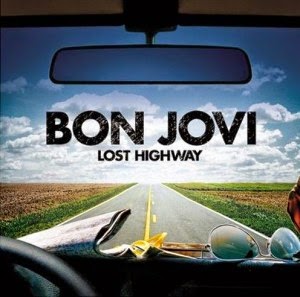
Bon Jovi: Lost Highway

BON JOVI: LOST HIGHWAY (2007)

1) Lost Highway; 2) Summertime; 3) (You Want To) Make A Memory; 4) Whole Lot Of Leaving; 5) We Got It Going On; 6) Any Other Day; 7) Seat Next To You; 8) Everybody's Broken; 9) The Last Night; 10) Til We Ain't Strangers Anymore; 11) One Step Closer; 12) I Love This Town.

And with this dusty cliché, Bon Jovi become Taylor Swift. Twelve tracks of non-stop, completely interchangeable, instantly forgettable, absolutely si­milar-sounding guitar drivel — just the kind of music that gives «country pop» such a bad name among people who try to make life more colorful these days. Up to now, Bon Jovi had been almost everything, from dreadfully tasteless to surprisingly effective when they had their hooks properly aligned to utterly dull when they just wanted to tell you how much better they were than everybody else, but never before had they been so thoroughly embarrassing.

Then again, it was a long time coming: with «affairs of the heart» occupying a central place in the Bon Jovi rulebook ever since Keep The Faith transformed them from hair-clad cock-rockers into leather-clad spiritual heralds, the «Bon Jovi country album» was imminent, sooner or later, be­cause where else can your spirit really find a safe place to rest other than Mother Earth and those musical styles that grow right out of it? This album should be played loud and proud — in a corn field, preferably. With some rocks and rapids close by, so you and your loved one can wash that road dust off your sexy bodies whenever you feel the need, as that trusty Bon Jovi soundtrack serenades you with sounds that sound so natural, so organic, you'd swear the creeks and the meadows themselves wrote them just for you and your mate.

And I do stress «you and your mate», because the majority of these songs are romantic — ballads or pop-rockers, they are all about the protagonist's relations with that special someone, coming or going or staying or leaving. No mentions of life on welfare or social unjustice, this one's strictly for all you lovebirds out there. The exception being the tracks that bookmark the album — ʽLost Highwayʼ and ʽI Love This Townʼ are both about the will to live on this planet despite all the setbacks and troubles, so if you feel like killing yourself, Lost Highway will try to dissuade you from the task. (If you also feel like an intelligent human being — it will probably fail, though). They are also the only two genuinely catchy tunes on the album, even if the «happy» fiddle-and-banjo arrangement of the title track makes me sick, and the gang-friendly atmosphere of ʽI Love This Townʼ feels extremely contrived.

Oh, wait, there's one more exception — somewhere in the middle of this wheatfield wasteland comes ʽWe Got It Going Onʼ, a talkbox-adorned throwback to the good old dumb days of the 1980s if there ever was one, a song that feels so utterly dumb and so completely out of place that it had no choice but to become a highlight of the show for me, clearly reminding why New Jersey, on which this song would totally fit in, was really the pinnacle of this band's career. Okay, so it's good to know that the old boys can still dress up in gorilla furs when they feel like it. This band was born to party, not to cruise lost highways.

Everything else hardly seems deserving of wasting extra bytes of precious cyberspace, so I will be brief: pick out a random Taylor Swift song, replace the gorgeously packaged young blond female beauty with a gorgeously packaged not-so-young blond male hunk, and voilà, your lost highway lies right before you. And it merits a thumbs down — I mean, highways don't just get lost without a good reason, and I think this particular one got lost sooner than it was put into actual operation.

Saturday, April 4, 2015

Bon Jovi: Have A Nice Day

BON JOVI: HAVE A NICE DAY (2005)

1) Have A Nice Day; 2) I Want To Be Loved; 3) Welcome To Wherever You Are; 4) Who Says You Can't Go Home; 5) Last Man Standing; 6) Bells Of Freedom; 7) Wildflower; 8) Last Cigarette; 9) I Am; 10) Complicated; 11) Novo­caine; 12) Story Of My Life; 13) Who Says You Can't Go Home (duet); 14*) Dirty Little Secret; 15*) Unbreakable; 16*) These Open Arms.

And with this friendly statement, Bon Jovi become Nickelback. Thirteen (sixteen, if you count the bonuses) tracks of non-stop, completely interchangeable, instantly forgettable, absolutely si­milar-sounding guitar drivel — just the kind of music that gives «rock» such a bad name among progressively-oriented youngsters these days. Up to now, Bon Jovi had been almost everything, from dreadfully tasteless to surprisingly effective when they had their hooks properly aligned, but never before had they been so utterly dull.

Whatever potential any of these songs may have (and as far as their bare-bones melodies go, I guess they aren't that much better or worse than the regular Bon Jovi fare), it is all wasted away on arrangements that put volume and pure energy (or imitation thereof) in the place of creativity, and then support them with pathos. The title track greets us with a forcedly passionate "Why you wanna tell me how to live my life?" — even though we'd think, after all these years, there would hardly be anybody left in the world to want to tell Jon Bon Jovi how to live his life. (He'd even cut his hair already, by his own free-will decision). "When the world gets in my face, I say — have a nice day!" And when was the last time it actually happened?

Oh, that's right — these songs aren't about (or at least, aren't for) Jon Bon Jovi, they are about and for his young (or not so young already), rebellious audiences. This ʽHave A Nice Dayʼ song — what a perfect anthem to arm yourself with, right? And shove it in the face of anyone who tries to bug you? "My daddy lived a lie, that's just the price that he paid, sacrificed his life just slaving away", but that's not me, sure enough, I ain't gonna repeat the same mistakes. (Instead of slaving away and living a lie, I'm just gonna sit around the house and play Grand Theft Auto all day). What a wonderful song — "standing on the ledge, I'll show the wind how to fly" (these generic power chords sure could teach the wind a lesson or two).

If you have honestly listened to and reached an opinion on ʽHave A Nice Dayʼ, and if that opi­nion happens to resemble mine in any way, feel free not to bother with the rest — like I said, all the other songs here are stylistic clones of the title track. Sometimes the tempo slows down and they dig into a source of romanticism (ʽBells Of Freedomʼ, with Desmond Child co-credited for some reason, even if there is not a single vocal or instrumental hook here that hasn't been regur­gitated from the preceding annals of pop history), sometimes the tempo speeds up and the whole song rolls along fast and smooth, a perfect soundtrack for a routine trip along the highway, but in the grand scheme of things, it's all the same all over the place.

It is so much the same, in fact, that for a time I didn't even notice that they did ʽWho Says You Can't Go Homeʼ twice — the second time, as a duet with Jennifer Nettles. Official sources say that the alternate version is a «country version», I suppose because, in addition to Nettles, who is herself ranked as a country artist, they add a fiddle and a slide guitar part, without amending any­thing in the basic mix. How easy it is to switch genres these days — throw in an electric guitar solo and you get the «rock version», a fiddle and a Southern gal and you get the «country ver­sion», and then they market you to all these neatly charted sectors of the market, and nothing is really as ʽComplicatedʼ as that track implies ("I'm complicated, I get frustrated, right or wrong, love or hate it") — Kurt was far more convincing, but at least there ain't no big danger of Jon blowing his brains out any of these days: for all its fakery, Have A Nice Day shows a human be­ing with a perfectly normal psychic health system.

Upon release, Have A Nice Day sold very well, was lauded in the mainstream rock press, got lots of air- and videoplay, and certainly pleased the dedicated fan by keeping alive the Bon Jovi spirit and sounding modern, relevant, and aware of the latest trends in rock music at the same time. Those latest trends, of course, being rather conservative: "Keep your pseudo-punk, hip-hop, pop-rock junk and your digital downloads" (ʽLast Man Standingʼ). Even disregarding the fact that I got this album as a digital download, say, Mr. Bon Jovi, I thought your career, from the very be­ginning, very much qualified as «pop-rock junk», or am I being led astray? Who are you singing about again — Robert Fripp?

Confused, but not amused, I give this record a thumbs down, be­cause any other decision might imply that you are telling me how to live my life. «Have a nice day».

Saturday, March 28, 2015

Bon Jovi: This Left Feels Right

BON JOVI: THIS LEFT FEELS RIGHT (2003)

1) Livin' On A Prayer; 2) Bad Medicine; 3) It's My Life; 4) Lay Your Hands On Me; 5) You Give Love A Bad Name; 6) Bed Of Roses; 7) Everyday; 8) Born To Be My Baby; 9) Keep The Faith; 10) I'll Be There For You; 11) Always; 12) The Distance.

Oh my sweet Jesus. I get shivers all over trying to reconstruct, step by step, the abominable logic behind this album. Because the optimal reconstruction goes something like this:

«I (we) feel tremendously dissatisfied with myself (ourselves), the way the world thinks about me (us) and my (our) music. Yes, the superstardom, yes, the money, yes, the admiring fans, yes, the ability to make it onto the front cover of Rolling Stone without sarcasm. But does the world really get Bon Jovi? Does the world really feel the depth, really suck in all the potential concealed in those Bon Jovi songs? Can't it simply be that the world loves a steady rock'n'roll beat and loud distorted electric guitars? Could it be that the world dances like crazy to ʽLivin' On A Prayerʼ just because it is being seduced by the talkbox effects? What about the message? The bitter inner truth? The emotional angst? The religious connotations? That ain't a world livin' on a prayer — it's a world livin' on a talkbox and a chuggy bassline. No, really, it's high time that something should be done about this! So maybe we have cut our long hair and began dressing in T-shirts and wor­king class jackets — that ain't enough. Too superficial. Something from the heart!»

This Left Feels Right is a wicked affair — a complete deconstruction and reconstruction of most of the band's major hits in what could only be called «Heart-On-Sleeve Remixes». Not really «unplugged» as such (although many of the guitar parts are, indeed, acoustic), the album stakes it all on the «melodicity», «emotionality», and «spirituality» of these songs, as they are rearranged with soft, sometimes electronic, drumming, folk/country guitar overdubs, mellow keyboards, and almost angelic vocal harmonies (ʽLivin' On A Prayerʼ is reconceived as a Tommy/Gina duet with Mike d'Abo's daughter Olivia — curious that Jon was not able to find anybody of higher stature, but perhaps the addition of a superstar was thought of as incompatible with the «humble» ideo­logy of the project).

One has to admit that a lot of work went into the project: most of the time, the rearrangements are truly drastic, making the songs completely unrecognizable, especially the old-time rock hits like ʽBad Medicineʼ and ʽYou Give Love A Bad Nameʼ, both of which are redone as «country-blues-pop» numbers with slide guitars that either weep like George Harrison or go all swampy on us. The ballads, just by being ballads, stay closer to what they used to be, but with most of the elec­tricity going out of them, emphasis is also fully transferred onto the vocal harmonies.

The results are predictable: This Left Feels Right sets out to seduce you and leave you in a pool of sentimental tears, as the personal charisma of Jon Bon Jovi and the band's «heavenly» hooks climb into your brain and take control. If it works, it works; but with the overall triviality of the band's melodies and lyrics, if any of these songs made sense in the first place, it was only when they went over the top. Simply put, there is no other setting than its original drunken-swaggery hair-metal arrogance in which a song like ʽBad Medicineʼ would be acceptable. Whether you do it in this stripped-acoustic-bluesy manner, or whether you hire a full Wagnerian orchestra to per­form it, or whether you do an instrumental didgeridoo-only version, this left won't ever feel right to anybody who knows right from left.

Ultimately, This Left feels as if all the banality inherently present in Bon Jovi's work has been carefully distilled, filtered out, pressed, folded, and re-packaged for universal consumption. The basic hooks still remain (sometimes), but they have been stripped of their rocking power and relative fun quotient, and forcefully converted into «spiritual anthems». In other words — I could hardly think of a more stupid career move, that is, of course, if Bon Jovi's career ever had «musi­cally intelligent people» as part of its target audience. Much to people's honor, This Left Feels Right sold quite poorly, compared to the band's regular albums — still, the total number of sold copies is said to approximate something like a million and a half, and if this reflects the number of music buyers who are willing to take Jon Bon Jovi as their soul brother and spiritual guru, well, it may not be such a large figure, but still, walk carefully out there, and don't let just about any­body know that you, too, would award the record a thumbs down.

Saturday, March 21, 2015

Bon Jovi: Bounce

BON JOVI: BOUNCE (2002)

1) Undivided; 2) Everyday; 3) The Distance; 4) Joey; 5) Misunderstood; 6) All About Lovin' You; 7) Hook Me Up; 8) Right Side Of Wrong; 9) Love Me Back To Life; 10) You Had Me From Hello; 11) Bounce; 12) Open All Night.

After the «crush», comes the «bounce»... if we were talking predators, I guess the two should have been turned around, but first, Bon Jovi are no predators, and second, Bounce is supposed to deal with the issue of «bouncing back» from 9/11. Since the music business logically supposed that the American people were now in more need of spiritual guidance from established artists than ever before, there was no way Bon Jovi could not write their country an album about it — after all, Bruce Springsteen did, and even Neil Young did, even being from a different country and all, and I suppose Billy Joel would have done one, too, had he still been interested in writing pop songs rather than recasting himself as a 21st century reincarnation of Chopin.

In all honesty, 9/11 was a pretty clumsy pretext for writing topical anthems — perhaps because so many people rushed to use it for inspiration, and, as it often happens in such cases, most, if not all, of the results felt flat, or, at least, have not outlived their momentum (anybody still remember Paul McCartney's ʽFreedomʼ? Even ʽGive Ireland Back To The Irishʼ had more lasting value...). The Bon Jovi album is hardly an exception, but on the whole, Bounce has more or less the same feel as Crush — not knowing its context and not listening to the lyrics, you'd hardly get the im­pression that something particularly awful and life-changing had inspired its appearance. ʽUndi­videdʼ opens the record with a song of dread, hope and unity, but essentially it is just a common-sounding alt-rocker whose best part is Sambora's short and elegantly constructed guitar solo; the harmonies on the "one for love, one for truth" chorus come together in a muddy howl, singing along to which is not much fun, although, of course, if any of the band's fans want to pretend that doing so really makes them feel "united" and "undivided", it's their Jove-given right.

Much more efficient is the lead single that preceded the album itself — ʽEverydayʼ consists of all the same ingredients (plus a little bit of the talkbox to immediately let you know who's been slee­ping here), but it's got a credible paranoid pulse to it, with a solidly doubled bass-guitar riff and a respectable verse-bridge-chorus buildup, one of the boys' most successful pop-rock concoctions from the last millennium (and another good guitar solo, too). And it's not the only such song here: ʽHook Me Upʼ and the title track are also energetic, catchy, and not particularly suffering from overproduction. Jon's good-boyishness certainly shines through in how he does not dare go all the way with the "me, I just don't give a f-f-f-f-f..." of the bridge, but when you are dominated by the rules of the game of much of your established audience (at least, the hypocritical part of it), I guess there ain't much to do but to follow the rules.

In between these few rockers comes a lot of softer stuff that mostly just flies out of the window right away. As Jon grows older, he gradually turns away from imitating Springsteen to imitating Billy Joel — ʽJoeyʼ and especially ʽRight Side Of Wrongʼ sound almost note-for-note tributes to Piano Man: grand epics where pianos and strings matter more than guitars, and pathos matters more than pianos and strings. I do, however, have to admit that the orchestral arrangements on these and other songs immediately struck me as the best thing about them, so it was no surprise to learn that they were at least partially handled by David Campbell (the father of Beck and, not co­incidentally, probably the best orchestral arranger in pop of the past thirty years). The strings at least make life less miserable when you are forced to give in to the «spiritual majesty» of these tunes. Nothing, however, redeems the band's excourses into neo-country such as ʽYou Had Me From Helloʼ and ʽMisunderstoodʼ which could just as well be performed by Taylor Swift or somebody else in a sexy red dress.

Bottomline: once again, not «awful» — the pluses and minuses outbalance each other fairly well to come together in a «neutral» assessment — but still not enough to raise Jon and Richie to the level of «artist who actually has something worth hearing to say». I mean, okay, it begins with a few songs about 9/11, but it still ends with a song about Jon Bon Jovi's role in Ally McBeal and how it should have turned out. Far be it from me to pass judgement upon whether it is ʽUndivi­dedʼ or ʽOpen All Nightʼ that encapsulates a greater part of the man's spirit. But it could be argu­ed that the album's construction is still symbolical — no matter how horrendous the scope of your latest catastrophe may ne, when it all ends you are still going back to your soap operas, want it or not. Maybe that's what the proverbial «bounce» is all about.

Saturday, March 14, 2015

Bon Jovi: One Wild Night: Live 1985-2001

BON JOVI: ONE WILD NIGHT: LIVE 1985-2001 (2001)

1) It's My Life; 2) Livin' On A Prayer; 3) You Give Love A Bad Name; 4) Keep The Faith; 5) Someday I'll Be Saturday Night; 6) Rockin' In The Free World; 7) Something To Believe In; 8) Wanted Dead Or Alive; 9) Runaway; 10) In And Out Of Love; 11) I Don't Like Mondays; 12) Just Older; 13) Something For The Pain; 14) Bad Medicine; 15) One Wild Night.

It is very hard to decide whether a Bon Jovi live album would be better thought of as a single performance from a single show (or at least a bunch of shows from the same tour), or as a spraw­ling retrospective like this one, with performances drawn from 1985, before they even matured into major stars; 1995-96 (the height of the «rebranding» era); and the most recent tour in support of Crush. Normally, tight and compact works best for live performance, but only when the band in question is tight and compact, and can boast a fabulous live sound; with Bon Jovi, chances of their ever producing a Live At Leeds have always been negative at best.

As it happens, though, it really does not matter: Bon Jovi have always been a rather boring band when plopped on stage. Sure they had the looks, and the hair, and wings to fly (sometimes almost literal­ly so), but they never truly gave any of their songs any additional life on stage, beyond may­be an extended intro or two (these days, for instance, they always start off ʽLivin' On A Prayerʼ with an actual simulation of a «musical prayer», which may last almost as long as the song itself — not here, fortunately, where there is just a little bit of atmospheric talkbox fun before the entire band kicks in). This is actually quite normal for a «pop» band — which they were despite all the «rock» trappings — and if one does not demand radical stage reinventions from Paul McCartney, why should one do so with Bon Jovi?

The problem being, of course, that Bon Jovi play Bon Jovi songs. Mostly — sometimes, when they play non-Bon Jovi songs, you wish they wouldn't: Neil Young's ʽRockin' In The Free Worldʼ loses all of its tragic flavor when stripped of Neil Young's voice and Neil Young's guitar, in the place of which we have Bon Jovi choral harmonies and hair-metallic Samborisms — melodic all right, but without any individual style. From the same 1995 tour, they also include a duet with Bob Geldof on ʽI Don't Like Mondaysʼ — nice song, sure enough, but why would the world need a Bon Jovi version? It's essentially a vocal-driven musical number, to which Jon cannot add any­thing that is not already present in Geldof's vocal timbre. It goes without saying that they could have done much worse (for instance, chosen an Osmonds song to cover), but these particular examples are totally uninspiring.

As for the originals, it's competence throughout and brilliance nowhere in sight. The talkbox sounds terrific on ʽLivin' On A Prayerʼ, blown into with even more versatility than in the studio (considering that this version is from 2000, I guess you can't go wrong with more than 15 years of experience), but the vocals are consistently weaker — not out of tune or anything, just sort of feeble; with all due respect, Jon has always been more of a looker than a singer, and although in the studio he can usually work hard enough to get that «perfect take» or close to it, live you really have to see him to fall in love with him, if you're the falling-in-love kind: Mr. Tom Jones he ain't. Just compare the studio and live versions of ʽKeep The Faithʼ for proof.

The good news, and the only reason why the record will not be getting a thumbs down from me, is that they intentionally avoid allmost of their power ballads — how this happened, I don't know, but there's no ʽI'll Be There For Youʼ, no ʽBed Of Rosesʼ, nothing. They must have performed them, but they aren't here: the album relies almost exclusively upon «rocking» material. This is sort of an uncommercial decision, and if it was undertaken in order to make way for the retro­spective approach and make more space for old renditions of ʽRunawayʼ and ʽIn And Out Of Loveʼ, so much the better. Still, the album as a whole — and any other live Bon Jovi album — may really only be recommended to people who probably do not read these reviews.

And, al­though this really has nothing to do with the music, what's up with the incongruent title? Is this One Wild Night or Live 1985-2001? Or is this a subtle metaphorical point — that the entire time from 1985 to 2001 has, for this particular band, been like «one wild night»? If so, it's not as if the metaphor were seriously substantiated by these performances, whose level of «wildness» often leaves a lot to be desired. These guys aren't cavemen by no means — they are very much a product of the technological era.

Saturday, March 7, 2015

Bon Jovi: Crush

BON JOVI: CRUSH (2000)

1) It's My Life; 2) Say It Isn't So; 3) Thank You For Loving Me; 4) Two Story Town; 5) Next 100 Years; 6) Just Older; 7) Mystery Train; 8) Save The World; 9) Captain Crash & The Beauty Queen From Mars; 10) She's Mystery; 11) I Got The Girl; 12) One Wild Night; 13*) I Could Make A Living Out Of Lovin' You.

Thirty-eight is not an age to joke about — for some people, the nostalgic pull is stronger than ever around that particular time, and Crush is the first Bon Jovi album to ride the nostalgia vibe real seriously. Textual, musical, and atmospheric references to past idols abound here — the Beatles, Bowie, James Brown, and, of course, the young Bon Jovi themselves: ʽIt's My Lifeʼ opens the record with unmistakeable references to ʽLivin' On A Prayerʼ — in the reference to "Tommy and Gina", and in The Return Of The Son Of The Talkbox. On the whole, for the first time in his life, Jon seems to be looking backwards in his career rather than forward. Could this help to improve the music, considering how it had mostly been awful all the time he had been looking forward? Will the Beatles help?..

Not bloody likely. Given that «Bon Jovi» is really a disease, the best we can do about it is to keep it relatively harmless — sometimes even slightly enjoyable, as in a nice light warm fever when we are looking for an excuse to not get out of bed. From that point of view, Crush alternates between sickly convalescence, when the mind is no longer delirious but still too weak to pursue a serious course of action, and occasional painful relapses — whenever, for example, the band strikes up yet another «knight-in-shining-armor»-type power ballad (I am still trying to figure out which one makes for more efficient torture — ʽThank You For Loving Meʼ or ʽSave The Worldʼ; current bets are on the latter, if only for the atrocious lyrical metaphors: "I wasn't born a rich man / I ain't got no pedigree / The sweat on this old collar / That's my Ph.D.").

But there are some interesting lines of experimentation. The album's most ambitious undertaking is ʽNext 100 Yearsʼ, an epic anthem with grand harmonies à la ʽHey Judeʼ and swooping psyche­delic orchestration that also apes the Fab Four circa 1967 (a few string lines are lifted almost directly from ʽI Am The Walrusʼ). Although the main part of the song is rather boring, the instru­mental coda, especially when the tempo is accelerated and Sambora steps in with a harsh, but melodic solo, merging the borders between orchestral art-pop and hard rock, for a few minutes I manage to almost forget about what band it is that I am listening to. At the very least, ʽNext 100 Yearsʼ is miles above any overtly sentimental power pop ballad they ever did.

Another «kinda fun» track is ʽCaptain Crash & The Beauty Queen From Marsʼ, the band's tribute to the classic era of glam rock whose title by itself, as you can see, is immediately associated with Elton John and David Bowie at the same time. Nothing particularly inspiring about the generic midtempo rock melody of the song, but its nostalgic flair is surprisingly free of irritants — even the allusive line about "dressed up just like Ziggy but he couldn't play guitar" is funny, especially if you take it to be self-referential. And if I am not mistaken, ʽI Got The Girlʼ is an intentional attempt to write (and even sing!) a song in the style of Tom Petty's ʽAmerican Girlʼ or the like, and if you ask me, it's a big relief to hear it bounce and rock like that after the first verse has just threatened your life with the perspectives of yet another power ballad. In other words, if retro­grade nostalgia results in unpredictable surprises, so be it.

That said, three decent songs are not enough to make up for a good album — which is still being dragged down, not just by the ballads, but also by stuff like ʽIt's My Lifeʼ (where the talkbox sounds stupid rather than scary, and the chorus is even more pedestrian than the one in ʽPrayerʼ) and the neo-country-rock of ʽMystery Trainʼ (no relation to the Elvis classic). At least, with all this nostalgic flavor, they had the good sense to end the record with a throwback to the good old days of totally dumb hair metal — ʽOne Wild Nightʼ is just the kind of song that goes perfectly well hand in hand with lion manes, freaky outfits, and flying over the stage with golden sparks rattling off the sides of your guitar. So, generally speaking, Crush is an improvement over These Days — a little less pretense, a little more surprise, maybe showing a little more maturity and sensibility to the band, but the tasteless parts and the boring parts stay as tasteless and boring as they'd ever been. Hey, God bless nostalgia in the children of the 1960s and early 1970s — at least it shows how growing up on the Beatles and David Bowie was healthier for the spirit than grow­ing up on Bon Jovi.

Saturday, February 28, 2015

Bon Jovi: These Days

BON JOVI: THESE DAYS (1995)

1) Hey God; 2) Something For The Pain; 3) This Ain't A Love Song; 4) These Days; 5) Lie To Me; 6) Damned; 7) My Guitar Lies Bleeding In My Arms; 8) (It's Hard) Letting You Go; 9) Hearts Breaking Even; 10) Something To Believe In; 11) If That's What It Takes; 12) Diamond Ring; 13) All I Want Is Everything; 14) Bitter Wine.

By the mid-1990s, they took it way too far. At least Keep The Faith still retained some features typical of a rock'n'roll album — These Days took its formula of ecstatic power ballads and foam-at-the-mouth social anthems to such a hardcore conclusion that even Richie Sambora's electric guitar sounds like a superfluous addition, used mainly to control the high volume levels rather than melodic potential and rock'n'roll energy. The goddamn thing is long, too — fourteen tracks that go on forever, one demonstrative stab of one's own heart after another until you just can't help but wonder, how much soul can one heart contain, physically?

Every song on this album is soaked in sentimentality of the most blatant order: not even ol' Bruce himself probably could cram that much in 73 minutes. The band did say that they were under heavy influence from old soul and R&B records at the time, but stylistically, they sound as if they were probably just trading influences between themselves and Aerosmith: if Permanent Vaca­tion sounded totally modelled on Slippery When Wet, then These Days takes its lessons from Get A Grip — ʽThis Ain't A Love Songʼ and ʽHearts Breaking Evenʼ in particular sound like carbon copies of ʽCrazyʼ and ʽCryingʼ, even borrowing some of Tyler's vocal moves, let alone the total similarity in arrangement and mood. Consequently, all of this sounds well tested, unimagi­native, and supported only by the sheer physical strength of these guys, as if making music were in the same department as pumping iron.

As always, I make no claim about tracks like ʽHey Godʼ or ʽSomething To Believe Inʼ lacking sincerity. Sincerity is so much in the eye of the beholder that it is useless to speculate on how much Jon Bon Jovi was really worried about all the evil in the world, or on whether it is at all ethical for a millionnaire rock star to sing songs about poverty and social injustice (it is hardly a coincidence though, I guess, that both These Days and Get A Grip begin with such a song: first and foremost, the world must be shown that they really care). It is not the lack of sincerity that bothers me — it is the «overcooking» of these products, whose instrumental melodies never stray away from tattered alt-rock clichés, but whose vocal execution taxes Jon's voice to an extent where he cannot pay these taxes, yet still makes us believe that he can; check out his attempt to «gurgle» and stay in key at the same time on one of the "somethiiiiiing... to believe in!" of the «climactic» chorus — anything goes to show us just how much he cares. Who gives a damn if you're a poor songwriter? Just beat your working class breast like nobody else.

On the other flank of the love front, the band is now trying out an additional formula: stripped-down acoustic balladry with Jon in weeping troubadour mode (ʽLetting You Goʼ, ʽDiamond Ringʼ). Its effect is exactly the same, though: the songs could pass for inoffensive, unimpressive filler if not for the DRAMA in the singer's voice that immediately converts them into unlistenable crap. Maybe somebody like Willie Nelson could uncover the true potential of ʽLetting You Goʼ, but this rendition carries an instantly lethal overdose of sweetness. Just as a song with a title as pretentious as ʽMy Guitar Lies Bleeding In My Armsʼ (a monster hybrid of ʽWhile My Guitar Gently Weepsʼ and ʽLove Lies Bleeding In My Handsʼ, I suppose) carries an instantly lethal overdose of TRAGEDY GLOOM DESPERATION KILL YOURSELF NOW NOW NOW. Also, "I can't write a love song the way I feel today", he says, but then apparently today turns into tomor­row, because the very next song is a love song. Oh well.

Occasional catchiness is the only redeeming factor for this wreck of a record, but this time it is not enough to get it off the hook — These Days pretends to more seriousness than any other preceding Bon Jovi album without any musical development whatsoever. Give me a straight, no-frills, no-pretense song like ʽBad Medicineʼ over ʽSomething For The Painʼ any time of day: as I already said, New Jersey had the optimal balance between ambition and potential that these guys could ever establish for themselves, and since then it's all been downhill, and These Days is the first Bon Jovi album where I cannot fix myself a positive outlook even on one single song. Total­ly thumbs down to a band that should have never outlived its big hair, really.

Saturday, February 21, 2015

Bon Jovi: Keep The Faith

BON JOVI: KEEP THE FAITH (1992)

1) I Believe; 2) Keep The Faith; 3) I'll Sleep When I'm Dead; 4) In These Arms; 5) Bed Of Roses; 6) If I Was Your Mother; 7) Dry Country; 8) Woman In Love; 9) Fear; 10) I Want You; 11) Blame It On The Love Of Rock'n'Roll; 12) Little Bit Of Soul; 13*) Save A Prayer.

One thing you gotta give to these guys: they sure know how to adapt to the changing times. Or, perhaps, somebody knew how to adapt them to the changing times. The majority of hair metal bands could come and go and leave no trace whatsoever, but Bon Jovi were the major hostages of the system par excellence: the biggest band in the world, or something close to that, does not just come and go at will. They had to reinvent themselves and come out on top as usual, or something would be revealed as wrong with the business model.

In other words, in this era of triumphant grunge and «alt-rock» values, as rock'n'roll music once again seemed to be entering a «serious» age, Bon Jovi had to get serious, too. That entire "bad medicine is what I need!" schtick had to go, although there are still some traces of it here, in the form of the oh-so-flat barroom rocker ʽBlame It On The Love Of Rock'n'Rollʼ, for instance. Not that this was any sort of problem for Jon Bon Jovi, who had always, more than anything in the world, be Mr. Bono Springsteen the Third, and now it's as if Father Time himself was knocking on his door: "Two minutes to Big Social Statement Ball, Mr. Bon Jovi!"

The change of producer was accidental: they wanted Bruce Fairbairn on the job again, but he was busy producing guess what? — Aerosmith's Get A Grip, of course! — and so they had to settle for the next best thing: Bob Rock, who helped Mötley Crüe become a household name with Dr. Feelgood. The overall production values or sound type have not changed much, actually, except for one obvious thing — the album is much more bass-heavy, both in the guitar and keyboards department, symbolically reflecting an increase in Depth. As for the songs, the good old «power ballad» is not going anywhere, what with it already having had Depth from the beginning; but the «cock rocker» is thoroughly replaced by the «heart rocker».

I would guess that anybody who first saw the track listing on the new Bon Jovi album would have to go, «oh no, they're Christian rockers now!» But in fact, calling the songs ʽI Believeʼ and ʽKeep The Faithʼ was just a cozy trick to attract a part of the religious audience — lyrically, it is never made clear what it is exactly that we have to believe in, and what sort of faith should we keep: both tunes are just vague-and-vapid «spiritual anthems» of the «life-is-shit-but-we-will-pull-through» variety. There's also a song with the word «soul» in the title, and if you get the bonus-tracked edition, the last song is called ʽSave A Prayerʼ. Well — only natural, now that you have probably made love to every single young female on the planet, to save a little prayer for desert, and make us all think about our souls, if only for a little bit.

Now here comes the strange part: many, if not most, of these songs are fairly catchy — no matter how much more pomp they pump, the vocal hooks are still there. ʽI Believeʼ is a slavish imitation of U2, and Jon's Bono-influenced wail is wailed at just the right climactic moment in just the right intonation to convince a hundred thousand-strong stadium to sing along. ʽKeep The Faithʼ, the band's first experience with that new, trendy, funk-poppy, Madchester-style sound that keeps your body so busy, also does a good job of gradually climbing up towards the explosion. And I will even put down the grin for a moment and admit that ʽFearʼ is a good song — notwithstan­ding the open theft of the main chorus riff from Michael Jackson's ʽBeat Itʼ, its paranoid buildup has something really scary about it (it doesn't hurt, either, that the song is not as mercilessly stretched out as everything else on here, clocking in at 3:05 like a good lad).

Even so, they manage to overdo it every now and then. The most obvious case is ʽDry Countyʼ, a song squeezed out to Epic Proportions because Epic Points need to be justified by Epic Length. How do you know which one is a record's major artistic statement? — by the size, of course. Building up, falling down, stopping for breath, kicking the shit out of that drumstand, unwinding the most frickin' ecstatic guitar solo of your life — all of this going hand in hand with lyrics about the failure of The American Dream, be it for one person in particular or for all mankind. Are you game enough to join Jon and Richie in their eulogy for idealism? I'm not. The whole experience is way too artificial and calculated, and who really needs it if you can have Neil Young's ʽRockin' In The Free Worldʼ instead of this combination of gloss with primitivism?

Yet on the whole, despite all the predictably calculated aspects and despite the rather irritating length, Keep The Faith is probably the last Bon Jovi album that is consistently listenable. The songs keep their «tough» musculature and frequently rock, the choruses are well thought out, and you could trim these 70 minutes down to a reasonable 40 if you pruned out some of the power ballads (ʽBed Of Rosesʼ is just awful, and would be just as awful even if it did not contain the hilariously-unintentionally-blasphemous line "I wanna be just as close as your holy ghost is") and removed some of the verses and/or bridges from others. And yes, ʽDry Countyʼ would have to go — not because it is the worst song on the album, but simply out of principle. Quod licet Iovi, non licet Bon Jovi, as the Romans said, which freely translates into English as: «What the hell is a nine-minute song doing on a Bon Jovi record, of all possible places?»

Saturday, February 14, 2015

Bon Jovi: New Jersey

BON JOVI: NEW JERSEY (1988)

1) Lay Your Hands On Me; 2) Bad Medicine; 3) Born To Be My Baby; 4) Living In Sin; 5) Blood On Blood; 6) Homebound Train; 7) Wild Is The Wind; 8) Ride Cowboy Ride; 9) Stick To Your Guns; 10) I'll Be There For You; 11) 99 In The Shade; 12) Love For Sale.

Scrutinizing the million shades of awful is kind of an ungrateful affair, but such is our trade, and therefore, I have to state that the concept of «Bon Jovi as decadent superstars» somehow feels more forgivable to me than the concept of «Bon Jovi vying for decadent superstardom». There's just something hilarious about seeing these guys work out of the understanding that they are the biggest band in the world (and have to uphold that image), rather than just diligently push for­ward in the faint, but prophetic hope of gaining that title. More than once, I have seen the word «confidence» spring up in the discussion of New Jersey — and indeed, this is Bon Jovi at their most self-confident, hairiest, glammiest, narcissistic ever. It's just that the album has no talkbox, but in every other respect it outbellies its predecessor.

I mean, you can hardly get any more arrogant than naming your album New Jersey (naturally, to remind your fair country that you come from the same place as The Boss, and, incidentally, would not mind claiming the same title), and you can hardly get more blasphemous than calling your first song ʽLay Your Hands On Meʼ, as if you imagined yourself to be... well, you know. With overdubbed crowd noises, overwhelming drums, martial vocal harmonies — the intro to the song states the fact that Bon Jovi are now very, very, very big and they like it that way. Throw in a church organ-imitating synthesizer and a clearly gospel chorus, and what you get is a double metaphor: evangelical clichés as a substitute for a love serenade, and a love serenade as a sub­stitute for letting you know that Bon Jovi are now bigger than Jesus Christ. (Well, at least that hair sure beats the Son of God in most of the cultural depictions.)

Then there's ʽBad Medicineʼ — written according to the usual hit formula, but arguably with far more swagger than any of their previous hits, as the boys feel completely loose and totally self-confident, as if the results of clinical analysis had just come in and it were now medically con­firmed that the collective length of their virility organs could girdle the Taj Mahal three times over, and not even Mötley Crüe could beat this achievement. It isn't even a particularly smutty song, lyrics-wise — it just rains so much testosterone that the effect becomes comical, especially at the end, when Jon «urges the band on» with one last chorus: "I'm not done! One more time! WITH FEELIN'!" I'd like to hate this song for the usual melodically primitive, intellectually offensive piece of glam-pop tripe that it is, but I'm just a bit too busy laughing to do that.

In fact, there is only one song on this album that is seriously offensive — its main offense being in taking itself too seriously. ʽBlood On Bloodʼ, a brawny sentimental reminiscence on Bon Jovi's childhood friendships, once again intrudes on Springsteen territory, as all the band members take their cues directly from the corresponding members of the E Street Band, but interpret them according to their own limited musical vision, which places loudness, pathos, and emotional simplicity above everything else. I can see myself getting entertained by Bon Jovi in an uncom­fortable dream — I could see myself getting inspired over a passionate epic anthem by Bon Jovi only in the worst of nightmares.

Fortunately, the next song is ʽHomebound Trainʼ, which takes us from Springsteen into the tenets of Southern rock-cum-pop-metal, toying around with a bit of me-and-the-devil imagery, but ulti­mately just a vehicle for some head-spinning sleazy-funky jamming, with a fairly long instru­mental section that may or may not have been the inspiration for Aerosmith's ʽLove In An Ele­vatorʼ (the two songs are quite similar in tone, although ʽTrainʼ is faster and more aggressive in spirit). Together with ʽBad Medicineʼ, ʽ99 In The Shadeʼ, and the closing acoustic ditty ʽLove For Saleʼ (allegedly recorded at a drunken party, but with some pretty nifty acoustic solos played out for a drunk guitarist), this all forms the «cock rock» basis for New Jersey, around which you see sprinkled the occasional bad social statement like ʽBlood On Bloodʼ and a bunch of by now inescapable power ballads like ʽI'll Be There For Youʼ that you have to be ready for in any situa­tion — nobody wants to deliberately lower his odds of getting laid, after all.

In brief, this is that one perfect juncture in Bon Jovi's career when they had already «gone pro», but did not yet feel the need or pressure to «mature»: New Jersey is mostly about having fun, and succeeds even better simply because by now, the band has no nervous obligation to «prove itself» (apart from demonstrating that their success was not a fluke, which is not that difficult if you keep Desmond Child and Bruce Fairbairn by your side). There is still no talk, nor will there ever be, of the band putting out a genuinely «good» record, but it only made me puke once or twice, and that's certainly something to remember.

Saturday, February 7, 2015

Bon Jovi: Slippery When Wet

BON JOVI: SLIPPERY WHEN WET (1986)

1) Let It Rock; 2) You Give Love A Bad Name; 3) Livin' On A Prayer; 4) Social Disease; 5) Wanted Dead Or Alive; 6) Raise Your Hands; 7) Without Love; 8) I'd Die For You; 9) Never Say Goodbye; 10) Wild In The Streets.

There is one hilarious discrepancy between ʽLivin' On A Prayerʼ and its accompanying video which, I think, more or less summarizes all you need to know about Bon Jovi. The lyrics and the «aural autmosphere» of the song reveal it as a dumbed-down, trivialized take on Springsteen: here's Tommy who works on the docks, there's Gina who works at the diner, times are tough, but they got each other and that's a fact, and eventually we disentangle ourselves from the scary grip of the grunting talkbox and make the transition to the optimistic, hope-inspiring chorus: musical medication for the weary souls of the working class, what's not to like?

But then we take a look at the video and... what the heck? It's a video about Bon Jovi, the band, rehearsing their flying-over-the-stage routines and then carrying them out in the presence of an ecstatic stadium audience. What exactly does that have to do with Tommy and Gina? Answer: nothing, and there's no reason it ever should, because the song is not about Tommy and Gina, it is about excess, escapism, and adrenaline. The bassline makes you want to dance, the talkbox makes you want to pull scary faces, and the chorus... the chorus is like Beethoven's friggin' ʽOde To Joyʼ, well, sharing the same spiritual function, I mean. It also has the word «prayer» in it, which would probably appeal to all the religious members of the audience (a lesson that would soon be learned by Madonna and God knows who else).

Still, the lyrics are important — Jon Bon Jovi sends out a clear signal that he is here for all the dock workers and all the diner servers in America (and the world as a whole), and certainly not for any sort of pretentious elitist snobs who value vague ideas like «complexity» and «class» over a very concrete and easily understandable idea like «instantaneous mass appeal». Joining forces with promising young producer Bruce Fairbairn and promising young corporate songwriter Des­mond Child (both of whom would soon become walking symbols of the glam metal era), Bon Jovi trim some of the excessively electronic fat from Fahrenheit, put some tighter screws on the hooks, and come out with an album that, according to popular statistics, has so far managed to sell about 28 million copies — we could add «because every dock worker and every diner server in the world got at least one», but that would be a cheap insult to two respectable professions that are really far more useful and noble than the profession of a glam metal artist.

The amazing commercial success of the record was not, I think, exclusively due to the «magic» of the songwriting and the production — in a large part, it was due to the fact that by 1986, the world was ready for Bon Jovi in a way in which it was not yet ready for Bon Jovi two years, or even one year earlier. And there were lots of things that had gradually prepared the world for it — not the least of them Bruce Springsteen himself, whose catchy, glossy rock bombast on Born In The U.S.A. must have been no less a major inspiration for Bon Jovi than the hedonistic pop metal of Van Halen and friends. The main point being — even if we distance ourselves from issues of «taste», «class», or «intelligence», it's not as if we see the birth of a new formula here on Slip­pery When Wet: we merely witness its acceptance by the world at large.

The music is now neatly divided between power rockers and power ballads, the former praising the material joys of life and the latter reminding of spiritual pleasures — curiously enough, «tits and ass» being more or less equally split here between the material and the spiritual half (this would soon be remedied on New Jersey, their most quintessential «glam» recording of all time). That said, there is really very little structural or compositional difference here between the rockers and the ballads — other than tempos and slight tweaks in Sambora's guitar tones. And why should there be, if even the two biggest hits of the album are based on the exact same bass line? ʽYou Give Love A Bad Nameʼ (itself a re-write of ʽShot Through The Heartʼ from the first album) is really almost the same song as ʽLivin' On A Prayerʼ, except it doesn't have the talkbox effect, which, I guess, makes it inferior.

I must admit that «catchiness» applies to the absolute majority of these choruses. In records like these, what matters is whether you can look back at the song titles and reconstruct the melodies from them in your head, and yes I can: "nothing would mean nothing WITHOUT LOVE!" (double negative alert!), "NEVER SAY GOODBYE! NEVER SAY GOODBAYIEEAY!" (this one was like a blueprint for 99% of Aerosmith power ballads, wasn't it?), "we were WILD IN THE STREETS! WILD, WILD, WILD IN THE STREETS!" — hey, I get most of it, and I can totally see why 100,000,000 Bon Jovi fans couldn't be wrong. I think that only the glam-cowboy anthem ʽWanted Dead Or Aliveʼ falls foul of this formula, and should by all means be qualified as unsuccessful filler in this context: too slow and too distant from the true goals of the album (not to mention that it has a little too much syncopation in it — not a good thing, people might start spilling too much of their beers from those plastic cups).

To be fair, though, I was able to do that with Fahrenheit as well, so there is no reason why this record should be rated any higher in comparison; besides, we are long past 1986 and its values, even if those values have not managed to find a better defender than Bon Jovi ever since, so I cannot exclude that the album will still be listened to a hundred years from now, at least by those who find its friendly, hedonistic, excessive vibe «retrospectively refreshing» or something like that. The gut appeal of Slippery When Wet is undeniable, and there is no need to fight it if you properly un­derstand the place of this music among other types of music — the problem is that most people simply refuse to understand.

My thumbs down will not make any serious difference here — it will merely indicate that in this particular case, I think that the «guilty pleasure» aspects of this album do not excuse its embarrassingly manipulative nature, nor do they compensate for the very poor ratio of musical complexity to anthemic pretense. That said, I also have to admit that the moment where the talk­box guitar kicks in on ʽLivin' On A Prayerʼ is one of the most psychologically efficient moments in the history of hard rock — too bad they had to go and spoil it with one more idiotic anthemic chorus, instead of simply keeping on grossing out the little old ladies and scaring the shit out of little children.