Search This Blog
Sunday, January 18, 2015
AC/DC: Rock Or Bust
Thursday, December 13, 2012
AC/DC: Live At River Plate
Thursday, April 15, 2010
AC/DC: Backtracks

AC/DC: BACKTRACKS (1974-2001/2009)
CD I: 1) High Voltage; 2) Stick Around; 3) Love Song; 4) It's A Long Way To The Top; 5) Rocker; 6) Fling Thing; 7) Dirty Deeds Done Dirt Cheap; 8) Ain't No Fun (Waitin' 'Round To Be A Millionnaire); 9) R.I.P. (Rock In Peace); 10) Carry Me Home; 11) Crabsody In Blue; 12) Cold Hearted Man; 13) Who Made Who (12" Extended Mix); 14) Snake Eye; 15) Borrowed Time; 16) Down On The Borderline; 17) Big Gun; 18) Cyberspace; CD II: 1) Dirty Deeds Done Dirt Cheap; 2) Dog Eat Dog; 3) Live Wire; 4) Shot Down In Flames; 5) Back In Black; 6) T.N.T.; 7) Let There Be Rock; 8) Guns For Hire; 9) Sin City; 10) Rock'n'Roll Ain't Noise Pollution; 11) This House Is On Fire; 12) You Shook Me All Night Long; 13) Jailbreak; 14) Shoot To Thrill; 15) Hell Ain't A Bad Place To Be; CD III: 1) High Voltage; 2) Hells Bells; 3) Whole Lotta Rosie; 4) Dirty Deeds Done Dirt Cheap; 5) Highway To Hell; 6) Back In Black; 7) For Those About To Rock; 8) Ballbreaker; 9) Hard As A Rock; 10) Dog Eat Dog; 11) Hail Caesar; 12) Whole Lotta Rosie; 13) You Shook Me All Night Long; 14) Safe In New York City.
Another cooky boxset, released at the peak of the Black Ice hype and featuring the latest and greatest in boxset technology: a box that represents a real small working amplifier (one watt power, so as not to disturb the neighbours). Apart from the packaging delights, however, Backtracks only goes to show, once more, just how uncluttered the vaults are.
The set exists in two versions — three CDs/two DVDs and two CDs/one DVD, respectively — and only the first CD really makes any proper sense, since it carefully collects all, or most, of the B-sides and rarities that used to make the professional collector a human being of a different order from the mere mortal. No more. Now even the laymen have regular, simple access to pleasures they had missed, such as:
— the B-side to the 'Jailbreak' single, surreptitiously called 'Fling Thing' but in reality the same 'Bonnie' that the band sang along with the audience on the Live album, only in the studio, with nearly inaudible vocals but quite well-pronounced guitar;
— the Australian-only release of 'Rock In Peace' (originally on Dirty Deeds Done Dirt Cheap) and 'Crabsody In Blue' (originally on Let There Be Rock), a mid-tempo and a slow blues shuffle respectively, both of which further develop Bon Scott's sickly predictable brand of teenage humor ('Crabsody In Blue' is basically 'The Jack Part 2');
— 'Cold Hearted Man', a rocker from Powerage that sounds exactly like most other rockers on Powerage and (possibly, for that same reason) disappeared on the American LP;
— some unremarkable Johnson-era B-sides from the late Eighties. If you hate Blow Up Your Video, don't bother. I don't, but I still don't bother;
— 'Big Gun', a pretty damn good thing written for the soundtrack of Last Action Hero (well, it ain't Scorsese, but still a good excuse for popcorn consumption). That is, until you realize the principal excitement comes from the same type of vocal hook that used to be 'Bedlam In Belgium' (the riff from that one they recycled elsewhere).
Granted, this (plus a couple other unmentionables) is no Ali Baba's treasure cave, but still a good source of iron for completists. As for the two live CDs, the small bunch of Bon Scott-era live material is expendable (no surprises next to the wealth on Bonfire); the nine songs recorded live at Donington in 1991 are a complete waste of space — they are more or less the same as on the Live album from the 1991 tour — unless you are a particular fan of the Donington concert (available on video in its entirety) and are too lazy to rip the audio off your DVD all by yourself; the live stuff from 1996 lets you see that Ballbreaker was not all bad, but also shows that, by that time, the band was not able to amass the same level of fury onstage that it did in the studio; and the extended live version of 'Jailbreak' from 1985 is terrific until the strip section, where you will be subject to approximately five or six minutes of the bass drum going BOOM... BOOM... BOOM... while Angus is slowly trying to figure out whether or not to give in to the crowd's demand for admiring his manhood. Authentic, but imminently skippable.
So, basically, the only real reason to own these extra two CDs is for the eight live tracks from 1981 to 1983, which capture a still young and fearsome band with hard rock's deadliest singer in his absolute prime. Granted, Brian, even at his very best and healthiest, never sang as good on stage as he did in the studio — apparently, lack of concentration and the necessity to lash and thrash about in order to keep up with the world's wildest guitarist, not to mention the necessity of constantly adjusting his cap (why he never came up with the idea of gluing it on is one of rock's deepest mysteries), hindered him from hitting all the right notes. But belt it out he could, and did, and once you get adjusted to all the little mistakes, these live renditions will be a nice change from the overplayed studio counterparts — plus, they include two of the best songs from Flick Of The Switch, and I count this as a personal gift.
Overall, while this is not the symmetric Johnson-era companion to Bonfire that the fans were expecting (under a guessable title like Brianstorm or Brianshake), it is almost the thing — the Bon-era material is underrepresented, and the Brian-era material graciously lets us remember some of the best pages of his legacy. In that sense, it is a companion, and a must-have for fans, if not for general audiences.
Thursday, April 8, 2010
AC/DC: Bonfire

AC/DC: BONFIRE (1974-1979/1997)
CD I: 1) Live Wire; 2) Problem Child; 3) High Voltage; 4) Hell Ain't A Bad Place To Be; 5) Dog Eat Dog; 6) The Jack; 7) Whole Lotta Rosie; 8) Rocker; CD II: 1) Live Wire; 2) Shot Down In Flames; 3) Hell Ain't A Bad Place To Be; 4) Sin City; 5) Walk All Over You; 6) Bad Boy Boogie; CD III: 1) The Jack; 2) Highway To Hell; 3) Girls Got Rhythm; 4) High Voltage; 5) Whole Lotta Rosie; 6) Rocker; 7) T.N.T.; 8) Let There Be Rock; CD IV: 1) Dirty Eyes; 2) Touch Too Much; 3) If You Want Blood (You Got It); 4) Back Seat Confidential; 5) Get It Hot; 6) Sin City; 7) She's Got Balls; 8) School Days; 9) It's A Long Way To The Top (If You Wanna Rock And Roll); 10) Ride On; CD V = Back In Black.
Many fans were seriously disappointed with AC/DC's first attempt at contributing to the «Boxset Movement». They expected rarities a-plenty, outtakes, demos, previously unheard or, at least, well-remastered live recordings, and other surprises. After all, even though the boxset was only supposed to cover the band's years with Bon Scott — hence the punny name — there must have been plenty of gold stuff lying in the 1970s vaults, no?
Well, either no or else they are letting it age for a couple more decades. Let us see. The first CD is a live performance from the Atlantic Studios, recorded
By the fourth CD, Volts, we finally get to the vaults (get it? vaults — volts! genius!), and this is where things become really odd: studio rarities are basically limited to two alternate versions of songs from Highway To Hell with only slightly different arrangements (this is AC/DC; their arrangements of one single song cannot be seriously different), and two early versions of 'Whole Lotta Rosie' and 'Beating Around The Bush' that are given different lyrics and, hence, different titles, but that is obviously not enough to fool anyone. Then there are a couple more live versions and a few tracks from early Australian-only releases.
Finally, the fifth CD is Back In Black. 'Nuff said.
The biggest mistake that one can make about Bonfire, however, is to think of it from the perspective of hardcore AC/DC fans, who, for some reason, thought this boxset was for them. It is not. First and foremost, it is for Bon Scott, whose memory the band still lovingly cherishes after all these years, and for the band members themselves, who seem to have taken far more delight in designing and materializing this boxset than in raking in the money from its sales. Second, it is for novices who do not, as of yet, own any AC/DC, and for whom a combined set of Back In Black and some well-recorded live performances (always a better choice than regular best-of compilations) will do nicely as an introduction to the sleazy magic of Scott. Third, it is for the rock critic — to give him a nice pretext for ranting on how disgustingly cool and how street-wise intelligent AC/DC's former frontman has always been in comparison to his replacement.
For all those reasons, Bonfire is actually one of the better boxsets on the market. And the performances are kick-ass. One finally gets unabbreviated live versions of 'Whole Lotta Rosie', ten awesome minutes of 'Rocker', thirteen of 'Bad Boy Boogie' (alright, this one is not so fine: much of it is just basic chugga-chugga on rhythm guitar, while Angus is busy stripping — there was a good reason they filtered that part out on If You Want Blood), and quite a few Bon-sung numbers from Highway To Hell, including a 'Girls Got Rhythm' that discards all the «poppy» production elements and realizes its hardcore potential to the max.
As to the surprising lack of studio rarities, the Youngs have gone on record stating that there actually were none — the band pretty much used up all the good ideas it ever came up with, and bad ideas are hardly worth releasing. Besides, who needs outtakes from AC/DC sessions if each second album they release sounds like a bunch of outtakes anyway?
Thursday, April 1, 2010
AC/DC: Black Ice

AC/DC: BLACK ICE (2008)
1) Rock'n'Roll Train; 2) Skies On Fire; 3) Big Jack; 4) Anything Goes; 5) War Machine; 6) Smash'n'Grab; 7) Spoilin' For A Fight; 8) Wheels; 9) Decibel; 10) Stormy May Day; 11) She Likes Rock'n'Roll; 12) Money Made; 13) Rock'n'Roll Dream; 14) Rocking All The Way; 15) Black Ice.
With most of its members steadily nearing pension age, each new AC/DC album is a curio in itself, and if there is one reason behind people sweeping it off the racks, it is most likely the need to find out — do they still deliver the kind of crunch that is at least comparable to their classic hits? Can they still cut it? Can I still bang my head to it?
This time the firm of Young, Johnson, & Young, Inc., has pushed the waiting period even further: almost eight years between albums. But the length does not really matter. In a certain sense, the last ever AC/DC album — and not a very fine one — was Ballbreaker. Both Stiff Upper Lip and Black Ice function on a different plane: their aim is not to continue the band's career, but rather to remind us, occasionally, of the band's existence. And in between reminders, they can take as much time as they want.
Which is why Black Ice got mostly positive responses. It's not because the songs are good — frankly speaking, they are not — it is because, deep down inside, we have all been waiting with accumulating impatience for a new AC/DC album. Then it finally comes out. What's it like? How is Brian's voice? Well, it got better, not exactly Back In Black, but at least back in shades of grey, one can easily listen to it without cringing. How are the guitars? Well, how can the guitars be? Did we seriously expect the Young brothers to switch to banjos and ukuleles? How is Phil Rudd doing on the drums? Well, unless they cut off his arms and legs, he will always be the perfect drummer for this band. Okay, stop right here. Five stars out of five? No, wait, let's make that four stars out of five. After all, only Back In Black can have five.
Black Ice does break some of the rules of decency. First, fifteen songs is way too much. I understand the Youngs must have accumulated quite a lot during these eight years, but the more songs there are on an AC/DC album, the easier it is to spot reused riffs (e. g. 'Spoilin' For A Fight' = 'Bedlam In Belgium', etc.). Second, they do not need to convince me that they represent the old guard faithfully protecting the legacy of rock'n'roll. 'Rock'n'Roll Train', 'She Likes Rock'n'Roll', 'Rock'n'Roll Dream', 'Rocking All The Way' — guys, enough already. Not even Chuck Berry was that obnoxious with his titles.
Third and related, the lead single, 'Rock'n'Roll Train', is not very helpful. AC/DC are at their most punchy with tight, angry, focused tunes, in which respect 'Stiff Upper Lip' was an excellent choice; but this here bombastic anthem, instead, tries to invade the territory of 'Highway To Hell', and, although musically they are about equally simplistic, the latter was at least provoking, while 'Rock'n'Roll Train' simply breeds a bunch of stadium-happy chords. Anthems, with few exceptions, are embarrassing in general; late-period AC/DC anthems are embarrassing in particular.
So it could have been better. But let me, nevertheless, join the chorus and say that an AC/DC album of such caliber is perfectly welcome every ten years (maybe even every five years, although I doubt they are capable today of meeting those deadlines). The 'Hail Caesar'-ish menace returns with the fire and smoke of 'War Machines'; the power-poppy charm of Razor's Edge finds a worthy successor in 'Big Jack'; in a rare experimental mood, Angus successfully deflowers the slide guitar on 'Stormy May Day', reminiscent of Led Zeppelin's 'In My Time Of Dyin' but not truly ripping it off, as some pessimists have complained; and Brian Johnson follows suit by trying on the shoes of Robert Plant (!) in 'Rock'n'Roll Dream', arguably the closest these guys have ever come to art-rock in their career (if you do not believe it, check the eerie «crowing» effects at the end of the song and tell me there is a precedent).
Best of the bunch, however, is 'Anything Goes', a brawny pub-rock tune that explodes with the kind of shiny happy delight one could frequently see on albums by Brian Johnson's original band, Geordie. It is sometimes mentioned that producer Brendan O'Brien was constantly pushing Brian towards singing rather than screaming, calling him a «soul singer» throughout the sessions, and on one song at least, Johnson has managed to remember the way it used to be in the 1970s — to terrific effect. The result is an uplifting, powerful tune, absolutely unoriginal, but delightfully breaking up the monotonousness of the band's hard rock crunch. They even took it with themselves onstage — and as much as I hate to admit it, this is the singing style that best suits Johnson's voice and personality, which, in turn, leads to uncomfortable thoughts about how the man has been pretty much sacrificing himself for the past thirty years. But if he gets at least one song like this per album from now on, the payback will be sufficient.
Like Stiff Upper Lip, Black Ice is the kind of an album that is only real good while it is still real hot — we listen to it to celebrate the phenomenon of AC/DC in the 21st century, not as the first choice to satisfy our basic craving for kick-ass rock'n'roll. But what's wrong about a little celebrating? Thumbs up for all the good times these guys have given us.
Thursday, March 25, 2010
AC/DC: Stiff Upper Lip

AC/DC: STIFF UPPER LIP (2000)
1) Stiff Upper Lip; 2) Meltdown; 3) House Of Jazz; 4) Hold Me Back; 5) Safe In New York City; 6) Can't Stand Still; 7) Can't Stop Rock'n'Roll; 8) Satellite Blues; 9) Damned; 10) Come And Get It; 11) All Screwed Up; 12) Give It Up.
Returning to elder brother George for production — and elder brother George helps them restore the balance by steering them back into the amplified pub rock direction of their earliest releases. If The Razor's Edge was heavy metal with a power-pop edge, and Ballbreaker was heavy metal with a blues-rock edge, then Stiff Upper Lip is no longer heavy metal: it is hard barroom rock, and it works pretty well for the band at this juncture.
Turns out the Youngs' riffpark is still running strong. The title track runs on a sly, relatively complex blues riff that seeps inside only slowly, but gradually it becomes a cool, humorous pub rock anthem that is neither too lax nor too overstated. It is also fun to see Angus begin his solo with a series of drunk, disjointed, incoherent licks, only to have a steady, climactic Chuck-o-Berry melody emerge from under them a few bars later and smash the listener into the ground. But it is Brian Johnson who takes the cake, starting the song off with some gruff Tom Waits-like bluesroaring, tricking one into believing that, perhaps, the high notes are gone forever? — then, once the main body of the song kicks in, bringing you back those high notes with a freshness that you have not experienced for over a decade. (Apparently, he had some throat surgery in the interim).
What makes the song so likable? Thematically, it is not all that different from 'Hard As A Rock'; but the former was anthemic and sounded like it took itself too seriously, where 'Stiff Upper Lip' just kicks some modest ass and presents a little self-irony: "I keep a stiff upper lip / And I shoot from the hip", Brian sings, and although we all know that he is quite liable to missing if he really shoots from the hip, there is some relaxed fun in his voice, indicating that he might be firmly aware of that, too. 'Stiff Upper Lip' does not try to prove that they are still tough; it just busies itself with giving you a good time.
The same applies to most of this album. The doom-laden feeling of 'The Furor' and 'Burnin' Alive' is nowhere to be seen. The closest this record ever gets to «ominous» is 'Safe In New York City', and even so, mostly because of the tension-mounting arrangement on the opening riff and the late-coming association with 9/11, even though the song itself was released more than half a year before the catastrophe. It is pretty gritty, but certainly not apocalyptic, just tough in a streetwise way, ridiculing the concept of a «safe metropolis» as such.
Much more biting and, in my opinion, a minor overlooked gem, is the slow pounding groove of 'Damned', where the Young brothers take on the issue of straightjacketing society — apparently, the most picking issue they have with The Man, as they condemn it with arguably one of their best sets of lyrics. Johnson catches on to it fairly quickly, and his "I'll be damned if I drink or smoke, damned if I steal your joke, damned if I go for broke, damned if I do, damned if I don't!" is surprisingly relevant and poignant for the modern age.
But most of the other songs are simply about having a good time. They are ready to rock, they can't stand still, it's getting hot, you can't stop rock'n'roll, she start a-rockin', come and get it — all the regular news. No bad songs, no timeless masterpieces. Catchy choruses. Good clean production with very little metal edge. Johnson totally tolerable throughout. Throw in a couple extra beers and Stiff Upper Lip goes down nice and smooth. If they and I live for another two hundred years, there is no harm in getting a new album like this with every new decade.
Thursday, March 18, 2010
AC/DC: Ballbreaker

AC/DC: BALLBREAKER (1995)
1) Hard As A Rock; 2) Cover You In Oil; 3) The Furor; 4) Boogie Man; 5) The Honey Roll; 6) Burnin' Alive; 7) Hail Caesar; 8) Love Bomb; 9) Caught With Your Pants Down; 10) Whiskey On The Rocks; 11) Ballbreaker.
The title is stupid at worst, the songs are mediocre at best, and the balance is off. In between The Razor's Edge and Ballbreaker — an interim that lasted five years, seriously longer than any previous lapse period — AC/DC got old, and this is their panicky way of denying the obvious. The only thing that is truly «hard as a rock» about this record is the Young brothers' fingers that certainly get harder with each passing year — through experience as much as worsening skin condition. The sound is unmistakable.
Still, it must be stated clearly that Ballbreaker is decidedly uncommercial: after the occasional power pop melodies, crowd-pleasing singalong choruses, and dazzling gimmicks of The Razor's Edge, the band goes to basics again. Strictly mid-tempo, very much bluesy, sometimes even lazy and relaxed, this is music for the hardcore AC/DC fan, one who cherishes the vibe of these guys far more than the imprintability of their riffs in memory.
Not that there aren't any imprintable riffs. The Youngs stick to two styles — apocalyptic and sexalicious — and when they are in the «look out, danger ahead» mood, one that can be experienced equally strong regardless of age, it works: 'The Furor', 'Burnin' Alive', and 'Hail Caesar' are masterful highlights. 'Hail Caesar', in particular, has them seriously playing with fire, culminating in a series of mock-Nazi 'Hail!' exclamations as they warn the unsuspecting beer-guzzling fan against the evils of absolute power; and the riff, totally trivial but utterly evil, shows that they still have it in them to wring total genius from utter simplicity. As for 'Burnin' Alive', its introductory fifty seconds are only second to 'Hell's Bells' in the band's catalog for the status of «Greatest Tension Mounting Moment in AC/DC History» — slowly and patiently, the Youngs' guitars urge their way in, like a couple of vultures circling from afar, finally settling on the carcass to rip it apart to wild carnal cries of chief vulture B. J.
It is with the sexalicious part of the story that the real problems begin. Having concocted a cute pop melody for the album opener and lead single, 'Hard As A Rock', they apparently decided not to bother with the rest at all. Not only do songs like 'Cover You In Oil', 'Love Bomb', and 'The Honey Roll' feature some of the most inane lyrics in the band's pedigree (they base their approach on the innuendo-swarming pre-war blues style, but second-rate imitations of salaciousness cannot usually be described by words other than «laughable» or «idiotic»), the melodies are not at all engaging. And how many rewrites! Haven't we already heard 'Cover You In Oil' as 'Meanstreak' (where it was much better)? Didn't 'Boogie Man' used to be 'Night Prowler'? And why do they want to parody their own stop-and-start style of 'Whole Lotta Rosie' on the thoroughly inferior 'Caught With Your Pants Down'?
On the positive side again, five decent songs out of eleven (three ominous numbers plus 'Hard As A Rock' and the title track, which somehow manages to combine the ominous with the sexalicious) is not an altogether invalid proposition. Plus, Johnson seems to have somehow managed to cope with the destruction of his voice — he does not attempt so frequently to scream his head off, settling into a quiet, but shrill whine that alternates with sporadic Tom Waits-ish gruffness (the latter works particularly well on regular blues numbers like 'Boogie Man' — too bad AC/DC are not truly a blues band), and his presence is thus made more bearable (still, never make the mistake of playing this back to back with Back In Black).
So, Ballbreaker is not such an utter waste as it can seem on first listen; a flawed, uncomfortable album whose creators find it hard to deal with the mid-life creativity crisis, but one that might be worth revisiting if you are pursuing the study of the evolution of ballsy hard rock nuances. Judgement used to be thumbs down all the way, but these days, I'm not too sure. Surprisingly, I find myself returning to 'Hail Caesar' and 'Burnin' Alive' all the time. They just keep talking to me, the doggone bastards.
Thursday, March 11, 2010
AC/DC: Live

AC/DC: LIVE (1992)
CD I: 1) Thunderstruck; 2) Shoot To Thrill; 3) Back In Black; 4) Sin City; 5) Who Made Who; 6) Heatseeker; 7) Fire Your Guns; 8) Jailbreak; 9) The Jack; 10) The Razors Edge; 11) Dirty Deeds Done Dirt Cheap; 12) Moneytalks; CD II: 1) Hells Bells; 2) Are You Ready; 3) That's The Way I Want My Rock'n'Roll; 4) High Voltage; 5) You Shook Me All Night Long; 6) Whole Lotta Rosie; 7) Let There Be Rock; 8) Bonny; 9) Highway To Hell; 10) T.N.T.; 11) For Those About To Rock.
This memento of the Razor's Edge tour exists in two versions — single-disc and a «deluxe» two-disc variant — and if you care about the band at all, there is no reason not to go for the double CD version, giving a much more precise and detailed impression of a late-period AC/DC show. Culled from various venues, it is very «honest» in that the sound fades out after each track, but on practice this constant fade-in/fade-out is annoying and gives the impression one normally gets from cheap Greatest Hits Live packages, even though the album is actually quite representative of the true AC/DC live set of the period, big hits, fresh numbers from the last two albums, and occasional rarities and oddities interspersed.
Arguably, The Razor's Edge tour was the last time the band rocked on stage with the usual amount of juvenile delight — during their subsequent live shows, old age started biting at their heels, which is particularly well visible on video (Angus being a little more restrained and less psychotic), but is subtly reflected in the overall sound as well. On Live, there is no such thing — the band rocks like crazy, which makes it all the more sad to see the further deterioration of Johnson's voice, particularly showing on the old Back In Black hits. Of course, he tries to compensate by finishing the announcement of each song's title with a beastly roar ("this one's called... '
Apart from the voice problem, the only other question is the same I have already asked about If You Want Blood: what's the point of an AC/DC live album in the first place? That previous live record made good mainly on the strength of Bon and Angus. This live record, on the contrary, succeeds despite Brian Johnson rather than because of him, leaving Angus as the only undisputed hero, but even Angus cannot make all of the tracks special, and the recent ones, in particular, are played very much by the book ('Thunderstruck'), meaning you have to pay for more or less the same thing twice.
So, what's actually different? Well, some things. You get to hear a less squeaky clean production of 'Who Made Who', without the electronic effects on the drums. You get to hear 'Heatseeker' begin with a few bars from 'Rocker' (a song that Brian only performed briefly with the band at the start of his tenure — it was too much of a personalized Bon vehicle for him to hold on to it). You get to hear 'The Jack' with Bon Scott's original «uncensored» lyrics — much less interesting than the double-entendre version, if you ask me (see how censorship rules?). You get to hear Angus play a little bit of Scottish folk music ('The Bonnie Banks O'
None of this is essential, but little is disappointing (I would recommend to skip 'Hells Bells', a song that Brian never managed to get right onstage even in the early days, much less now when the pearly gates to the required high notes have been sealed with nicotine and alcohol), and, besides, this is the last young AC/DC album you are ever going to hear. Three years later, they would officially change their names to Angus and Malcolm Old, and the world would never be the same. So, thumbs up for now.
Thursday, March 4, 2010
AC/DC: The Razor's Edge

AC/DC: THE RAZOR'S EDGE (1990)
1) Thunderstruck; 2) Fire Your Guns; 3) Moneytalks; 4) The Razor's Edge; 5) Mistress For Christmas; 6) Rock Your Heart Out; 7) Are You Ready; 8) Got You By The Balls; 9) Shot Of Love; 10) Let's Make It; 11) Goodbye & Good Riddance To Bad Luck; 12) If You Dare.
The choice of Bruce Fairbairn, the former producer for Bon Jovi and the corporate incarnation of Aerosmith, was weird, especially right after the reteaming with Vanda and Young — in spirit, no two production styles could be more different. However, what with all the critical lashing and the singer continuing to lose his voice at an alarming rate, the band needed a commercial shot in the arm, and, most probably, they expected Fairbairn to give them the same kind of slick stimulus that they had earlier received from Lange. Amazingly, this is exactly what happened!
The Razor's Edge is AC/DC's «poppiest» record since at least Highway To Hell, and, although some of the veteran fans despised its clean and merry nature, the casual listener need not be afraid. Fairbairn was not stupid enough to try to deprive the band of its trademarks — he simply pushed them into exploring other directions than the exclusively blues-oriented hard rock style, and he is probably responsible for the odd diversity of the album.
Indeed, had it sustained the same level of variety as displayed by the first four tracks, The Razor's Edge might have become one of AC/DC's biggest artistic triumphs. The famous «tapping» (actually, «pseudo-tapping») melody of 'Thunderstruck' might have partially endeared the song to hair metal lovers, but it still retains the tone and the punkish spite of AC/DC, never ever going into any of the corny van Halenish «God of Thunder» modes, despite invoking thunder all the time — and its busy droning instantly commands the listening attention of just about everyone. Who says this band is boring? On 'Thunderstruck', there is about a miriad subtly different ways in which Angus' and Malcolm's guitars connect with and disconnect from each other, and, at the same time, it is one of the greatest driving songs of all time. At least today, when people are no longer cursed with having it blast out of every second car window, as it used to be in 1990.
'Fire Your Guns' returns us to more traditional territory, but in a major way — not only is it one of the band's fastest songs ever, but they seem to have remembered what it is like to plan and record a superbly constructed three-minute rocker with not one second wasted. Riff, verse, bridge, chorus, verse, bridge, chorus, instrumental bridge, instrumental verse, bridge, chorus, short maniacal build-up to the finale, each in its right place: three minutes of getting your ass kicked by the elite squad of ass-kicking. Johnson sounds like he is busy regurgitating his vomit most of the time, but, in a way, this only adds to the ass-kicking.
Then — one more surprise with 'Moneytalks', another hit single that lands them firmly in the «power pop» camp, what with that anthemic chorus and the song's general party attitude. Who cares? Why complain? The Youngs have provided not one, but two memorable riffs for the occasion — I actually like the brain-pounding verse riff far better than the beer-chugging chorus riff — and what other criteria are there for judging the quality of their songs? Yes, one can understand some of the old fans worrying, but there is no need for us to join their ranks, at least not until we get the true statistics on how many people started going to AC/DC shows hoping to hear 'Come on, come on, listen to the money talk!' and leaving in disgust at the sounds of 'Whole Lotta Rosie' or 'Hells Bells'. And even if some did — so what?
Speaking of 'Hells Bells', the title track clearly strives for a similar apocalyptic vibe, but with a denser, more multi-layered and imposing sound, trying to go a little beyond basic ass-kicking and establish a generally sinister background with its heavy reliance on power chords and «evil» vocal harmonies. Again, while the approach in itself is not all that different from 'Hells Bells', the overall synthesis is fairly new and, I would say, successful. AC/DC were never in great danger of becoming Iron Maiden anyway, but it is fun to see them trying on this kind of image.
It is with the (un)suitably titled 'Mistress For Christmas' that the band starts running out of steam and reverting back to the usual clichés; the remainder of the album is patchy, alternating tight, focused, but not tremendously memorable, rockers ('Shot Of Love', 'If You Dare') with slow-moving lumbering monsters that sound like outtakes from Blow Up Your Video ('Got You By The Balls') and songs that do not have any creative ideas at all ('Goodbye & Good Riddance To Bad Luck', 'Rock Your Heart Out'). They are still crisply produced and all, but this is the breaking point at which Brian's gurgling voice becomes a real nuisance.
Another nuisance is that Brian did not write any of the lyrics. In some of his interviews, he confesses that he never really liked that occupation, and was only too relieved to hear Malcolm and Angus propose that they shoulder this burden themselves. This is strange, because, next to the Young brothers' word-wielding skills, Johnson is at least a Yeats (and Bon Scott no less than a Lord Byron). As late as Blow Up Your Video, Brian was writing at least some texts that dealt — crudely, but listenably — with the traditional blues topics of trouble, sin, and redemption; the Youngs, ninety percent of the time, seem to only be able to come up with the traditional blues topic of the dirty old man. Their idea of a good lyric goes something like this: "Jingle bells, jingle bells, jingle all the day; I just can't wait till Christmas time when I can grope you in the hay". Bon must have been rolling in his grave.
The album is thus riddled with problems — yet it is still a miraculous achievement for a band of 40-year old codgers who, long past their prime, were still able to make the world pay attention without significantly compromising their style and their values. For that fact alone, as well as the four opening classics, The Razor's Edge is a surefire thumbs up experience. But even on the whole, and even taken out of its context, and even when you have to sit through all the filler, it still delivers the right punches. Since then, the band has failed to deliver anything that would top it, and, at this point, probably never will.
Thursday, February 25, 2010
AC/DC: Blow Up Your Video

AC/DC: BLOW UP YOUR VIDEO (1988)
1) Heatseeker; 2) That's The Way I Wanna Rock'n'Roll; 3) Meanstreak; 4) Go Zone; 5) Kissin' Dynamite; 6) Nick Of Time; 7) Some Sin For Nuthin'; 8) Ruff Stuff; 9) Two's Up; 10) This Means War.
After the critical and commercial failure of Fly On The Wall, AC/DC's fortunes perked up somewhat with the release of Who Made Who, the band's soundtrack to Stephen King's Maximum Overdrive (apparently, AC/DC happen to be King's favorite band, which should come as no surprise to King fans because, in reality, AC/DC are everybody's favorite band, it's just that not everybody has properly understood it so far. But someday, even you will see the light). Granted, it merely gave the fans an opportunity to re-buy such old hits as 'You Shook Me All Night Long', along with two punchy, but forgettable instrumentals and the title track — a catchy pop-rocker that nevertheless may have alarmed some purists with its big electronic drum sound.
Two years later, the purists had every cause to rejoice: not only did the band's next album contain no traces whatsoever of any electronic tampering, but the Young brothers were obviously dead set on correcting Fly On The Wall's horrendous mix problems by reteaming with their old producing duo of Vanda & Young. They were also dead set on recapturing the ballsiness of yore: for the first time since 1980, they come up with a proper album title — alluding to healthy destruction and, along the way, poking fun at MTV; a proper album sleeve — Angus bursting through a shattered and splintered video screen; and a proper album introduction, as 'Heatseeker' stomps into your room at breakneck speed.
At this point, stylistics would require the use of a turn of phrase such as «Too bad they manage to strangle all hope by the time the second song comes along...», and, in fact, such was, and still is, the attitude of quite a few critics, who have worked hard at creating the image of Blow Up Your Video as the lowest, or one of the lowest, points in the band's career. But guidelines for measuring the level of awesomeness of an AC/DC album do not generally go beyond gut reaction, and what can I do if my gut reaction reads overtly positive?
Seriously, at least half of these songs are fun. What other AC/DC record starts and ends with a speedy rocker? And not just a speedy rocker, but 'Heatseeker' is their liveliest anthem to the pleasures of headbanging in a long, long time — I will certainly take its Chuck Berry attitude over the fat pomp of 'For Those About To Rock' any time of day — whereas 'This Means War' is just as exciting in terms of showcasing Angus' «tapping» technique as the far better known 'Thunderstruck', just not as anthemic.
There are also nice apocalyptic notes scattered here and there, most overtly so in 'Some Sin For Nuthin', with arguably the most meaningful lyrics Brian Johnson ever wrote: 'Some sin for gold, some sin for shame, some sin for cash, some sin for gain, some sin for wine, some sin for pain, but I ain't gonna be the fool who's gonna have to sin for nothing!' — and the brothers come up with a suitably grim riff and an ominous atmosphere. «Intellectually oriented» fans of the band like to complain, with generally good reason, about how the coming of Johnson ruined AC/DC's flashes of street wit, sarcasm, and self-irony embodied by Bon; but songs like this could have very easily fit onto an album like Powerage, and might make one want to think twice before pronouncing judgement on Johnson's cranium capacity (which would necessarily involve some lame joke about his cap, I suppose).
Other good riffs can also be found. 'Meanstreak' has one, presented in a cool alternation with a memorable bass line (a rarity!). 'Two's Up' has one — a weeping one! 'Kissin' Dynamite' hasn't got one, but the chorus is still fun, and the song, with its slow ominous build-up, has later been employed as the blueprint for about half of the Ballbreaker album. It may take a couple listens to get used to the amicable nature of these hooks — which, perhaps, accounts for the lack of luck, since we generally expect to be satisfied with an AC/DC record at first listen, otherwise, what's the point? — but once you're in the game, you won't want to let it go. As for the filler tracks, there certainly are some (I can never remember a single thing about 'Ruff Stuff' or 'Go Zone', for instance), but this is the obligatory blame of just about any AC/DC album.
The saddest thing is the ongoing deterioration of Johnson's voice. They still put a heavy echo on it, but not nearly as heavy as the last time around, and the ever-increasing rasp begins to get on one's nerves. The thing to do is try not to concentrate on it at all; every time I start thinking about it, I begin to feel a nasty lump in my own throat, and, instead of just digging the music, experience admiration for the humanism of the Young brothers, stuck with a pathetic voiceless shadow of a formerly terrifying singer for the next two decades, yet gallantly refusing to let him go — surely they didn't just let him tag along because of the fans growing accustomed to the cap and the wife beater shirt? There's chivalry involved, right?
All in all, a thumbs up; this is, by all means, a serious improvement on Fly On The Wall, even though it is still riddled with problems of inconsistent songwriting, average mixing, and progressively deteriorating singing. But it does rock.
Thursday, February 18, 2010
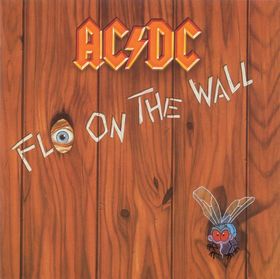
AC/DC: Fly On The Wall

AC/DC: FLY ON THE WALL (1985)
1) Fly On The Wall; 2) Shake Your Foundations; 3) First Blood; 4) Danger; 5) Sink The Pink; 6) Playing With Girls; 7) Stand Up; 8) Hell Or High Water; 9) Back In Business; 10) Send For The Man.
For a band that much busy with promoting a dumb image, AC/DC certainly raise quite a few complicated issues. For instance — we all know that AC/DC are generally as good as their riffs, but what is it, exactly, that makes an AC/DC riff, or, in fact, a hard rock riff in general, so utterly great for the body and soul? And what is it that makes an AC/DC riff boring and generic? And why would most — not all, but most — people agree on the greatness of the riffage in 'Hells Bells' or 'Whole Lotta Rosie', while at the same time failing to notice anything special about the riffage on 'Flick Of The Switch' or 'This House Is On Fire'?
Or — vice versa — some fans and critics, even those convinced that Fly On The Wall represents AC/DC's all-time lowest point, would still note that the title track, however, is sort of okay, or even «excellent». How could that happen? 'Fly On The Wall' (the song), to my ears, has always seemed the weakest start ever to an AC/DC album, a return to the power chord sludge of the 1981 album, a song that could have been slapped together in three minutes on a particularly lazy day. Does it even have a riff? Can one hum it? Can one appreciate it? If so, how and why can one appreciate it and another even fail to notice it...?
These are all interesting questions, and to discuss them is perhaps more appropriate within the review of a mediocre album than an excellent one. But since I do not even have a hypothetical answer, let us just skip the theoretical part and concentrate on the record for a while. By 1985, AC/DC were getting older, and their schtick was already illustrating the definition of «predictable» in every thesaurus, so it is no wonder that fans and critics alike were not at all happy with Fly On The Wall. Today, in retrospect, the album still stands as a fine testament to AC/DC's tenacity — coming out at the height of the hair metal boom, it was, nevertheless, firmly and frighteningly true to the band's style. Even the drums (now played by new band member Simon Wright, having replaced Phil Rudd due to the latter being sacked for non-disciplinary behaviour) have not been enhanced by any modernistic electronic effects — leaving AC/DC probably the only classic rock act of that era so steadfastly clinging to the past.
History has rewarded them with the last laugh: today, Fly On The Wall is one of the few hard rock albums of 1985-86 that does not sound ridiculously dated. If only its material stood up to the production values, we would all be sitting pretty. Alas, the songwriting has once again taken a sharp downturn, and the lack of focus on the title track is but one indication. None of the tracks at all have persisted in the band's live setlist, and some are just silly macho throwaways that are only production-wise better than the goofy hair metal crap they were supposed to contest with. 'Send For The Man'? 'First Blood'? 'Back In Business'? (The latter's title probably tries to somehow allude to 'Back In Black', but how could this unimaginative hard-funk riff, somewhat reminiscent of Rainbow's 'Man On The Silver Mountain', ever hope to compete with the genius simplicity of the bang - ba-da-bang - ba-da-bang of 'Back In Black'?) All of these songs have the required crunch and punch, but AC/DC pride themselves on being a rock'n'roll band, and this is not rock'n'roll — this is pompous heavy rock posturing, and it is boring at best and ugly at worst.
Still, some nice rock'n'roll is present: the riffs seem noticeably better on songs like 'Shake Your Foundations', 'Sink The Pink', 'Playing With Girls', and 'Hell Or High Water', and these also contain the catchiest, most likeable choruses — getting dumber with each year, as most people who have ever tried singing along to "ai-yee-yay-yay, shake your foundations!" will probably agree, but still preserving the fun quotient. Which makes Fly On The Wall very inconsistent, but certainly not a complete disaster, as was thought at the time.
One major disadvantage is that AC/DC's magic only really works when all the ingredients are equally strong; lose or weaken just one and the seams will start showing. By 1985, Brian Johnson's voice had finally begun giving in to all the strain, embarking on its transition from the most powerful high-pitched scream of 1980 to the «stuck pig hoarse rasp» of 1990. At that time, the problems were showing up more frequently onstage than in the studio; but, for some reason, the band decided that it was necessary to «mask» them all the same — so they put some kind of ugly echo or reverb effect on the vocals, for once, yielding to technological pressure.
The result is that the singing problem still remains and is well visible, but the vocals tend to simply disappear behind the guitars' wall of sound — to the point that sometimes I almost fail to notice when exactly the vocalist is supposed to come in, or, at least, when exactly his ad-libbing in the song intro finally shifts into the verse melody. This is totally frustrating, particularly on the better songs: I cannot help thinking how, with improved mixing and production, 'Playing With Girls', for instance, could have turned into a fabulous classic, well on the level with Back In Black material. (Could have, I'm not taking any chances).
Throw in the strangest album title so far — the first AC/DC album title, in fact, to completely dump their power effect — and the unimpressive album sleeve (an actual fly on the wall? imagine that!), and there is no disputing the fact that the band has, indeed, ran into deep trouble. But I still give the album a moderate thumbs up, on the strength of its strong half and the bravery of its very existence in the age of Def Leppard and Mötley Crüe.
Thursday, February 11, 2010
AC/DC: Flick Of The Switch

AC/DC: FLICK OF THE SWITCH (1983)
1) Rising Power; 2) This House Is On Fire; 3) Flick Of The Switch; 4) Nervous Shakedown; 5) Landslide; 6) Guns For Hire; 7) Deep In The Hole; 8) Bedlam In Belgium; 9) Badlands; 10) Brain Shake.
The idea behind Flick Of The Switch was that the band had become much too bloated and over-polished — the blame for which, unsurprisingly, was pinned on Mutt Lange, who had already fulfilled the important task of securing the band a happy old age, anyway. Subsequently, Malcolm and Angus fired the man and decided to produce the record on their own.
The changes are not huge, but important. The brothers do retain the «full» sound of the previous records, making the songs very bass-heavy and the riffs over-distorted, getting a much more metallic sheen than they used to in the Seventies. Accordingly, they stick Brian Johnson way over there in the corner, so that on each single song he has to struggle tremendously in order to outshout the guitars. This is where you start to notice the differences: Mutt would solve the problem by emphasizing the vocals with a bit of echoing, so that, on their best songs of the early Eighties, Brian would be hovering over the musical waves like a supernatural evil presence. On Flick Of The Switch, he goes back to being the big nasty sweaty bulldog in the corner.
But they do achieve their goal — that way, the album is indeed much rawer and more «immediate» than its predecessors. And, as if rejuvenated and re-inspired by this approach, the brothers, this time around, complement it with yet another set of kick-ass riffs. Gone are the sleepy power chords of For Those About To Rock; in their place, we once again have perfect musical phrasing — the melody that opens 'Rising Power' may not be one of their best, but it is a simplistic, catchy, fun hard rock riff, and there is nothing wrong with it that wasn't equally wrong with a song like 'Dirty Deeds Done Dirt Cheap', for instance.
Other tunes show a renewed interest in the band's blues roots — 'Badlands' most obviously so, where Angus, armed with a distorted slide guitar, extracts a «sample part» of a 12-bar riff and somehow transform it into a headbanger's paradise (the mid-tempo build), but 'This House Is On Fire' sounds like it might have originally been conceived with the help of a slider as well. And, finally, they reward the fans with at least one breakneck speed anthem — 'Landslide' — with an unusually complex build-up from verse to bridge to chorus and quite a difficult picking pattern in the main melody, which, I think, Angus only topped with 'Thunderstruck' seven years later.
The lyrics are the album's weakest point: admittedly, Johnson never liked writing them all that much, and not only are all the subjects fairly typical, there is not even any effort to make their descriptions stylistically polished; lines like 'I'm a pistol-packing man with a gun in my hand, looking for a woman who will understand' have always left me wondering what exactly the woman is supposed to understand — for instance, why the hell does the man need one gun in his pack and another in his hand at the same time? Big exception: 'Bedlam In Belgium', not only a phonetically delicious song title, but actually a coherent, well-put account of an unhappy accident the band happened to run into on their latest European tour. Not exactly their 'Smoke On The Water', but pretty smouldering all the same.
Amazingly, there is not a single song on here that does not work in at least some way. The album yielded no hits at all, because nothing is particularly anthemic or immediately striking — this will probably explain the all too commonly encountered negative attitude, since, in AC/DC and general rock'n'roll lore, Flick Of The Switch is frequently singled out as the start of the decline, the turning point where AC/DC became «generic» and «stale» and «irrelevant». Such is the general critical consensus, at least, and even some non-hardliner fans have stated that this is where they jump ship in indignation.
Rubbish, as far as I am concerned; AC/DC have always been generic, but as long as they were fun, they were never irrelevant, and this is their secondmost funnest album of the Eighties. That ascending guitar line on the title track? FUN. 'Guns for hire, shoot you with desire'? FUN. 12-bar blues turned stoner rock on '
Thursday, February 4, 2010
AC/DC: For Those About To Rock

AC/DC: FOR THOSE ABOUT TO ROCK (1981)
1) For Those About To Rock; 2) Put The Finger On You; 3) Let's Get It Up; 4) Inject The Venom; 5) Snowballed; 6) Evil Walks; 7) C.O.D.; 8) Breaking The Rules; 9) Night Of The Long Knives; 10) Spellbound.
Back In Black certainly brought in a lot of money and, more importantly, a lot of confidence, but its success was arguably a bit too much for the band. There was no reason whatsoever for AC/DC to be turned into a household name: somebody who regularly puts out songs on the level of 'Hells Bells' can hardly be expected to become a permanent mainstay in the home of the average Joe. But the devil did play this ingenious trick on humanity, and, as if having woken up from a deep, semi-decade-long slumber, people were rushing out to stores for more AC/DC product. Back In Black did not even have enough time to go all the way to No. 1 in the
Since it only makes sense to measure AC/DC albums on the riff-o-meter, the verdict is inescapable: there is not a single great riff here, nowhere in sight. Nowhere. Most of the time, this is just lumbering mid-tempo bluesy sludge, not even properly fit for headbanging. At best, the choruses are catchy — how can they not be catchy, when each one consists of repeating the song title four times in a row? — but the music is unimaginably unimaginative. Almost as if the band were simply too busy scooping up all the accolades, and decided, instead of a proper new record, to put out a bunch of outtakes from the Back In Black sessions.
Where Back In Black yielded at least three or four immortal classic tunes of the you-know-which genre, its follow-up has one — the title track, which picks up at the exact same spot where 'Rock'n'Roll Ain't Noise Pollution' dropped us off the train one year ago. And even that one is not so much immortal because of its melody (which is just as rote and unmemorable as everything else on the record), but because of its pompous, bloated anthemic character. Yes: Brian Johnson delivers the grand line 'For those about to rock — we salute you!' with plenty of flash, and the cannon blasts add a rare unexpected touch (particularly exciting when they bring them out onstage). But it is my deep conviction that rock anthems are one thing, and National Anthems are another, and that the aesthetics of the two should not be mixed. Somehow, in the Bon Scott days, the band used to understand that, and made 'Let There Be Rock' into a classic example of a true rock anthem — one that speaks through kick-ass energy and ironic delivery, not through pompous screeching and generic power chords that do not add up to anything distinctly meaningful.
There is little desire on my part to discuss individual songs. Two that may, as far as my opinion goes, rise above the overall sludgy dreck are the ones that you have to wait for the longest time. Side A ends with 'Snowballed', the only — get this: the only — fast rocker on the entire album, far from their best, but definitely a highlight on this morbid collection. And Side B ends with the phonetically similarly titled 'Spellbound', which is also mid-tempo sludge, but unexpectedly darker and grimmer than most of the Johnson-era tracks: for some reason, for this last track they preferred to drop all the glaring sexual innuendos, all the show-off-ey worship of Rock'n'Roll, all the cartoonish Satanism, and simply write a song about internal torment. I am not sure that, during this moment of glory, Brian Johnson really felt 'spellbound, my world is tumbling down', but he is definitely convincing.
Everything else is decidedly for the seasoned fan only. But rest assured: the guitars are loud and crunchy, each song has a mad Angus solo, and this is the second of only three records in AC/DC history where Brian still had the full power of his sonic tank. Even Rolling Stone originally fell for the trick, finally pandering to the record-buying public's tastes and providing AC/DC with the first truly glowing review — and, what the heck, anyone would probably give For Those About To Rock a glowing review if it were the first or second AC/DC album he/she'd ever heard in their life. But were we to entirely ignore context, we might as well sit tight and cozy with our «Greatest Hits» and «Best Of» collections instead.
An almost surreal idea is that they may have intentionally recorded a sub-par LP in order to solidify and purify their fanbase, so that only the steadfast and loyal would remain, and all the desperate housewives expecting another 'You Shook Me All Night Long' would go back to their proper lives, feeding on Boston and Styx. If so, they succeeded admirably: once For Those About To Rock hit its No. 1 and everyone actually started listening to it, their commercial status would start dropping immediately, while the quality of the music would, surprisingly, start growing again. But that is just a mad, mad thought: the Young brothers are no Bob Dylan, after all. Consciously shunning the limelight? I must be crazy. But a decisive thumbs down in any case.