Search This Blog

Showing posts with label Ash. Show all posts

Sunday, August 9, 2015

Ash: Kablammo!

ASH: KABLAMMO! (2015)

1) Cocoon; 2) Let's Ride; 3) Machinery; 4) Free; 5) Go! Fight! Win!; 6) Moondust; 7) Evil Knievel; 8) Hedonism; 9) Dispatch; 10) Shutdown; 11) For Eternity; 12) Bring Back The Summer.

Well, it looks as if the LP is here to stay, after all: after all these years of rationalizing about how the format has outlived itself, and how they are going to stick to the single-song routine from now on, Tim Wheeler surreptitiously returns to the tried and true — a monolithic collection of twelve new songs, tied together with a comic-book-derived title that suggests... huge impact? Well, you wish. According to the world at large, Ash had had their three-five-ten seconds of fame twenty years ago, and you might just as well be listening to Gilles Binchois these days — in fact, I am fairly certain that early medieval composers have a more loyal fanbase today than slowly aging alt-rockers from the 1990s. Had they had the most wittily composed and memorable melodies in a decade, even then this record would hardly cause a ripple. Yes, if you accumulate enough im­pulse, like the Stones or Madonna, you're pretty much set for life — but if you just had a small bunch of alt-rock radio hits twenty years ago, who gives a damn? You're not even yesterday's news, pal, you're more like an unknown quantum state.

Why am I bitching about this? Because, believe it or not, I get the feeling that with Kablammo!, Wheeler and Co. have produced their finest album in... oh wait... maybe, like, ever. It was curious how that A-Z run of singles actually helped Wheeler pay more attention to his melodies and avoid too much filler, but it seems as if the long-term effects, too, have been beneficial, and these days, Ash just go on writing good songs — not great, earth-shattering, innovative songs, but just regular power-pop and art-pop songs that sound... nice. No big pretense, no attempts to change the world, just half an hour of emotionally charged music.

The lead single and the opening track is ʽCocoonʼ, and you will not fail to notice that it consists almost exclusively of clichés — opening with the ʽHard Day's Nightʼ power chord, then laun­ching into the introduction with some powerhouse Blondie-style drumming, then superimposing simple falsetto chorus harmonies over chainsaw guitar riffage (Ramones or My Bloody Valen­tine?), but it all works out, and there is even an uplifting, high-pitched power-pop lead line pop­ping up from time to time if you needed an extra hook. The lyrics? They have no significance, it's just fun to sing along with "cocoo-oo-waa-oon, cocoo-oo-waa-oon", especially if you have no problem hitting the falsetto range. Cool song, me likey.

Then comes song number two, which wasn't even a single: ʽLet's Rideʼ. Guitar fanfare for the announcement, drum bash, a jagged glam-style guitar riff... the chorus could perhaps use less reliance on grumbly power chords, but then they rectify things with an added hard rock melody for the bridge (that's what, two different riffs in a 2015 pop song? what a reckless waste of mate­rial!) and an ecstatic blubbering solo. No complaining from me.

Okay, that's a little too much Smiths influence at the beginning of track three, ʽMachineryʼ. But then the Smiths usually favored slower tempos, and anyway, Wheeler is neither a master of true guitar jangle nor a fan of theatrical vocal deliveries, so by the time they rise to the top of that cho­rus, everything is forgiven. Again, good song. But now comes the big quest — a ballad! With ʽFreeʼ, you still have a relatively fast rhythm, echoey psychedelic guitar tones, and another catchy chorus, quietly burning with longing, yearning, whatever it takes to justify the song title, and then towards the end you get a restrained, but focused intrusion from some strings and cellos: another nice touch that was completely unnecessary, but it feels so good to have it here.

And now comes the really odd part: it's all more or less like that right to the very end. Nicely constructed, pleasantly executed songs of love, hope, frustration, and a little nostalgia, one after another. Nothing is particularly awe-inspiring, but nothing is particularly stupid, either. The two big orchestrated ballads (ʽMoondustʼ and ʽFor Eternityʼ) echo John Lennon, Elton John, and ELO rather than Eighties' and post-Eighties power ballads, with more emphasis on cellos and acoustic guitars than violins and electric guitars (that's always a good sign); the instrumental ʽEvil Knie­velʼ is like a joint tribute to James Bond themes, spaghetti-western overtures, and Ritchie Black­more at the same time; and ʽBring Back The Summerʼ finishes the album on a Beach Boyish note, so endearing that we can even forget them the inscrutable decision to use a drum machine. Maybe drum machines are well known for their ability to bring back the summer.

To put an unnecessarily long story short, Kablammo! keeps it short, simple, but smart, and I sup­pose that might just be the only way to go about it in an era where 99% of conscious attempts to «innovate» just pathetically end up reinventing the wheel. At any rate, I wouldn't be surprised if it ultimately turned out to be one of the best rock albums of 2015 — at least, I certainly wouldn't object to this becoming a reality. Congratulations, Mr. Wheeler, all you really had to do was open your mind to as many clichés as possible — not just Nineties clichés, but all the way to the Se­venties and Six­ties — and then your mind was able to reshuffle and recombine them in such a surprisingly refreshing manner. If this is mediocrity, well, gimme more; for now, just a very grate­ful thumbs up, because it is albums like these that show how my obsession with complete discographies is not always a total OCD-related waste.

Saturday, June 9, 2012

Ash: A-Z Vol. 2


ASH: A-Z VOL. 2 (2010)

1) Dare To Dream; 2) Mind Control; 3) Insects; 4) Binary; 5) Physical World; 6) Spheres; 7) Instinct; 8) Summer Snow; 9) Carnal Love; 10) Embers; 11) Change Your Name; 12) Sky Burial; 13) There Is Hope Again; 14) Teenage Wildlife; 15) Spellbound; 16) Nightfall.

The second volume in the series seems slightly less engaging than the first. There is a little bit more electronics, a little bit less hooks, and a nagging feeling that this formula simply cannot go on forever, or, at least, that the English alphabet simply has too many letters in it to adequately fit Tim Wheeler's purposes. But overall, if you already own — and like — the first half of the series, there is no reason not to own and like the second half.

The review will be brief, because most of the general remarks have already been made for Vol. 1, and specific remarks are hard to come by — this is Ash, after all, not the Beach Boys or the Beatles, there is not a lot to latch onto. Catchiest tunes so far are ʽPhysical Worldʼ, one of their trademark fast-paced pop-punk ravers with a message we can all identify with: ("Come back to the physical world, you're lost in the digital world" — tell me about it); ʽInstinctʼ, whose lyrics ("I'm animal, I'm not machine") strangely contrast with heavy use of Cold Synth Harbor; and the anthemic six-minute performance of ʽTeenage Wildlifeʼ, a great, inspiring tune if there ever was one... oh wait, it's a David Bowie song. Bummer.

I have to admit that even the electronic dance stuff is sometimes linked to vocal hooks the likes of which this band rarely, if ever, knew before. There is nothing surprising or particularly likeable about the likes of ʽBinaryʼ, but the chorus truly sounds amazing, with a set of "alright, alright"s in the background that can even remedy a sinking mood — try it out. On the other hand, their at­tempts at mimicking the Arcade Fire sound do not work so well: ʽDare To Dreamʼ builds up a wall of sound all right, but Arcade Fire, at their best, make the song sound big/sprawling/anthe­mic and personal/confessional at the same time. Wheeler, on the other hand, manages the spraw­ling thing well enough, but there's nothing intimate about it.

Arguably the best thing on the entire record, however, is ʽSky Burialʼ — in fact, it might just be the most daring thing Ash ever attempted in their lifetime, and they get away with it: a ten-minute long, almost «progressive», instrumental whose purpose it is to take you to the skies (don't really know about the burial, though — there is nothing funebral here whatsoever). A ten-minute «jam» like that from a band known for its generic alt-rock inclinations should be awful, but this isn't really a jam: it's a well-structured, progressively developing composition, moving along at a brisk, energetic pace (apart from a slowed down, minimalistic-atmospheric midsection), alternating riffs, trills, pretty slide guitar trips, bombastic power sections, wailing blues-rock solos, and a big wah-wah fury in the final section.

The whole thing arrives completely unexpected: you don't normally expect a lack of vocals or a ten-minute length on a single, and Ash are not usually known for taking these sorts of risks. I am not even sure that I really like it so much on its own, not simply for the reason that it stands out so much. But more likely, it just confirms the old suspicion once again: in a different age, Tim Wheeler would not have been saddled with bland mainstream «rock» conventions of his era, and could be continuously doing stuff like that — painting complex semi-psychedelic pictures that begin in Allman Brothers territory and end up on Hawkwind turf. It would have been derivative and not always amazing, but it could have been consistently entertaining. In any case, I am glad that this whole «singles» idea worked, and that, somehow, it gave the band a chance to stretch out and do stuff beyond their usual image. Thumbs up, and it would be curious to know where they will be headed from here in the future: for the next two years, Wheeler kept a fairly low profile.

Saturday, June 2, 2012

Ash: A-Z Vol. 1


ASH: A-Z VOL. 1 (2010)

1) Return Of White Rabbit; 2) True Love 1980; 3) Joy Kicks Darkness; 4) Arcadia; 5) Tracers; 6) The Dead Dis­ciples; 7) Pripyat; 8) Ichiban; 9) Space Shot; 10) Neon; 11) Command; 12) Song Of Your Desire; 13) Dionysian Urge; 14) War With Me; 15) Coming Around Again; 16) The Creeps; 17) CTRL-ALT-DEL; 18) Do You Feel It?; 19*) Kamakura.

Apparently, Wheeler himself quoted two main reasons for the band abandoning the LP format after Twilight Of The Innocents. Reason number one: disappointment with the record label that allegedly did nothing to promote an album that cost them so much time and effort. Reason num­ber two: «LPs are on their way out» due to the spread of digital downloads that have once again taken the emphasis off lengthy, coherent musical statements and put it on individual songs. Roll over Sgt. Pepper, we're back to good old Sun Sessions days.

I am not sure either of these considerations stands criticism, though. For one thing, Twilight Of The Innocents was a miserable piece of shit; no responsible record executive should have consi­dered releasing it on the market in the first place, let alone wasting time trying to promote it. For another, the rise of digital downloads still has not eliminated the need for LPs: few, if any, bands have followed the example of Ash, provided they have a record contract and a serious distributor in the first place. It is far more likely that the decision to switch to singles format was just a gim­mick — a last minute trick to draw some press attention and, perhaps, re-carve a unique niche for the band. If they could not retain musical individuality, they could at least take pride in an in­di­vi­duality of for­mat.

Ironically, Father Time has already judged that, if any of these singles are going to be listened to in the future, they will be downloaded as collections, particularly because Ash themselves even­tually succumbed to the temptation and released the A-Z series of singles in two volumes as early as 2010. The title itself, where each single is assigned an individual letter and an individual color, is another gimmick (Tim Wheeler swears to God that he really sees each of these songs in a dif­ferent color, but we won't know for sure until he donates his body to Science). So was there ever a point in making a big fuss of it in the first place?

In terms of a «greater good» or «innovativeness» — definitely not. But, amusingly, in terms of Ash's own musical integrity and career, definitely yes. The songs assembled on A-Z Vol. 1 are, overall, a huge improvement over the monumental boredom of Ash's last several studio albums. Releasing a new song every two weeks really helped them concentrate on the material: there is no issue of «filler», since every track is its own focus, and there may be more pop hooks here alto­gether than there have been over the entire course of the band's career, bar one or two better re­cords like Free All Angels.

There are no attempts at serious musical change, except for a slight occasional nod to electronics (most evidently visible in the opening track, ʽReturn Of White Rabbitʼ), but all these singles are mostly just power pop — you don't need much except catchy hooks and a little bit of emotion to make this stuff work. And much of this stuff does work — as incredible as it may seem to those who, like me, have been so thoroughly disappointed in Ash's last couple of albums at least, if not their entire career and meaning of existence.

For instance, ʽReturn Of White Rabbitʼ is really a fun track. The synth loops that bubble beneath the surface are only really there for wall-of-sound purposes; the song in general hangs upon its R'n'B-ish bassline and catchy-as-hell chorus ("is this the end of the line my friend..."). There is even a little bit of paranoid atmosphere to match the lyrics ("I followed the rabbit and now I am lost and alone... locked in a nightmare that's all closing in on me") — not a lot, but enough to complete the hooklines and turn the whole thing into one of the more respectable «mainstream-oriented» hits of 2009. Nasty critics whined about the band transforming into a clone of Franz Ferdinand with this release, but at this point, nobody should really give a damn: Ash are now on­ly as good as their pop hooks are, and these pop hooks may be in anybody's style, be it Franz Ferdinand, the Bay City Rollers, or Johann Strauss Jr.

I cannot admit to falling in real love with any of these numbers, but I could possibly see myself doing that, had I been a pathological fan of derivative power-pop, ready to listen to the whole thing thirty rather than the required three times in a row. Let's see... examples? All right. ʽArca­diaʼ, with its clouds-oriented chorus of uplifting piano chords and high-pitched whoah-whoah harmonies, is an attempt to write something in Arcade Fire style: shallower, but vivacious and friendly enough for us to look past that. ʽIchibanʼ is more of a classic Cheap Trick send-up, built on the same basic rhythms as ʽI Want You To Want Meʼ, but more anthemic. ʽWar With Meʼ is a tasteful mix of simple piano riffs, simple piano flourishes, and simple vocal harmonies that is al­most impossible to resist. ʽThe Creepsʼ is funny pop-punk that manages to be accessible, inoffen­sive, and sincere-sounding at the same time. And so on.

Very few of the songs are in ballad mode, which is understandable, because you do not usually put out ballads as singles; the ones that veer towards balladry mode through slower tempos and increased sentimentality are usually my least favorite ones (ʽPripyatʼ, ʽSong Of Your Desireʼ), but they are not awful or anything — they just do not exploit Wheeler's strong sides, and should have been done as less heavily arranged folksy ditties instead. But most of these eighteen tracks are in fully dynamic mode.

In the end, the gimmick worked — not because of the gimmickry itself, but because it gave the guys a chance to clear their heads and get rid of the «filler bug». It is not very interesting to write about these individual tracks, whose only strength lies in a careful selection of chords, but that is a typical reviewer problem when it comes to simple, unpretentious pop rock. What is truly impor­tant is that there has been a genuine rebound, and with these songs Ash have propped up their, still highly dubious, body of work on extremely solid support. They haven't been that good for al­most a decade — and these singles have legitimately established a point at which no artist can any longer be considered a «fluke». Maybe it ain't genius, but it's durable craftsmanship, and durable craftsmanship always gets a thumbs up from me.

Check "A-Z Vol. 1" (CD) on Amazon

Saturday, May 26, 2012

Ash: Twilight Of The Innocents


ASH: TWILIGHT OF THE INNOCENTS (2007)

1) I Started A Fire; 2) You Can't Have It All; 3) Blacklisted; 4) Polaris; 5) Palace Of Excess; 6) End Of The World; 7) Ritual; 8) Shadows; 9) Princess Six; 10) Dark And Stormy; 11) Shattered Glass; 12) Twilight Of The Innocents.

In my highly subjective, one-in-a-billion, opinion, completely irrelevant in the face of the uni­verse and its struggle for perfection, peace, and justice — Twilight Of The Innocents, pre­sumably the last ever LP-format release in Ash history, is a pile of bland, instantly forgettable, proverbially generic, emotionally disappointing, intellectually insulting, historically insignificant, culturally repugnant airwave stimulants, with a passable superficial similarity to a certain style of art they used to call «music».

To soften the blow, I hasten to confirm that the exact same definition could be slapped on a mil­lion other records, including complete discographies of certain artists we could (but won't) name — and also express a certain amount of satisfaction. For more than a decade, Ash seemed like the perfect band to release a primetime suckjob of an album, but something always stopped them at the last moment: a cool vocal hook or two, a passable funky groove, a well-thought out guitar so­lo, a heartfully delivered folksy melody, something like that. Now, with Charlotte Hatherley once again out of the band, the classic trio finally feels free to fire their worst shot.

Apparently, the intention here was to play it more «raw», less «polished» – a statement that, co­ming from the mouths of most modern bands, is usually translatable to «run for the hills», be­cause, nine times out of ten, dropping the «polish» also means abandoning any attempts at wri­ting non-trivial melodies. Which is really logical: «raw», «unpolished», «with a live feel to it» is frequently understood as «go into the studio and hammer out anything that just blunders into your head. Don't worry, you're a pro, you're bound to sweat out some inspiration».

None of these guys happens to be Thelonious Monk or Keith Jarrett, though, and even if these songs were all written on the spur of the moment, that does not excuse their existence (and if they weren't, that's even worse). Everything here is written in the genre of... «rock music» (shudder), where one guy plays the drums, another one plucks the bass, and a third one picks distorted notes on the electric guitar. Ever heard of that? Oh yes, they do it rhythmically, so you can punch a couple of holes in the floor if you got spikes on your shoes.

There is not a single memorable riff here, nowhere in sight. There are claims at catchy choruses that rarely go beyond shouting the same line over and over again (ʽYou Can't Have It Allʼ). There is one slightly more than hopeless, but still quite pathetic attempt at coming up with an anthemic, «soulful» Brit-pop ballad (ʽEnd Of The Worldʼ), a last humiliating lick at the lollipop already consumed by the likes of Oasis – how does it taste licking a wooden stick? There are a few at­tempts at guitar jangle-laden power pop that don't even manage to step outside the door, because the jangle is compressed into sonic muck (ʽShadowsʼ) . There is an «epic» conclusion (title track) laced with falsetto and a bunch of strings rolling over Beethoven. None of it works. There may be craft, but there is no sign of genius.

It is true that there is less noise here than on Meltdown — the nu-metal legacy is almost out, re­placed by nostalgia for the «1990s nostalgizing for the 1970s». But this is neither good nor bad in itself. And Twilight does not even feel like a sweeping nostalgic gesture: it does everything in half-terms, and ends up sagging rather than bulging in between its countdown points. Goshdarn it, there are only two things that Tim Wheeler can sometimes do really well — bash out sunny-hap­py Ramones rip-offs and sing sentimental folksy ballads — and this record just goes on to prove it by featuring neither. Thumbs down, violently.

Check "Twilight Of The Innocents" (CD) on Amazon

Saturday, May 19, 2012

Ash: Meltdown


ASH: MELTDOWN (2005)

1) Meltdown; 2) Orpheus; 3) Evil Eye; 4) Clones; 5) Star-Crossed; 6) Out Of The Blue; 7) Renegade Cavalcade; 8) Detonator; 9) On A Wave; 10) Won't Be Saved; 11) Vampire Love; 12*) Shockwave; 13*) Solace; 14*) Cool It Down.

Wrong move. Some stupid jerk must have complained that Free All Angels was way too «hap­py» and «sissy» to match the honor of the proud sons of Ireland, and incidentally shamed Whee­ler into returning to the tough standards of Nu-Clear Sounds. The title alone says it all: after «nuclear sounds», comes the «meltdown». An exaggeration, for sure, but it does feel like the si­ckening radiation effects of the 1998 album are back. Be sure to check your hairs after listening, or, better still, wrap yourself in aluminium foil before listening.

Something like nine out of eleven tracks on here are moderately fast heavy rockers, most of them in such idioms as «pop-punk», «electro-funk», «slam-dunk», and «stinky-skunk». Their emotio­nal pattern is formally «aggressive», but with a heavy mix of sarcasm: as the title track breaks in with "revolution, we're the solution, we're gonna take it to the overload", Wheeler's sneer makes it clear that the aggression is as much directed at the simplistic system-bashers as it is at the system itself. That's fine by me — intelligence and sarcasm are always welcome in pop music.

What is not fine is that the music has once again dissolved in a sea of well-coordinated, but deadly boring noise. Guitar parts on ʽMeltdownʼ grumble, but never crunch, or form a distinctive, individual riff. Repeat same phrase nine times, substituting other track names, and you get an overall portrait of the album. The vocal parts are slightly better, but still lazy — "I think my head is gonna explode, I think my head is gonna overload" is a tense, but all too familiar angsty trick, and it lacks gusto.

If the mood occasionally lightens up, it is still not enough to pierce through the lazy haze. ʽOr­pheusʼ, for instance, goes from a gruff metallic verse to a «sunnier» power-pop chorus, but it's a generic alt-rock chorus all the same — no particular inspiration detected. ʽStarcrossedʼ is a parti­cular shameful affair: the album's only slow-paced ballad, sternly deprived of Wheeler's soft folk­sy hooks and turned into a bland «power» show-off.

I wish I could concentrate more effectively on some of these rockers and sort out the «hookless» and the «weakly-hooked» ones, but it would just waste everybody's time, so let's just go straight to the bottomline: Meltdown sacrifices diversity and melodicity for a «kick-ass» approach, and the results can be predicted accurately, because Tim Wheeler is about as good at kicking ass as Meat Loaf is at singing opera. As in «it can be done, but why?...». Thumbs down.

P.S. Acquaintance with alternate reviews shows that ʽClonesʼ is regularly being extolled as a particularly vengeful, raucous highlight, if not even one of the best songs in the Ash repertoire. I beg to differ. Flat lyrics like "Shame, that everyone's the same / I thought you stood alone / We're different from the clones" are primitively bad on their own, but it hurts twice as bad when they are set to a pedestrian funk metal melody, further weakened by a muffled, overcompressed guitar tone. (Even the Red Hot Chili Peppers could have given the song more liveliness). Take a hint, people: if you want to write a song about loss of individuality, either drown your lyrical content in Dylanisms or at least bother writing a melody which only a ruthless troll could put down as a boring copy-paste affair.

Check "Meltdown" (CD) on Amazon
Check "Meltdown" (MP3) on Amazon

Saturday, May 12, 2012

Ash: Free All Angels


ASH: FREE ALL ANGELS (2001)

1) Walking Barefoot; 2) Shining Light; 3) Burn Baby Burn; 4) Candy; 5) Cherry Bomb; 6) Submission; 7) Someday; 8) Pacific Palisades; 9) Shark; 10) Sometimes; 11) Nicole; 12) There's A Star; 13) World Domination.

Lighter, faster, less folksy, but more actively rock'n'rollish than Nu-Clear Sounds — I have al­most taken a liking to this album, despite the obvious fact that this is still very much an Ash al­bum, and that Tim Wheeler is not the Pete Townshend of his generation and will never be. How­ever, each time that his inner «Heavy Lead Monster» goes to sleep and the «Light Magnesium Elf» takes over the watch, the sickness wanes and the music becomes listenable — and, in places, even highly enjoyable. This is one of the better samples.

The early parts are not particularly promising. ʽWalking Barefootʼ starts things off on a happy pop-punk note — fast, frivolously romantic, but generally hookless and flat; and the five-minute long ʽShining Lightʼ is optimistic enough not to get condemned as generic depressed alt-rock crap, but just as flat and predictable («now we are relatively quiet... now we SUDDENLY be­come loud as heck... what else do you need to get it shoved down your throat?»).

However, already the third track, ʽBurn Baby Burnʼ, lights up a little candle. A nice picking pat­tern, a fast rumbling bass line, a «choppier», livelier rhythm, a slightly less trivial chorus, a classy trill-based solo — is this an attempt to put the fun back where it belongs, or what? ʽSubmissionʼ builds up a hot funky groove whose principal hook (an electronically treated "you turn me on...") may irritate you, but that wouldn't make it any less of a hook. ʽPacific Palisadesʼ is the next entry in the ongoing series of Beach Boys / Ramones tributes, and arguably the best one so far —lyrics like "I lie with candles by my bed / Brian Wilson in my head" may be a bit too obvious, but the chorus resolution is still tremendously uplifting. ʽSharkʼ brings back the aggression in the form of a deep guitar tone, pitch-torturing effects, and vocals pressed into an ugly sneer on the "violent mind, violent mind" chorus. And so on.

The sentimental domain of the album generally comes in the form of loud, but not particularly «power-loud» ballads, usually acoustic or joint acoustic-electric in form and more often than not backed up with a thick layer of fake strings — sometimes emulating actual strings and sometimes bringing back Mellotron memories (ʽCandyʼ). I cannot see any great discoveries, but, considering that ballads are a dangerous thing altogether, Wheeler gets off all right this time. The "was it a dream I had..." bit on ʽSomedayʼ even manages to have a special ring to it. ʽSometimesʼ sounds like Blur on a cloudy day, which isn't necessarily a bad thing.

A decent affair altogether, and it succeeds in lifting a small corner of the «alt-rock curse» which lay heavily all over Ash all through the 1990s: on more than one song here, they let in a little bit of sunshine, and do not seem so genuinely eager to honor the limited array of distorted rock guitar clichés of  the genre. Of course, it also has to do with all sorts of other honorings: from the Beach Boys to the Jesus and Mary Chain, almost every one of these songs could be deciphered as a sum of several influences. But if you ask me, it's better to be inspired by the Beach Boys than the Stone Temple Pilots, regardless of who you are and where you stand.

A touch of experimentation, a drop of diversity, a smudge of lightness and poppy optimism, and Free All Angels may even be a better album than 1977, if not as histo­rically important — but then again, is there anything about Ash that will seriously look «histori­cally important» ten years from now? Thumbs up, in the meantime.

Check "Free All Angels" (CD) on Amazon
Check "Free All Angels" (MP3) on Amazon

Saturday, May 5, 2012

Ash: Nu-Clear Sounds


ASH: NU-CLEAR SOUNDS (1998)

1) Projects; 2) Low Ebb; 3) Jesus Says; 4) Wildsurf; 5) Death Trip; 6) Folk Song; 7) Numbskull; 8) Burn Out; 9) Aphrodite; 10) Fortune Teller; 11) I'm Gonna Fall.

Girl presence detected! Or not detected, because new band member Charlotte Hatherley had been hired primarily for her guitar playing skills, thickening the sound during live performances and saving time for extra overdubs in the studio. She does add some backing vocals as well, but as far as I can tell, she does not get to sing lead at all (unless she can pose as Wheeler's double).

Nor does the lineup expansion result in any mind-blowing stylistic turn-arounds. Nu-Clear Sounds (a really awful title, if I might add; nothing that begins with «nu-» has ever proven to be good) starts off horrendously, with a bunch of songs that go, «Hey! We bring you the excitement of power pop baked in grunge guitar tones! Uncumbered with original chord changes — no more dan­ger of getting sidetracked by silly inventions like ʽmelodyʼ! Go with the flow, and the Force will always be with you!» The fast-kicking «rock» of ʽProjectsʼ, the slow-moving «meditative rhythmic balladry» of ʽLow Ebbʼ, and the third-rate Iggy Poppisms of ʽJesus Saysʼ are the kind of total garbage past which so many of the critics simply couldn't make it — which explains the overall cold reception in comparison with 1977. Dark, morose, nasty, and boring: an unbeatable combination for anyone desiring to sully the good name of rock'n'roll.

It does get somewhat better from there on. ʽWild Surfʼ is another in Ash's series of Ramones-in­spired bubblegum anthems, and even though it should have been played twice as fast for optimal effect, at least it has a friendly, funny, catchy chorus that slightly deflates the deadly, exaggerated seriousness of the first three numbers. Then they step back, regroup, take a deep breath, and let rip with ʽDeath Trip 21ʼ, which is probably the closest this album really gets to nu-metal, but at least it's faster, sharper, and flashier than ʽProjectsʼ.

But, as curious as it could be, Nu-Clear Sounds is at its best when Wheeler quiets the band down in order to inject some sentimentalism. The basic guitar picking of ʽFolk Songʼ, supported by a bunch of pseudo-strings in the background, is no more out­standing than anything else here, but, all of a sudden, Wheeler puts together a soft, cozy, naturally-sweet sounding vocal and applies it to a catchy chorus — his "springtime slipping away, my love, springtime slipping away" is just about the only moment on the album that has pledged to stay with me at least until the next mor­ning. Two tracks later, the trick is repeated with ʽAphroditeʼ, and it almost works, except that this time, they resort to the usual trick of «make that chorus louder! It's the CHORUS, goddammit!», and spoil much of the effect of the "all I know 'bout is desire baby" refrain with the same power chords that we have already had the chance to chew up, swallow, shit out, scoop up, repeat pro­cess etc. so many times.

In between these and other ballads, however, we still keep getting regurgitated trash like ʽFortune Tellerʼ, which has no instrumental melody that I am aware of, borrows its verse vocal melody from some other song that I am fairly sure I have heard many times before, and is not ashamed to actually quote from the other, much better known, ʽFortune Tellerʼ (Benny Spellman / Rolling Stones / Who, etc.) in the first line of its chorus vocal melody. I mean — come on, really, that is not how one is supposed to come up with new rock'n'roll songs, even if they have an explicit retro orientation. Really!

Clearly a thumbs down here overall: for a band that gets most of its acclaim for distorted guitar-driven rock thunderstorms, Nu-Clear Sounds produces a way too suspicious impression of an album written by an aspiring folk songwriter, a wannabe 1990s Donovan, cruelly mishandled by Fate and thrown into the lion den of rock'n'rollers with a stern order to prove yourself or die try­ing. And that's me attempting to put it in an interesting framework — when, really, the album is so dead boring that I am frankly amazed at my own self with that phrasing.

Check "Nu-Clear Sounds" (CD) on Amazon
Check "Nu-Clear Sounds" (MP3) on Amazon

Saturday, April 28, 2012

Ash: 1977


ASH: 1977 (1996)

1) Lose Control; 2) Goldfinger; 3) Girl From Mars; 4) I'd Give You Anything; 5) Gone The Dream; 6) Kung Fu; 7) Oh Yeah; 8) Let It Flow; 9) Innocent Smile; 10) Angel Interceptor; 11) Lost In You; 12) Darkside Lightside.

Listening to «alt-rock» almost always produces a poisonous effect on me — there is something innately sick about that sludgy sound, something very, very uncomfortable. When all is said and done, pop is pop, and metal is metal: you cannot assure a healthy, stable marriage between the two (which makes me all the more admire those few lucky bastards, like Kurt, who did manage a temporary union; on the other hand, he did that at an expense that might be too heavy for the rest of us). Ash, even at their very best, never strived to be the exception from the rule. Therefore, all of the music that Ash ever produced makes me sick, period.

But a more interesting subject to discuss would be the reason why 1977, the band's first proper LP, propelled them into the limelight like crazy — by 1996, the album was hot enough to push Jagged Little Pill off from the top spot on the charts, and, although both records certainly qualify as «alt-rock» to whoever uses «alt-rock» as a bad word, they are certainly different enough to acknowledge that 1977 gained its popularity somewhat on its own, not just because it was the trendy thing to do (even if it was).

One thing is for certain: 1977 is more than just a «three guys play tinny rawk» album. Certainly Tim Whee­­ler is not the easiest person in the world to pigeonhole. The songs here blast off a whole wide variety of influences — of which classic Ramones/Clash-era punk, heralded by the album title, is but one, and not necessarily the strongest (in fact, it is claimed that the title simply refers to the birth year of two of the band members, and is also a subtle Star Wars reference — ʽDarkside Lightsideʼ ring a bell?). But there is also regular Oasis/Blur-derived Britpop, gruff re­tro-1970s metal, Springsteen-muscle-powered «urban rock», shades of Hawkwind psychedelia, and... you fill in the rest, I'm sure I've missed something along the way.

It is too bad that Wheeler's imagination is blocked on subsequent steps — he seems to be doing his best to take all these various ingredients and reduce them to the same formula, compressing chords, tones, and moods into one big headbang-fest. 1977 may have been God's gift to modern rock radio stations — here was something you could disseminate at top volume from your creaky car stereo without spooking off the environment — but we will never know why he chose as his mediator this particularly odd guy, taking off on a major highway and then ending up on a one-track dirt road. It doesn't help that he can't sing, either. One genuinely bugging aspect of 1977 is that nearly all of the vocals are... murmured?

Still, even with all the aspects of this record that one could detest, 1977 is likeable, to a degree. It has a mild sense of humor and hipness — not everybody could have come up with the idea of using a Ramones-inspired (with an explicit lyrical reference to «teenage lobotomy») two-minute pop-punk tongue-in-cheek anthem to ʽKung Fuʼ as the lead-off single. In fact, had the Ramones recorded the song themselves, it could have been a minor classic — as it is, Wheeler's muffled guitar sound and boring vocals (that try to simulate excitement but fail) make it more of a bark than a bite. A pleasant bark, nonetheless — cheap swipes at pop culture will never die.

The other big single, ʽGirl From Marsʼ, rolls along on what seems like the laziest chord set in the world, but is somewhat redeemed by Wheeler's attempt to channel the spirit of Ray Davies, even attempting to trade the whiny murmur in for a higher-pitched, naïve-romantic delivery (which certainly works better for him than any attempts to raise the aggression bar). The melodic wah-wah solo in the middle is also attention-worthy: in fact, Wheeler's lead playing is quite superb throughout the record — crisp, fluent, technical, and with plenty of love for various pedals and stuff. What this band really needed was a fourth member, one that could take away his rhythm playing and especially singing duties.

Some of the stuff is quite below par, though. The lumpy, leaden take on 1970s metal, ʽI'd Give You Anythingʼ, really plays out like an inferior variation on Black Sabbath's ʽN.I.B.ʼ with all the cool Satanism taken out and replaced by... never mind, it's impossible to make out anything from that murmur anyway. ʽGoldfingerʼ somehow became the single that truly put them on the map for the world to see, but it is the weakest of 'em all — a rather transparent take on the basic Oasis style, yet without a mighty hook to boot. But that's probably the exact reason why people were buying it at the time. Does anybody even remember it any more these days, though?

Overall, 1977 is a firm chunk of 1990's musical history now, and should probably be listened to by all those who are interested in learning more about the «spirit of 1996» — and also by every­one who wants to know how a melting pot of superior influences should not be brewn. But hey, these guys just didn't want to stick to the underground — they wanted to make it big, and in 1996, if you wanted to make it big, you didn't invent the rules, you stuck to them. They even had to go to Oasis' producer for this album, for God's sake. Sorrowful, but understandable.

Saturday, April 21, 2012

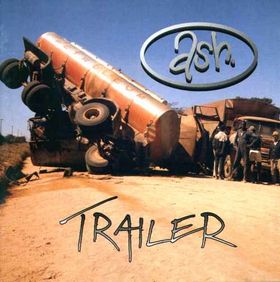
Ash: Trailer


ASH: TRAILER (1994)

1) Season; 2) Jack Names The Planets; 3) Intense Thing; 4) Uncle Pat; 5) Get Out; 6) Petrol; 7) Obscure Thing; 8*) Hulk Hogan Bubblebath; 9*) Different Today; 10*) Punk Boy.

Apparently, before recruiting drummer Rick McMurray and settling upon «Ash» as a suitable name for their future «best-rock'n'roll-band-in-the-world (to ever come from Ireland, since you are all sick of U2 by now anyway)», guitarist Tim Wheeler and bassist Mark Hamilton had done time in an Iron Maiden cover band, no less. Traces of this can be heard quite distinctly in their early sound (ʽHulk Hogan Bubblebathʼ starts out as sheer heavy metal, before melting down into zombie-flavored stoner rock), but it is most probable that they sucked at this venture — Wheeler is a good guitar player, but hardly on the level of Iron Maiden's axe gods, un­less technique and complexity were intentionally sacrificed once the new band rerouted its inte­rests into the direction of «alternative rock».

Trailer, their first EP/mini-LP, was built around ʽJack Names The Planetsʼ, the band's first single of any popular importance, and originally contained just seven songs (a few more were thrown on later for comprehensiveness' sake). None of them are very good, but one fine aspect of Ash alrea­dy on display is that their guitar-based sound is just a tad different from the generic «punk sloppi­ness meets pop toothlessness» manner of the alt-rock crowds of the mid-Nineties. Maybe it is the Iron Maiden tribute period that we have to thank, but, in any case, Wheeler's guitars usually have a lower grumble and a fuzzier crunch to them than the genre prescribes, and the lead parts feature a variety of tones, from high-pitched to wah-wah, and are consistently more melodic and less pre­dictable than one would expect.

That does come in handy when you realize that there is not a single melody to die for on Trailer. ʽJack Names The Planetsʼ is sort of likeable, with its fast tempos, Wheeler's friendly, non-screa­my vocals, and a brave attempt at marrying punk, hard rock, and Brit-pop, but the melodic flow is extremely even, and the hooks are non-existent — what, did they really think that simply re­peating the track title three times in a row is enough to make a respectable pop single? The se­cond attempt, ʽPetrolʼ, essentially following the same songwriting formula, managed to be a little better — at least this time, there is an attention-drawing climactic burst at the end of each verse as Wheeler's echoey scream kicks off an extra layer of distortion and sets the song's main melodic riff in action. Not that it's a lot, either — any professional songwriter would have chuckled at how little is really done to gain the listener's trust.

I hardly remember anything about the other songs, except for ʽUncle Patʼ, where the tempos are slowed down a wee bit, and the whole song, replete with Wheeler's friendly vocal overtones, ends up sounding somewhat like (very) late period Kinks (Think Visual or something like that). On the ultra-short ʽGet Outʼ, the band tries to go for a «polished metalcore» type of sound — very fast, aggressive, but also quite technical — but the melody is too brutal to be melodic, yet too re­strained to win points just for the hardcore smell of it all.

In the end, the most memorable tune on the album is... the band's cover of Helen Love's ʽPunk Boyʼ, quite a telling fact all by itself. (Even more telling is the recommendation to listen to the original instead — Helen Love have quite an odd, if very silly-sounding, approach to bubblegum-pop that sounded far more original in the mid-1990s than Ash's approach to Helen Love material). The good news is that the bubblegum pop influence may have helped these guys to lighten up — and become a little bit better in the future. With Iron Maiden and Helen Love playing dice in your subconscious, chances of your musical output amounting to pure, undiluted crap can be expected to decrease rather sharply. It does take time, though, and for the moment, Trailer gets a thumbs down, if only for not being diagnostic of the subsequent movie that it allegedly advertises.

Check "Trailer" (CD) on Amazon
Check "Trailer" (MP3) on Amazon