Search This Blog

Tuesday, November 19, 2013

Bob Dylan: Before The Flood

BOB DYLAN: BEFORE THE FLOOD (1974)

1) Most Likely You Go Your Way (And I'll Go Mine); 2) Lay Lady Lay; 3) Rainy Day Women #12 & 35; 4) Kno­ckin' On Heaven's Door; 5) It Ain't Me, Babe; 6) Ballad Of A Thin Man; 7) Up On Cripple Creek; 8) I Shall Be Re­leased; 9) Endless Highway; 10) The Night They Drove Old Dixie Down; 11) Stage Fright; 12) Don't Think Twice, It's All Right; 13) Just Like A Woman; 14) It's Alright, Ma (I'm Only Bleeding); 15) The Shape I'm In; 16) When You Awake; 17) The Weight; 18) All Along The Watchtower; 19) Highway 61 Revisited; 20) Like A Rolling Stone; 21) Blowin' In The Wind.

Nowadays, with the Bootleg Series out on a steady roll, we have easy access to the «Bob Dylan live experience» at all sorts of stages — early acoustic shows, mature acoustic shows, classic era electric shows, and even Bob's major post-crash live appearance with The Band at the Isle of Wight in 1969, previously known only through brief glimpses on Self Portrait, is now available officially for all those who are too honest, or too lazy, or both, to indulge in bootleg study. We have it all, for historical knowledge and personal enjoyment alike.

Back in the day, though, in 1974 there was not yet a single Dylan live album available, and Asy­lum Records decided to seize the occasion. Now that Bob was back in the saddle again, and em­barking on his first major American tour in eight years, and with The Band at his side once more, what was to prevent him from finally giving the fans what they wanted — not to mention, what was almost demanded by the Golden Era of the Double Live Album?

The tour only lasted around two months, and although plenty of recordings were made, most of the record is comprised of takes from the very last two shows, played on February 13 and 14 at the Los Angeles Forum in Inglewood, California — possibly these shows were thought to reflect the band at their most «well-flexed». The setlist is mixed, so that this is, in fact, «Bob Dylan & The Band» rather than «Bob Dylan, backed by The Band»: the first part is Dylan classics played by everybody, then there's a Band part without Dylan, then there's an acoustic solo Dylan part, then another chunk of Band stuff, and finally, back to big-band Dylan arrangements: a circular ABCBA structure, probably symbolic of something we'll never know for sure.

Time has not been very kind to the album. When it first came out, critical praise was nearly uni­versal, but in a couple of years, everybody seemed to forget that it ever existed, and later on, with live shows from 1964, 1966, 1975, etc. coming out as official releases, we began to understand the prophetic meaning of the title: Before The Flood was lucky enough to have been released, well-bought, well-reviewed, and orderly appraised... before the flood of archive performances came in and duly washed it away. Not completely, but, well, put it back in its proper context.

Do not be too afraid — every live Dylan album before the man completely lost his voice is worthy in at least some respects, and, for that matter, after he'd completely lost his voice he stopped releasing new live albums completely. But there are two major problems with Dylan & The Band as far as these shows, and recordings, are concerned. The first one is about Dylan — the second one, as you may have guessed, is about The Band.

The problem with Dylan is that he is just too goddang loud on this tour. It is almost as if some hypnotizer fed him two words — «ARENA RAWWK!» — or as if he'd been to a Led Zep show and it temporarily blinded him or something. Even while playing his acoustic on the solo spot in the middle of the show, he flails it like a madman — and then there is the singing: not a murmur, not a grumble, not a whine, not a croon, but a warrior-style scream through and through. And if it works fairly well on numbers like ʽMost Likely You Go Your Wayʼ, anthemic and inflammatory from the get-go, songs like ʽLay Lady Layʼ and ʽIt Ain't Me Babeʼ shift dangerously close to self-parody in the process. You try to invite your lady to lay across your big brass bed in that kind of voice, and she'll probably be off calling 911 in a second.

In less than two years, when the Rolling Thunder Revue came along, Dylan would learn to cope with that problem — adjusting his singing to the appropriate musical backing and once again di­versifying the moods and attitudes of the individual performances. But on Before The Flood, all of the thirteen numbers performed are reduced to the same common denominator: power, power, and still more power, subtlety and stealth be damned. Perhaps that was an experiment: the man had to see if he still had it in him to win over a huge crowd. Perhaps he just thought it a good way of re-establishing his grip on 'em, or perhaps it was sort of a «sweet revenge» thing after the mixed reactions to his risky concerts of 1965-66. Whatever be the answer, Before The Flood is very much of a «stadium rock» thing, and Dylan is not quite Dylan, I'd say, when he is donning that sort of attitude.

Then there is Robbie and the gang. When they do their own songs, they do them reasonably well, the way they are supposed to — although they never venture beyond the ordinary setlist, and most of these numbers can be found in equally good or better versions on the classic Rock Of Ages album. But when they back up Dylan, they become his trusty Hawks, and fully indulge his «arena fetish» by providing a loud, crunchy, yet somewhat rustic rock'n'roll foundation. Garth Hudson gets a chance to try his trendy synthesizers on extra material, but really it is the Robbie show all along, as he plays Phenomenal Guitar God on almost every song, making his guitar scream as loud as Dylan's set of pipes. It works — at first — then quickly becomes predictable and tiresome. By the time they get to ʽAll Along The Watchtowerʼ, you just know they are going to go the Hendrix route, and they are not going to succeed. Why keep on listening?..

Play it all off a different angle, though, and it might strike you — well, why not? This is a live reflection of an arena tour, it is supposed to replace subtlety with crunch, and all of these songs deserve a little crunch every once in a while: heck, even ʽJust Like A Womanʼ is interesting to get to know in a hysterical version, now that you have already known it for so long in its original pensive mode. And it is also not as overloaded with extra bit players as the 1975-76 recordings, not to mention the Vegasy production of the infamous Budokan album — what's better, anyway, a mean and lean rock'n'roll backing or a choir of stiff gospel back vocalists? And is it possible to deny the sheer raw energy, the intensity of the show? One thing is for sure, there is not a minute here that could be described as «lax» or «limp».

In the end, leave it up to yourself, and history, to decide. Dylan himself had no fond memories of the tour, and seemed to acknowledge that he'd overstepped the limits where «power» and «ener­gy» were concerned. But there is no need to agree with that opinion as long as you do not insist that this is exactly the way these songs always need to be done. At the very least, this is yet ano­ther curious page in Dylan history — and, for one thing, it is a very different «Dylan and The Band» from the «Dylan and The Band» that had just done Planet Waves not more than a few months ago. (For that matter, they did play some Planet Waves stuff at the beginning of the tour, but then ended up dropping most of it in favor of the golden oldies — this new personal shit was a little too hard for Bob to convert to arena-rock mode, and it probably didn't manage to get the crowds a-goin' in exactly the sort of way he'd like them to go). Still, you will probably be doing yourself a favor if you do not procure this as your introduction to the Live Dylan Experience — for which cause, Live 1966 or Live 1975 will be a much more beneficial choice.

Check "Before The Flood" (CD) on Amazon
Check "Before The Flood" (MP3) on Amazon

Monday, November 18, 2013

Brenda Lee: Reflections In Blue

BRENDA LEE: REFLECTIONS IN BLUE (1967)

1) Here's That Rainy Day; 2) You'll Never Know; 3) Baby Won't You Please Come Home; 4) Can't Help Falling In Love; 5) I'll Only Miss Him When I Think Of Him; 6) Am I Blue; 7) If I Had You; 8) Close To You; 9) Little Girl Blue; 10) I Will Wait For You.

This one's sort of a cult favorite — all of a sudden, Brenda's producers decided to add an unex­pected twist to her balladeering image, and recast her in the image of a moody vocal jazz perfor­mer, sort of like a Rosemary Cloonie or a Blossom Dearie. Normally, that's a smart move: you can allow yourself to remain sweet, sappy, and sentimental, but at the same time pretend to true emotional depth and gain points with the critics. But does it really work with Brenda Lee?

I mean, we all have to ask ourselves that question at least twice — if only to beat the common prejudice against «turf-shifting»: naturally, Brenda Lee is not a well-trained or deeply experien­ced jazz singer, and one either has to be completely ignorant of that field, or allow a certain de­gree of tolerance for the «amateur intruder», in order to judge the whole thing impartially. It also makes matters twice as bad when, like your humble servant, one has fairly little tolerance for «vocal jazz», particularly orchestrated sentimental vocal jazz, in the first place, and requires a performer of outstandingly unique quality (such as Ms. Billie) to override the intolerance.

That said, it's not as if the problems of Reflections In Blue were all that different from all of Brenda's problems in the post-1962 era. There are no technical flaws to her voice, but the delivery on all these songs — regardless of whether they deal with loss of love or discovery — is always the same: loud, powerful, professional, monotonous, predictable, and perfunctory. Okay, so she respects the melody and the lyrics sheet, but that works fine for an evening's entertainment in a local jazz club, not for a record with supposed replay value. Okay, so some of the songs are ack­nowledged clas­sics of the genre, but the overriding lush strings reduce them all to the lowest common denominator. And whoever came up with the sequencing that places the old aching classic Bessie Smith tune ʽBaby Won't You Please Come Homeʼ right next to ʽCan't Help Falling In Loveʼ should be hung, drawn, and quartered.

In any case, all credibility goes out the window when an album like this finishes on such a patho-bombastic note as ʽI Will Wait For Youʼ: nothing against Umbrellas of Cherbourg in general, but they fit in with Bessie Smith about as well as milk with pickles. I am not saying that Brenda was completely «out of it» — I mean, let's face it, 1967 was as much the year of Barbra Streisand as it was the year of Jimi Hendrix — I do mean, however, that Reflections In Blue crudely and cruel­ly nipped the «para-Motown transformation», attempted with ʽComing On Strongʼ, in the bud, and that, in the end, it won her nothing. Yes, in terms of song selection and overall image, it is a step forward from the totally empty balladeering of yesterday, but one that still would not allow the girl to properly compete with the big names. A historical curio, worth getting to know for reasons of perspective, but for little else. Oh well, at least it somehow stands out from all those other faceless albums, so indistinguishable from one another.


Sunday, November 17, 2013

Black Dice: Broken Ear Record

BLACK DICE: BROKEN EAR RECORD (2005)

1) Snarly Yow; 2) Smiling Off; 3) Heavy Manners; 4) ABA; 5) Street Dude; 6) Twins; 7) Motorcycle.

No, no, not that way! To me, this album is about as big a disappointment as its cover, which seems more fit for a gonzo porn DVD (granted, one with a psychedelic flavor) than a collection of atmospheric electronic soundscapes. With just a few exceptions, they have turned their atten­tion to noise, and I don't mean jungle noise or animal noise or wind-in-the-trees noise, I mean kaleidoscopic loops of industrial / computer-ish noise that, for the most part, do not translate into anything meaningful. From having gone beyond the Animal Collective, they have now reverted to behaving like a second-rate Animal Collective. Why?..

One big change is that they decide to re-introduce rhythmic patterns, so you can tap your foot to most of these «tunes» if you feel like it. A big potential problem with the rhythmic pattern, how­ever, is that it can be looped forever without any interesting additions — as it does happen on both ʽSnarly Yowʼ and ʽSmiling Offʼ that open the album. The former consists of two or three se­parate, but similar, parts that are too busy shimmering and glimmering in their electronic beauty to ever go somewhere. The latter behaves in a more distorted and schizophrenic manner, before eventually settling into a «madhouse march», driven by pseudo-Mellotron and idiot vocal harmo­nies — you are welcome to take it if you are interested, but I want my jungle life back.

Eventually, it sort of dawns on you that the band simply has had enough of beaches, canyons, and jungles, and wants to get back to the big city. ʽStreet Dudeʼ, let alone the title, is chock-full of urban noise, for instance, and ʽMotorcycleʼ speaks for itself as well — actually, I think ʽMotor­cycleʼ is the only genuinely exciting number on here, basically an electronic comedy piece, with the band trying to start off their chopper for about seven minutes and getting nowhere fast (so in­stead they just have to push and lug it around, yelling and yodeling to the rhythm of the slowly turning wheels).

But before you get to that final number, you have to deal with the rest — and the rest does not connect, no matter how hard I try. The sound palette on Creature Comforts was truly unique, or even if it was not, it still translated to vivid images in the head. ʽSnarly Yowʼ adds nothing to the accomplishments of the industrial and «freak-electronic» scene, and neither expands my mind nor entertains it. Basically, the guys just lost their angle, simple as that — not that there is anything un­usual about it, they just went the standard route of so many other 21st century artists: say it all first or second time around, then stick around for another decade with third-rate product, instead of doing the right thing by switching to another profession. Thumbs down.

Check "Broken Ear Record" (MP3) on Amazon

Saturday, November 16, 2013

Beck: The Information

BECK: THE INFORMATION (2006)

1) Elevator Music; 2) Think I'm In Love; 3) Cellphone's Dead; 4) Strange Apparition; 5) Soldier Jane; 6) Nausea; 7) New Round; 8) Dark Star; 9) We Dance Alone; 10) No Complaints; 11) 1000bpm; 12) Motorcade; 13) The Informa­tion; 14) Movie Theme; 15) The Horrible Fanfare / Landslide / Exoskeleton.

Imagine yourself having lived through several years of your life, regularly exchanging a pair of bright yellow socks with blue stripes and a pair of bright red socks with white stripes to work. At first it's a shock, then it's a news item, then it becomes a running gag, and finally everyone calms down and get bored. What is the next logical step to take? Right-o — one fine day, you come to work, one foot clad in a yellow sock with blue stripes and the other one, nicely contrasting with the former, in a red sock with white stripes. All of a sudden, life has taken an interesting turn — struck out an exciting chord once again.

The analogy may be crudely generated and even more crudely stated, but it does convey my first impressions of The Information, an album that Beck, in accordance with the schedule, had him­self produced by Nigel Godrich, but which also, completely out of schedule, sounds like it really should have been produced by The Dust Brothers. For those of us who find it fun to derail the karmic wheel from time to time, this should sound exciting from the get-go — for those who think that some combinations should rather be left alone, The Information may become one of the most serious disappointments in Beck's career.

Personally, I think it works in more ways in which it fails. First, it is not to be taken too seriously — how, in fact, can you take seriously an album whose very first track is already called ʽEleva­tor Musicʼ? And if that is not enough, how about a direct clue from Mr. B. in person: "Put the eleva­tor music on / Put me back where I belong". Of course, most of his lyrics are nonsense, but every once in a while there is a hidden instruction out there, and it is our job to find it. Besides, the track does sound a little like elevator music — or, rather, like the musical imitation of an elevator in flight, with cogs grinding, ropes pulling, and little bells and whistles ringing and clanging as the floors swoosh past you in a typically Godrich-esque cosmic buzz.

The psychedelic strings, once again arranged by Dad, are back with a vengeance on ʽThink I'm In Loveʼ, but other than that, the song has nothing to do with Sea Change — it is fast, tight, poppy, pinned to a loud, swirling blues bassline (think Bob Dylan's ʽAs I Went Out One Morningʼ, if you need an earlier analogy), and dedicated to all the confused mindsets out there: "I think I'm in love / But it makes me kinda nervous to say so" is just another generation's way of saying "I think it's love, but I can't explain", right? They just got a little more sophisticated about it, but plus ça change... well, it's just a thought, not a criticism, the song is fun.

From then on, it all falls together in a synthesis that really combines the madness of Midnite Vul­tures with the dark sultriness of Sea Change in a way that Guero never attempted to. Tracks like ʽCellphone's Deadʼ, ʽNauseaʼ, and ʽ1000bpmʼ are formally «dance-oriented» (or just call it «body muzak» or something), but their emotional spectrum runs from philosophical gloominess to cynical anger — in fact, ʽNauseaʼ starts out with a stern acoustic bass rhythm that used to be a typical fixture of that highly underrated band, Morphine, and they were pretty much the epitome of late night gloominess in the 1990s. Yes, you may use this stuff as club fodder, but unless the rhythm is the only thing your ears pick up, pretty soon you will start scratching your head and wondering just what the heck is up — the party spirit is getting fucked over.

Of course, Beck has never been a particularly happy guy, but still, remember ʽDevil's Haircutʼ? Triumphant brass fanfares and all? Forget it. Every single song on here is morose, every single song captures that turn-of-the-century depression spirit, every single song is about some sort of bad shit or other, explicitly or implicitly, and Godrich has his hands full procuring the shit in question and stuffing it in all the empty slots between the beats (that's why it's «bad cosmic shit», not simple «bad shit»). ʽDark Starʼ, for instance, whose hip-hop essence is honestly hung out in space — Beck plays the space cowboy with some harmonica blowing as well, but it is the phased strings and keyboard arrangements that give the song its final flavor.

One possible problem with The Information is that it is overlong. This especially concerns its last track, a medley of melodies that run through a hip-hop section, another one that almost ap­proaches Aphex Twin-style IDM, and a final ambient piece — but even without this somewhat bloated and not too memorable ten-minute monster, the tunes share the issue of Sea Change (too much «sameyness» of the mood) without sharing its redemption factor — depth and power of raw emotion. On Sea Change, there was a feeling the man wasn't just dicking around, but was actual­ly saying something he needed to say and wanted us to hear; The Information never really seems to know whether it is making a point or is merely using a valid point (such as «this world is really coming to a sticky end») to provide Beck with a pretext for messing around.

In other words, ʽDark Starʼ is formally dark, but is it, say, ʽGimme Shelterʼ-dark? Cool — yes, by all means. The band, and Godrich in person, do a damn fine job fleshing out all the beats and all the beeps and bloops and gimmicks, and Beck consistently finds the right vocal hooks for most of the songs (just getting a little tired, so it seems, towards the end, or maybe it's just me getting tired). It's just that, unlike Sea Change, The Information does not have me convinced that the darkness actually expands beyond the theatrical. But that's all right. It doesn't necessarily have to. Besides, look at Radiohead — their darkness seemingly expands beyond the theatrical, and has it made a goddamn difference? Nah. Thumbs up, of course — if only for the simple, but effective producer-swapping trick that had us all fooled, and helped keep up the freshness of approach for an extra while. Oh, and good songs, too.

Check "The Information" (CD) on Amazon
Check "The Information" (MP3) on Amazon

Friday, November 15, 2013

A-Ha: Ending On A High Note

A-HA: ENDING ON A HIGH NOTE (2011)

1) The Sun Always Shines On TV; 2) Move To Memphis; 3) The Blood That Moves The Body; 4) Scoundrel Days; 5) The Swing Of Things; 6) Forever Not Yours; 7) Stay On These Roads; 8) Manhattan Skyline; 9) Hunting High And Low; 10) We're Looking For The Whales; 11) Butterfly, Butterfly; 12) Crying In The Rain; 13) Minor Earth, Major Sky; 14) Summer Moved On; 15) I've Been Losing You; 16) Foot Of The Mountain; 17) Cry Wolf; 18) Ana­logue; 19) The Living Daylights; 20) Take On Me.

Fairly literally so: the famous high E that concludes the chorus to ʽTake On Meʼ is the last note taken on by Morten at the end of the show. Now in all fairness, this live album (available in CD as well as DVD format) is only there for the ultimate fan — approximately three quarters of the setlist are exactly the same tunes as had already been released less than a decade earlier on How Can I Sleep..., so the primary purpose here is clearly to provide documental proof of what, in 2011 at least, was presented to the public as the very, very, very last show A-Ha would ever play as A-Ha. (But set your watches up for a Silver Jubilee Reunion anyway).

The exact date of the last show was December 4, 2010, and it was reverentially played at home, at the Oslo Spektrum; the 2-CD concert includes all but two songs played that night, and it is intere­sting to note what was excluded: (a) ʽBowling Greenʼ, an Everley Bros. cover that they probably cut because they thought two Everley Bros. covers on one live album would seem like overkill — and how can there be an A-Ha live album without ʽCrying In The Rainʼ?; (b) ʽThe Bandstandʼ — the opening number on Foot Of The Mountain, an album they were sort of supposed to promote with that tour, but which, in the end, turned out to be represented by just the title track. Not that we should feel sorry — at the very least, it is reassuring to know that the band did not regard its last album as a masterpiece.

Anyway, the general quality of an A-Ha live show usually seems to be in direct proportion to the state of their lead singer's voice, and I see no problem here: be it the enchanted falsetto of ʽTake On Meʼ or the lengthiest-soundwave-on-Earth of ʽSummer Moves Onʼ (diversified here by ad­ding just a tiny touch of non-irritating melisma), he remains in fine form from start to finish —  one can only hope that this is indeed the end of A-Ha, and that general listeners will not have to endure the suffering as Harket's pitch inevitably deteriorates over the years à la Ian Gillan or (even worse) Art Garfunkel.

If there is a general problem with the show, it is only that the band has set itself up, in accordance with its reputation, as more of a «synth-pop» ensemble than a «rock» one — in other words, the «purification» of their image, introduced on Foot Of The Mountain, is carried over to the live show, with keyboards taking a generally more active part than guitars. This exerts a negative in­fluence on songs like ʽMove To Memphisʼ (whose teeth-grinding funky rhythm is smothered by wishy-washy synths and limp percussion) and ʽMinor Earth, Major Skyʼ, where the cosmic-psy­chedelic atmosphere of the original also seems cheapened by the keyboards. Still, most of the songs performed, want it or not, are in the synth-pop aesthetics, so why complain?

The setlist, as can be seen, covers the band's entire career, leaving no stone unturned though pre­dictably concentrating on the hits, but it is nice to see them not leaving out Analogue (alas, only the title track gets performed, but then it would have been too much to expect them sing ʽHalf­way Through The Tourʼ when they are already done with the tour), and they also do ʽButterfly, But­ter­flyʼ, the last studio recording they released as a single — a pleasant, if not too memorable, ballad, backed by regular pianos and acoustic guitars.

I suppose that most of the fans went home fully satisfied that night, and it is only in (slight) retrospect that we realize the show is not fully representative of the band's true potential, being too heavily skewed in the ʽTake On Meʼ direc­tion. But then there are very few people in the world in the first place who would agree to thinking of A-Ha as something more than just a sweet boy band with a digital fixation, one more gross relic of the funny hair decade, and Harket and co. may be excused for not specifically pandering for that minor subset of their fanbase. And on the whole, I really enjoyed this, so what's to stop us from one more final thumbs up?..

Check "Ending On A High Note" (CD) on Amazon

Thursday, November 14, 2013

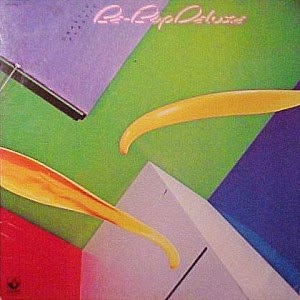
Be-Bop Deluxe: Drastic Plastic

BE-BOP DELUXE: DRASTIC PLASTIC (1978)

1) Electrical Language; 2) New Precision; 3) New Mysteries; 4) Surreal Estate; 5) Love In Flames; 6) Panic In The World; 7) Dangerous Stranger; 8) Superenigmatix; 9) Visions Of Endless; 10) Possession; 11) Islands Of The Dead; 12*) Blimps; 13*) Lovers Are Mortal; 14*) Lights.

It seems very easy to mistake Drastic Plastic for a New Wave album, but if we are operating with genrisms in the first place, I would still rather think of it in terms of «glam». Up to the very last moment of its existence, the Be-Bop Deluxe sound was loud, expansive, flashy, cocky, what­ever, even long after Nelson had reneged on the principle of choking his basic melodies with mountains of guitar improv. Yes, he did cut down on guitar heroics, add more keyboards, expand his horizons with new ideas, but Drastic Plastic still betrays a child of the early 1970s, as far as my ears tell me, at least.

It is a good album all the same, and it may, in fact, even contain the single largest number of memorable hooks that Nelson ever had the chance to collect on a single LP. However, its being all over the place — as Bill explores page after page of the blues, pop, funk, hard rock, even rock­abilly books — is not necessarily a plus. The songs are not that good, and the overall impression is that of a highly experienced and talented, but kinda clueless artist in search of... well, in search of a new light for an old direction, so to speak. I enjoy this stuff, sure, but I am not certain if there would be any reason for me to come revisit it some time later.

ʽElectrical Languageʼ is a pretty attractive power-pop opener with a romantic (not «New Roman­tic», just romantic) flavor and a very democratic balance between the synthesizers, now turning cold but still friendly rather than robotic, and Nelson's guitar. One could see where it might have been some invigorating introduction to a concept album of sorts — on how to express old feel­ings with new technologies, that kind of thing. Then, however, we start meandering. Titles like ʽNew Precisionʼ and ʽNew Mysteriesʼ, especially if they are sitting right next together, suggest that the focus will be on «technocracy», and both have a certain «Gary Numan scent» to them, but they are not exactly the epitome of admirable precision or deep thrilling mystery — they just kind of roll along to more or less the same martial rhythms, nothing too mystifying or terrifying about them. Rumour has it that Nelson was, in fact, closely monitoring the latest developments in his major idol's career, but these songs are nowhere near the psychic intensity of Bowie's «Berlin trilogy» — among other things, this is also because Bowie had Eno to keep him company (not to mention an occasional Robert Fripp as well), whereas the keyboards on Drastic Plastic are hand­led with taste and reservation, but without any seeming touch of genius.

Still, the record gets by merely on the strength of its bizarre plunges into the unpredictable. For instance, ʽLove In Flamesʼ sounds like a proto-New Waver's parody on hard rock ecstasy — with a guitar-hero finale in which Nelson is channelling the spirits of Angus Young and Alvin Lee at the same time in a hilariously flashy mode. ʽDangerous Strangerʼ is nothing if not a «new-era re­write» of Eddie Cochran's ʽSummertime Bluesʼ (even the bass vocal line is retained from the ori­ginal), inessential fun but curious simply in terms of its existence. ʽPossessionʼ is glossified garage, Alice Cooper style — all that is missing is that extra snarl in Nelson's voice to make the track register on the same shelf as something from Alice's own Flush The Fashion.

Arguably the best track (although some competition is provided by the humorous catchy pop song ʽPanic In The Worldʼ) is the album closer, ʽIslands Of The Deadʼ, a fine tribute to Nelson's own departed father — no predictable sadness, no trivial sentimentality, just a solid folk-based art-pop song with a friendly pagan concept (others would have probably sung about the joys of Heaven; Bill goes beyond the boring tenets of monotheism). Still, it is not fabulous «per se»; its classiness is mainly provided by the context — writing a song about the dearly departed without falling on musical and lyrical clichés by the dozen is complicated even for a genius, and Bill Nelson does not quite fit my vision of genius (at the very least, just like Bowie, he is just too smart to let the genius come awake, and usually gets by through the force of intellect).

In any case, even if I do not see anything drastic about this plastic, this is yet another stimulating experience — rounding out a small, but remarkably even (with the possible exception of Futu­rama, where I do not see eye to eye with the fans) collection with another respectable thumbs up. Less than a year later, Nelson would pull the plug on Be-Bop Deluxe, realizing that, in the im­mortal words of Decca executives, «guitar bands are on their way out» and finally shifting to the intellectual department of modern sound exploitation — leaving behind the oh-so-seventies image of the «brainy guitar rocker». Come to think of it, he may not have had another choice. But it was fun — although a very strange kind of fun — while it lasted.

Check "Drastic Plastic" (CD) on Amazon
Check "Drastic Plastic" (MP3) on Amazon

Wednesday, November 13, 2013

Blood, Sweat & Tears: Nuclear Blues

BLOOD, SWEAT & TEARS: NUCLEAR BLUES (1980)

1) Agitato; 2) Nuclear Blues; 3) Manic Depression; 4) I'll Drown In My Own Tears; 5) Fantasy Stage; 6) (Suite) Spanish Wine.

Losing the entire band after Brand New Day had infamously ended up as the «Same Old Flub» was no big deal for Clayton-Thomas — after all, earlier on in the decade the entire band had lost him, so a quid pro quo was in the works anyway. Some sources state that he was not going to use the BS&T tag at all, but that the band's old manager somehow persuaded him, so David simply enlisted a bunch of his Canadian friends and ploughed on, brave guy.

Listening to Nuclear Blues makes it fairly obvious why this «new» Blood, Sweat & Tears was only able to get one new album on the MCA label. The reason is that the lineup may be new, but the music, the vibe, the sentiments stay exactly the same — by the standards of 1980, these guys might just as well have been «reinventing» the Charleston. In retrospect, Clayton-Thomas should probably earn our admiration for the obstinacy. In general, it did him no good: the album expec­tedly sank again, and most people probably did not even go to the trouble of noticing that it did come out. But those few people who are ready to take note might actually find something they can not only respect out of a general respect for bravery, but actually enjoy.

When the album is being bad or silly, it is the kind of badness / silliness that we are quite used to from Clayton-Thomas. Not for the first time, he picks out a solid soulful oldie (Ray Charles' ʽDrown In My Own Tearsʼ), then slows it down and stretches it out to breaking point, mutilating every inch with his overacting. For the hard rock part of the show, he picks out another solid oldie, Jimi's ʽManic Depressionʼ, and gives it a flashy brass reading that only works if you forget all about the schizo-psycho original. From his own songwriting gut comes the title track, a pas­sable piece of funk-blues that does not sensibly match the song's ominous lyrical message — and the predictable piece of cabaret schlock, ʽFantasy Stageʼ, which could work in Las Vegas, but hardly in my or your living room.

However, the unsung hero of this album is not Clayton-Thomas, but rather his hitherto unknown pal, trumpetist Bruce Cassidy. He not only contributes the opening instrumental (ʽAgitatoʼ), but is also responsible for a large chunk of the closing 15-minute suite, ʽSpanish Wineʼ — an inventive mix of various Latin musical forms with elements of fusion. In between both, this makes for twenty minutes of competent, energetic, and occasionally memorable music. Naturally, a third-, if not fourth-generation BS&T circa 1980 could hardly be capable of pushing boundaries or any­thing, but the various movements of ʽSpanish Wineʼ, most of them intelligently sewn together with Dave Piltch's subtly thrilling bass part, form an intriguing, if not very deep, composition, something that the old BS&T hadn't really tried out since the early 1970s.

All in all, this almost desperate attempt to stick even harder to their guns and go all-out retro on listeners who were just saying goodbye to the age of disco and hello to the age of electrofunk, synth-pop, and man-machines, was as good a «swan song» for BS&T as anything — it goes with­out saying that this nostalgic meandering, sometimes impressive and sometimes embarrassing, was much preferable to the option of trying to fit in with the times and incorporate contemporary synthesizers, drum machines, and pop-metal guitars. Hence, despite the many problems of Nuc­lear Blues, I will succumb to the temptation of giving it a thumbs up: at the very least, ʽSpanish Wineʼ deserves one all by itself, even if it comes in tandem with some gummy Ray Charles.

Check "Nuclear Blues" (MP3) on Amazon

Tuesday, November 12, 2013

Bob Dylan: Planet Waves

BOB DYLAN: PLANET WAVES (1974)

1) On A Night Like This; 2) Going Going Gone; 3) Tough Mama; 4) Hazel; 5) Something There Is About You; 6) Forever Young; 7) Forever Young (v. 2); 8) Dirge; 9) You Angel You; 10) Never Say Goodbye; 11) Wedding Song.

Blood On The Tracks may be more «polished», generally accomplished and certainly better known, but Dylan's fourth phase — that of the «introverted / tortured / self-centered songwriter» — properly begins here, on this somewhat half-hearted collaboration with The Band. A three-year break from «proper» songwriting, or at least recording, can sometimes be detrimental, and, in fact, I have always tended to look at Planet Waves as the first official album in Dylan's career to be seriously plagued with meandering filler. But «temporary loss / slackening of songwriter skills» was not the only reason for this impression.

As Bob's family life was beginning to disintegrate in his most serious personal crisis to date, there was no way he could avoid letting his feelings on the matter spill out — in fact, this was probably the first time in his life when he found himself hurting so bad, it couldn't help but lend an air of deep tragedy to everything he was doing. There is a bunch of cheerful, happy songs on Planet Waves — in fact, it starts out with quite a merry romp — but they mostly sound forced, some­times almost hyperbolically so: the only reason I can see for the existence of the second, «upbeat» and rather corny version of ʽForever Youngʼ sequenced right after the first, slow and melancholy one, is to show how very, very, very hard it is for the man to stay optimistic.

ʽGoing Going Goneʼ, ʽDirgeʼ, ʽHazelʼ, and ʽWedding Songʼ all convey a sense of desperation, the likes of which Dylan fans had never yet experienced from the man. Before the crash, he was fierce, cocky, locked up tight, and most of the genuine feelings that seeped in through the walls were aggressive. After the crash, he'd softened up, got subtler and wiser, but everything generated in 1967-70 was still primarily an act of mystification — we never saw an inch of «the real Dylan» on either John Wesley Harding or Self Portrait (never mind the misleading title), or if we did, there was no surefire telling where exactly he would pop up.

Planet Waves, from that angle, is the first «mature» Dylan album, although «maturity» is by no means associated with higher quality — it simply means that the man gets more... well, more grounded in concrete personal situations, I'd say. The biggest shift is in the lyrics department, as the sophisticated wordplay starts making more literal sense. The love songs are good old-fashi­oned love songs, none of that "ceremonies of the horsemen" «bullshit», and the lost, or, rather, in-the-process-of-getting-lost love songs are all soaked with fear, anxiety, depression, even occasi­o­nal guilt and remorse (though mostly implied, particularly on ʽDirgeʼ, where the exaggerated hatred thrown at the female antagonist reveals hatred of oneself — he'd be much more careful about whitewashing his own spirit on Blood On The Tracks). And with ʽForever Youngʼ, he is really concerned about writing a song that could be sung as a meaningful lullaby to a three-year old — without having to worry about the three-year old asking unanswerable questions about Captain Arab and those one-eyed midgets.

All of this means that there is a transition taking place, and that the transition is rough. Neither, I am afraid, was his choice of The Band to back him up during the recording sessions here as good as all the previous choices. Robertson and Co. do not seem to have properly sensed that change in Bob, or, if they did, they weren't able to fully latch on to it. They could certainly sound somber and tragic if they'd worked themselves up for it, but it almost seems like they thought they were just going in for another round of Basement Tapes, and realized that they weren't when it was already much too late. The music tends to be a little relaxed, a little sloppy, generally sparse and spontaneous (none of the production intricacies of The Band's first two or three albums found their way on here — not that Bob would be interested, of course), more appropriate for a quiet campfire evening ("on a night like this!") without too much on your mind than for a soul-baring session. Just a big mistake on Dylan's part here — his first big one, I'd say.

That said, more than half of the songs still pass the grade. ʽForever Youngʼ is the only «golden classic», but it is, indeed, the first straightforwardly anthemic song that Bob wrote in about a de­cade, cleverly worded so as to appeal to his kids as well as a general audience — and as simple as the melody is, there is a touch of easily cracked genius here: the "forever young, forever young" chorus is sung with such a tragic inclination that the emptiness of the wish becomes felt. This is basically a prayer to reach the unreachable, and we have the whole bunch here — love, affection, sadness, desperation, acceptance of fate. Small wonder the chorus did not make it to the second, upbeat version: it has no place there whatsoever, as the vibe is completely different (and utterly anticlimactic; whoever would prefer the second part to the first would fit my personal under­standing of a proverbially «heartless» person).

My second favorite song would probably have to be ʽGoing Going Goneʼ — the one that must have played out like a shock to the listeners after the expectable little opening folk dance of ʽOn A Night Like Thisʼ. Luckily, Robbie got the vibe right on this one, adding some quietly dry, stingy electric lead lines — nasty pain impulses reflecting the protagonist's state of mind — and the lyrics do not mince words much: "I've just reached a place / Where the willow don't bend / There's not much more to be said / It's the top of the end". And on one hand, it is funny that the proverbial «top of the end» has been stretched out to about forty years now, with the total amount of everything that has been said (and written, and sung) far exceeding what had been done in the previous decade — and yet on the other hand, he is also absolutely correct: Planet Waves is the first, and far from the last, album in Bob's career on which he is not searching for anything new, he just says it all the way it is. ʽGoing Going Goneʼ is not the first time that he had sounded de­pressed, but it is the first time he sounds depressed about himself, rather than Hattie Carroll, St. Augustine, or the chronologically frozen inhabitants of Desolation Row.

ʽDirgeʼ and ʽWedding Songʼ raise the bar on tension even further — the music is stripped down to its basics (on ʽDirgeʼ it is just Bob on minimal piano and Robbie accompanying him on acoustic, on ʽWedding Songʼ Dylan goes completely solo) and the singer's voice is raised to a scandalous howl. Melodically, they are not too interesting, and the howling prevents subtlety, but it all essentially depends on whether you are willing to empathize or if you think that the songs exude too much self-pitying, and that their monotonousness makes them either too boring or just simply too unbearable. Difficult decision; I am not a big fan of either, but it seems like this kind of stuff was something Bob needed to do at the time (ʽWedding Songʼ was written and recor­ded at the very last moment, like a final attempt to get that particular stone off his back).

I cannot say anything positive about songs like ʽNever Say Goodbyeʼ or ʽTough Mamaʼ except that all my years of Dylan-listening experience come together to suggest that Bob's heart just wasn't in them. He may have felt that getting back to a little rock'n'roll with his old friends at his side would do him good, but this is limp, half-assed rock'n'roll, a far cry from the spirited per­formances of 1965-66. ʽOn A Night Like Thisʼ, where they turn down the volume and place their faith in Garth Hudson's accordeon, works much better than all those other numbers put together — perhaps because it is not so far removed from the soft country-rock sound that was fresher in Bob's memory than his «garage» days. Like a fussier, merrier take on ʽI'll Be Your Baby Tonightʼ where the singer is at last ready for some active participation; Bob's "...and let it burn, burn, burn, burn on a night like this" is my second favorite bit of phrasing on the record after the ʽForever Youngʼ chorus.

All in all, this just doesn't properly fit the criteria for a «thumbs up» type of album. Like The Times They Are A-Changin', this is essential listening for everyone interested in Bob's thorny evolution path, but it only has two or three essential songs on it, as such: to the ones already listed one could, perhaps, add the New Morning-style soul ballad ʽHazelʼ, and that's just about it. (No wonder that most of these songs would not be revisited by Bob in subsequent concert perfor­mances — only ʽForever Youngʼ and, to a lesser extent, ʽHazelʼ seem to have survived his personal reassessment). What I see here is a temporarily derailed man, unable to properly pull it together, and a bunch of old friends who do not really understand how they can help. But even if it is a relative «disaster», its very disastrous nature makes it all the more intriguing for the non-casual Dylan fan, not to men­tion the Dylan historian.

Check "Planet Waves" (CD) on Amazon
Check "Planet Waves" (MP3) on Amazon

Monday, November 11, 2013

Brenda Lee: Coming On Strong

BRENDA LEE: COMING ON STRONG (1966)

1) Coming On Strong; 2) You Don't Have To Say You Love Me; 3) Summer Wind; 4) Kiss Away; 5) Call Me; 6) What Now My Love; 7) Uptight; 8) Crying Time; 9) Strangers In The Night; 10) Sweet Dreams; 11) You Got Your Troubles; 12) Somewhere.

I count a grand total of three impressively produced, Motown-aping tracks on this album, re­leased just in time for the opening of the Christmas market of 1966. The best known of the lot is, of course, the title track — which, despite its brash, brass-'n'-harmony-stuffed production, was actually written by «Little David Wilkins» of Nashville, launching his own career in the process. In an age where people hungered for more and more red-hot Supremes and Marvelettes material, ʽComing On Strongʼ nailed that vibe, and miraculously skyrocketed Brenda all the way to No. 11 on the charts — it is only the utmost stupidity of the music industry people that they did not ma­nage to capitalize on this success, and reinvent Ms. Lee as a fun, groovy, but strong-willed dance-pop personality. A little grooming, a little coaching, a little extra makeup, and she could have been fashioned as a white Diana Ross; they were even born in the same year.

Or maybe a white Stevie Wonder, because another bona fide Motown simulation captured here is ʽUptightʼ, where she gets caught up in the fun so much, there is even a brief remembrance of her old school «pirate» voice — nothing to make you forget the original hit, but, again, the flame is successfully carried over. Then it gets a little less invigorating on the third «upbeat» number of the album, a cover of ʽYou Got Your Troublesʼ, which was a hit for The Fortunes the year before, but they try out the same combination with the brass fanfares, and even if it is a little slower and feels a little less suited for Brenda's singing style than ʽComing On Strongʼ, it's still a winner.

Unfortunately, what we have lodged in between is the same old shit — ʽYou Don't Have To Say You Love Meʼ (she was covering Dusty Springfield, but the bitter irony is that once again, Bren­da's version would be soon competing with Elvis, and guess who'd win), ʽStrangers In The Nightʼ (yeah right), ʽSomewhereʼ... well, you get the drift. Still, having even three songs here that con­stitute an attempt to remold the image was a grand achievement for Brenda, in the context of pretty much everything she did before — and this tiny Motownish step was, at the very least, more convincing and much less forced than the «sings teen hits» embarrassment.


Sunday, November 10, 2013

Black Dice: Creature Comforts

BLACK DICE: CREATURE COMFORTS (2004)

1) Cloud Pleaser; 2) Treetops; 3) Island; 4) Creature; 5) Live Loop; 6) Skeleton; 7) Schwip Schwap; 8) Night Flight.

In our era of «one-album bands», there was no obligation whatsoever for Black Dice to top their initial success — but they still went ahead and did exactly that with Creature Comforts, which is, in my opinion, their absolute peak and a major highlight of the decade's non-dancefloor-oriented electronic music in general. Not only that, it is one of the most aurally perfect «Psycho-Tarzan» albums ever recorded... so to speak.

Several of the composition titles are indicative of the atmospherics, with references to «islands», «clouds», «treetops», and «creatures» lurking in and out of the landscape. The difference from the usual procedure is that they are genuinely indicative. Where Beaches And Canyons was still sort of all over the place, and some of it worked explicitly on placing you, the listener, on a beach or inside a canyon, and some of it just made bizarre noises, Creature Comforts, from start to finish almost without exceptions, works on transporting you to a mystery island and stranding you there for about 45 minutes (which, by the way, is quite a sparing amount of time: electronic artists tend to make full advantage of the average CD length, as it gives them the opportunity to explore all the nuances of potential of their favorite loops, bells, and whistles — but Black Dice, starting with their second album, have decided to spare our time, and must be thanked for that).

Of course, part of that magic comes from the fact that the band, with its «real instruments» past, does not limit itself to computers and synthesizers, but uses them in conjunction with guitars, real (if treated) percussion, and other stuff. Thus, the brief opener ʽCloud Pleaserʼ is seemingly based on a simple, see-sawing, «kiddie-avantgarde» guitar loop, and all the cute little electronic appari­tions cluster around it, popping in and out of the «clouds». Chain-looped jangly drone is also at the heart of ʽTreetopsʼ, although it is not as much in the listener's face as are all the back-and-forth rockings of the treetops in question — along with flocks of birds, howls of monkeys, chirps and squeeks of small rodents in the branches, and, as strange as it may seem, sounds of crying babies, or maybe that is just another sonic illusion caused by the interference of all the different waves up there in the air.

The album really hits its stride with ʽCreatureʼ, all suspense and intrigue that never really comes to the surface — imagine yourself traveling on a narrow jungle path from one end of the forest to the other, hearing all the animal noises from all sides but never once actually witnessing the source. Bellowing, cackling, grunting, snorting, hissing, rustling, cooing, guffawing, (insert your own favorite sound-imitating verb from Roget here), all of it sequenced in a manner that does not exactly make the track «musical», but gives it a certain logic of development that makes it inte­resting to follow. My only grudge is that ʽCreatureʼ is hardly the right title — there is no singular «creature» to be represented here, more like a miriad of creatures, freshly released from Noah's Arc or something into the forest and singing their happy songs of freedom. Or is that supposed to be a ʽ(Waiting For) Creatureʼ kind of idea?

The 15-minute-long ʽSkeletonʼ is the only track to slightly overstay its welcome: somewhere in the middle, the band hits upon a «wave upon wave of relaxing psychojangle» groove that they be­come so happy about, they let it roll and roll and roll for what seems like ages, even though it hardly has anything to do with any skeletons (some of the other effects do sound like the rattle of bones, though). However, they more than make up for this with ʽNight Flightʼ — an acoustically stunning six-minute closer where, indeed, all sorts of things, from small birds and bats to large birds and bats to spirits, ghosts, and pink elephants charging through the air one or several at a time, before they all come plodding and crashing down at the end. In the meantime, we also realize that we have made a full 24-hour circle, from the greeting dawn of ʽCloud Pleaserʼ to the busy aerial life of the nighttime in the final round.

So, once again, be it «music» or «sonic theater», Creature Comforts is an utter delight for the senses, provided you let your imagination run as wild as the sound does, instead of boringly wal­lowing around in modernistic abstractions — which is why, despite the comparative lack of hype, I actively prefer it to most of Autechre's «aural suprematism». Another clear thumbs up, heavily recommended (especially if you are an active zoo-goer or Animal Planet watcher).

Check "Creature Comforts" (CD) on Amazon
Check "Creature Comforts" (MP3) on Amazon

Saturday, November 9, 2013

Beck: Guero

BECK: GUERO (2005)

1) E-Pro; 2) Qué Onda Guero; 3) Girl; 4) Missing; 5) Black Tambourine; 6) Earthquake Weather; 7) Hell Yes; 8) Broken Drum; 9) Scarecrow; 10) Go It Alone; 11) Farewell Ride; 12) Rental Car; 13) Emergency; 14*) Send A Message To Her; 15*) Chain Reaction; 16*) Crap Hands.

Having exorcised the irritating breakup demon fair and square, Beck had also honored the al­ter­nation for­mula («one for the body, one for the mind»), and now it was time to get back to the hot stuff. Out with Godrich, in with The Dust Brothers: the man was becoming predictable like clock­work. Fortunately for us, the predictability only extended to the overall choice of producer and musical direction — in everything else, the man's brain was still popping out new exciting ideas like crazy. In fact, he hit his commercial peak with Guero: not a mean feat for a guy with more than ten years of an established musical career behind his back, and something that most of to­day's artists, even the «real» ones, could only hope for.

Some have described Guero as sort of a synthesis — another record in the wild, reckless, trendy party style of Midnite Vultures, but tempered off and sombered up with some of the moodiness and broodiness of Sea Change. This is not quite the case. Of all the songs on here, only ʽBroken Drumʼ, with its slow tempo, sad piano chords, and farewell lyrics, could have easily fit on Sea Change — but on Guero, it is more of an intruder, a «breather» providing some respite from the energetic beats and waves upon waves of noisy overdubs on the «dance» tracks. It is true that, in general, Guero goes heavier on distorted guitar riffs, grumbly vocals, and disturbing lyrics than Midnite Vultures. But none of these things demand to be taken too seriously. We really are back here to the world of «expensive cheap thrills», «trash-muzak» of the highest quality imaginable, although, in some cases, still somewhat intellectually stimulating.

To be sure, ʽE-Proʼ is far more of an aggressive, clenched-teeth opener than ʽSexx Lawsʼ ever was, with its funky drive and merry brass fanfare. Here, Smokey Hormel immediately kicks in with the heaviest guitar riff on the album, hearkening back to the «brawny» 1970s early metal scene, and Beck's arrogant "see me comin' to town with my soul... see me kickin' the door with my boots..." tongue-lashers almost reach out like an "I'm back in the saddle again!" sort of mes­sage, though, naturally, the man's lyrics in general never once begin to make literal or figurative sense, and it is only the choice of words that matters: "devil", "garbage" (of course! Mr. Hansen's favorite word in the English language), "rubbish", "snakes and bones", "poison", "wolves", well, you must have guessed already that giving candy to strangers with a smile on your face isn't exactly what the song is about. But on the other hand, it is also doggone catchy, in a happy pop sort of way, with all the "na na na na"'s providing the giggle factor — and, while we're at it, there is quite a bit of "na-na-nah-ing" and "la-la-lah-ing" on this, allegedly dark and broody, record (ʽGo It Aloneʼ, ʽRental Carʼ, etc.).

ʽGirlʼ and ʽHell Yesʼ were the other two singles, and they are quite dissimilar. ʽGirlʼ is essentially a Sixties' style sunshine pop nugget with modern production — some drum machines, some electronic bleeps, soon choked with traditional slide guitars — that cannot refrain from the temp­tation of a mildly shocking refrain ("hey, my cyanide girl", which could easily be misheard as "hey, my summer girl" or "hey, my sunny girl", but this is exactly what the lyrics sheet is for). ʽHell Yesʼ, on the other hand, represents the Dust Brothers in full flight, supplying cool hip-hop beats and samples while Beck is rapping about the delights of being serviced by a bunch of Japa­nese robots and guest star Christina Ricci is providing the occasional "please enjoy" and "sumi­masen". Yes, we have come quite a long way from Kraftwerk and The Man Machinethis sort of robotics now feels quite comfortable and housebroken. Sexy, in fact. Plus, it's always the little things — like the ability to make a working hook out of the expression "hell yes".

Once again, Beck's monster-like ear for intrigue and excitement ensures that there is virtually no filler on the album — everything has at least something to it, but my personal favoritism extends mainly to ʽScarecrowʼ (the ʽMixed Biznessʼ of this album, I'd say, with delicious disco bass of instantaneous toe-tapping value, and the chorus line about how "scarecrow's only scaring him­self" has become inexplicably wedged inside my brain for some reason); the aforementioned ʽBroken Drumʼ, a celebration of stately, but troubled serenity that might as well have served as the blueprint for Beach House's entire career; and ʽRental Carʼ, which is just a good fun driving song. Along the way, Beck also plunders Bo Diddley (ʽBlack Tambourineʼ), old gospel blues (ʽFarewell Rideʼ), and offers a friendly tribute to his Mexican friends (ʽQué Onda Gueroʼ), even if there is hardly anything Spanish, other than a big chunk of the lyrics, to this cool-struttin' chunk of new-school-white-bread R&B.

From a detached, historical point of view, Guero could count as a relative disappointment — it does not add anything «major» to Beck's legacy, just another large heap of small ideas on how to synthesize this and that and generate another squad of creepy, disfigured, but perversely attractive musical monsters, according to the practice already perfected on Midnite Vultures. But even if this is not necessarily «going up», neither it is, by any means, a downwards slide. Everything about Guero is honestly enjoyable, and the tiny added pinch of darkness also makes it less deca­dent and superficially silly than Vultures — quite in line with the general demands of the mid-2000s hipster crowds (and most of their young idols would kill for an album of such quality, any­way). Hence, the usual — a thumbs up with all due joy and reverence; and do look for the UK issue, which adds several bonus tracks that kick up even more rucus (ʽChain Reactionʼ is as crazy as the man ever got with that style, and more).

Check "Guero" (CD) on Amazon
Check "Guero" (MP3) on Amazon

Friday, November 8, 2013

The Bats: Free All The Monsters

THE BATS: FREE ALL THE MONSTERS (2011)

1) Long Halls; 2) Simpletons; 3) Free All The Monsters; 4) See Right Through Me; 5) It's Not The Same; 6) In The Subway; 7) Fingers Of Dwan; 8) Spacejunk; 9) On The Bank; 10) Canopy; 11) When The Day Comes; 12) Getting Over You.

A long-term fan of The Bats who would expect any change from the band as late as 2011 might as well expect AC/DC's Brian Johnson to star in a Broadway musical... oh wait a minute, he near­ly did star in a Broadway musical, so The Bats take first prize. Free All The Monsters continues the tradition of irregularly alternating «strong» Bats albums (cutesy folk-rock with hooks) and «weak» Bats albums (cutesy folk-rock without hooks), and it seems to me, on the whole, to be a minor improvement over Guilty Office, but with a huge stress on seems — it might just be the atmospheric pressure on the brain conditioning the judgement here.

Fans of Kaye Woodward might take a particular liking to such tracks as ʽSimpletonsʼ, where she sings harmony with Scott — the end result is a disarmingly charming twee pop nugget of a dis­armingly romantic nature; ʽSee Right Through Meʼ, where her role is mainly reduced to wispy ooh-oohs in the background; and, come to think of it, most of the other tracks have her vocal pre­sence as well — and when you put enough echo on Woodward's voice, it gives her the presence of an Elven Queen (it's a different question whether that automatically makes Scott an Elven King or not, but it does seem that they feed off each other, and that mixing their voices together helps soften their individual weaknesses and highlight their collective strength).

The instrumental parts, however, do not offer much respite — all atmospheric texture, as usual, no individuality whatsoever to the songs: even the instrumentals, like all Bats instrumentals, are predictable drones that are more likely to rock you to sleep than to rock you to any sort of action (ʽCanopyʼ). Only the title track can boast an anthemic riff, mixing tenderness with determination, but it took me three listens to single it out, lost as it is in the monotonous production jungle.

For the sake of objectivity, I must mention that the general critical and public opinion alike on Free All The Monsters was quite positive — however, I ascribe that primarily to a three-year long deprivation from fresh Bats material. Just another three years, just another Bats album.

Check "Free All The Monsters" (MP3) on Amazon

Thursday, November 7, 2013

Be-Bop Deluxe: Live! In The Air Age

BE-BOP DELUXE: LIVE! IN THE AIR AGE (1977)

1) Life In The Air Age; 2) Ships In The Night; 3) Piece Of Mine; 4) Fair Exchange; 5) Mill Street Junction; 6) Ad­ventures In A Yorkshire Landscape; 7) Blazing Apostles; 8) Shine; 9) Sister Seagull; 10) Maid In Heaven.

Recorded on a UK tour in early 1977, this is the official answer to all of the fans' red-hot prayers for a live Be-Bop Deluxe record — but coming just a wee bit too late in the band's career, I'd say. Because there is no better reason to hope for some documentation of Bill Nelson's live powers than a desire to check the man's guitar prowess in action — yet, by that time, Nelson was already edging away from the status of a guitar hero and moving more in the direction of «economic» songwriting. There is plenty of guitar prowess on display here, not to worry; but not the sort of bold, reckless melodic experimentation as first seen on Axe Victim — for the most part, things are kept under tight control, almost as if, with new musical values on the horizon and all, Nelson was becoming afraid of potential accusations of «wankery».

Altogether, the selected setlist, spread across an unusual format of one LP and one «bonus» EP, includes but two sprawling workouts. ʽAdventures In A Yorkshire Landscapeʼ, extended by a good four minutes from the original running length, contains several fusion-style workouts in the spirit (though not quite in the form) of John McLaughlin, interspersed with Simon Clark's less involving, but pretty, keyboard solos. In stark contrast, ʽShineʼ (not the same as the studio re­cording, appended as a bonus track to Sunburst Finish) goes for a completely different mix of funkiness and psyche­delia — real trippy, far-out-there stuff that sounds like nothing else in the band's catalog.

The majority of the other tracks comes from Sunburst Finish — oddly enough, none of the material from Modern Music was seen fit for inclusion, even though the tour itself was allegedly held to promote the latest record — and they are not too drastically different from the original, be­ing about as well-polished and well-rehearsed as the studio blueprints. Then, almost as a «for-the-casual-fans» afterthought, Futurama is represented by quick, polite, but honest runs through ʽSister Seagullʼ and ʽMaid In Heavenʼ on the last side of the EP.

All in all, due to solid choice of material and professional commitment, In The Air Age is never «bad» or «unlistenable», but it is still a disappointment — adding very little, if anything at all, to our understanding of and «spiritual bond» with the band and Nelson in person. Serious fans will, of course, enjoy the many nuances and appreciate the minute differences in tones, tempos, and textures, but this really ain't no Live At Leeds or Made In Japan, where these differences just jump out and kick you in the face, regardless of how many years of experience you have had with the bands in question. A pity, that — Be-Bop Deluxe was one of those bands that seems like it had enough brains and brawn to make their stage act into a separate phenomenon from their stu­dio creativity. Maybe it was just a case of unlucky selection, but, whatever be the answer, I am not going to implore you to run off in search of Be-Bop Deluxe live bootlegs based on this par­ticular experience; sticking to the studio albums seems quite enough.

Check "Live! In The Air Age" (CD) on Amazon
Check "Live! In The Air Age" (MP3) on Amazon