Search This Blog

Friday, September 17, 2010

The Art Of Noise: In Visible Silence


ART OF NOISE: IN VISIBLE SILENCE (1986)

1) Opus 4; 2) Paranoimia; 3) Eye Of A Needle; 4) Legs/Slip Of The Tongue; 5) Backbeat; 6) Instruments Of Dark­ness; 7) Peter Gunn; 8) Camilla: The Old, Old Story; 9) The Chameleon's Dish/Backbeat; 10*) Peter Gunn (extended version).

Since The Art Of Noise could be easily described as electronic punks, it would have made sense if they ceased to exist as a team upon the release of their first album — which, like all true punks, they would never ever manage to beat in terms of freshness, impact, and overall fun. Instead, they tried to show the world that the hooliganish impulse that was Who's Afraid? could be transfor­med into a regular mode of living.

Which is why In Visible Silence, their stylishly titled follow-up, would, by all acounts, be destined to be far more boring. We know the formula now: randomly selected samples, used partly to set up a rhythmic groove, partly to pepper it with oink-oinks to keep the listener intrigued. And how difficult is it to select a random sample? Not difficult at all if you've spent some time in the electronic business. Much more difficult to convince people that this particular collocation of different samples bears that particular symbolic meaning that makes it «art» (of noise or whatever else).

However, In Visible Silence still places the right bet on the right factor: diversity. Where the first album combined elements of the randomizer with those of the contemporary dance floor, the fol­low-up delves into many more types of traditional musical territory, and so, if the shock value has decreased, the basic inventiveness has not. Of the three singles to herald the album, only 'Legs' sounded like an outtake from Who's Afraid? 'Paranoimia', on the other hand, rode an odd stuttery funky bass-dependent groove (the track was specially written for the AI TV character Max Headroom, still somewhat fun to watch even today), and 'Peter Gunn' — well, 'Peter Gunn' is always 'Peter Gunn'; the band even got Duane Eddy in person (probably caught in a tight cash-strapped situation) to guest on the track, reawakening public interest in his old version from 1960 and also making this one of the oddest collaborations of the decade.

In addition, 'Eye Of A Needle' is built upon the foundations of generic lounge jazz / elevator mu­zak, and 'Backbeat' features uplifting classically-oriented sections with synthesizer patterns that al­most seem lifted from The Who's Quadrophenia. Taken together, these five tracks are an impressive collective illustration of the power of tape-tampering, and prove that The Art Of Noise did have something left to prove after having broken the ground two years earlier.

Some other tracks clearly do not work so well. 'Camilla', for instance, is a rather obvious «re-write» of 'Moments In Love', going for the same type of hushed lushness, but it fails to produce a hook that would be nearly as memorable. And 'Instruments Of Darkness' relies too much on voice­overs — today, its value is nearly all historical (e. g., most of the spoken bits come from the mouth of P. W. Botha, stimulating the curious listener into doing research on the recent history of South Africa) and pretty much non-existing otherwise. But with wildly experimental albums like these, particularly from the early days of the sampling craze, inconsistency is to be expected and made mental peace with before one even puts on the record.

The way the initial punch of Who's Afraid? flows so seamlessly into the wider ambitions of Si­lence is somewhat astonishing, considering the band's fluctuations at the time: the three core members (Anne Dudley, J. J. Jeczalik, Gary Langan) had just torn themselves away from creative gurus Trevor Horn and Paul Morley, amd, consequently, away from Horn's ZTT label and away from the «faceless» artistic ideology that required them all wearing masks during promotion. Live activity was increased, too, with a whole show filmed for video at the Hammersmith Odeon — as weird as it is to see the band reproduce parts of their loops and samples in real time, they did this quite convincingly. Eventually, it would be this very tendency to restore a «live» feeling to their music that finally killed the project — nothing surprising about that — but in 1986, it all worked fine, and twenty-plus years after the fact, In Visible Silence still sounds bawdy and fresh, teach­ing us new ways to enjoy common sounds. Thumbs up.

Thursday, September 16, 2010

Alan Parsons Project: Pyramid


ALAN PARSONS PROJECT: PYRAMID (1978)

1) Voyager; 2) What Goes Up...; 3) The Eagle Will Rise Again; 4) One More River; 5) Can't Take It With You; 6) In The Lap Of The Gods; 7) Pyromania; 8) Hyper-Gamma-Spaces; 9) Shadow Of A Lonely Man.

Pyramid sold a little less than I Robot, perhaps because it was neither punk nor disco, and it did not have 'Come Sail Away' on it, either. For all the critical derision that the Alan Parsons Project got through the years, they never abased themselves to blunt populism. If, with each new album, they were becoming more «pop» than «prog» — well, heck, so did Pink Floyd, more or less.

On the down side of things, the textures of Pyramid, even on instrumentals that had so far tended to represent the complex, demanding side of the Project, had by 1978 drifted dangerously close to the Elton John/Billy Joel fief, perhaps over a conscious attempt to avoid being called cheap Floyd clo­nes (all the more curious as to why none of the songs were hits; sheer lack of luck, I suspect). 'In The Lap Of The Gods', in quite a few of its places, brings to mind 'Funeral For A Friend' — the same sort of get-rich-quick-with-a-keyboard-riff attitude that the seasoned prog fan will want to detest and deride for pandering to the oligophreny-inclined segment of the population, before retreating into his world created by Roger Dean and jointly ruled from Canterbury and Kobaia.

On the up side, this is definitely not Styx we are talking about. Even if going a bit overboard with the sentimental and the simplistic bits, Parsons and Woolfson have not let down their sense of taste, and there is not an ounce of cheap populist melodrama on Pyramid that so many of their «Serious» contemporaries had wilfully submitted to. Think about it: an artist of lesser stature, ri­ding the «pyramid power» craze of the 1970s, would have, most likely, released a bunch of bull­shit anthems on all sorts of paranormal hogwash. The Project, on the other hand, upon calling their album Pyramid, deal out just one cruel, lambasting, but fully deserved blow to Patrick Fla­nagan's charlatan tripe ('Pyromania') — and dedicate the rest of the album to the real historical pyramids and the living gods they were built for. Of course, it's not like they really did their homework on Egyptian history or anything — but then, not everyone is supposed be the pop music equivalent of the BBC History Channel à la Al Stewart.

In basic spiritual terms, The Project remains completely true to its essence: musical reflections on the sad, pathetic aspect of human existence. 'What Goes Up...' expectedly ends in "...must come down", and if the songs are not about the vanity of constructing pyramids, they are about the va­nity of constructing personalities. E. g. my personal favorite, 'Can't Take It With You', a pretty folk-pop song that pairs a very Revolver-like electric riff with very Byrds-like vocals (Dean Ford takes the lead) to remind us of the fact that we cannot take it with us indeed — when we go, that is, regardless of what the "it" is. Banal, yes, but it works.

In this respect, sentimental ballads such as 'The Eagle Will Rise Again' (sung by former Zombie Colin Blunstone) and 'Shadow Of A Lonely Man' (sung by John Miles) work very well: they are insecure, frail, and pitiful, with soft, breaking vocals (Miles almost seems to be crying in his ja­cket when delivering his lines) perfectly matching the melodies and the lyrical content, even if this limp thing can turn off many a rockier listener. The only time when the ensemble does try to rock out — very mildly — is on the Lenny Zakatek-sung 'One More River', a song that rolls along with a good punch, but feels a bit out of place, a strange attempt at pointless gung-ho opti­mism amidst a sea of self-doubt and cynicism.

Nevertheless, there are really no serious misfires. If it ain't a masterpiece for the ages, it is still a finely designed, deeply felt, and professionally executed concept album, on which The Project's usual «coldness» — as always, provided mostly through Alan's velvet keyboard sound — for the third time around, is a perfect conductor for the moods/ideas these guys want to make you ex­perience or ponder upon. They nail it with the first doom-laden steps of 'What Goes Up...' and never really let go.

And there is every pos­sibility that even tracks that are the easiest one to dismiss might come back to haunt you (on the strength of Pyramid Power, no doubt!) — that keyboard theme from 'Hyper-Gamma-Spaces', for instance, no matter how dumb and repetitive it is, has pretty much stuck with me for good, I beli­eve; it is about as hard to shake off as the riff for 'Satisfaction'. As for 'Pyro­mania', the «kiddie humour» bit of the album, I really like it, not so much for alleviating the mood (The Project work as soft, never as hard, depressants, so there is really not much need for any arti­ficial cloudbursting) as for stating so clearly and explicitly that the album and the band have nothing to do with cheap pocketbook mysticism, and are as happy as the next intelligent person to give it a proper whipping. It's good, clean fun.

In short, if this is «poor man's progressive rock» — and, from certain formal points of view, it might very well be — consider stepping into a poor man's shoes for fourty minutes, and join me in my unequivocal thumbs up.


Check "Pyramid" (CD) on Amazon
Check "Pyramid" (MP3) on Amazon

Wednesday, September 15, 2010

Al Stewart: A Beach Full Of Shells


AL STEWART: A BEACH FULL OF SHELLS (2005)

1) The Immelman Turn; 2) Mr. Lear; 3) Royal Courtship; 4) Rain Barrel; 5) Somewhere In England; 6) Katherine Of Oregon; 7) Mona Lisa Talking; 8) Class Of '58; 9) Out In The Snow; 10) My Egyptian Couch; 11) Gina In The Kings Road; 12) Beacon Street; 13) Anniversary.

Down In The Cellar gave us an Al Stewart that was cozily settling in. And for an artist that did not really make too many wild, unexpected, dangerously experimental moves even at his youthful peak, «settling in» means providing precious little food for us reviewers. Pleasant, but never over­whelming melodies, intelligent, but never unpredictable lyrical subjects and flourishes, good sense of taste so steady it's almost boring — what is there to say?

In Al's case, this means thirteen more folk-rock tunes that grow, although slowly, upon each en­suing listen, and more of his little stories, sometimes fantasies, sometimes nostalgia pieces. And, as usual, although the acoustic-based arrangements are generally similar, there is enough mood diversity to sit through the entire thing if not in an enthralled, then at least in a cutely satisfied manner. Every once in a while, Al's «modest perfection» may really get to you in all of its perfect modesty, and all of that accumulated NICENESS may make you want to throw up in disgust and reach out for your collection of hardcore classics — but in 2005, everyone who puts on a new Al Stewart album is either supposed to know what to expect, or is completely crazy and throws up on a regular basis all the same.

For the record, this particular issue of «Where In The World Is [W]Al[do] Stewart?» covers such topics as limerick father Edward Lear; David Lean's Brief Encounter; American barnstorm fliers of the 1920s; one of the wives of Henry VIII subtly transplanted into a personal fantasy; and far more obscure subjects that I am unable to decipher at all (what the hell is 'Rain Barrel' about, and who the hell is Mr. Williams? Perhaps Al should consider having his albums come packaged in news­paper clippings, à la Thick As A Brick?).

Also for the record, rumors state that the entire thing was originally thought to be centered around a thirteen-minute version of 'Class Of '58', with Al's inevitable nostalgic impulse targeted at gray-haired rock'n'roll grandaddies of his generation. The full version, it is said, has seen single release, but it is hard to see why this fun, but insignificant retro-rockabilly stomp should have been any longer than four, which it is here.

And for the final record, my personal favourite song is easily definable here as 'Mona Lisa Tal­king' — not because Al pretends to have found a simple, but most probably wrong decipherment of the most famous smile in history, but because he has actually found a gorgeous musical/vocal hook to go along with the decipherment: the "go home, pretty baby..." is one of those subtle heart-tugs that I so like to collect in relatively obscure locations and strongly recommend to all the other heart-tug connoisseurs out there.

Oh, and thumbs up, of course. These particular shells on the beach are hardly worth a million, but all are fairly solid, and it's not that easy these days to fall upon a solitary beach with thirteen solid shells. This one's definitely not for the tourists. Odd coincidence of the day: Why does the Middle Eastern-ish strings riff that introduces 'Rain Barrel' sound so much like the opening riff of ABBA's disco hit 'Voulez-Vous'? Either the two must have a common source, or Al Stewart has a really sick subconscious.


Check "A Beach Full Of Shells" (CD) on Amazon
Check "A Beach Full Of Shells" (MP3) on Amazon

Tuesday, September 14, 2010

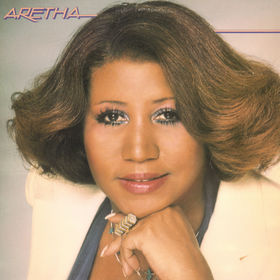
Aretha Franklin: Aretha


ARETHA FRANKLIN: ARETHA (1980)

1) Come To Me; 2) Can't Turn You Loose; 3) United Together; 4) Take Me With You; 5) Whatever It Is; 6) What A Fool Believes; 7) Together Again; 8) Love Me Forever; 9) School Days.

Aretha's debut with Arista Records is definitely an improvement over the self-parody of La Diva, but not by much. The fact that it restored her, albeit temporarily, on the charts, probably had more to do with promotion on the part of the Blues Brothers, who'd arranged for her fun cameo in the movie as the hot-tempered boss lady singing 'Think', and thus endeared her to an entire new generation of Saturday Night Live alumni. Don't think they were all that happy, though, upon rushing to the stores to scoop up her new album.

Aretha — at the time, the title could hardly have been confused with that of the long out of print 1961 album, although, today, a retitling to Aretha Reloaded might be welcome — is certainly a more reasonable proposition for the Queen than her last bunch of Atlantic albums. The giggly di­sco crap is gone, the arrangements do not rely so much on strings-based pop clichés of the 1970s, and the general atmosphere is slightly more relaxed, so that one does not fall under the impres­sion that the lady is permanently trying to prove something. Even the photo on the album cover gives us arguably the most realistic Aretha expression we've seen since 1970.

Which means this could have been a fairly good record, if only the songs didn't suck. Unfortuna­tely, the music is pretty much all rotten. The idea to modernize Otis Redding's classic 'Can't Turn You Loose' through robotic funk riffs and electronic drums may be questionable, but the main groove is still preserved, and this means that every single other groove-based dance number on here pales miserably next to this frail shadow of Otis' greatness. The only other track that is ho­nestly fun is Aretha's own 'School Days', a charming deception — starts out as if it were going to be a soft, nostalgic, miserably boring ballad-o-mush, then, in good old fashion, transforms into a fast, exciting, modern jazz performance.

If only Aretha bothered to let her hair down on tracks other than 'School Days' and the Redding number... but throughout the rest of the record she plays it safe, more often hiding behind the big, but meaningless boom of drums and keyboards than not. The big anthemic ballad 'United Toge­ther', a typically bland Diva-style number that made it all the way to a whopping No. 56 on the charts (for all its Bigness and Pomp!), tries way too hard to communicate with the Lord's an­gels to convince me that it was indeed graced by an angelic presence. Sill, it is at least noticeable; the rest of the songs just roll by like ordinary clouds, instantly forgotten. For the record, the cover of the Doobie Brothers' 'What A Fool Believes' almost improves on the original, with a more com­plex arrangement and a vocal delivery that conveys deeper understanding of the lyrics (the sub­ject matter of strenuous male-female relationship is, after all, right up Aretha's alley) — but me­lodically, this piece of primitive crap totally stunk with Kenny Loggins, totally stunk worse with the Doobies, and was objectively proven to have been skunk-raped upon birth with Aretha.

Thumbs down are in the order of things, although without a whole lot of cringing in addition; the tunes are really not so much puke-worthy as bland and expendable. At the same time, 'School Days' just might be Aretha's best overall creation of the entire decade — which, of course, does not bear good tidings for the rest of the decade.


Check "Aretha" (MP3) on Amazon

Monday, September 13, 2010

B. B. King: King Size


B. B. KING: KING SIZE (1977)

1) Don't You Lie To Me; 2) I Wonder Why; 3) I Just Wanna Make Love To You; 4) Your Lovin' Turned Me On; 5) Slow And Easy; 6) Got My Mojo Working; 7) Walking In The Sun; 8) Mother For Ya; 9) The Same Love That Made Me Laugh; 10) It's Just A Matter Of Time.

In between 1973 and 1977, King somehow cut down on studio material, releasing a couple live albums in tandem with blueswailer Bobby Bland (who, contrary to one's instinctive predilection for puns, is not really as bland as one would expect him to be) and a couple compilations. When he finally returned with King Size in 1977, nobody really needed him any more; his music had completely gone off the cutting edge, and since then, most of his hits have been superstar duets (of which the cunning old fox has had plenty, but at least it is a less generally questionable way of making money than advertising with Burger King).

This, however, does not mean that no post-1973 album from Old King B. B. merits listening. This particular recording, assembled from several sessions with mostly unknown players, is, for instance, pretty swell. Why? Well, it's probably got the longest version of 'Don't You Lie To Me' ever recorded — were Chuck Berry to duckwalk all the way through it, the results would have laid to rest every single «if I walked this way...» joke in the world — and it's got a modern take on the dirty old blues 'Mother Fuyer' (from the same old stock of thinly veiled, but technically unsuable rhythm'n'blues classics as Bull Moose Jackson/Aerosmith's 'Big Ten Inch Record') — and, hearken to this, it's got the only disco rearrangement of 'Got My Mojo Working' that I know of. Surely that would mean something, to hear one king of the blues paying tribute to another king of the blues with a dorky disco bassline behind his back.

Anyway, most of the material is pretty old, and King does not play a whole lot of blistering guitar, but the arrangements work, and the emphasis is very much on real, live, interactive playing. At the height of the disco era, one could have expected far worse. It's all smooth and slick, but the grooves are non-boring; in comparison, B. B.'s colleague Albert King's albums from the same pe­riod are far more depressing, recorded by people who clearly only did this for the money. King Size, at its worst, is steadily professional, and at its best — e. g. the little bit of jamming that fol­lows 'I Just Wanna Make Love To You' — is as incendiary as a B. B. King track can ever be.