Search This Blog

Thursday, July 26, 2018

Ringo Starr: Ringo

RINGO STARR: RINGO (1973)

1) I'm The Greatest; 2) Have You Seen My Baby; 3) Photograph; 4) Sunshine Life For Me; 5) You're Sixteen; 6) Oh My My; 7) Step Lightly; 8) Six O'Clock; 9) Devil Woman; 10) You And Me (Babe); 11*) It Don't Come Easy; 12*) Early 1970; 13*) Down And Out.

General verdict: Might just be one of the greatest drunken records of all time. If you're sixteen and you're beautiful, this album is just for you. (Or, at least, it WAS back in 1973).

While Ringo's first two solo albums are essentially indefensible, his properly self-titled debut in the world of genuine pop-rock presents a great pretext for the proverbial Ringo Apology. In the world of pop music, we do not always have to judge artists by their technical skills or songwriting genius: sometimes — much more often than we want to admit to ourselves, actually — charisma and personality is all it is really about. And there was never a time when Richard Starkey lacked charisma and personality, even if in those early years it may have been more apparent in the movies than in the music. And as the Seventies moseyed along and the individual Beatles' power of innovation and breaking new ground passed on to a new generation of musicians, and their solo albums began to be more about personality than about revolution, suddenly Ringo found himself in a position when his chances at making a good record became comparable with said chances for all of his former bandmates.

Sure, he would never become a fully competent, self-assured songwriter; but this did not prevent him from writing two songs on his own (ʽIt Don't Come Easyʼ and ʽBack Off Boogalooʼ) and sending them into the US and the UK Top Ten — not because he was Ringo Starr, but because they were really good songs, the first one fun and inspirational, the second one weird, frivolous, and catchy. More importantly, why should you bother writing songs when you can have your friends write them for you — particularly the kind of friends who understand very well what sort of songs would suit you best of all? And finally, whoever said that a good record need necessarily deal with soul-searching à la Lennon, pastoral idyllies à la McCartney, or religious epiphanies à la Harrison? ʽWine, Women, And Loud Happy Songsʼ, the title of one of the entries from the disappointing Beaucoups Of Blues, would be Ringo's motto from now on, and Ringo has as many terrific loud and happy songs about wine and women as Living In The Material World has about Lord Sri Krishna, or as Red Rose Speedway has about... uh, red roses?

It should probably be pointed out that Ringo came out in the right place at the right time. 1973 was the height of the glam era, and Ringo was living the life of quite the wild party animal, hitting it off with the likes of Keith Moon and Marc Bolan like there was no tomorrow. The glitzy, egocentric, hedonistic nature of the glam movement must have appealed to his unpretentious, simple-man-with-simple-pleasures artistic persona, and yet, at the same time, his natural charm, friendliness, and humility would definitely prevent him from coming across as an annoying, obnoxious jerk. If you are familiar with the music of the time, you do not need to go further than the opening dry-throat guitar chords of ʽHave You Seen My Babyʼ to make the identification (I honestly did not remember this, but I knew it was Marc Bolan with the first couple of notes) — but Ringo's adoption of glam trademarks stops abruptly at the line between «loud and cheerful» and «overpowered». Because the latter is just not what he is.

Besides, Bolan may have played on ʽHave You Seen My Babyʼ, but the song was written by Randy Newman — and, if anything, it presents the protagonist as a sore loser with his woman rather than Mr. Magneto-Man ("when you're through with my baby, milkman, send her home to me"). Even more blatantly, ʽI'm The Greatestʼ, donated by Lennon, clearly pokes all sorts of fun at the superstar craze — and John in person had gone on record saying that, well, if he'd written a song called ʽI'm The Greatestʼ for himself, people would have raised eyebrows; but for Ringo, it was perfectly alright. Nothing could hurt Ringo at the time.

Anyway, the sheer amount of talent on the album is legendary — all four Beatles (though never in the same room at the same time), Bolan, Newman, Nicky Hopkins, all of The Band, Steve Cropper of Booker T. & The MG's, Harry Nilsson, Billy Preston, Jim Keltner on drums: appa­rently, nobody could say no to Ringo, a phenomenon that he would make continuous good use of through the next four or five decades. Typically, such a superstar swamp does not guarantee true quality; but in the heated-up, inebriated, rambunctious atmosphere of Los Angeles in 1973, it almost certainly guaranteed a wild, irresistible ego trip. With most of the songs contributed by Beatles members, the deal was sealed, and up to this day, Ringo is almost unanimously regarded as the pinnacle of Starr's solo career, with which I can only concur.

The big hit was ʽPhotographʼ, co-written with George (and later, in a moment of accidental brilliance, revived by Ringo as a memory to his good friend at the Concert For George) with a bit of a Roy Orbison vibe, but also featuring George's trademark love for «winding-stairway» chords (here in the bridge section) and somehow cutifying the cheesy melodrama by means of that same old lovable Ringo personality. (I mean, when you just look at these lyrics, you probably expect a highly sentimental and tearful delivery — Ringo is not physically capable of that, which is why his nostalgic / depressed tunes have a miraculous edge not to be found in many of the far more versatile singers). The second big hit was Johnny Burnette's ʽYou're Sixteenʼ, which only went to No. 8 in 1960 — perhaps the world was not yet ready for such underage lust; in 1973, though, it was OK, plus, it did not really sound all that dirty when it was Ringo behind the mike. (For extra cheese, be sure to take in the 1978 video with the already far-over-16 Carrie Fisher as Ringo's love interest).

In all honesty, though, the album kicks more ass on Ringo's own numbers, sometimes co-written with guitarist Vini Poncia: the major highlight is ʽDevil Womanʼ, a fast, percussion-heavy glam rocker with distorted guitar, big brass, and even a slight whiff of creepy menace and sexual aggression — a whiff that quickly turns to humor as soon as you remember who the lead singer is, but the backing band is so talented and so enthusiastic (and hopefully, quite inebriated) that the balance between humor, kick-ass rock'n'roll, and sexual braggadoccio is just about perfect. And for ʽOh My Myʼ, the third single off the album, Ringo managed to stir up a solid R&B feel, with the participation of both Martha Reeves and Merry Clayton of ʽGimme Shelterʼ fame; the romp is four minutes of pure LA fun, not forgetting a good dose of coke, I am sure.

Is it all just trashy, disposable fun? I don't know. It's just a party-type album, sure, but unless you want to penalize it for sexism or something, it's a party-type album that still has not lost its boozy appeal. Because the art of making a party album that is humorous and endearing rather than just loud and obnoxious is an art in itself, and it is especially pleasant when that art comes to some­body as naturally as it comes to Ringo here. In fact, right here and there, off the top of my mind, I cannot think of any party albums that would top this one for sheer fun. It's always either too serious, or too loud, or too generic, or too moronic. Here, the combination of talent, humor, energy, and hooliganry is just about perfect.

Wednesday, July 25, 2018

Roger Waters: Radio K.A.O.S.

ROGER WATERS: RADIO K.A.O.S. (1987)

1) Radio Waves; 2) Who Needs Information; 3) Me Or Him; 4) The Powers That Be; 5) Sunset Strip; 6) Home; 7) Four Minutes; 8) The Tide Is Turning (After Live Aid).

General verdict: One of Roger's better concepts, but perhaps he should have waited thirty more years to get a better shot at it.


Having duly acted out all of his strange sexual fantasies, by the mid-Eighties Roger Waters was ready to return to the tried and true — politics. With a completely new working team and a con­cept that seemed like «Joe Strummer's Tommy», Roger produced the single most politically charged album of his career, making The Final Cut look like an intimate diary in comparison. The concept was actually fun: predictably leftist, but reasonably intelligent and even intriguing, with a disabled, but superhumanly gifted protagonist scaring the world into thinking that it is going to perish in an imminent nuclear holocaust, and letting it see how petty and ridiculous all of its big issues seem in the aftermath of the happily averted catastrophe. With more care invested into the recording process, it could even have been a success.

Unfortunately, Roger Waters may have been the wrong man to be the mastermind behind such a project, and 1987 might certainly have been the wrong year to record it. Waters himself would later admit the flaws of the production — the record was cast in a typical mid-to-late Eighties mold, with booming drums, leaden metallic guitars, and plastic synths all over the place, though, admittedly, not nearly as bad as the contemporary production on Eric Clapton or Cheap Trick or Moody Blues albums: for one thing, the concept demanded lots of Final Cut-like quiet passages, so the record could not be stereotypically reduced to arena-rockers and power ballads. Still, for the first time in history, an album overseen by Roger Waters began looking as if Roger Waters was being overseen by somebody else; a grim fact, and deadly ironic in light of Roger's never ending struggle with Big Brother.

Behind the gloss of the production, however, resides a set of tracks that is nowhere near impres­sive even if you try to recast them as acoustic demos in the back of your mind. Like before, lyrics take precedence over music, but this time around, the music does not even properly materialize: most of the backing tracks are fairly ordinary blues-rock rhythms, and any of them could be just as well written by Bob Seger or, at best, Ric Ocasek. Sometimes slower and more soulful, sometimes faster and more poppy, sometimes placing their trust in a singalong chorus (ʽRadio Wavesʼ), but hardly ever making you deeply invested / involved in the concept. ʽRadio Wavesʼ, if you take it out of context, actually sounds as a ready-made radio hit about the coolness of radio; good enough for Bananarama, but for a founding member of Pink Floyd — hardly.

The only song that carries forward a tiny bit of the Floyd spirit is ʽMe Or Himʼ, whose quiet, restrained arrangement brings out the best in Roger's voice and is also well complemented by his cutely pastoral use of the Japanese shakuhachi. Even then, I think it is largely an effect of context, since hearing the song in between the arena bombast of ʽWho Needs Informationʼ and ʽThe Powers That Beʼ is such a relief. And I wish I could say the same for the final number, ʽThe Tide Is Turningʼ, which also strives to be soulful and soothing — but that song was written by Roger as an afterthought, specially for the purpose of giving the album a more optimistic ending, and it shows: the chorus of "oh, oh, the tide is turning" is thoroughly unconvincing, not to mention how much less convincing it sounds in 2018 than it did in 1987. ("Who is the strongest / who is the best / who holds the aces / the East or the West / this is the crap our children are learning" — for all my reservations about Roger's politics, this is a goddamn great verse, and it rings even more true now than it did thirty years back).

I think that, given the proper care, Radio K.A.O.S. could have been reworked into a much better Pink Floyd album than The Final Cut — its storyline and social issues are well in line with Floyd's usual agenda, and could very easily be loaded with sonic thrills, moody atmospheres, and soulful guitar solos a-plenty. But what we have here instead is a combination of atrocious pro­duction values with musical skeletons that are more close to Eighties' Dire Straits than to classic Pink Floyd (and sometimes, Roger even ends up sounding eerily similar to Mark Knopfler, not because their voices are so close but because of this common adopted down-in-the-dumps working-class Englishman stylistics; which is kinda funny given how Mark and Roger tend to focus on completely different aspects of the existential crises of working-class Englishmen).

Ultimately, Radio K.A.O.S. does not work because Roger's ambitions here vastly exceeded his capacities. The best example, probably, is near the end of the album: ʽFour Minutesʼ is about the final countdown, after which the world is going to be reduced to nuclear ash — and all he has to offer us is a slow, ponderous gospel march, overloaded with boring ticking clocks (and this from a man who once knew precisely how to make the perfectly chillin' thrill out of a ticking clock!). That's IT?.. The irony is multiplied ten-fold by the fact that the gospel vocals are handled by Clare Torry — but no, lightning does not strike twice, particularly if you do not make the effort to assemble the heavy clouds in the designated location; and Torry sounds here just like any generic diva singer. Could be Pat Benatar for all I know.

Still, now that the production does not bother me nearly as much as it used to (as the Eighties recede even further, the pain is gradually subsiding), I think that Waters should be given his due for the effort. He did try to write some music, and he wrote some pretty good lyrics, and came up with a story that is arguably more mature and serious than any of his previous ones. Even the ensuing tour, where he could seamlessly (at least, subject-wise) integrate the old shit with the new shit, was insightful and entertaining. It's just unfortunate that he did not bother to find the right collaborators for the project.

Monday, July 23, 2018

Arcade Fire: Everything Now

ARCADE FIRE: EVERYTHING NOW (2017)

1) Everything Now (continued); 2) Everything Now; 3) Signs Of Life; 4) Creature Comfort; 5) Peter Pan; 6) Chemistry; 7) Infinite Content; 8) Infinite Content; 9) Electric Blue; 10) Good God Damn; 11) Put Your Money On Me; 12) We Don't Deserve Love; 13) Everything Now (continued).

General verdict: Catchy dance hooks, intelligent message, passable 1977-meets-2017 arrangements. What was the band's name again?..


Well, guess the expected «back to roots» revival is postponed again. But really, you just know something is not quite right when the general critical consensus is starting to turn against the biggest (or, at least, formerly biggest) band of the 21st century — despite the fact that they seem to be doing everything right. On their fifth LP, Arcade Fire continue to avoid the trap of whatever passes these days for «rockism», while at the same time trying to stick to their core values, dreams, and phobias. They even lower their ambitions a little, sensing that, perhaps, Reflektor might have shot too high and mighty with its art-for-art-sake conceptualism, sprawling song lengths, and bombastic arrangements. Result? This band is lost. As in, literally lost in the forest. "Looking for signs of life / But there's no signs of life / So we do it again" — this verse just about perfectly describes the state they are in at the moment.

Ironically, Everything Now is not a «bad» record at all, not if by «bad» we mean «boring». Its dance-pop stamp is now so solemnly official, they actually take care to attach an unforgettable melodic or vocal hook to nearly each of the tracks — they are perfect for club consumption, so perfect that the title track became their biggest selling single to date. In terms of pure listening enjoyment, I cannot honestly recognize that it is a step down from the level of Reflektor. But if we are talking about music that is supposed to transcend run-of-the-mill mediocrity on any given level, then Everything Now fails on all counts. It is not a genuine Arcade Fire record — and neither is it a respectable, top-of-the-line dance-pop record. And perhaps it fails on both these counts precisely because it tries to be both at the same time.

Structure-wise, the album takes it cue from The Wall: ʽEverything Nowʼ is present here in two versions (a fast-danceable and a slow-ceremonial one), the second of which is broken in two segments so that the second one is at the beginning of the album and the first one is at the end. But if Pink Floyd at least made a point with this gimmick (implying that walls are only torn down to be built up again), Arcade Fire, whose song cycle here is hardly a rock opera, just make a gim­mick with this gimmick. It does make you want to try to take this cycle seriously: after all, we have a ten-year history of taking this band seriously, so why stop now?

Unfortunately, as soon as the dance-pop version of ʽEverything Nowʼ invades your personal space, taking it seriously requires a lobotomy. So here is this song about oversaturation — Win Butler is complaining about how "every song that I've ever heard / is playing at the same time, it's absurd" and how "every room in my house is filled with shit I couldn't live without". These are valid points, I am ready to admit this without irony. But what do they have to do with an old-fashioned disco beat, underpinning a piano line that sounds like a porn parody version of ʽDancing Queenʼ? Why are they once again flogging that old horse — dropping subliminal anti-consumerist messages inside one of the most consumer-oriented media ever? How is this ironic rant against the illusory comforts and fake pleasures of modern life going to work in the context of music that brings about visions of leisure suits and mirror balls?

Okay, so they did it before, so they do it again. But here comes the worst part: this music no longer requires the Arcade Fire logotype. The collective power of the band that once rocked the world down with its multi-instrumental onslaught on tracks such as ʽPower Outʼ, ʽBlack Mirrorʼ, or ʽReady To Startʼ, is no longer felt. Everything and everybody is faceless and replaceable here, and that concerns Win and Regine as well: their voices are losing individuality, merging with everything else behind a wall of effects — I am pretty sure they would explain this as a symbolic representation of the loss of individuality by modern man as such, but hey, I'd be more than happy seeing the two play Winston and Julia in the face of Big Brother, and they sure as hell would be capable of that, so why don't they?

Or perhaps the worst part is that every now and then, the album descends into genuine boy-meets-girl stuff without any hints of irony — Win does this with ʽChemistryʼ, a synthpop-rockabilly exercise in sexless sexuality, and Regine with ʽElectric Blueʼ, a song that re-casts her in her old ʽSprawl IIʼ role as dance-pop forest nymph but completely misses the mark by glossing over her vocals and going for commercially cute seductiveness rather than an atmosphere of exuberant freedom, which was all over ʽSprawl IIʼ. And I like ʽElectric Blueʼ: I think its hooks are among the album's best. But there is like a million dance-pop bands today that could have come up with something like that; why should the authors of Funeral want to lose themselves in that crowd?

All right, so they do not want to be Winston and Julia, so perhaps they really want to be Wendy and Peter Pan, and this is why they dive into the world of twee and retreat to the sonic comforts of the Eighties — the last great decade of hedonistic innocence. But in that case, what's up with all the dread and despair that still keeps cropping up? ʽGood God Damnʼ seems to be about suicide; ʽCreature Comfortʼ is about crumpling under all the insane social pressure; ʽPut Your Money On Meʼ tells the lover to "tuck me into bed, and wake me when I'm dead". The album is tearing itself apart with these extremes, which never really feel at home with each other. And it seems that at least one of the extremes itself has more to do with crumpling under social pressure than with honoring the artistic message of Arcade Fire — because, honestly, all those years ago, when the band was just emerging from under the protective post-rock shadow of God Speed You! Black Emperor, who would have guessed that they would eventually morph into such casual disco revivalists?..

The real bad news is that while the record has certainly sold well and has managed to certify the casual man, Everything Now is going to irritate the hell out of the thinking parts of the audience on both sides. Young optimists will kick it for being too grumpy and complaining too much about the young optimists and their "infinite content, infinite content, we're infinitely content" attitudes. Old pessimists will despise it for pandering to the mindless dance instincts of the crowds (and that's not counting all those glitter suits that Arcade Fire like to sport nowadays just because, you know, nothing is more anti-establishment than draping yourselves in establishment). This semi-sell-out is, in fact, even more treacherous than a complete 180 degree turnaround; and nothing is more illustrative of it than the current shamefully low rating that the album enjoys on RYM.

I cannot put the blame on individual songs, though. Three listens into the album and I have them pretty much memorized — quite an achievement, actually. But what is the good of memorizing something if there is no emotional satisfaction? There were three things I used to love about Arcade Fire — Win Butler as the tormented prosecutor, Regine Chassagne as the newly born child of the universe, Arcade Fire as a multi-elemental unstoppable force of nature. And we may have Everything Now if you say so, but of all those three, the record only retains broken shards of the tormented prosecutor, whose regular job now consists of singing about how "you and me, we got chemistry".

Perhaps it's all intentional, perhaps it's all for our good. Perhaps, they say, these are the musical forms that are most accessible for today's new generation of consumers, and perhaps there are certain trends that you just have to follow if you want to ensure that your message of hope, faith, and warning gets spread around. And, of course, this is far from the first time that an artist has sold his soul to the machine in order to expose the machine; in fact, some artists have managed to do this quite brilliantly over the course of pop history. Arcade Fire, however, do this crudely and unconvincingly. And now, as they approach the fifteenth year of their existence, they also tend to sound more and more like grumpy old men (dressed in leisure suits) rather than the prophets of the young generation that they were at the time of Funeral. Will they ever make a meaningful comeback? Possibly — the problem is, by the time they do, the world will most likely have already written them out of its plus-ça-change history. They came, they amazed, they adapted. Next position, please.

Sunday, July 22, 2018

Talking Heads: More Songs About Buildings And Food

TALKING HEADS: MORE SONGS ABOUT BUILDINGS AND FOOD (1978)

1) Thank You For Sending Me An Angel; 2) With Our Love; 3) The Good Thing; 4) Warning Sign; 5) The Girls Want To Be With The Girls; 6) Found A Job; 7) Artists Only; 8) I'm Not In Love; 9) Stay Hungry; 10) Take Me To The River; 11) The Big Country.

General verdict: In a perfect world, THIS would have been the ultimate breakup album. After all, if you're not in love anyway, you can never truly break up.


Almost half of the songs on the Heads' sophomore album can already be found among the heavily bootlegged 1975 demos — typically, this is not a very good sign, but in the Heads' case, this merely meant that their artistic progression from 1977 to 1978 was not as phenomenal as it would be over the next two years. Even the title is somewhat self-conscious: it can be debated if «buil­dings and food» were indeed the primary topic of '77, but «more songs about...» is telling anyway. There are plenty of additional subtle nuances here that the debut record lacked (many of them certainly due to the presence of Brian Eno as co-producer and guest musician), but generally, it all falls under the «if you liked X, you will like Y» scenario.

I remember that upon first hearing the record, almost everything on it felt like one long, frantic, shaking, wobbling, paranoid funk jam, with insignificant variations in tempo and tonalities; only the much slower, soulful-ler ʽTake Me To The Riverʼ stood out from among minutes that felt like hours while David Byrne was letting himself be gradually and sadistically electrocuted. Repeated listens have altered this perception, of course; these songs owe as much to The Beatles as they do to James Brown — it is not for nothing, after all, that ʽThank You For Sending Me An Angelʼ opens the record with the galloping pattern of ʽGet Backʼ. It is simply that the manners and the antics of the Heads are so uniform that no matter whether they are leaning more towards pop or towards funk, it all ends up sounding like pages from David Byrne's diary.

Which, for that matter, starts out at the beginning of days, since on ʽThank Youʼ David pretty much assumes the role of Adam, freshly introduced to Eve: "Oh baby, you can walk, you can talk just like me... you'll walk in circles around me". If there is a better symbol of Talking Heads as the beginners of a new era — not just in music, but in human perception — if there is one, I can­not be bothered to go look for it, since this grand opening suits me just fine. Its message and its function are not that different from ʽUh-Oh, Love Comes To Townʼ, though: both songs are fairly upbeat and superficially optimistic eyes-wide-opened looks at the opposite sex — followed by miles upon miles of second thoughts, doubts, panics, penances, phobias, rejections, and whatever else there is in store for the tense and nervous psycho killer.

Indeed, the lyrics on this album are so good that it is easy to fall into the trap of simply discussing Byrne's views on relations and sexes instead of paying much attention to the music. Therefore, perhaps it is better to bring up, first and foremost, the case of ʽStay Hungryʼ — a song whose words probably describe the terrifying aspects of physical contact, but only really serve as an introduction to a lengthy funk jam, with Byrne and Harrison locking themselves into man-machine guitar grooves and Eno providing ghostly ambience with a synthesizer part that may have as well been stockpiled from his own sessions for Before And After Science. There is an ominous, scary effect in this recording that is hard to find in more traditional funk music — a bit of a hand-of-doom manifesting itself through the players, almost as if they felt they had fallen upon the pulse of life itself, which energizes them to no end but also scares the shit out of them. And Eno — Gandalf the Grey of the musical world — is just the perfect companion for them on this voyage: his creepy ambient textures are just the kind of imaginary ghosts that the Byrne character would be likely to be haunted by most of the time. Even when he is trying to make love to his girlfriend, because, as he knows, "the girls want to be with the girls" and physical contact between man and woman is odd by nature.

See, even now I am still sliding over to the lyrics, but what can I do? ʽThe Girls Want To Be With The Girlsʼ is arguably one of the greatest and most complex commentaries on the male/female issue in the history of pop music: "there is just no love / when there's boys and girls", he con­cludes, making the song into more of a psychological lecture set to music than an actual song (though not before lifting the melody of the Kinks' ʽTired Of Waiting For Youʼ for the main theme, which makes the whole thing even more ironic). If you need specific examples, you have ʽFound A Jobʼ, where a boy and a girl are only able to «save» their relationship by working together on storylines for TV shows — a concept as ridiculous in nature as is the song's music in sound (the instrumental coda is like trying to play a funk groove and a steady military march at the exact same time — the awesome weirdness of this is particularly well illustrated by the band's body movements in the Stop Making Sense video). "So think about this little scene, apply it to your life / If your work isn't what you love, then something isn't right" — right on, brother.

The greatest artists are those for whom no cows are sacred, and in between terror-funky de­pictions of his non-sex life, Byrne also finds the time to insert a poke or two at modern stereo­types, including his brothers in artistry: "I don't have to prove... that I am creative!" (ʽArtists Onlyʼ) — and at ancient stereotypes, including peace and happiness of rural life. I mean, you might think that after having so many breakdowns against the background of urban life, Byrne might really take after Ray Davies in his love for the village green, but no dice: "I wouldn't live there if you paid me / I wouldn't live like that, no siree!" is his proclamation on ʽThe Big Countryʼ, a song radically different in structure, finishing the herky-jerky album on a slower, steadier, more traditional note with a lyrical slide guitar-driven melody. It is not a great song (the slide hook is nice, but gets very monotonous and repetitive after a while; Jerry Harison is, after all, no George Harrison, and I have not only waited a long time to say that, but also found a perfect pretext for saying it) — not a great song, but a perfectly placed conclusion to an album that is all about urban paranoia, yet ultimately refuses to seek refuge from it in any imaginary, hypothetical pastoral paradises.

But before we make a final slide across the ʽThe Big Countryʼ, there is ʽTake Me To The Riverʼ, one of the (three) biggest singles in Talking Heads history and the song that more or less put them on the map for everybody who did not have the privilege of being a CBGB resident. The funny thing is that Heads recorded their version almost at the same time as Foghat, Levon Helm, and Bryan Ferry — but the public took to theirs (though, allegedly, only the Heads released theirs as a single rather than an LP track). Perhaps it was because they found the perfect tempo for it, so that Tina's bass line could be that perfect restraining anchor. More likely, because Al Green's complex message of love, sin, and redemption fits right in with Byrne's idea of love as an illusion and a virtual impossibility. Green's song was a bit of an enigma from the start — it is never explained whether the protagonist is baptized in love or against love — and it kinda remains that way in Byrne's paranoid interpretation. Perhaps more importantly, it is the first explicit link between Talking Heads and the old African-American tradition, and, even more importantly, it is not an attempt at a modernistic deconstruction, but a melodically loyal cover — a symbolic acceptance of the old values and the old issues that remain as valid for this new artistic age as they had ever been. (Of course, the Heads were not unique in this acceptance; but the sound of '77 was such a radical departure that my guess is, they made a very conscious move to include ʽTake Me To The Riverʼ on this album just to reassure the world that they were not, in fact, a bunch of aliens. Or if they were, at least they were aliens that spent some time in the church of Al Green).

It only goes to show how phenomenal this band was, really, if I find nothing but good things to say about an album that I very rarely listen to — partly because, as in the case of its predecessor, almost all of the songs here sound much better live, and partly because so few of them are truly outstanding. In less than a year, Talking Heads would go all ambitiously epic on our asses; here, they were still learning the ropes and keeping a relatively low profile. But just like the «teen Beatles», the «teen Heads» have a special charm (or, probably, anti-charm would be a better term) whose anti-innocence would no longer show on subsequent records; and from that point of view, more songs about buildings and food are always welcome. Even if by «buildings» they mean «inability to form a loving relationship with anything that is not made out of wood or stone».

Thursday, July 19, 2018

John Lennon: Mind Games

JOHN LENNON: MIND GAMES (1973)

1) Mind Games; 2) Tight A$; 3) Aisumasen (I'm Sorry); 4) One Day (At A Time); 5) Bring On The Lucie (Freeda Peeple); 6) Nutopian International Anthem; 7) Intuition; 8) Out The Blue; 9) Only People; 10) I Know (I Know); 11) You Are Here; 12) Meat City.

General verdict: A middle-of-the-road album, but I'd still rather be in the middle of the road with John Lennon than at the end of the road with... with... WITHOUT John Lennon.

Time has not been very kind to Mind Games, an album recorded by John right at the start of his next personal crisis — just after Nixon's victory at the polls had taken all the wind out of his political sails, but a little before his inner demons started getting the better of him (to be strongly unleashed in about a year's time). Thus, in between the arrogant fight-for-your-right exuberance of Some Time In New York City and the deep dark depression of Walls And Bridges lies this album, usually thought of as the one that spawned a classic title track and ten pieces of mediocre surrounding filler.

But I do not like to think of it that way. More than any other solo Beatle, I regard John's solo career now as one continuous, unbreakable whole — a decade-long musical diary of psycho­logical change, mental growth, and emotional transformation — and from that point of view, Mind Games is just another step, a somewhat relaxed and slightly less tense «breather», whose virtues are subtly touching and whose flaws are amusingly instructive. Unlike quite a few com­plainers, I sense no general weakening of the spirit here, let alone «selling out», and John's melodic gift remains, on the whole, untainted, even if a few stylistic and substantial missteps might certainly influence one's judgment.

One of the missteps in question may have been John's new playing team: remnants of the Plastic Ono Band had scattered to the winds, and in the place of heavyweights like Nicky Hopkins and George Harrison, John was hiring relatively little-known session musicians, such as light-jazz player Ken Ascher on piano and David Spinozza on guitar (the latter, amusingly, had previously already worked with McCartney on Ram, but made sure to conceal it from John throughout the sessions). This move was far from tragic, since, under John's guidance, all the session musicians still deliver the goods, and there are plenty of classy keyboard, guitar, and bass licks throughout the record (see below); but it does hurt the album's identity, and pretty much lays all the blame for its flaws on John exclusively. From now on, he would almost always be working with «third tier» players, either being jealous of the stronger ones or, more probably, just because he didn't really give a damn about extra personality touches.

Another potential misstep is actually an illusion: the album is sometimes said to have been written in one week, but that was largely because John used up a lot of material he had hung out to dry over the previous three years. ʽMind Gamesʼ itself started out as two different tunes around 1969-70, and took some time to blossom into the epic gem that we know. I love this song deeply because, unlike ʽInstant Karmaʼ or any of those other rabble-rousing anthems that John typically selected for his singles, ʽMind Gamesʼ is not a sing-along, clap-along, everybody-get-along social ritual, but more of a personal epiphany: its big, pompous arrangement calls for you to celebrate the glory of existence without sacrificing your privacy and individuality. The simple three-chord riff that keeps spiraling upwards throughout the song is, in my opinion, one of the most beautiful and transcendental sequences John ever came up with — a straightahead stairway to heaven, making the "love is the answer" bridge every bit as credible as "all you need is love", and, because of the song's less pandering-to-crowd nature, even a little bit smarter. We can beat up the lyrics for being clumsy, pretentious, or naïve, but if I am climbing that stairway to heaven, what do I care about the questionable content of the billboards along the way?

Now, about that filler issue. It is true that John seems to be somewhat confused here, nowhere near as sharp about his message and general direction as he had been from 1970 to 1972. But that does not prevent him from still having scattered flashes of quite variegated emotional brilliance. Other than the title track, my two personal favorites here are ʽAisumasenʼ and ʽIntuitionʼ — two numbers that set two completely different moods and challenges, yet each succeeds brilliantly at its assigned task, and I would rate them just as high as any highlight on POB or Imagine.

On ʽAisumasenʼ, perhaps an intentionally ironic corruption of the required ʽsumimasenʼ (because it just has to be so tough for a foreigner to correctly pronounce a long Japanese word), John asks for forgiveness — double the irony in light of the fact that the song originally started life as ʽCall My Nameʼ, an anytime-at-all-all-you-gotta-do-is-call active pledge of assistance — triple the irony in light of the fact that the song was released right at the start of John's «lost weekend» separation from Yoko, rather than, as could be normally expected, at its end. Regardless of the context, it is quite a devastating confessional (not coincidentally, its chord sequence is very similar to the one used on ʽI Want Youʼ) — slow-burning, but tense, with a breathtaking plunge into even deeper waters on the bridge ("all that I know is just what you tell me..."), and culmi­nating in a screaming, all-but-suicidal guitar solo from Spinozza that, at the end, just leaves you hanging there, unresolved and unanswered. To this day, it remains one of the greatest pure expressions of guilty self-torture ever recorded.

Conversely, ʽIntuitionʼ, opening the album's second side, is brighter, sprightlier, and a superb way to get you out of bed on a brand new morning — cheerful, but intelligent; optimistic, but thought­ful; somewhat martial, but friendly and homely. Everything about it is wonderfully cute, from Jim Keltner's «slightly drunk» drum pattern to Gordon Edwards' «back-of-my-mind» bass lick that opens the song to Ascher's delightfully disciplined music-hall keyboard solo. It's also got quite an impressive set of lyrics for a song that has to remain tied to continous usage of words that end in -tion by design, although it would have been just as impressive as a pure instrumental: it is not often that we catch John in such a perky mood (actually, in the long run the song would fit in perfectly on Double Fantasy, as the perkiest album of his entire career).

The same perkiness, however, can be misplaced; arguably the biggest weakness of Mind Games is that it still contains, more due to artistic inertia rather than artistic inspiration, several attempts at rabble-rousing that do not work because it does not feel like the artist really continues to believe in this type of action. The chief culprit is ʽOnly Peopleʼ, a song that has always struck me as the definition of «phoney» — and not even because it has a bad / unmemorable melody, but because its arrangement is completely misguided. Instead of bringing in the big band touch, with thunder-drums, bombastic brass, gospel choirs and all things Phil Spectorian, John goes here for a more restrained type of «party atmosphere», providing most of the vocals himself, including all the whoopees, hey-heys, and come-on-everybody's — which backfires severely, because in the end it seems as if he is here all alone, trying to raise to action a crowd of nobodys. In the overall context of his political disillusionment after all the wasted efforts of 1972, ʽOnly Peopleʼ feels especially hollow, like something that he still felt obliged to put on this record without actually wanting to do it one bit. (As far as I know, he would later end up pretty much disowning the song in his own words, so he might have felt the same way relistening to it).

Slightly more effective is ʽBring On The Lucie (Freeda Peeple)ʼ, with its bigger arrangement and an actual musical hook (the funny little slide riff, apparently played by Sneaky Pete Kleinow him­self). Its main problem is that it wobbles in between seriously hateful protest and a merry carnivalesque atmosphere, meaning that it could never have the same psychological effect as ʽGimme Some Truthʼ or ʽWoman Is The Nigger Of The Worldʼ; but melody-wise, it is a fine effort, and, besides, some people might actually prefer their political Lennon more poppy and carnivalesque, keeping the venom restricted to the lyrics.

But if, on the whole, John Lennon, The Political Animal, is on the wane in 1973, John Lennon the bare-bones pop-rocker is doing fine. ʽOut The Blueʼ is a simple and nice love ballad, pushed up over the mediocrity threshold by its powerful bridge section (there's a really great bit out there when the solo piano and bass soar sky-high right before the "like a UFO you came to me" line). ʽI Know (I Know)ʼ and ʽYou Are Hereʼ are two consecutive ballads that might take some time to grow in your mind, but the former can eventually win you over with its sheer sincerity, and the latter is really all about Sneaky Pete and how his pedal steel can be such a perfect companion to John's vocal tenderness. Speaking of vocal tenderness, though, that other ballad, ʽOne Day (At A Time)ʼ, kind of overdoes the tender thing — it is hard for me to throttle the cringe reaction hearing John go "you are my woman, I am your man" in that falsetto. (This is one Beatle song that I actually prefer hearing in the Elton John version).

If you want to remind yourself of John the rocker, ʽTight A$ʼ might do the trick just fine — a simple, unpretentious, solid piece of Carl Perkins-ish boogie with fun guitar solos and spooky lyrical innuendos. But if you want to remind yourself of John the weird rocker, treat yourself to ʽMeat Cityʼ, a real hot mess of a track: glam-rock with an avantgarde twist, danceable, dissonant, and befuddling. I used to hate it, now I feel more amused by it — a bit of a slap-in-yer-face after all the softness and normalness of the rest of the record. "Chicken-suckin', mother-truckin', Meat City shookdown USA" — not sure if Chuck Berry would have appreciated this attitude, but I guess that after all he thought he'd done for those people, John felt himself rightfully entitled for a bit of an anti-American poke here. Still, he never had the time to make good on his "I'm going to China to see for myself" promise, though; apparently, it was much easier to go L.A. and drown himself in alcohol for a year instead.

Bottomline is — Mind Games is not a great album (by Lennon standards, that is), but it is nothing to be ashamed of. It is probably the only LP in his catalog that has no overriding general purpose, and could be said to have been made just because John's profession demanded it at the time. But no purpose is still better than, say, the purpose of Some Time In New York City; and this is frickin' John Lennon — the man that is theoretically capable to inspire you by writing a song about getting out of bed and brushing his teeth, if he so desires.

Tuesday, July 17, 2018

Roger Waters: The Pros And Cons Of Hitch-Hiking

ROGER WATERS: THE PROS AND CONS OF HITCH-HIKING (1984)

1) 4:30 AM (Apparently They Were Travelling Abroad); 2) 4:33 AM (Running Shoes); 3) 4:37 AM (Arabs With Knives And West German Skies); 4) 4:39 AM (For The First Time Today, Part 2); 5) 4:41 AM (Sexual Revolution); 6) 4:47 AM (The Remains Of Our Love); 7) 4:50 AM (Go Fishing); 8) 4:56 AM (For The First Time Today, Part 1); 9) 4:58 AM (Dunroamin, Duncarin, Dunlivin); 10) 5:01 AM (The Pros And Cons Of Hitch Hiking, Part 10); 11) 5:06 AM (Every Stranger's Eyes); 12) 5:11 AM (The Moment Of Clarity).

General verdict: A reminder that we probably should NOT be rushing off to convert our dreams into musical form if they come to us in the interval between 4:30 and 5:11 in the morning.

The pro-est of all the pros of hitch-hiking is that this is one of the most unpredictable projects in Roger Waters' history. When, in 1978, he offered his bandmates the choice between The Wall and this project, they most likely settled on the former simply because it made more sense — not just more sense from a traditionally Floydian perspective, but more sense in general. With The Wall, Roger was clearly being Roger; with Pros And Cons, he seemed to express a desire to become pop music's modern day equivalent of Jack Kerouac and James Joyce rolled in one. The concept was either genius, or bollocks — and Gilmour, Wright, and Mason decided that it might be wiser not to put their money on the former. You know, just in case.

In theory, Roger's concept is quite intriguing, not to mention refreshing: for somebody who, since 1973, seems to have become completely obsessed with social (and eventually political) issues, this deeply intimate musical treatise on one's inner fears, neuroses, and crises, with a special focus on personal relationships rather than man's place in society at large, was a great chance to break out of the stereotypical mold. Unfortunately, in practice the artist probably ended up out­smarting himself. Ever since Pros And Cons came out, the typical reaction of the average listener has been commonly registered as «what the hell is all this about?» Midlife crisis? Sub­limation of sexual desires? General triumph of the subconscious? Good old madness? Frustrating as hell, especially coming from somebody who had previously proven, quite successfully, that accessible messages can be packaged as unequivocally great musical statements.

The main problem with Pros And Cons, however, is not the obscurity of its message, but rather the poverty of its music. Perhaps the concept might have fared better, had Floyd decided to settle on it instead of The Wall (in fact, Gilmour himself went on record saying that in its original incarnation, Pros And Cons was musically stronger). As it happened, five more years, one more half-Floyd, half-solo album (The Final Cut) and a radical change of teammates ended up lying between the original incarnation and the final product — and ultimately, the final product itself sounds rather like a bunch of outtakes from The Final Cut, which, in its turn, already sounded like a bunch of outtakes from The Wall. Most of the good moments on Pros And Cons are really only good inasmuch as they remind us of their Wall predecessors; and most of the other moments are... well... not too good.

Quite clearly, the lyrical content of the album takes precedence here over musical ideas. The main theme, for instance, which goes on to repeat itself quite a few times, is just a standard folk ballad pattern, well known from generations of singer-songwriters (e.g. John Lennon's ʽWorking Class Heroʼ); and too many others are built either upon standard 12-bar blues patterns, or recycle ideas from The Wall. None of this bothers Roger as long as he gets the chance to pour his new wine into the same old bags, apparently doing so with the same level of dedication, tension, morose­ness, anger, and fury that we always expect from him — it is just not clear, this time around, how he expects us to sympathize with all that.

Possibly, if you live the boring life of a boring 40-year old male boringly married with boring children, and your fantasy of choice is, one of these days, to commit adultery with a hot young hitch-hiker, or something like that, American Beauty-style, you might get some emotional support from this album (just do not let the wife hear you, or there will be a lot of symbolist explaining to do) — not to mention physical support from its (uncensored) album cover. But Pros And Cons neither endorses nor condemns these types of activities (it is, after all, about the pros and cons): it kinda just sits there, brooding and ruminating in the gloom. Every once in a while, some gospel / R&B vocalists show up to play the part of God's angels or heralds, usually with an ironic twist; more often, it is just Roger ʽSpiderʼ Waters grumpily weaving his confusing cobwebs.

To make things slightly more different, or, perhaps, to lure in some extra innocent customers, Roger endorses the services of Eric Clapton for the sessions — the one man who, I would imagine, must have felt extremely uncomfortable with all this Freudian / modernist bullshit (in fact, he is known to have notoriously defected from Roger's tour in support of the album), but still managed to wrestle himself into a suitably somber blues mood and deliver a few of his trademark solos (ʽSexual Revolutionʼ); these are, of course, just as predictable for Clapton as the whole Wall-style atmosphere is for Rogers. The two styles are not at all mutually incompatible, though it is telling that Clapton had to dub his solos over the already completed tracks; and as somebody who does not despise Clapton-blues simply because it cares less about psychedelic effects and unique tones on prolonged notes than Gilmour-blues, I certainly do not view Eric's presence on the album as an additional flaw. However, if the source material is weak, no gently-weeping guitar is going to save the day.

Still, The Pros And Cons Of Hitch-Hiking is worth remembering just for the sake of its bizarre position in Floyd's / Waters' catalog — at the very least, its «monumental blunder» status makes for a nice set of thought-provoking challenges, which is more than could be said about, say, Radio K.A.O.S. It might have been even more fascinating if Roger had decided to play completely against type and arrange all these tunes as polkas or liturgies, instead of sticking to the tried and true and dusty musical carcasses. As it is, I have nothing against musical recreations of one man's series of odd dreams, naked butts and Arabs with knives included; but when the whole set turns out to sound like a passable footnote in the history of young Pink's sexual awakening (or old Pink's erectile dysfunction, whatever), this results in the worst that can happen — a loss of adequate balance between ambition and performance.

Saturday, July 7, 2018

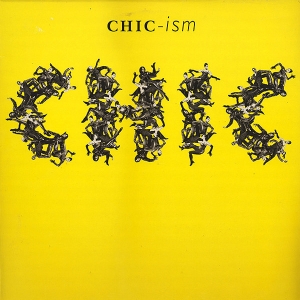
Chic: Chic-ism

CHIC: CHIC-ISM (1992)

1) Chic Mystique; 2) Your Love; 3) Jusagroove; 4) Something You Can Feel; 5) One And Only One; 6) Doin' That Thing To Me; 7) Chicism; 8) In It To Win It; 9) My Love's For Real; 10) Take My Love; 11) High; 12) M.M.F.T.C.F. (Make My Funk The Chic Funk); 13) Chic Mystique (reprise).

General verdict: A poor stab at modernization - long, languid, and lifeless.


In all honesty, I fail to understand any «artistic» appeal of dance-pop past its heyday — let us define it approximately as the time period from early Chic to early Madonna — because, once dance-pop completely loses that tiny precious spark of rebellion and defiance (stemming from the simple fact of the music doing something new and provoking) and becomes pure rhythmic enter­tainment for the feet, there is absolutely no reason to ever return to it. Those early Chic records, if you listen to them even today with open ears and open minds, all have that spark. Even if they did not know it, they were looking for freedom with those albums, and found it.

Fast forward now to the early Nineties, and witness Nile and Bernard, missing the good old days so badly, reforming Chic — with new leading ladies Sylver Logan Sharp and Jenn Thomas — and setting out to remind the world once again of how it used to be. From a nostalgic point of view, Chic-ism is everything you asked for: hot, funky dance grooves with powerful vocals, repetitive hooks, chugging bass, scratchy guitars, and a small infusion of sexy love ballads to complete the picture. Overlong, perhaps (sixty minutes is way too much for a Chic party), but such was the trend in the early CD era, and besides, they did have to somehow compensate to the fans for sitting out an entire decade.

The real problem is not the length, though; the real problem is that there is no spark. It might be hard to get that point across, considering that they really, really try to get all the classic ingredients right. But just throw on the opening ʽChic Mystiqueʼ, with its traditional title, tradi­tional bass groove, traditional walk-all-over-you horns, traditional singalong girl chorus, etc., and see if you can get the same thrill for it that you probably can from ʽLe Freakʼ or ʽEverybody Danceʼ. Guitar and bass are locked in mechanistic, never-changing patterns here, so typical of the new school of R&B that completely wipes out the player's identity — which is perfectly under­standable if we're talking Mary J. Blige, but not if we are talking about a couple of guys who, fifteen years earlier, set out to prove that disco music need not really be faceless. In all honesty, while you can certainly tell that this funky groove was played by professionals, ʽChic Mystiqueʼ is a track that totally does not warrant the presence of such greats as Rodgers and Edwards.

The reason why this album turns out to be so long is that the boys are hardly trying: more than half of its dance-oriented tracks sound exactly the same (ʽChic Mystiqueʼ segues directly into ʽYour Loveʼ without me ever noticing that), and the absolute majority sound as if Nile and Bernard hopped around some trendy clubs, listened to some hot dance acts, went "cool! these cats don't even have to write interesting melodies for the crowds to dig 'em", then proceeded to the studio to take advantage of this observation. The only thing necessary was to ensure that the old fans would be pleased, too, so we have all the gimmicks of old, including innumerable self-references like ʽChicismʼ, with fake audience noise and imaginary glitter falling from the sky.

Even the ballads (ʽOne And Only Oneʼ, ʽTake My Loveʼ) largely recycle the old templates. Jenn Thomas has a powerful set of pipes that she is not afraid to use on ʽTake My Loveʼ, but the song's only idea is to loop its title into an endless invocation that soon becomes annoying, and eventually — obsessive and creepy. An additional problem is that a powerful set of pipes, too, does not automatically transform into an interesting personality. At the very least, here was their chance to get back in touch with Norma Jean Wright, and they failed to deliver.

Of course, this would not be a properly contemporary album, either, if there was no flirtation with hip-hop on record: ʽSomething You Can Feelʼ features a properly urban delivery from a little-known rap starlet (Jennece S. Moore, a.k.a. «Princessa») — and if there is something I can feel, it is that the track feels even more forced and unfunny than the last time they tried to rap (on Believer). In the end, this is just a lose-lose situation: the nostalgic appeal of the record gets canceled out by the stiff production and the inability to make the best of recent trends in R&B (not that I could offer any helpful suggestions here), and the modern elements remain inefficient just because they really want you to kowtow before them simply because they're freakin' Chic, raised from the dead. Alas — no deal. 

Tuesday, July 3, 2018

Talking Heads: '77

TALKING HEADS: 77 (1977)


1) Uh-Oh, Love Comes to Town; 2) New Feeling; 3) Tentative Decisions; 4) Happy Day; 5) Who Is It?; 6) No Compassion; 7) The Book I Read; 8) Don't Worry About The Government; 9) First Week/Last Week… Carefree; 10) Psycho Killer; 11) Pulled Up.


General verdict: An album that marks the beginning of a new era in music, so we might as well pardon the fact that many of its individual songs tend to fuse into one gloriously paranoid mess.


The sternly informative title of the band's debut sort of seems to suggest that they were releasing it for their own «in crowd» — like a yearly digest, so that all those in the know would clearly understand what it is that separates Talking Heads '77 from Talking Heads '76 or Talking Heads '75. Actually, there was something: the Heads had only just added Jerry Harrison to the line-up, setting the stage for some of the most fascinating guitar weaving techniques known to mankind and significantly raising the stakes when compared to their first set of demos that they had recorded for CBS back in 1975. But who would really have guessed that outside of the immediate radius of CBGB? So, chalk this one up to the usual adorable arrogance of David Byrne. Like, what, you are in 1977 already and you mean you have never heard of Talking Heads? So, like, maybe you're still proudly wearing your dirty Woodstock underwear or something?..

It does seem odd, though, that after years and years of mostly relistening to Fear Of Music and Remain In Light, now that I am throwing on this debut again, it seems so... slight in comparison. Like a Please Please Me to whatever would come later (implying that it took the Heads at least a year or two less to traverse the road that separated them from their peak than it took the Beatles; though, admittedly, their personal distance from the foot of the hill was just a tad shorter). It is still a very good album (the Heads never really made a bad record), and it establishes the basic Heads formula as perfectly as could ever be asked for a debut album, but at this point in history it could still be possible to not take the band too seriously.

One song obviously stands out head and shoulders from the crowd, and if you know anything about Talking Heads at all, I need not even mention which one it is. Everything is strange about that song, starting with the fact that it is literally made by its first five seconds — one of the most instantly memorable and thoroughly ominous bass lines in rock history — and that those five seconds aren't even all that typical of the Talking Heads sound, because that bass line is not funky at all: more like «martial pop», hammered out by Tina Weymouth with as much brutality as can be transferred to a couple of fingers, but then it takes two more guitar players to take it up to the Modern level, and usher in a new era of musical conscience in the process.

What is it that ʽPsycho Killerʼ really does to the organism? It is certainly not a «creepy» song of the ʽMidnight Ramblerʼ variety — Tina's bass is its only genuinely menacing component, and once Byrne's and Harrison's guitars start to do their jerks and perks around it, the atmosphere is very quickly rerouted to something lighter (though the bass always keeps that menace in the background). But that choppy, scratchy, syncopated, high-pitched guitar sound steadily reminds me of one thing — alarm bells — and this is precisely what the Heads came here to do to us. Taking the musical arsenal of the past decade of largely African-American innovation, they are turning it around and showing how that weird, mystical, dangerous funky sound is actually symbolic of what goes around — how perfectly it describes and how aptly it adapts to the feeling of insecurity and paranoia that haunts so many of us in this post-industrial-whatever society. "I can't sleep 'cause my bed's on fire / Don't touch me I'm a real live wire" — those words are the perfect counterpart to that bass and to those guitars, and they might have never sounded sharper than in '77, even as they remain 100% relevant in 2017 and beyond.

There is no reasonable explanation to why so many lyrics are in French, or to why there is that Otis Redding-inspired "fa fa fa fa" bit in the chorus, but David Byrne is not a cryptographer, and, in fact, according to his memories, he was really writing a song about «just» a serial killer, never intending it to be deeply symbolic or anything. Fortunately, he did not succeed. Serial killers are boring, after all, and Mick Jagger and Alice Cooper had already told us everything about serial killers that we needed to know. But instability, insecurity, paranoia, madness in general — that is pretty much an inexhaustible topic, and the Heads' marriage of pop and funk gives it a spin that creates the ultimate New Wave track: ultimate in part because, unlike so many other New Wave tracks instantly dated by their production gimmicks, this one is all about the rhythm, the har­monies, the feels, and it plays out as fresh in the 2010s as it did forty years back. (For a laugh, check out the 2017 crap pop hit ʽBad Liarʼ by Selena Gomez that «samples» the bass line — as ridiculous as it gets, for sure, but without an ounce of «retro-flavor» to it).

Now comes the expected cold shower: not a single other song on Talking Heads: 77 sounds as immediately awesome as ʽPsycho Killerʼ — even if it could be argued that all the other songs on Talking Heads: 77 more faithfully represent the stereotypical Talking Heads sound than ʽPsycho Killerʼ does. With less prominent bass, funkier rhythms, somewhat whinier, more capricious vocals, and more pronounced influences from playful Caribbean genres, these remaining ten songs paint a slighter, more frivolous picture of an intelligent, but indecisive young guy trapped in modern life's intricacies and complexities. The guy in question, impersonated by David Byrne, is so nerdy, so jerky, so afraid of society and at the same time so strongly attracted to it that it all sounds like a parody of some Woody-Allenish stereotype — but when you think of it, there hadn't really been that kind of anti-hero in pop music prior to the appearance of Talking Heads. There are influences and predecessors, for sure: from the shy humility of Ray Davies to the frustrated stutter of the early Who to the comedic psychologisms of Randy Newman... and yet, here we have a radically new type of act, not yet polished to perfection but already so resplen­dently bizarre that it is easy to understand why, despite all the contemporary critical acclaim, the Heads had to struggle so hard to find a commercial market while retaining artistic integrity: instead of playing «pop», they play «anti-pop», and in that line of work it might have been much harder to find a market in 1977 than it was for Jethro Tull prog to find a market in 1972.

The worst thing that can be said about the album (and, running slightly ahead, it applies even stronger to their sophomore effort) is that the Heads' style, while so strikingly distinct from any­body else's, tends to get monotonous fairly quickly. Byrne always plays the exact same character, the scratchy twin guitars mostly just scratch their ways through the songs, and since in those pre-Brian Eno days the production remained rigidly minimalistic (the band worked with producer Tony Bongiovi, who had previously overseen two Ramones albums), the only thing that occasio­nally spices up the sound is Jerry Harrison's pleasant, but unexceptional keyboard playing. Throw in elements of self-repetition (ʽPulled Upʼ is essentially ʽUh-Oh, Love Comes To Townʼ sped up), and it is not difficult to see why only ʽPsycho Killerʼ and nothing else would remain in the band's setlist by 1979-80. And, speaking of setlists, once you hear the live versions of some of these tunes on the The Name Of This Band... retrospective, you will very likely never want to go back to the studio originals anyway — much of the Heads' primal energy and army-style tightness was inexplicably rubbed away when it came to fleshing out the studio takes.

But if taken one by one on their own merits, most of the songs do their humble jobs pretty damn well. ʽUh-Oh, Love Comes To Townʼ opens the record on an almost exceptionally joyful note: if Talking Heads are the Beatles of New Wave, then this is their ʽI Saw Her Standing Thereʼ — Byrne's explosive discovery of that funny feeling, of course, discovered in that unique Byrne way ("where, where is my common sense? how did I get in a jam like this?") and, perhaps sarcasti­cally, given a slightly sunny, nonchalant feel by Harrison's «Caribbean» keyboards. ʽNew Feelingʼ is the paranoid antidote — the first announcement of the arrival of classic Talking Heads nervous tension, set to a panic-attack riff that, interestingly, rips off The Doors' ʽMy Eyes Have Seen Youʼ (no idea if this was intentional or coincidental, but some of Jim Morrison's reactions to women must have been quite close to David Byrne's); even more interestingly, the music here is like one part Keith Richards, one part ska, and one part funk — not as much defying genre con­ventions as failing to recognize their existence in the first place. And it all fits.

While I am not going to mention every track, it is worth noticing how many «love songs» there are: compared to future releases that would concentrate more and more on the "tense and nervous and can't relax" personality aspect in relation to the world at large, '77 dwells a lot on girlfriend issues, which is, perhaps, also somewhat responsible for the monotonous feel of the album. Aside from ʽPsycho Killerʼ, the only other big exception is ʽDon't Worry About The Governmentʼ, possibly the second best track on the album, for which I have always had a special kind of interpretation (most people think that it is about a politician or a CEO, but I think that the best way is to think of it from the perspective of a lunatic locked away in a madhouse — then the lines "my building has every convenience, it's gonna make life easy for me... loved ones visit the building..." take on a completely different attitude, and doesn't David actually sound like a mentally deranged patient here, rather than a politician or a CEO?); but regardless of how you might want to interpret it, it is the closest that Byrne ever got to the «little man» style of Ray Davies, and the creepiest he ever got in his cuddliness.

The thing is, from the get-go this band was too smart, too cynical, too bleak to engage in acts of pure, unadulterated, tonge-out-of-cheek happiness. Just as ʽLove Comes To Townʼ seems to open the album on a happy note (but leaves it hanging), so does ʽPulled Upʼ seem to close it with a frantically life-asserting message of gratitude, but the guitar melodies that drive it are so funny, the vocal delivery so exaggerated, the words so ridiculously overblown ("I cast a shadow on the living-room wall / Dark and savage with a profile so sharp"), that it cannot be perceived as anything other than a vicious parody on the corresponding attitude — actually, screw «parody», because that word would diminish the song's importance. ʽPulled Upʼ is not happy pop: it is depressed and confused pop on steroids and a wild assortment of energy drinks. (As is, for that matter, most of the material produced by the Heads.) It is also a deeply satisfying conclusion, significantly hookier and punchier than most of the other songs here, and a good remedy if, like me, you thought that the record tended to slightly drag in the middle.