Search This Blog

Monday, March 14, 2016

Buddy Guy: Live At The Checkerboard Lounge

BUDDY GUY: LIVE AT THE CHECKERBOARD LOUNGE (1979/1988)

1) Buddy's Blues (part 1); 2) I've Got A Right To Love My Woman; 3) Tell Me What's Inside Of You; 4) Done Got Over You; 5) The Things I Used To Do; 6) You Don't Know How I Feel; 7) The Dollar Done Fell; 8) Buddy's Blues (part 2); 9) Don't Answer The Door; 10) Tell Me What's Inside Of You (version 2).

For somebody as prolific over the past twenty years as Buddy Guy, the amount of archival re­leases in his catalog is surprisingly small; apparently, he really spent most of his time in the six­ties, seventies, and eighties outside of the studio, and rarely had the opportunity or desire to bo­ther with professional recording equipment during his live shows at the time. Add to this the overall confusion with his pre-Damn Right discography — for this particular archival release, for instance, although all sources agree that it comes from a show at the Checkerboard Lounge in Chicago in 1979 (because that's essentially what the album cover tells you), different sources indicate different years of provenance, from 1979 itself to 1988 to 1995. I've also encountered no less than three different track sequencings, and I think my own copy has a fourth...

...anyway, let the specialists bother about trivia like these; my job is simply to tell people whether the music is any good. Overall, this seems to be typical fare for Buddy in that time period: he is not being too loud or cocky, he is not yet even close to building up his image of a «survivor» or a «blues saviour», he plays lots of «semi-originals» (i. e. generic 12-bar blues tunes with new lyrics made on the spot), and he sounds like a fun guy to hang around with, as he always does. Also, the sound quality, while not perfect, at least indicates a professional recording, although the engineer still deserves a good whipping for tampering too much with the controls; sometimes the rhythm section miraculously disappears, only to re-emerge a few seconds later as the control guy realises he must have overdone it with the volume level on Buddy's mike.

Minor points of interest include: (a) the main melody of Cream's ʻStrange Brewʼ remade into ʻTell Me What's Inside Of Youʼ (the man didn't even bother to change the phrase "inside of you"), which, for some reason, is featured here in two versions, indicating that there was probably more than one show taped after all; (b) Buddy's social conscience flashing in the form of ʻThe Dollar Done Fellʼ, a lengthy funky jam full of complaints against inflation and gasoline prices — essen­tially, though, it's just Buddy doing his clownish James Brown thing all over again; (c) the «ori­ginal» ʻDon't Answer The Doorʼ dropping all pretense and transforming back into ʻSweet Little Angelʼ, replete with loving how she spreads her little wings and all.

It is well possible that I missed a few particularly awesome guitar licks every now and then, but on the whole, this is just predictably solid all the way through — very straightforward blues solo­ing, all the note chains as familiar as your ten fingers. Very little stage banter, too, so maybe this is a better choice for those who love their Buddy as unpretentious and «un-patriarchal» as pos­sible. Otherwise, don't bother.

Sunday, March 13, 2016

Saturday, March 12, 2016

Cabaret Voltaire: The Covenant, The Sword And The Arm Of The Lord

CABARET VOLTAIRE: THE COVENANT, THE SWORD AND THE ARM OF THE LORD (1985)

1) L21ST; 2) I Want You; 3) Hells Home; 4) Kickback; 5) The Arm Of The Lord; 6) Warm; 7) Golden Halos; 8) Motion Rotation; 9) Whip Blow; 10) The Web.

And here comes another partial reinvention of the Cabaret Voltaire sound / aesthetics. First they were a theatrically spooky avantgarde outfit, then they became a theatrically spooky dance-pop band, and with The Covenant, they become a hilariously surrealistic dance-pop band. Never mind that the title of the album is taken from the name of a recently demolished white supre­macist organisation (which is why in the US the record had to be renamed simply The Arm Of The Lord to pass censorpship), or that some of the songs are spiked with excerpts from Charlie Manson's speeches — there are even fewer shivery / creepy moments here than on previous CV albums, and a lot of instrumental color instead.

Personally, I find it totally non-coincidental that the record was released approximately one year after Art Of Noise made a big impact with Who's Afraid Of The Art Of Noise?, because a lot of what's going on here sounds as if Trevor Horn and Anne Dudley were involved with the pro­ject (apparently, they were not, but I would totally not be surprised). Bubbly synth bass, as if belonging to kiddie show themes; blasts of synthesized brass instruments, as if coming from sen­sationalist B-movie soundtracks; spliced, sliced, and mashed vocal overdubs jumping out like jack-in-a-boxes at predictable or unpredictable moments; paranoid percussion — sometimes all of it within the confines of the same track.

Of course, Cabaret Voltaire still retain too much darkness to sound like newly emerged clones of the Art of Noise — Mallinder's vocals, in particular, have not changed much, as he still consis­tently sounds like a shadow on the run, out of breath but not out of a burning desire to save his life and his sanity despite overwhelming odds. However, there's something controversial in these paranoid vocals now surrounded by bubble synths and occasional stuttery oi-oi-oi vocal overdubs that belong in a post-Monty Python world rather than in the dusty underground of the original Cabaret Voltaire. If you know what I mean.

Unquestionably, they reach the end of that rope with ʻWarmʼ, a track heavily loaded with sexy female moans that you will have problems playing in public — one thing Cabaret Voltaire had never been up to this moment is aggressively erotic, and for a good reason: it is hard to concen­trate on erotic thoughts when you are running for your life in dark underground corridors. If the track were at least musically interesting, it might have worked, but its interlocking synth patterns don't sound any different from the average boring synth pop melodies of the time — which, in turn, makes the aahs and oohs seem even more ridiculous. And yet, sexual themes now occupy the band more than ever before: ʻI Want Youʼ, regardless of its title, is said to be about mastur­bation, for instance (not that any sane person could masturbate at that tempo for an entire four minutes, but who knows? Mallinder and Kirk may have had plenty of experience).

As usual, individual tracks are rather non-descript here: the «Art of Noise aesthetics» is adopted throughout, meaning that no two songs are completely different, and the album as a whole is... well, I am not sure the merger truly works. In their attempt to combine sarcastic darkness with playful absurdism, they sort of downplay the former without justifying the latter — think the same dusty dark corridors as usual, but now they're lighted with bright shiny Christmas orna­ments. Why? Well, it just so happens that there's a heavy demand for bright shiny Christmas or­naments these days — it's Christmas season, you see, and you gotta give the people what they want, even if they don't have any intentions to celebrate Christmas at all. I wouldn't go as low as a thumbs down, because this is not a proper «sellout» or anything, but I really don't see much of a point in this album. And it certainly is not made any scarier just by the inclusion of some Charles Manson mumble — most people won't even know it's Manson, and those who will are not going to lose much sleep over it.

Friday, March 11, 2016

Can: Monster Movie

CAN: MONSTER MOVIE (1969)

1) Father Cannot Yell; 2) Mary, Mary So Contrary; 3) Outside My Door; 4) Yoo Doo Right.

Technically, the first album recorded by Can was called Prepared To Meet Thy Pnoom, and was supposed to be released in 1968, but no label would accept it at the time, and ultimately, it was only issued in 1981 under the appropriate title of Delay 1968. Ironically, it was far more acces­sible than their next album, for which they did manage to find a label one year later — apparently, the degree of record label boldness rocketed sky high after the release of stuff like Trout Mask Replica, so that for a while some people could adopt an anything-goes mentality.

Yet despite all the weirdness, I do have to say that of all the bizarre Krautrock ensembles that Germany gave us Can have always been the most conservatively and traditionally oriented. Be­hind all their experimentation and craziness and psychedelia really rests a competent blues-rock band whose major passion was simply to jam, jam, jam all day and all of the night. The four-man war machine of Michael Karoli on guitar, Holger Czukay on bass, Irmin Schmidt on keyboards, and Jaki «Human Metronome» Liebezeit on drums must and will appeal not only to (and maybe even not as much to) those who look to Krautrockers for blowing our minds and expanding our horizons, but simply to those who respect and enjoy strong, sharp, cohesive playing — the same audiences who are willing to sit through lengthy sonic journeys by Cream or the Dead.

Case in point: ʻYou Doo Rightʼ, stretched over the entire second side of the album, is really but a 20-minute excerpt out of a jam that is said to have gone on for about six hours, and resulted in men outlasting machines as the band had to cut it short because the amps started to smoke. And the way it is handled here, I'm pretty sure they were only getting warmed up by the end of the sixth hour: Can's fanatical devotion to their craft meant that, when they were on, time ceased to exist. And this is why good Can jams (and most of their jams were good) are so easy to tolerate. It is easy to get bored by a lengthy piece of jamming when you sense that the players are simply going on because they're following a trend (such as «your song does not matter at all if it is any­thing shorter than 20 minutes»). Can, however, were not following trends: upon locking themsel­ves into the groove, they simply lived that groove.

I mean, listen to Jaki Liebezeit pounding out those complex polyrhythms on ʻYou Doo Rightʼ without ever faltering — you'd think drumming, to him, was like air: stop drumming, and you stop breathing. Twenty minutes into the track, the entire band is going every bit as strong as they were at the beginning... and, as it turns out, these twenty minutes by themselves were only the beginning. The jam's somewhat lazy pacing and the diminished role of both guitar and keyboards might turn people off, but it is all about the rhythm section: it is the African drums and the droning bass that make it into what it is — a tribal ritual that needs to go on at 100% efficiency all the time, lest contact is lost with the respective deities. I actually think the jam does not hit its peak until somewhere around the 12th minute, when Jaki and Holger settle upon a mutual lock that seems inescapable, so they have no choice but to go on forever and let those amps take all the punishment they can stand.

That said, if your organism is too weak to take in even 20 minutes of that jam (and I can get that: mine was fairly weak, too, when I first submitted myself to the experience), the shorter tracks on the first side might be a better initial proposition. ʻFather Cannot Yellʼ is faster, has a far more prominent guitar and keyboard part, and occasionally threatens to burn up the entire world with those feedback blasts from all the melodic instruments. ʻMary, Mary So Contraryʼ is built upon a dirge-like drone where Schmidt's and Karoli's shrill, high-pitched, wobbly tones knock your brains out as efficiently as any imaginable chemical substance, and at no expense to physiological health. And the shortest track, ʻOutside My Doorʼ, is a four-minute garage-blues-rock romp that would not have been out of place on Nuggets — short, adolescent-style aggressive, rhythmically simplistic and full of kick-ass guitar solos that go for devastating emotional brutality right away, without taking much time to build up.

You might notice that so far, I have not said one word about the fifth member of the band: the African-American vocalist Malcolm Mooney — first of the two «accidental» vocalists that the Germans would recruit during their glory years. Although he did have some experience, singing in a vocal band while in high school, at the time he befriended Can he made a living as a sculptor in New York, so basically he was the first one to prove Can's strange point that «anybody can be a singer in a band like ours». Neither what he sings nor whether he can sing at all makes much difference — Can do not really need singers, they just use them up as sonic material to make the tunes a little more accessible and a little more crazy at the same time. Most of the time, Mooney screams his way through the music, or, as it is in the case of ʻYoo Doo Rightʼ, scrapes his way through it, making himself sound like a homeless person on the brink of insanity. The creepy thing is that working in the band actually drove him to insanity; soon after the release of Monster Movie, he took his doctor's advice and fled to America to avoid going completely crazy — and you would, too, if you had to provide improvisational vocals for six-hour long jam sessions.

That said, in the context of Can songs being «tribal rituals», Mooney's vocalizations, as would Suzuki's a year later, make perfect sense — this is a «speaking-in-tongues» component, stretches of shamanistic delirium that show us how effectively the man is possessed. If anything, his vocals on ʻYoo Doo Rightʼ are too normal for the band — much of the time, you can actually make out what he is singing (which is not right at all), and some of the singing even follows a clear melodic pattern, which is even less right, implying rationality and a search for structural elegance. So you might say that Mooney was an essentially normal character whose work in Can drove him to madness, whereas Suzuki would be an essentially mad character whose work in Can drove him to become a Jehovah's Witness — and so the stakes go up.

Clearly, Monster Movie is not the best Can album. At this stage, they are still putting their shit together, and the band's love for jam magic is not yet tempered with the ability to add vision, scope, and massive tape splicing to the proceedings. But on the other hand, this here is as «raw» as it gets, and the band's four-piece gears are in complete working order. They have not yet been graced with the presence of a perfect vocalist, and the grooves are more enjoyable than memo­rable, but one thing's for certain: no other band in 1969 sounded that tight over the course of an interminable live improvisation — something to remember for all those critics who like to point out the (hard-to-deny) influence of the Velvet Underground, but forget that the adorable Moe Tucker would stand no chance in a drum battle versus Herr Liebezeit, and more or less the same goes for all the other instrumentalists. Of course, this does not make them a better band (and we will not get into any apples vs. oranges types of discussion here), but it does make them one of the greatest, if not the greatest band at the time who could combine experimental/psychedelic inclinations with phenomenal instrumental technique, all the while resting comfortly in an easy-to-understand zone of the blues idiom. Thumbs up for sure.

Thursday, March 10, 2016

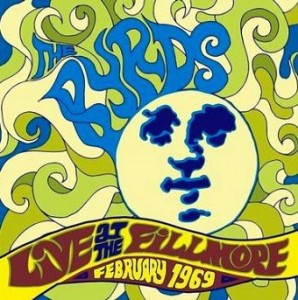
The Byrds: Live At The Fillmore

THE BYRDS: LIVE AT THE FILLMORE (1969/2000)

1) Nashville West; 2) You're Still On My Mind; 3) Pretty Boy Floyd; 4) Drug Store Truck Drivin' Man; 5) Medley: Turn! Turn! Turn! / Mr. Tambourine Man / Eight Miles High; 6) Close Up The Honky Tonks; 7) Buckaroo; 8) The Christian Life; 9) Time Between; 10) King Apathy III; 11) Bad Night At The Whiskey; 12) This Wheel's On Fire; 13) Sing Me Back Home; 14) So You Want To Be A Rock'n'Roll Star; 15) He Was A Friend Of Mine; 16) Chimes Of Freedom.

In the case of The Byrds, the vault-emptying ritual has largely focused on the Clarence White era, particularly when it comes to live albums — the original Byrds were never appreciated much for their live playing, not to mention that they fell apart just prior to the era of the first quality recor­dings of live shows. However, the decision to open the vaults with this particular recording, taped at two shows from the Fillmore West on February 7-8, 1969, is still questionable. The new Byrds were just getting their stuff together: Dr. Byrds & Mr. Hyde had only been released one week before, and not only does this mean that you are going to have to sit through quite a few mediocre songs from that album, but it also means that everything else is happening in «test» stage.

For instance, ʻEight Miles Highʼ, although already a couple minutes longer than the original, has not yet been expanded to the mammoth psychedelic heights of the Untitled era — instead, it is included here as part of a frickin' medley, into which they have compressed three of their biggest hits. The trick is a well-known cop-out: "we have no interest in playing these songs any more, but out of a sense of loyalty, we're giving you a taste" — and, honestly, they'd do better to leave out ʻTurn! Turn! Turn!ʼ and ʻMr. Tambourine Manʼ of this altogether, because the harmonies on those songs just flat out suck. Admittedly, the instrumental passages on ʻEight Miles Highʼ are handled much better, with White already an accomplished sparring partner for McGuinn.

Overall, the setlist predictably concentrates on material from Dr. Byrds and from Sweetheart Of The Rodeo, with the addition of a few extra country covers (Red Simpson's ʻClose Up The Honky Tonksʼ, Merle Haggard's ʻSing Me Back Homeʼ, Buck Owens' ʻBuckarooʼ) and every­thing else basically just played «for the old fans». This is in stark contrast with the live material they'd soon record for Untitled, which included only one pure country number and observed a better balance between new and «classic» songs, so you have to be mentally prepared for the fact that these Fillmore Byrds are shining knights of the Country Rock Order through and through.

Arguably the one thing that is most typical and representative of the album is Clarence White's manner of playing country melodies — with a device called the Stringbender that he invented with Gene Parsons, enabling him to play a regular electric Telecaster similarly to a pedal steel guitar. This does bring a whole new twist to the idea of «country rock», and gives all these ins­trumentals like ʻNashville Westʼ and ʻBuckarooʼ a unique face — otherwise, we'd probably just ask "so why do we have to listen to the Byrds doing this stuff, when it would make so much more sense to just bring in the regular Nashville guard?" However, I would also insist that true pedal steel gives a much prettier sound than a regular electric guitar made to sound like a pedal steel; there's just something about this imitation that throws me off (actually, a lot of situations where instrument A is forced to sound closer to instrument B throw me off, but maybe it's just me).

Still, it is a fact that White's guitar playing is pretty much the only argument why you'd ever feel tempted to give this another spin — in no other respect do these performances even come close to matching the originals in clarity or emotional impact. Whenever he takes a seriously focused solo, even on so-so material like ʻBad Night At The Whiskeyʼ, the playing is clearly inspired (unfor­tunately, he does that on less than half of the tracks), and even if that country style of his may seem a bit monotonous, it also provides unity for all content — old classics, new originals, and cover material. Just forget about The Byrds as one of America's (formerly) greatest vocal har­mony bands, and you'll be fine for a while.

Wednesday, March 9, 2016

Cardiacs: Songs For Ships And Irons

CARDIACS: SONGS FOR SHIPS AND IRONS (1991; 1986-1987)

1) Big Ship; 2) Tarred And Feathered; 3) Burn Your House Brown; 4) Stone Age Dinosaurs; 5) Plane Plane Against The Grain; 6) Everything Is Easy!; 7) There's Too Many Irons In The Fire; 8) All Spectacular; 9) Blind In Safety And Leafy In Love; 10) Loosefish Scapegrace; 11) All His Geese Are Swans!.

The title of this LP is an amalgamation of Big Ship and There's Too Many Irons In The Fire, a mini-LP and an EP that were both released in 1987. In 1991, the band put them together on one CD, added a few extra rare B-sides and one archive track, and ended up with a fairly weighty addition to the catalog. And I mean «weighty» in an almost literal sense, because this is where Cardiacs finally begin to capitalize on the «progressive promise» and add epic scope, pomp, and symphonism to the still rather lightweight ska-pop-punk exercises of the previous albums. Not consistently so, but enough for symph-rock fans to take proper notice.

The very first song, ʻBig Shipʼ, sounds like a cross between classic Queen and some big, brawny arena rock band with a penchant for stomping power chords. Loud, martial guitars, organ a-plenty, vocals that get in your face with a vengeance, and plenty of stops, starts, and tempo changes in between the oratorio-like choruses to ensure that this is Inventive Art. Unfortunately, the song itself just isn't very good: the bombastic sections are too simple and repetitive, relying on huge­ness of sound rather than a classy chord sequence. I wish I could get inspired by it, but neither the lyrics nor the melody lend themselves to coherent interpretation.

So I start feeling more at ease with the ensuing songs that tone down the seriousness and bring back the playfulness, craziness, and ska-punkish spirit, while at the same time continuing to ex­plore all sorts of novel ideas. ʻTarred And Featheredʼ and ʻBurn Your House Brownʼ leap along like mad, with vaudeville piano rolls alternating with avantgarde dissonances, no melodic section lasting uninterrupted for longer than a dozen bars (10cc said hello), and your head having serious trouble assimilating it all. My only problem is that they are less capable than, say, Zappa to knock all these things together into some surrealist musical — the lyrics make too little sense, and the band shows a very limited sense of humor.

As we go on and on, relatively short crazyass romps like these multiply in number, sometimes interrupted by slower and statelier pieces of the ʻBig Shipʼ variety — such as ʻStone Age Dino­saursʼ, a slow, brass heavy hymn; and the instrumental ʻAll His Geese Are Swans!ʼ, which just acts as a foothold for some guitar and keyboard soloing, some of it very psychedelic, but most of it rather uninspired. Also, at least one track, ʻLoosefish Scapegraceʼ, combines both approaches, star­ting out as eccentric vaudeville and becoming almost a requiem midway through.

Nevertheless, even if this may all be a technical advance over The Seaside, emotionally these songs are not much of a departure: still too much of a band that simply wants to be eccentric without presenting enough reasons for this eccentricity. Once the initial wave of amusement or amazement at how effortlessly they weave in elements of symphonism and music hall is over, you might want to ask yourself, "so what was that all about?" and realising that you don't even know in what direction the answer might lie. There's plenty of energy and a lot of fuss, but way too much ado about nothing, if you ask me — «form over substance» in the flesh. Then again, maybe it's all about reaching that other plane of consciousness.

Tuesday, March 8, 2016

Camel: The Snow Goose

CAMEL: THE SNOW GOOSE (1975)

1) The Great Marsh; 2) Rhayader; 3) Rhayader Goes To Town; 4) Sanctuary; 5) Fritha; 6) The Snow Goose; 7) Friendship; 8) Migration; 9) Rhayader Alone; 10) Flight Of The Snow Goose; 11) Preparation; 12) Dunkirk; 13) Epitaph; 14) Fritha Alone; 15) La Princesse Perdue; 16) The Great Marsh.

I confess that I have not read anything by Paul Gallico — I also confess that the basic plotline of The Snow Goose does not impress me nearly enough to seek it out, nor do the occasional critical slashes at the sixty-four page novella that accuse it of excessive sentimentality. Nevertheless, I would also think that a profound acquaintance with this literary work is not totally necessary in order to enjoy Camel's third album for what it is: the quintessential, if maybe not the best, Camel album that only Camel could have made.

Ironically, it was the success of the lengthy suites on Mirage that led the band to considering making a record that would be fully based on a piece of literature; but that piece of literature was not a Tolkien epic, but a modern time fairy tale with a sad ending, sort of a cross between Hans Christian Andersen and Erich Maria Remarque. The fairy tale has three characters — the loner Rhayader, the innocent girl Fritha, and the symbolic Snow Goose — who are so self-sufficient, it seems, that the entire world, from the marshlands of Essex to the beaches of Dunkirk in 1940, just acts as a canvas for their triangularity. That was exactly what Latimer and Bardens needed to set them back on the right track and recreate the atmosphere of dark-beautiful loneliness that they originally generated on Camel, but sort of dissipated on Mirage.

The album is completely instrumental, and its full title is, in fact, Music Inspired By The Snow Goose; both of these things are due to Gallico's disapproval of the project and the necessity to avoid copyright infringement lawsuits. The lack of vocals does make the experience a bit more demanding: the tunes are generally very similar in mood, and the emphasis is on texture rather than flashy, distinctive hooks. But The Snow Goose really has to be assimilated as one 43-minute suite with a bunch of separate movements, even though some of the songs had to be pulled out as singles; in concert, they tended to play it complete whenever possible, and even the titles clearly hint that they're all part of a whole — I mean, ʻFlight Of The Snow Gooseʼ, when issued as a single, probably made people not-in-the-know think it was a parody on ʻFlight Of The Bumblebeeʼ or something.

The music in general is fairly typical for Camel, incorporating elements of jazz fusion, folk, «art-pop» hearkening back to Sixties' psychedelia, and first generation symph-prog. Everything is handled very delicately: despite the sentimental potential, this is not really the kind of music that will tear and rip you apart with sonic passion — most of the themes are played quietly, without rising to breathtaking heights or plunging to abysmal depths. For instance, ʻRhayaderʼjust hops along at a moderately fast tempo, with pretty flute and keyboard melodies creating a cheerful atmosphere (too cheerful, I'd say, for a loner like the title character); ʻRhayader Goes To Townʼ slightly increases tempo and fuss, throws in some shrill guitar solos, then becomes a blues jam for a few minutes, then just sort of fizzles away. Always pleasant to hear, rarely memorable.

In my opinion, this «pleasantness» only becomes to gradually evolve into something grander with ʻFlight Of The Snow Gooseʼ — all those short bits when Rhayader and Fritha save the bird and help it to convalesce are cute, but it is only when the main theme of ʻFlightʼ emerges out of the synth bubbles that the album starts building a bit of epic muscle. ʻDunkirkʼ is the second big success, though probably not as big as it could have been: the jazz-rock interpretation of the big event is quite furious for Camel, but surely Yes or ELP would have raised even more tension. And then there is the stately finale of ʻLa Princesse Perdueʼ, built around a simple, but beautiful «friendly-sad» guitar figure from Latimer, reminiscent of either Harrison or Gilmour, depending on your immediate associations. The musical ideas contained in these three tracks are like pillars on which everything else is resting.

That said, I would not have given the album a thumbs up for just three tracks. In reality, it is the kind of record that I like more when I am not listening to it too closely. When I try to do that, I usually get bored quickly; but if I do not, eventually it grows into something bigger and more mysterious than simple background music. Believe it or not, it does feel like some strange and sentimental happening, taking place somewhere in a far away marshland: lonely place, lonely people, spiritual isolation, the works. You might have to wait a little for the humble magic to start happening, but eventually it will, maybe with a little active help from the imagination. And may­be it is a good thing that this album was not made by the likes of Yes or ELP, because they would have made it all on a grand grand scale, which would be all right for ʻDunkirkʼ but certainly not for any other tracks. The subject, the atmosphere, the vision — this all perfectly suits the talents and characters of Bardens and Latimer.

Monday, March 7, 2016

Buddy Guy: Born To Play Guitar

BUDDY GUY: BORN TO PLAY GUITAR (2015)

1) Born To Play Guitar; 2) Wear You Out; 3) Back Up Mama; 4) Too Late; 5) Whiskey, Beer & Wine; 6) Kiss Me Quick; 7) Crying Out Of One Eye; 8) (Baby) You Got What It Takes; 9) Turn Me Wild; 10) Crazy World; 11) Smarter Than I Was; 12) Thick Like Mississippi Mud; 13) Flesh & Bone; 14) Come Back Muddy.

I suppose that's Buddy playing his guitar with his teeth on the sleeve photo out there, but for what it's worth, one might also get the impression that he just keeled over his instrument and fell asleep in the middle of the session or concert. Perhaps it works both ways; in any case, I wouldn't call the photo particularly appropriate or inspiring, and the same judgement applies, more or less, to the entire album.

Here's how it starts: "I was bo-o-o-orn in Louisiana..." (how many times does he have to remind us?), followed by a standard introductory blues lick. The rest of the track explains how the very fact of his being born in Louisiana made it imminent and inavoidable that he would, in fact, be born to play guitar, along with some nice, quiet samples of said guitar playing. "A polka dot guitar will be resting (rusting?) on my grave". Sounds pretty convincing. The only problem is, how many of us still remain to be convinced? At least ʻLiving Proofʼ kicked ass, volume-wise; ʻBorn To Play Guitarʼ just says it, rather than screams it. And this applies to the album in gene­ral: there are very few, if any, outstanding guitar parts (one interesting exception are the wah-wah parts in ʻCrazy Worldʼ and ʻTurn Me Wildʼ, but they're kind of buried right in the middle of a long series of by-the-book 12 bar playing).

Later on down the line, you get ʻWear You Outʼ, a fun collaboration with Billy Gibbons of ZZ Top — and indeed, the song does sound a little ZZ Top-ish; the partnership is quite natural, too, considering how Buddy likes to rough it up every once in a while (more natural, in fact, than the Santana duet on Living Proof). The other guest appearances are not as successful — Kim Wilson plays Sonny Boy Williamson-style harmonica on ʻToo Lateʼ and ʻKiss Me Quickʼ (Sonny Boy played it better anyway); Joss Stone shares lead vocals on ʻYou Got What It Takesʼ (could have invited, oh, I dunno, Sheryl Crow with the same results); and Van Morrison is drafted to sing ʻFlesh & Boneʼ, a soul number dedicated to the memory of B. B. King — inevitably touching, yes, but still way too perfunctory. Neither Van, nor Buddy's guitar, nor the gospel backups manage to rise to any ecstatic heights here... although, who knows, in a hundred years from now people might look back on this fusion of great vocal and instrumental talent in their waning years and melt away in admiration.

Overall, there are no real highlights here, although at least there are no serious lowlights, either: best of all, there's no sign of Keith Urban or Kid Rock, and this is why this album gets no thumbs down from me. The guest stars are respectable, the songs try to be a tiny bit original, and Buddy Guy has never stopped being good, and I will personally defend his right to come out with a new album every two years: if ʻBorn To Play Guitarʼ and ʻCome Back Muddyʼ will be followed by ʻGuitar Playing Is My Businessʼ and ʻI Said Come Back, Muddy!ʼ in 2017, to me this will only signify that Buddy is still alive and well, and it will be nice to know that in an age when heroes are dropping around like flies. So you might even buy this thing to let the man know we still love him. You don't really have to listen to it. Just admire the karma.

Saturday, March 5, 2016

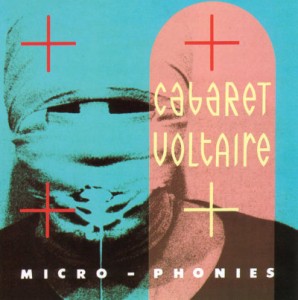
Cabaret Voltaire: Micro-Phonies

CABARET VOLTAIRE: MICRO-PHONIES (1984)

1) Do Right; 2) The Operative; 3) Digital Rasta; 4) Spies In The Wires; 5) Theme From Earthshaker; 6) James Brown; 7) Slammer; 8) Blue Heat; 9) Sensoria.

If you have not had the chance to grow up with the Three Stooges (and how could I, a simple Soviet kid, ever have had such a chance?), you might find it hard to get adjusted to their crude brand of humor later on in life. Consequently, even if Micro-Phonies, their 87th short produced in 1945 with an already ailing Curly, tends to be highly rated by veteran fans, nothing guarantees that it will be equally warmly embraced by a new gen...

...oh, hang on, we're actually talking Cabaret Voltaire here, not the Stooges. So anyway, if you have not had the chance to grow up with Cabaret Voltaire (and although I, a simple Soviet kid, might have had that chance if my parents were huge New Wave fans, they were not, so I hadn't), you might find it hard to get adjusted to their rough brand of electrofunk later on in life. Con­sequently, even if Micro-Phonies, their 6th proper LP produced in 1984 with three new percus­sionists replacing Alan Fish, tends to be highly rated by veteran fans, particularly those reared on the video for ʻSensoriaʼ, nothing guarantees that it will be equally warmly embraced by those of us who tend to be curious about Cabaret Voltaire rather than giddily excited.

But yes, ʻSensoriaʼ is a pretty damn good «spooky dance-pop» number for 1984, maybe one of the most successful updates of Kraftwerk's Man Machine vibe for the Age of Dance. Mystery bassline, disturbing synth bubbling, and Mallinder's breathy vocals singing about sin, temptation, and "senses reaching fever pitch". Frankly, this is not a very good line: Cabaret Voltaire are a cold band par excellence, and no matter how many paranoid overdubs they make, "fever pitch" is never a thing I could associate with any of their songs. Across these six minutes, something is clearly being reached by the senses, but it ain't fever pitch. I'm still trying to figure it out.

One of the tracks carries the name of ʻJames Brownʼ, as if to acknowledge the debt that these guys owe to their funky forefathers, but yet again, James Brown makes hot music, whereas this song, like everything else in the catalog, is freezing cold, so we should all agree to retitle it ʻAnti-James Brownʼ and then play it simultaneously with ʻSex Machineʼ so as to annihilate all sonic matter in the world. It does feature the catchiest bit on the album — the mantra of "everything devoured, I learn to hold my will power" repeated over and over against a cheerful brass riff  — but I have no idea what it means or how it relates to The Godfather Of Soul.

However, my personal favourite track on the record is ʻSpies In The Wiresʼ, maybe one of the most atmospheric things in the CV catalog ­— and I mean successfully atmospheric, on a true sensual level rather than on the level of intellectual analysis. Subjective opinion, yes, but some­how it all clicks together, particularly the cavernous synth overdubs and the "like spies in the wire, dark eyes in the wire" chorus. This track, I think, could actually spook away impressionable little kids, so keep that in mind. Other people have their own favorites, like the faster-paced ʻOpera­tiveʼ or the perverted vibe of ʻBlue Heatʼ, but in the end it does not matter, because all the songs end up using the exact same vibe — now completely updated and refined for the general dance environment, without sacrificing an ounce of the band's ideology. Even the aptly titled ʻDigital Rastaʼ, which, as you can guess, is an attempt to synthesize their standard sound with elements of reggae, still ends up sounding like the soundtrack to a movie about chasing innocent bystanders in dark corridors and sucking their souls out. (But don't worry, the chase is always better than the catch for Mallinder and Co.).

I have no idea if this is «better» than The Crackdown, but at the very least, Micro-Phonies is not any less inspired — which does not imply that either of the two is a work of genius, but yes, at least as late as 1984, Cabaret Voltaire continued to be on some sort of cutting edge. And the album title might suggest that they weren't taking themselves too seriously, either, which is al­ways a good thing.

Friday, March 4, 2016

Budgie: The BBC Recordings

BUDGIE: THE BBC RECORDINGS (1972-1982; 2006)

CD I: 1) Rape Of The Locks; 2) Rocking Man; 3) Young Is A World; 4) Hot As A Docker's Armpit; 5) Breaking All The House Rules; 6) Crime Against The World; 7) Napoleon Bona-Part 1 & 2; 8) Forearm Smash; 9) Panzer Divi­sion Destroyed; 10) Wild Fire; 11) Breadfan [lost edit].
CD II: 1) Sky High Percentage; 2) In The Grip Of A Tyrefitter's Hand; 3) I Turned To Stone; 4) Superstar; 5) She Used Me Up; 6) Forearm Smash; 7) Crime Against The World; 8) I Turned To Stone; 9) Truth Drug; 10) Superstar; 11) She Used Me Up; 12) Panzer Division Destroyed.

Okay, here is another one worth a quick mention. Again collected from radio transmissions, but this time spread out over a much larger period and concentrating way too heavy on the John Thomas stage of the band, including not one, but two mini-shows (or excerpts from shows) at the Reading Festival, in 1980 and 1982 respectively, which explains why some of those less-than-stellar songs are captured here in two versions.

Of course, fans might be interested in the John Thomas version of the band performing ʻBread­fanʼ — just to see if he can nail that fabulous riff, and you know what? He comes somewhat close, but he can't, which is probably why they cut down the number of bars repeating it, and did not include the number in the original transmission either (it is qualified as a «lost edit» here, with a lopped off intro and probably a lopped off outro as well, since it concludes with a lengthy show-off guitar solo without returning to the opening theme). Just a somewhat telling bit of difference between the old and the new guitarist — or, rather, between classic Seventies and early Eighties styles of metal playing.

On the other hand, the disc is historically treasurable for containing some of the earliest live Budgie recordings caught on tape — four tracks from a 1972 show at the Paris Theatre in London, with Bourge setting the world on fire with his soloing on ʻYoung Is A Worldʼ and ʻHot As A Dockers Armpitʼ, the band still riding that old Sabbath vibe for all it's worth. The two tracks from 1976 are not nearly as stellar — ʻSky High Percentageʼ is a throwaway from one of their weakest albums, and the classic riff of ʻTyrefitter's Handʼ sounds so much shriller and sharper in the stu­dio that they might as well have left it out of the setlist for good.

And the new stuff? Well, one thing's good: the decision not to include (or perform) any of the awful songs from Deliver Us From Evil, except for one (ʻTruth Drugʼ, which was originally not transmitted, but the Devil made them excavate it anyway). I certainly do not mind them doing their AC/DC-type schtick like ʻForearm Smashʼ and ʻSuperstarʼ, except that AC/DC have ways to make their stuff even more exciting live than it is in the studio and these guys are too laid back to do it. The audiences love it, though — from both festivals, you have your fans going wild and screaming their heads off for "Budgie! Budgie! Budgie!" (One question, though: why didn't you buy the records, if you loved the band so much?).

In any case, this collection still does not properly satisfy the demand for a Budgie live album, and makes one wonder how the hell is it at all possible that not one single complete recording of a classic era Budgie live show has survived in acceptable quality to complete and dignify this series of semi-satisfying archive releases. Was the band too hard up back in those days, or were they just too lazy to set up a bunch of recording equipment, letting the BBC do it all for them? (Note that there is at least one officially released live album from the reunion era — 2002's Life In San Antonio, but the setlist there is way too unappealing, with way too many songs from the expen­dable 1980-82 era, for me to bother).

Thursday, March 3, 2016

The Byrds: Byrds

THE BYRDS: BYRDS (1973)

1) Full Circle; 2) Sweet Mary; 3) Changing Heart; 4) For Free; 5) Born To Rock & Roll; 6) Things Will Be Better; 7) Cowgirl In The Sand; 8) Long Live The King; 9) Borrowing Time; 10) Laughing; 11) (See The Sky) About To Rain.

If I am not too mistaken, this was the first ever «reunion / comeback experience» in the history of rock music, at least as far as major league players are concerned. The event happened largely by accident — by late 1972, it so chanced that all five original Byrds found themselves at the cross­roads, with their solo careers (including McGuinn's disaster with Farther Along) either commer­cially flopping or reaching a certain turning point (for instance, Crosby, Stills & Nash were on a lengthy hiatus). Had they been the Beatles, their egos would probably stay too huge and mutually repellent to succumb to attraction. But they weren't the Beatles, and five years after mutual dis­agreements tore them apart, the wounds healed well enough to initiate reunion talks. Throw in a nice financial proposition from Asylum's David Geffen, and the cat was in the bag.

One thing that was not in the bag, though, was nostalgia. The reunited band did have the exact same lineup as the Great Original Byrds of Mr. Tambourine Man — McGuinn, Crosby, Hill­man, Clark, and Clarke — but they immediately came to an agreement that they would do any­thing but consciously try to recreate the «harmonies-and-jangle» atmosphere of their early albums, partly because trying to cohesively work as a single unit was the thing that ended up driving them apart in the first place, and partly because they were, after all, still too young and too full of ideas to bow down to pure nostalgia. Consequently, the reunion album, as everybody seems to agree, is not really a true «Byrds» album — it is a bunch of solo tracks, collected from four out of five members: more precisely, McGuinn contributes 2 songs, Crosby contributes 3 (one of them a Joni Mitchell cover), Hillman and Clark also 2 each, and then there are two Neil Young covers, sug­gested by Clark and defended by Crosby (saying that the band was now covering Neil Young in­stead of Dylan because Neil was for the Seventies what Bob was for the Sixties).

It is actually quite curious how the original Byrds were pigeonholed — reviews at the time were scathing, with people complaining about the disunity and the lack of jingle-jangle much the same way that in 1969, somebody could easily complain about the lack of "yeah yeah yeah"s on Abbey Road. True, the record on the whole sounds more like a James Taylor album with group harmo­nies, but even James Taylor in his prime had some good songs, and if there is no unity, at least there is diversity. Let's face it, when you have three songs on your record that totally sound like solo David Crosby, it's still better than when your record consists entirely of songs by solo David Crosby. On the other hand, the downside is also that in a situation like this, band members may be tempted to offer their weakest material for the collective pot, consciously or subconsciously saving up the best stuff for true solo albums.

The bottomline is that Byrds sounds quite nice. Only Crosby's ʻLaughingʼ, one of those lengthy stoned rants of his set to a completely unmemorable melody, sticks out unpleasantly with its 5:40 running length (and, adding insult to injury, it was already released earlier on his first solo album, so there's hardly any other reason than pure laziness behind its inclusion). Everything else ranges from cute to sympathetic — even the Neil Young covers, with ʻCowgirl In The Sandʼ remade as a bouncy, almost cheerful country-pop number and ʻSee The Sky About To Rainʼ featuring a soul­ful Clark lead vocal and even, in the form of a small bonus for the fans, some genuine 12-string jangle in the coda section.

Clark's two originals, ʻFull Circleʼ (also brought from his solo career) and ʻChanging Heartʼ, arguably have the best vocal melodies on the album — nothing too breathtaking, but the «alar­med» intonations on the chorus of the latter agree very well with the song's message (warning about the fickleness of fame and all that), and although the semantics of the line "funny how the circle is a wheel" is a bit tautological, its delivery is inspiring, and so well punctuated by the added mandolin lead line. As for Hillman, he contributes the album's poppiest tune, ʻThings Will Be Betterʼ, with colorful power pop riffs and lively choruses that would not be out of place on a contemporary Big Star or Badfinger album.

This leaves McGuinn, and, surprisingly, he is probably the second weakest link on the album after Crosby — throwing in his filler bit ʻBorn To Rock & Rollʼ (which has very little to do with actual rock'n'roll, not to mention stealing the verse melody from Dylan's ʻI Shall Be Releasedʼ) and the Jacques Levy collaboration ʻSweet Maryʼ, where I guess Levy wrote the lyrics and Roger borrowed the melody from some traditional sea shanty. Not that it doesn't sound nice — it's al­ways nice to hear McGuinn sing traditional ballads, and the mandolin touch is again a gallant addition — but it does seem like, out of all the contributors, McGuinn contributed the smallest efforts to this reunion. It's basically like, "okay, guys, I've held up the Byrds name for four god­damn years on my own, now I'm just going to sit back and relax while you do your job". But I guess he may have thought he earned it, after all. Besides, less work — fewer reasons for arguing over artistic decisions with his former pals.

In retrospect, I think that the record does deserve a mild thumbs up, because of all the little pretty things and the essential lack of ugly bad things. Formally, it is sort of a belated Abbey Road for these guys — a «let's-come-together-and-be-friendly-for-the-last-time» type of album, except, of course, that there is not even a small attempt at the grandness of vision that charac­terizes Abbey Road; in the end, The Byrds never truly had a «grand vision», and they weren't about to try and develop one at the end of the road. It is not likely that anybody would want to revisit Byrds on a regular basis — however, it is still very comforting and satisfying to have it, witnessing the band coming «full circle» indeed. From Mr. Tambourine Man all the way to Byrds — such a long, strange, bizarre trip, beginning in one place and ending up in several com­pletely different ones. Very instructive, at the very least.

Wednesday, March 2, 2016

Cardiacs: The Seaside

CARDIACS: THE SEASIDE (1984)

1) Jibber And Twitch; 2) Gena Lollabridgida; 3) Hello Mr. Sparrow; 4) It's A Lovely Day; 5) Wooden Fish On Wheels; 6) Hope Day; 7) To Go Off And Things; 8) Ice A Spot And A Dot On The Dog; 9) R.E.S.

Finally! A Cardiacs album that does not sound as if coming to you out of the depths of a concrete bunker — despite also having originally been produced only in cassette form. The original track listing contained 13 titles; however, when the album was finally released on CD in 1995, four of them were omitted under the pretext that the master tapes were lost. More likely, since three of these four songs would later be re-recorded for other Cardiacs albums, the omission was inten­tional (assuming Smith may have thought of the earlier versions as inferior). In any case, the real early versions of ʻIs This The Lifeʼ and ʻNurses Whispering Versesʼ can be found on Toy World, in all their lowest-fiest glory.

Anyway, 9 tracks with a total running length of 35 minutes seems quite appropriate for a record like this, because The Seaside is far from the best that the band has to offer. A key problem here is monotony: most of the tracks are speedy ska-punk ditties with similar-sounding keyboard tones and similar-sounding hysterical vocals, distinguished only by the number of different unpredic­table interludes that Smith and co. throw in seemingly at random. And while the speedy delivery makes things superficially fun, sometimes the songs zip by (even the long ones!) in such a flurry rage that you find it very hard to concentrate on the melodic aspect.

As you slowly get adjusted to the «jibber and twitch» (name of the first track, but I wouldn't mind if it were the title of the entire record), the fun aspect eventually prevails over the monotony, but the album remains a pretty lightweight affair — like an incessant ping-pong game with occasio­nal detours into other sport areas, or like a corny vaudeville show locked in a state of hyperdrive. I have no idea what the songs are «about» (lyrics are not included, and there's little hope of ever making out Smith's words), but in any case, words are clearly much less important here than the music, and the music does not lend itself to inspired description.

Even when you come across something that could be defined as a «catchy riff», for instance, the little bouncy organ phrase that drives ʻR.E.S.ʼ, its catchiness does not matter much on its own, be­cause you could very well encounter any such phrase on Sesame Street or the opening credits to a comic TV show. What matters is that within the same ʻR.E.S.ʼ you also have a couple of tricky jazz interludes with varying tempos and a slow-moving progressive rock part with a moody guitar solo that sounds right out of Steve Hackett's textbook. By the end, as you go into drunk waltz tempo, there's hardly anything left in the world that could surprise you.

Essentially, it's all fun, but it's all also rather shallow — once you get over the amazement at how nifty these guys are (and they are still no niftier than Frank Zappa, whose Absolutely Free album from as far away as 1967 could be called a distant ideological forefather), the tunes do not prove much of anything, except that there's, you know, a reason why people do not usually combine ska, punk, jazz, and classical influences within the same track — just as there's a reason why you rarely put meat, fruit, vegetables, and chocolate in the same dish. It's curious and instructive to take a taste, but eventually you'll probably just have to accept that some things don't click too well when forcefully synthesized.

That said, there are different ways to synthesize stuff, and The Sea­side is, after all, the Cardiacs still in their original stage, youthful and enthusiastic and overdriven and experimental beyond measure. In addition, this is also a transitional album, with Marc Cawthra on his way out and William D. Drake on his way in, so some of the fussiness may be explained by a generally con­fused state of the band at the time — although, granted, that is a flimsy excuse, because Cardiacs are by their very nature an eternally confused and confusing band.

Tuesday, March 1, 2016

Camel: Mirage

CAMEL: MIRAGE (1974)

1) Freefall; 2) Supertwister; 3) Nimrodel; 4) Earthrise; 5) Lady Fantasy.

I have never really been satisfied with Camel's second album. Prog fans tend to praise it, but it seems to me that most of the praise is for reasons that are all too obvious — the songs get longer, the solo/jam passages more technically challenging, and there is at least one Tolkien-inspired tune (maybe more, because even though ʻLady Fantasyʼ does not drop any direct references, it works well in tandem with ʻNimrodelʼ).

The problem is that such an approach by itself could hardly surprise anybody in 1974 (not to mention today) — the question is not whether Mirage is more «complicated» than Camel, but whether it manages to preserve and develop the band's own identity, to have a face of its own that would distinguish it from all the other faces. And from that point of view, too much on Mirage sounds like rather unconvincing imitations of Yes, Genesis, ELP, and even some of their more ancient predecessors (for instance, the first keyboard solo on ʻLady Fantasyʼ is uncannily remi­niscent of the Doors' ʻLight My Fireʼ).

Most importantly, a crucial vibe is missing here — the melancholic mood, that quiet desperation which is so much the English way, has dissipated, as the band embark on a flight of colorful fan­tasy. There's nothing wrong with flights of colorful fantasy in general, of course, but for Camel, this is a somewhat uncomfortable detour: epic songs about wizards and love ballads to mystical fantasy ladies is not something for which they have any special knack. The two long suites sound tasteful enough, but there is not a single melodic line or twist there that would really capture my attention. Signature changes, polished guitar solos, pretty harmonies, alternations between loud and quiet; only the «magical», echoey slide solo at the end of ʻNimrodelʼ really sounds like no­thing we'd previously heard before — good find, that; not enough to grant masterpiece status to the entire song, though.

Of the shorter tracks, Bardens' ʻFreefallʼ is quite an energetic opener, but, again, just seems way too much like an inferior Yes tribute; the instrumental ʻSupertwisterʼ is a cute little waltz with some flute work from Latimer; and the other instrumental, ʻEarthriseʼ, exists somewhere on the border between classically influenced prog and jazz-fusion, without properly making its mind about which side of the border it wants to stake a real claim on. Honestly, I do not know what to say about them. They rock, but not too hard; they're pretty, but not beautiful; they have well thought out melodies, but they're not catchy. Generic second generation prog, in short.

Consequently, I am one of the few who feels tempted to dub this a «sophomore slump» — a half-decent, but misguided and forgettable attempt at aping the founding fathers of the progressive genre without adding even a drop of their own personality. Had they persisted in this direction, the world might have already forgotten all about Camel; fortunately, the mistake would not be repeated again, at least, not on the scale of an entire album.

Monday, February 29, 2016

Buddy Guy: Rhythm & Blues

BUDDY GUY: RHYTHM & BLUES (2013)

CD I: 1) Best In Town; 2) Justifyin'; 3) I Go By Feel; 4) Messin' With The Kid; 5) What's Up With That Woman; 6) One Day Away; 7) Well I Done Got Over It; 8) What You Gonna Do About Me; 9) The Devil's Daughter; 10) Whiskey Ghost; 11) Rhythm Inner Groove.
CD II: 1) Meet Me In Chicago; 2) Too Damn Bad; 3) Evil Twin; 4) I Could Die Happy; 5) Never Gonna Change; 6) All That Makes Me Happy Is The Blues; 7) My Mama Loved Me; 8) Blues Don't Care; 9) I Came Up Hard; 10) Poison Ivy.

Look, we all love Buddy Guy. He is one of the coolest blues players around — the coolest blues player still left alive from his generation, probably, and the world will never be the same when he's gone. But that doesn't mean that we just have to keep spending our time on every new album of his, and certainly not on a double album, unless that double album has anything specifically in­teresting to say. And the fact that this album is called Rhythm & Blues, and the first disc is supposed to be «rhythm» and the second is supposed to be «blues» is not a specifically interesting fact on its own. Not to mention that it's a fickle distinction anyway.

The worst news here is that the record, once again, is just too damn slick. On Living Proof, Guy at least sounded excited and eager to, well, prove that he can still outplay any new sucker in town. Here, that excitement seems largely dissipated, and the songs, most of them not-too-original ori­ginals co-written by Buddy with a pack of songwriting partners (Tom Hambridge, Richard Fle­ming, and others), are melodically boring and played by-the-book. You know something's not quite right when the record greets you with the opening riff and it's... uh... Miley Cyrus' ʻParty In The USAʼ. Well, okay, that one's probably a funny coincidence, but fact is, everything here is remade, sterile, safe, and dull.

It certainly does not help matters much that the new bunch of guest stars, in place of Derek Trucks or Santana, now includes bland singer-songwriters like Beth Hart, handsome sentimen­talists like Keith Urban, and evil scourges of humanity like Kid Rock, let alone three grizzled members of Aerosmith who really have no business on a Buddy Guy album. The only pleasant collaboration here is with rising blues star Gary Clark Jr., but his abilities seem wasted on an up­beat track like ʻBlues Don't Careʼ where he just gets a brief rip-it-up solo of speedy trills, choking on themselves (if you know nothing about him, he's usually much better on his own albums). I think these guests are quite indicative, really — and, with disgusting predictability, Kid Rock joins Buddy on nothing else than ʻMessin' With The Kidʼ. Dear Mr. American Bad Ass, could you please not pollute the production of your elders with your presence any more?

Not that the elimination of bad guest appearances would have saved the album anyway. Buddy plays okay throughout, but we know that he is capable of more than «okay», even at this old age, and the only reason why he is not rising to the occasion is that he is not trying to — the emphasis here is on crafting a slick, commercial piece of product. Every once in a while, there's a flash of raw greatness (ʻWhat's Up With That Womanʼ, on which he is backed by the Muscle Shoal Horns, is probably a good example), but for an album that runs well over eighty minutes, these flashes come all too rarely.

I understand that a thumbs down rating here may seem unnecessarily harsh, but see, at this time in history there is simply no need for Mr. Guy to come out with albums like this — I don't think he needs the money that bad, and if he wants to transmit his expertise to a younger generation of players, he can just do it in his basement and leave us out of it. (Not to mention that the only thing that needs to be transmitted to somebody like Kid Rock is a free one-way ticket to Saint Helena island). Basically, there's nothing good on this record that you haven't already heard a couple dozen times (usually better), and the bad stuff on this record is not something you ever need to hear, unless you really have the hots for a sexy hunk like Keith Urban.

Saturday, February 27, 2016

Cabaret Voltaire: The Crackdown

CABARET VOLTAIRE: THE CRACKDOWN (1983)

1) 24-24; 2) In The Shadows; 3) Talking Time; 4) Animation; 5) Over And Over; 6) Just Fascination; 7) Why Kill Time (When You Can Kill Yourself); 8) Haiti; 9) Crackdown.

Oh, looks like someone's tired of being unjustly confused with a guitar band. Taking their mission one step further, Cabaret Voltaire now place severe restrictions on guitar-based melodies, and plunge into the seductive waters of electronica. The Crackdown is far less noisy than their pre­vious releases — still dark gray, still a disturbing weight on your conscious, but «cleaner» and more polished than it used to be. More sterile, too, you could say.

The opening track, ʻ24-24ʼ, sounds like something Prince could have come up with — the same electrofunky type of rhythm, same drum machine sound, same approach to the mechanics of the groove to get you up and dancin' in that early Eighties style. Except Prince would have made the number all pretty and optimistic, whereas in the hands of Cabaret Voltaire all such grooves be­come zombie rituals, so we have unsettling lyrics ("turning out, beggars to eat me"), hushed creepy voices, keyboards that sound like marinated church organs, and an atmosphere of total coldness and detachment. These here are the roots of IDM — because if this ain't «intelligent dance music», then what is? (Then again, so was Kraftwerk, so the term is really useless).

Most of what follows is the same: groove after groove, constructed out of dark electronic tex­tures, sometimes peppered with extra ingredients (the brass section on ʻTaking Timeʼ), but always set­ting the same mood. Actually, mood-wise this new style may be said to work better than the old one: Mallinder's out-of-the-shadow vocals are now higher and cleaner in the mix, and throughout the entire album there's a sense of some magic eye, benevolent or malicious, watching over your shoulder, as you make the journey through the twisted alleys of evil electrofunk. Melody-wise or hook-wise, though, I am not even sure where to begin in an attempt to single out any highlights or simply to talk about the points and effects of any particular track.

The closest thing to a potential «hit» on the record is probably ʻJust Fascinationʼ — as Mallinder moves one step closer to singing than hissing and hushing, the track begins to sound uncannily like classic Depeche Mode, and suddenly, Cabaret Voltaire get access to associations of deep dark sexuality that they never really had before. Bad news, though — they don't know very well how to exploit that, nor do they seem to really want to, so essentially the effort is wasted: not too many horny teenagers would probably make use of The Crackdown in 1983, as compared to Construction Time Again. Then again, Cabaret Voltaire would never stoop to becoming a real pop band, would it? To ensure that nothing of the sort ever happens, they name one of the tracks ʻWhy Kill Time When You Can Kill Yourselfʼ, setting themselves up for lawsuits of suicide pro­paganda — except, since this record never sold that much, nobody bothered.

Actually, speaking of selling, the album did reach No. 31 on the UK charts — their highest posi­tion ever, signifying that the change in style did appeal to the masses to a certain degree. They would quickly rectify this mistake with the follow-up, but whether they were rooting for the money or not, the decision to make a dash for the trendy dance scene of 1983 was clearly con­scious, and at least it did not result in them making yet another carbon copy of Red Mecca — even if I cannot say that the new results were any more exciting.

Note also that most of the recent CD editions come with an attached bonus EP, called Double­vision — featuring a studio version of ʻDiskonoʼ and three other tracks that, in stark contrast to this album, are more of a noise-ambient nature (including one called ʻMoscowʼ, with resonating church bells as a distinctive feature — other than that, it seems to represent a post-nuclear war Moscow, which, come to think of it, would be quite an appropriate evil fantasy for 1983). Again, nothing too special, but curious to have as such an ardent counterpoint to the cold dance rhythms of The Crackdown proper.

Friday, February 26, 2016

Budgie: Radio Sessions 1974 & 1978

BUDGIE: RADIO SESSIONS 1974 & 1978 (2005)

CD I: 1) Breadfan; 2) You Are The Biggest Thing Since Powdered Milk; 3) Hammer And Tongs; 4) Zoom Club; 5) Parents; 6) Rocking Man.
CD II: 1) Melt The Ice Away; 2) In The Grip Of A Tyrefitters Hand; 3) Smile Boy Smile; 4) In For The Kill / You Are The Biggest Thing Since Powdered Milk; 5) Love For You And Me; 6) Parents; 7) Who Do You Want For Your Love; 8) Don't Dilute The Water.

Budgie proudly subscribe to the rule that says the less important a certain band is, the more archive releases it has to put up on the market (because ten cheaply assembled albums will even­tually sell more than two, even if the total number of copies will still be hardly enough to cover your cigarette expenses). There's quite a few packages of outtakes, rarities, and live performances out there for the hardcore devoted fan — we are only going to focus on a couple, and rather brief­ly at that, because...

...well, see, one of the reasons why Budgie never put out a live album in the Seventies (just like Black Sabbath) is that they were never a particularly outstanding live band, and this double live CD is a very representative example. We have two shows here, one recorded relatively early in the band's career (London, 1974) and one from the Impeckable era (Los Angeles, 1978) — different drummers, but Bourge is the guitarist on both shows, so you could theoretically hope for the best. Unfortunately, even if you disregard the questionable sound quality of the 1974 show (the 1978 one is much better), it is not easy to recommend them as useful additions to the studio versions, let alone suitable replacements.

Technically, the band sounds good, although Shelley occasionally finds it hard to sing and play bass at the same time (ironically, he has his worst flubs on ʻBreadfanʼ, where you'd rather expect Bourge to slip every once in a while on the speedy riff). But the songs are performed very close to the studio originals and inevitably pale whenever Tony finds it impossible to reproduce all the original overdubs (he does try to insert a few screeching gulls on the early version of ʻParentsʼ, with questionable effects, but he hardly even tries any more on the later version). There is no extra improvisation whatsoever, with the exception of an obligatory-unnecessary drum solo in the middle of ʻRocking Manʼ; and the songs are not taken to a new level of wild wild metal energy because... because, I guess, Budgie are not really wild wild metal people.

Basically, the guys were hard working pros with a knack for a certain humbleness (and maybe so much for the better, because Burke Shelley as a Robert Plant-style swaggering frontman would only embarrass people) — perfect for the studio, not so interesting for the stage. Add to this the occasional problem with the setlist (ʻHammer And Tongsʼ does not cease to be a lame ʻDazed And Confusedʼ rip-off just because it is rolled out on the arena), the occasional problem with the sound, and most likely you will not be returning to these recordings fairly soon. Which should not prevent you from having at least one good listen, though. But Live In Japan or Live After Death this ain't, not by a mile.