Search This Blog

Showing posts with label Alan Stivell. Show all posts

Saturday, May 7, 2016

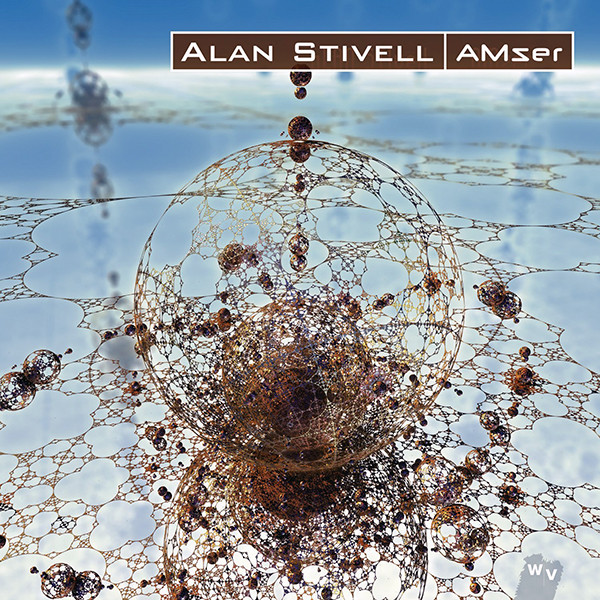
Alan Stivell: Amzer

ALAN STIVELL: AMZER (2015)

1) New' Amzer — Spring; 2) Other Times — Amzerioù All; 3) Matin De Printemps — Kesa-no Haru; 4) Mintin New' Hañv; 5) Au Plus Près Des Limites — Je Marcherai; 6) Purple Moon; 7) Postscript; 8) Kala-Goañv — Calendes D'Hiver; 9) What Could I Do?; 10) Kerzu — December; 11) Halage; 12) Echu Ar Goañv? — Till Spring?.

For several years, word has been leaking out about the preparation of a new Stivell album, but then the process became so stretched out that eventually everybody lost interest. When it was finally released in 2015, it was done to such tiny fanfare that even some of the regularly updated Internet databases failed to register the event — but yes, there it is, finally: a brand new Alan Stivell record that shows the man ready and willing to settle into very old age, but unwilling to abandon his dedicated search for the last cosmopolitan chord.

Once again, this is not so much a «Celtic» album as a fusion between several genres, or, at least, a «Celtic perspective» on different parts of the globe. In addition to the predictable vocal and musi­cal motifs of French, British, Brezhoneg, and Gaelic origin, Stivell now displays a fascination with traditional (and I stress — traditional!) Japanese culture, even inviting a couple of Japanese ladies to recite some classic haiku lines on some of the tracks. Actually, that's not really a lot of internationalization: musically, Stivell remains closely tied to his harp and the Celtic tradition, and he might be a little too old now to try and pick up the koto. On the other hand, it does count as a symbolic recognition of the close connection between all sorts of folk traditions, Eastern and Western, and the link between Celtic harp melodies and haiku recitals feels almost surprisingly natural. So, hey, if this is any help in getting some Japanese cultural fund to donate to the preser­vation needs of Brezhoneg culture... why not?

The problem with Amzer (which, by the way, is the Breton word for 'time, weather, season' and announces the rather obvious conceptual theme for the album) is that most of the actual music here is not very interesting. According to Stivell himself, it was largely based upon his improvi­sation routines, and also reflected a growing interest in studio experimentation — many of the tracks feature elements of «computer-assisted deconstruction-reconstruction», which sounds cool on paper, but in reality makes the whole thing very confusing and unfocused. There are really no memorable melodies, just a lot of atmospheric «harping» around, usually at low volume and with very little energy — bordering on sheer ambience most of the time, really. As atmospheric back­ground muzak, it's every bit as good as any Stivell product that remained unspoiled by silly tech­nology: pretty harp, chirping birds, cloudy synths, and Stivell's voice, despite the aging process, has not lost a shred of its friendliness or expressivity. But where even Emerald was, after all, a collection of compositions, some of them very memorable, this is a decorative piece — yes, like a cute little Japanese garden or something.

The only actual «song» is ʽWhat Could I Do?ʼ, a strangely un-cozy, blues-tinged dirge with bits of distorted guitar and wheezing synths cluttering the background and a general atmosphere of worry and even depression. It is not completely out of place, because it fits in rather naturally with the ensuing harsh coldness of ʽDecemberʼ, apparently illustrating a grim winter mood. But most of the time, the atmosphere is very light — not exactly joyful, but optimistic and spiritual-celebrational, right from the opening ʽSpringʼ and until the album closing instrumental ʽTill Spring?ʼ that brings us full circle. A quiet, unpretentious affair: despite all the digital experimen­tation, Amzer is first and foremost an album by somebody who's got absolutely nothing new to say, and does the next best thing — sits on his front porch and cooks up nice radiovibes, dissipa­ting as quickly as they are generated but leaving a pleasant aftertaste.

I do have to state that if this is really the best that the man can come up with over a six-year period, this means that he's largely finished as an artist. But then again, who at this time could expect a new Symphonie Celtique from him? These «front porch improvisations» are nice enough to serve as background music for the time being — and if it happens to really be his last album after all, who knows, maybe repeated listens in the future will make it seem like the perfect musical goodbye from an old tradition-cherishing geezer who decided to go out with a gentle breeze rather than a stunning bang of an album.

Thursday, May 12, 2011

Alan Stivell: Emerald


ALAN STIVELL: EMERALD (2009)

1) Brittany's - Ar Bleizi Mor; 2) Lusk - Skye Boat Song; 3) Marionig; 4) Tamm Ha Tamm - Rennes, Nantes & Brest; 5) Gael's Call - Glaoch Na nGael; 6) Harplinn; 7) Goadec Rock; 8) Eibhlin - Eileen A Roon; 9) Aquarelle - Er Penn All D'Al Lanneg; 10) An Hirañ Noz - Noël, Espoir - Ar Hyd Y Nos; 11) Mac Crimon (part I); 12) Mac Crimon (part II); 13) Mac Crimon (part III).

Emerald has the same number of letters as Explore and both begin with an E. The similarities do not end there, as you understand, but overall, the two records drift on completely different pivots. This time, Alan is back to «normal» music-making, and three years of procrastination have done well for the 21st century druid: not only has he managed to come up with his most diverse album in years, if not decades, but he has even done what I already believed impossible — scaled those catha­r­­tic heights once again.

It comes on in the very end, though; you'll have to wait for it, but the three-part epic 'Mac Cri­mon' is worth every bit the wait. It is one of Alan's grandest finales, the grandest, perhaps, since Celtic Symphony, if nowhere near as complex — just a stately piano melody, some bagpipes, and choral singing ('L'Ensemble Choral Du Bout De Monde', to be precise) to wind up the solemnity motor. The middle part is the real juicy bit, but it sits well in its coating of pipes and gloomy acappella singing from both sides. It probably will not work, though, if there was never a moment somewhere deep in your childhood when you did not shun away from the opportunity of shedding a tear over 'Auld Lang Syne'. (Never too late, though).

The rest of the record also aspires to grabbing one's attention, in a better planned and more seri­ous­ly concentrated effort than anything since... quite a long time ago. Simply put, this is a wor­king syn­thesis of just about all the directions, with the exception of «world music fusion», that Stivell had pursued in the past thirty years. Some of this sounds like cocky Celtic power-pop ('Ar Bleizi Mor'), some, like Mist Of Avalon-style Arthurian opera ('Lusk'), some, like his New Age experiments, but with more distinctively fleshed out musical themes ('Harplinn'), and for those who like it loud and brawny there is even some really jarring, grumbly Celtic hard rock ('Goadec Rock' may be driven by the deepest, heaviest guitar rhythm part in all of Alan's catalog, and, sur­prisingly, it sounds quite tasteful at that).

All of which shows that, even if the main bulk of Stivell's legend is unlikely to get more props (not that it is in dire need of any more), the 65-year old artist is still going strong. Emerald is the kind of record of which he could make fifty carbon copies and everybody would be happy — un­like Explore, this stuff is timeless, and as long as Alan is not infected by the notion that new legi­ons of upcoming young fans must learn to appreciate Celtic motives by hearing them in hip-hop or nu-metal or emocore arrangements, all new albums such as these will be an incessant source of B-level enjoyment (the A-level, I'm afraid, ended with the Seventies). Thumbs up.


Check "Emerald" (CD) on Amazon

Thursday, May 5, 2011

Alan Stivell: Explore


ALAN STIVELL: EXPLORE (2006)

1) Miz Tu; 2) Là-Bas, Là-Bas; 3) You Know It (Anao'rit); 4) Té (Beyond Words); 5) They; 6) Into; 7) Druidic Lands; 8) Me­nez; 9) Explore; 10) Un Parfait Paradis (Miz Tu 2).

From one extremity to the other: if Back To Breizh was a stark piece of nostalgia, Explore, with its telling title, is the most «modern» Stivell ever got since his endorsement of prog-rock trap­pings back in the Seventies. The harp still plays the lead role on most of the tracks, but now it is inseparable from hi-tech electronic pulses and programmed beats — not that he never toyed with either before, but this time, the experiment is carried through over the course of an entire album, and, starting from the very first track, it is the electronics that catch most of the attention, rather than the harp. Particularly if you are already a Stivell fan and take the harp for granted.

None of the modern elements are taken in a «dumb» manner: hard-working guy Stivell takes as much care about diversifying his drum machines and synchronizing them with the harp melodies as he takes about the melodies themselves. The results are... interesting. At the very least, they show that the man is consistently sticking to his credo: fusing deep past with cutting-edge present. At most, their uniqueness may trigger an unpredictable psychedelic reaction in your brain. Trip-hop rhythms multiplied by masterful Breton harp — you don't find that lying around on every corner, not when it is that creative, at least.

Sadly, I never felt any magic; to my ears, the combination worked about as well as putting whip­ped cream on seafood. As an original «vaccination» against decaying in one's conservatism, it is probably a good move on Stivell's part. As the possible start of a new genre, say, «Celtic IDM» or whatever, it is ridiculous, bound to alienate lots of Alan's «traditional» fans (those who either vi­ew any kind of programmed beat as an immediate sellout, or, like me, just do not see the appeal of these things going together) and hardly capable of attracting new ones — I mean, if you are an admirer of the Electronic Arts, what in the world would make you want to enrich your experience by listening to an old Breton geezer adding plinking harps and buzzing pipes to a sound that, by nature, should rule out «live» instruments as atavisms?

Not that there aren't any good songs — 'Là-Bas, Là-Bas' in particular has a marvelous harp «riff» to it — and not that the whole thing is, in any way, «unlistenable». It is just that it sets a very high goal, and, for the most part, shows that the goal is unreachable (to me, at least). Alas, sometimes it is better to just stick to that harp.


Check "Explore" (CD) on Amazon

Thursday, April 28, 2011

Alan Stivell: Au-Dela Des Mots


ALAN STIVELL: AU-DELA DES MOTS (2002)

1) La Harpe, L'Eau, Le Vent (A); 2) La Celtie Et L'Infini (A); 3) La Celtie Et L'Infini (B); 4) Dihun Telenn vMarzhin; 5) La Harpe Et L'Enfant; 6) Bleimor, Le Bagad; 7) Gourin-Pontivy; 8) E Kreiz Breizh; 9) Goltraidhe; 10) Et Les Feu­illes Repousseront; 11) Demain Matin Chez O'Carolan; 12) Harpe Atlantique/La Route De L'Etain; 13) La Celtie Et L'Infini (C); 14) La Harpe, L'Eau, Le Vent (C).

It does not require a deep knowledge of French to understand that this is yet another purely ins­tru­mental album from Mr. Stivell, and, as such, not deserving of a long review. This one is less explicitly ambient than Harpes Du Nouvel Age: the arrangements are more complex, and the overall spirit is a bit more dynamic ('Bleimor, Le Bagad' refers to the music of Breton pipe bands called bagad, and, sure enough, an actual ear-bursting bagad is enlisted; and 'Gourin-Pontivy' is a very quiet, hushed-down, but still danceable tune).

On the other hand, it is certainly no Renaissance Of The Celtic Harp: next to Stivell's landmark breakthro­ugh record, this one is just a modest collection of pretty, but relatively unstimulating and mostly unremarkable melodic weaves. However magical and otherworldly the sound of the Celtic harp may be, there are certain limits to it; being tailor-made for exclusive needs of traditi­onal Celtic melodic patterns, it cannot be molded into much of anything else.

Nevertheless, it is probably quite indispensable for any major lover and/or student of the harp, as well as for everyone who loves proverbially deep titles such as 'La Celtie Et L'Infini' (much as listening to the actual melody convinces me of its oxymoronic nature, unless under 'Infini' he ac­tually means infinitesimals). Me, I'm only qualified to acknowledge its soothing New Age-style qualities, rather than recognize its thematic depth and adventurous spirit.

Thursday, April 21, 2011

Alan Stivell: Back To Breizh


ALAN STIVELL: BACK TO BREIZH (2000)

1) Vers Les Iles Et Villes De Verre; 2) Rêves (Hunvreoù); 3) Ceux Qui Sèment La Mort; 4) Arvor-You; 5) Rock Harp; 6) Skoit 'N Treid!; 7) Iroise; 8) Kreiz Hag Endro; 9) Back To Breizh!; 10) Harpe De Vies; 11) Brian Boru In French; 12) Armoricaine Suite.

«Back» is right: the last time Stivell came out with an album com­pletely centered on his native locality was in... 1981? 1979? Whatever. Of course, most people would never notice much dif­fe­re­nce be­tween Breizh, Cymru, and Eire in the first place, but it's been a long, long time since Alan recorded anything for «most people». Back To Breizh, too, is strictly for the fans.

For those nostalgic fans, actually, who dislike Stivell's synthesis of Celtic and anti-Celtic musi­cal traditions: at the expense of sounding too monotonous and retrograde, he sticks to Breton melodi­city all the way through, ending the album with a massive re-recording of 'Suite Armoricaine' and offering new variations on old melodies that I would hardly dare to call exciting.

The good news include a major improvement in production values. Synthesizers are used sparing­ly, so that the «swampy» New Agish effect is generally missing; most of the tunes show a clean, sparkling sound that we really hadn't heard on Stivell's song-based albums since the 1970s. At the same time, he is not abandoning modern technologies at all: the title of 'Rock Harp' speaks for it­self, as the man attaches yet another distorted technogadget to his instrument to make it sound like one of Adrian Belew's treated guitars. And on the title track, memorable mostly because of its sentimental-nostalgic melodica 'n' bagpipe curve, he toys a bit with voice encoding (just a bit, punctuating certain moments in the chorus — just so that you wouldn't mistake the album for something recorded around 1976).

Other than that, there is not much to say, except that this might be Stivell's most «authentic-soun­ding» record from the last part of his career, and in 2000, when it must have been lying around at least in some of Europe's musical stores, it was no big crime to use it as an introduction to his world. These days, there is no reason to seek it out instead of going straight for the real thing.


Check "Back To Breizh" (CD) on Amazon

Thursday, April 14, 2011

Alan Stivell: 1 Douar


ALAN STIVELL: 1 DOUAR (1998)

1) A United Earth I; 2) La Mémoire De L'Humain; 3) Hope; 4) Ensemble (Understand); 5) Crimes; 6) A United Earth II; 7) Scots Are Right; 8) Ever; 9) Kenavo Glenmor; 10) Una's Love; 11) Aet On (Into The Universe's Breath); 12) A United Earth III.

Back to musical pan-globalism, with surprisingly classy results. The target audience of Eunn Douar («One Earth», but, as the exact title suggests, still seen through the unmistakeable eyes of a Breton) comprises admirers of «world music» understood as a synthesis of one or two areal tra­ditions with Western pop music elements and production values (as opposed to, say, «ethnic mu­sic» where you actually listen to a real tribe of hunter-gatherers banging the drums for fifty minu­tes as the neighbours go quietly mad). To that end, we have lots and lots of guest stars, including Senegalese star Youssou N'Dour, Algerian star Khaled, and a bunch of Stivell's pals from the Cel­tic musical business world.

My own knowledge of «world music» is fairly limited, possibly because I have always regarded it more as a «social tool» than a set of self-contained art forms. As far as I'm concerned, Youssou N'Dour exists primarily to inform people of the fact that there is such a country as Senegal, with its own history, culture, and art. That's a good, healthy, educational mission. Real specialists in African art and culture may, however, dismiss the man as a «Western sellout», and they will have their point, too (even if they do acknowledge his role in changing Western perceptions about the rest of the world). In any case, there has been relatively little «world music» that I have heard which would make me want to spend time and resources on a full immersion, from the Americas to Africa to the Middle East to the Pacific and back again.

That said, 1 Douar, with all of its Celto-African fusion bits, is still primarily a Stivell album. Alan and Youssou N'Dour may duet in their respective tongues on 'A United Earth' all they want, but it is still the quirky Celtic harp rhythms and the merry sound of ye olde recorder that drive the tune forward, and it is only on the reprise version that both are complemented by explicitly Afri­can-style drumming. 'Crimes', with Khaled singing a Bedouin raï against Stivell's Celtic folk mo­tive, is more democratic in that respect — but, perhaps not surprisingly, much less memorable.

The album's true surprise is 'Ever', a duet with John Cale of all people, set to hard-rocking dis­torted guitar chords and an almost trip-hoppy rhythm track. However, it is also a disappointment, since a little bit of crunch is just about everything that separates it from the rest of the tracks, and it is not clear why John Cale should be associated with crunch when he is usually associated with lots of other things; a misused presence indeed.

In general, 1 Douar is perfectly listenable, without any tasteless slip-ups, and its main theme may well be included in any Stivell retrospective, but it is definitely not the «comeback» that I have seen a few people call it. Where Celtic Symphony was a grand, epic, spirit-arousing triumph, this next attempt at fusion is languid easy-listening stuff, to be played at quiet, inobtrusive volume le­vels in your local stylish ethnic restaurant. (Probably goes down real well with a good helping of baba ghanoush, over a good glass of chouchen, to celebrate a truly united earth).


Check "1 Douar" (CD) on Amazon