Search This Blog

Showing posts with label Boards Of Canada. Show all posts

Thursday, February 26, 2015

Boards Of Canada: Tomorrow's Harvest

BOARDS OF CANADA: TOMORROW'S HARVEST (2013)

1) Gemini; 2) Reach For The Dead; 3) White Cyclosa; 4) Jacquard Causeway; 5) Telepath; 6) Cold Earth; 7) Trans­misiones Ferox; 8) Sick Times; 9) Collapse; 10) Palace Posy; 11) Split Your Infinities; 12) Uritual; 13) Nothing Is Real; 14) Sundown; 15) New Seeds; 16) Come To Dust; 17) Semena Mertvykh.

The first full-length album from Boards Of Canada in eight years — no wonder the electronic world went almost as crazy for this one as it would do for Aphex Twin's Syro a year later. Over­rated or not, Boards Of Canada are «official giants» from the Radiohead era, and just like Radio­head, even if they go on releasing dull crap for the rest of their lives, the hype machine has been set in such major action that the important question of «what it is, exactly, that separates great art from dull crap, particularly in the 21st century?» will seem irrelevant to the majority.

Alas, I remain in the minority that does give a damn, and I have to confess that I find Tomor­row's Harvest to be the duo's least impressive and most overreaching offering to date. Not that I have ever been a major fan, but at least in the past, these guys would look for odd targets to shoot at, and you could spend more time pondering over the meaning of the target than over whether they managed to hit it or not. This time, however, the target is pretty clear — as is, to me, the understanding that they missed it completely. In fact, they missed it so completely that I am even beginning to wonder if these guys really had any genuine talent to begin with.

The album's title, the song titles, the general atmospherics, even the hazy, ominous silhouette of Manhattan on the front cover all speak of dangerous premonitions. From the sounds of childhood and campfires, Boards Of Canada advance to the state where they, too, want to make their «post-apo­calyptic» soundscape of coldness, devastation, loneliness, and organic degradation. Which is perfectly alright: almost every electronic artist wishes to make one sooner or later. The only ques­tion is — will mine work better than yours?

My answer is that this is one of the least convincing, most instantly forgettable post-apocalyptic albums I have ever had the displeasure of hearing. It builds up the atmosphere based on careful selection of tones, yes, so that the sound is very consistent (and many of the tracks virtually in­distinguishable from each other), but that's about it. Just like before, the duo does not care about causing any sharp sensations: everything is smooth and glossy — elevator muzak for the last working elevator in the world left after the last World War. There is not a single track here, not one, for which I could offer any meaningful comment, because I have a distinct feeling I'd heard it all before, in better versions, worse versions, equally dull versions — not a single emotional response above the usual «well, I guess I'd rather hear this in an elevator/supermarket than Katy Perry, but then, on second thought...».

If we can have a specific point of counter-reference, the theme and mood of the album reminded me of certain tracks on the instrumental sides of David Bowie's Low and Heroes — stuff like ʽWarszawaʼ, ʽSubterraneansʼ, ʽSense Of Doubtʼ, compositions that used similar (even if compa­ratively «antique») techniques to create a feeling of lonely cockroach-style survival among the devastation and dreariness, but actually employed some brilliant minimalistic melodic moves to enhance and really drive home that feeling. And I no longer buy the whole «well, with Boards Of Canada it's all about continuous atmosphere, not about melodic potential» stuff — because Bowie and Eno somehow managed to have both, and now that I know that you can have atmosphere and melody at the same time, why should I settle for anything less?

All I can say is this: if an album like Tomorrow's Harvest, with its grand critical reception and all, is considered by anyone to represent the «state-of-the-art» of electronic music in the early 2010s, then «Electronica» must be as creatively dead as «Rock» or any other such labels, and this particular thumbs down that I am vehemently issuing for this «oh-no-not-another-dust-and-cock­roaches-art-piece» of an album turns out to be something far more serious than just a thumbs down. I do hope that is not the case here, though, and what we are really dealing with is a stereo­typical case of self-bullshitting due to somebody's legendary status. 

Thursday, February 19, 2015

Boards Of Canada: Trans Canada Highway

BOARDS OF CANADA: TRANS CANADA HIGHWAY (2006)

1) Dayvan Cowboy; 2) Left Side Drive; 3) Heard From Telegraph Lines; 4) Skyliner; 5) Under The Coke Sign; 6) Dayvan Cowboy (Odd Nosdam remix).

Originally, I managed to mistake this for an actual album, even though it is really a stop-gap EP (or «maxi-single», whatever): 28 minutes, 5 of which is ʽDayvan Cowboyʼ (already included in Campfire Headphase and discussed above), 5 more of which is a remix of ʽDayvan Cowboyʼ by trendy producer Odd Nosdam, and only about 15 minutes of which actually consists of material unavailable elsewhere. Nevertheless, on the whole it is still pretty long, and a brief comment may be in order (besides, Twoism and Hi Scores were EPs, too, formally speaking).

The remix of ʽCowboyʼ seems like a crapola exercise to me: the major point was to take the composition's sonic subtleties and convert them to jarring, distorted noise, so that the «Link Wray guitar» parts of it now sound more like «Sonic Youth guitar» parts. Artistic license is always welcome, but Boards Of Canada have never been a «noise»-oriented band, and I do not see the point in trying to reinvent their art as some sort of «neo-shoegazing» project. That said, there's no accounting for taste, really — any combinations, reinventions, or deconstructions in this densely populated world of ours will always find some audience.

The two new large tracks, ʽLeft Side Driveʼ and ʽSkylinerʼ, seem to pre-announce the duo's transition to the next stage of their career, to be fully explored on Tomorrow's Harvest several years later — a return to a completely electronic sound (no acoustic guitars or any other «folk» accoutrements), but more dynamic and multi-layered than the early style: chill-out muzak for people who just want to be chilled out, rather than «symbolically stimulated». The former em­ploys digital tones that I'd call «cloudy», the latter relies on tones I'd name «steamy», but the overriding ideology is pretty much the same, and so is the general effect (lazy psychedelia — light trance — breezy hallucinations — don't drink and drive — that sort of thing). Okay, but nothing special whatsoever.

Finally, the short tracks are just atmospheric humming interludes: ʽHeard From Telegraph Linesʼ (and subsequently amplified, bottled, and sold) pretty much describes the essence of this minute-long bit in a nutshell, and if ʽUnder The Coke Signʼ genuinely describes whatever is happening down there, I'm pretty sure the owner is not doing a good business at all. Or maybe they just mean a billboard along some lonely highway — the Trans Canada Highway, that is. Arguably the best way to assess this EP is simply to take the highway and plop this in your stereo. Be warned, though — according to Wikipedia, the highway is approximately 4,860 miles long, so you'll have a lot of replaying to do. But if there's anything we can learn from Boards Of Canada at all, it's that the world need be in no hurry, and that slow and repetitive digestion beats fussy and varied digestion on all counts.

Thursday, February 12, 2015

Boards Of Canada: The Campfire Headphase

BOARDS OF CANADA: THE CAMPFIRE HEADPHASE (2005)

1) Into The Rainbow Vein; 2) Chromakey Dreamcoat; 3) Satellite Anthem Icarus; 4) Peacock Tail; 5) Dayvan Cowboy; 6) A Moment Of Clarity; 7) '84 Pontiac Dream; 8) Sherbet Head; 9) Oscar See Through Red Eye; 10) Ataronchronon; 11) Hey Saturday Sun; 12) Constants Are Changing; 13) Slow This Bird Down; 14) Tears From The Compound Eye; 15) Farewell Fire.

By this time you must probably have realized that I am not exactly head over heels in love with Boards Of Canada — and yet this is one of those cases when assessing an artist in strict chrono­logical order turns out to have its benefits, too. After the previous two albums, the «masterpiece» legend of which I cannot agree with at all, their third full official release does sound like a genu­ine masterpiece in comparison. It may be too late for me, of course, to recognize the duo's genius, but it is never too late to tell that you have enjoyed something, and I did enjoy this.

The title of the album contains the word «campfire», which may bring on thoughts of folk music played on acoustic guitars, and the word «headphase», which may bring on thoughts of... well, whatever has a head phase — like a tone generator or something. Incidentally, The Animal Col­lective came out two years earlier with Campfire Songs, one of their brave attempts to fuse avantgarde, acoustic guitars, and DIY digital technology, but these guys are older and more ex­perienced, way past their crude lo-fi stage and maybe, you know, having a better idea of where it is that they may be actually going.

The idea involves becoming a little more «conventional» in their music-making. The old tripar­tite formula («ambient keyboards» + «IDM beats» + «field overdubs») is not going anywhere as such, but the keyboards are made livelier, sometimes moving from «ambient» to «agitated», the beats are downplayed in importance, and the «field overdubs» (all those «ghostly children» of the past) are moved aside to make way for new elements — such as acoustic guitars: processed, of course, and looped and twisted, but still a breath of fresh air when compared to the rigorous reliance on purely digital sonics of the previous records («field overdubs» notwithstanding).

Thus, after a brief mood-setting intro, ʽChromakey Dreamcoatʼ opens with a little acoustic riff in the old style of Donovan's folk ballads and/or ʽDear Prudenceʼ, which soon begins to serve as the center of attraction for various electronic tissues — indeed, «folksy» and «spacey» at the same time. The nagging, repetitive, but not unattractive guitar chords prevent the composition from trickling all over your brain like melted jello, and the layers of overdubs give the guitar melody an extra aura of elevated mystery — not an «amazing» combo, and certainly not a revolutionary one or anything, but it works. Then, for the coda, the rhythm disappears completely, leaving us with just a kaleidoscopic-chromatic flurry of colorful sounds, fussier and livelier than just about anything the duo had recorded up to date.

Even slower and statelier, ʽSatellite Anthem Icarusʼ plays out the same trick — an acoustic guitar basis for an overall «cosmic» soundscape which is anything but minimalistic: in comparison with ʽDreamcoatʼ, it is as if they allowed you to zoom in on the outside surroundings, so you get to examine the wonders of alien life floating past you at slower speeds and in greater details. The acoustic rhythm, amusingly, sounds as if it could have been the accompaniment for some moody singer-songwriter ballad à la Elliot Smith — simple, «deep», «introspective» — yet instead, the singer-songwriter shuts up and just stares in bewilderment at all the giant space amoebas busily wiggling their tails through the continuum. (I'm sure there's a potentially endless discussion on the combinatory and revelatory possibilities of Art lodged in here somewhere, but that's about as far as I'm willing to progress at this particular moment.)

Arguably, the «climactic peak» of the new formula comes with ʽDayvan Cowboyʼ, for which the duo had even prepared a specially atmospheric-oceanic music video (which, in turn, led to the hilarious definition of a «dayvan cowboy» in the web-based Urban Dictionary as «an individual who boldly parachutes from the stratosphere down onto a surfboard in the ocean» — !!!). Here, they switch from acoustic guitar to distorted electric, beginning with a heavy load of feedback and then changing to strummed open chords, Link Wray-style. It also helps, I must say, that the beats to all these songs are shaped more «traditionally», with elements of playful syncopation, expressive fills and rolls, etc., instead of pure mechanical robotism — it all helps to transform the duo's art from «ambient techno» into «picturesque electronic rock music».

As we progress further, we occasionally begin meeting purely electronic tracks once again (ʽ'84 Pontiac Dreamʼ, ʽTears From The Compound Eyeʼ, etc.), but this is not such a big problem now that the first positive impression has been made — and eventually, the record even gains the right to «slow-burn out» on a majorly minimalistic note: the stately church-organ-like phrasing of ʽFarewell Fireʼ is an exercise in the art of fading out, beginning to lose volume after the three-minute mark but evaporating completely only after the eight-minute mark. I guess this is an inno­vative move, technically speaking, but most importantly, it feels like a rather natural conclusion to a Boards Of Canada product — they drive you ever so gently through the main bulk of the album, and then they disorient you as to exactly when and how the album is supposed to end, what could be gentler than that?

Although this is the first BoC record to which I'd give a modest thumbs up, this does not auto­matically mean that I consider it «better» — it is pretty damn hard to talk of music like this in terms of «good» or «bad»; rather, there are just two parameters — does the music trigger some special reaction in your senses? and, does the music allow itself to be visualised in your brain? On both these counts, the music of Right To Children and Geogaddi did not amount to much: the sounds were familiar and not particularly interesting, and the sound combos were mutually disruptive and not very well adaptable to visualisation. Campfire Headphase is markedly pro­gressive on both counts — with a real good balance between «the mundane» and «the astral», colorful, occasionally beautiful, and even if the formula starts getting predictable after the first couple of tracks, it is a good enough formula to keep you going for about an hour.

Thursday, February 5, 2015

Boards Of Canada: Geogaddi

BOARDS OF CANADA: GEOGADDI (2002)

1) Ready Lets Go; 2) Music Is Math; 3) Beware The Friendly Stranger; 4) Gyroscope; 5) Dandelion; 6) Sunshine Recorder; 7) In The Annexe; 8) Julie And Candy; 9) The Smallest Weird Number; 10) 1969; 11) Energy Warning; 12) The Beach At Redpoint; 13) Opening The Mouth; 14) Alpha And Omega; 15) I Saw Drones; 16) The Devil Is In The Details; 17) A Is To B As B Is To C; 18) Over The Horizon Radar; 19) Dawn Chorus; 20) Diving Station; 21) You Could Feel The Sky; 22) Corsair; 23) Magic Window; 24) From One Source All Things Depend.

Most of the reviews here went like, "so yeah, they made an album that sounds almost exactly like Music Has The Right To Children, but who really cares to complain if it's so good?" A basic agreement with the first half of this statement on my part, then, would automatically presume disagreement with the presupposition of its second one. Once again, Boards Of Canada offer us a Modern Art Soundscape that will tremendously appeal to all those who have properly disclosed their minds towards Modern Art, as well as to many of those who like stuff just because it is Modern with a capital M (well, properly speaking, as of 2014 this is no longer a truly capital M, but new electronic records like these keep cropping up so often that Geogaddi might just as well have been released today and nobody would have noticed).

This here cranky old stubborn reviewer, though, still feels himself relatively immune to the seductive charms of the Lovin' Hums of Boards of Canada and their «ice-cold tones imbued with childish spirit(s)» ideology, no matter how many glowing counter-opinions he encounters. And this happens even despite a little more emphasis on the atmosphere here than on the beats — there are still plenty of beats, but they do not feel nearly as integral to the sound, perhaps because of numerous small beatless linking tracks, many of which sound like teenagers having fun with some decrepit, million-times-broken church organ in the ruins of a bombed church. Even so, this does not automatically move the record onto the «awesome» shelf.

Straining and overloading my brains, I could probably visualize the world Geogaddi as some sort of purgatory for dead children — a tense and nervous waiting room where nothing much happens except for waiting, although the room is divided into separate sections with their own acoustics and furnishings and micro-climates, and we lazily drift from one room to another for sixty-six minutes and six seconds (a running length suggested to the duo by Warp Records president Steve Beckett as a joke — although, in order to realize it, they had to include a 1:46 track of utter silence ʽMagic Windowʼ, inadvertently, but shamelessly ripping off John Cage in the process). Such a visualization helps tolerate the length and makes the process slightly more amusing, yet it is still not enough to elevate it any higher. I mean, what's the real big difference between watching real paint dry on the walls of your house, or watching imaginary paint dry on the ima­ginary walls of the purgatory office for dead children? Perhaps in the first few minutes, yes, but then the distinction begins to fade away anyway.

Maybe it has something to do with how «buzzy» their mourning droning is. The tones they choose are always sad, and their repetitiveness brings on associations with inescapable doom, but there is hardly any depth to this sound at all. Just to remind myself that I have not become totally insensitive to this stylistics, I put on Brian Eno's ʽSpider And Iʼ — an electronic composition written very much in that same ice-cold stylistics twenty-five years back, and, thank God, was immediately emotionally smitten and overwhelmed exactly the same way that I was smitten when I'd first heard it. In comparison, something like ʽSunshine Recorderʼ or ʽ1969ʼ here sounds bot­tomless, baseless, feather-light and instantly forgettable. Is it just a difference in technology? Is it related to the fact that the old electronic guys, with their massive circuit boards and «stone age electronics», were by the very nature of their equipment capable of wringing more depth out of it than modern electronic wizards with their triumphantly miniaturized arsenals? Or does it simply mean that Brian Eno was a genius, while Michael and Marcus are merely inventive craftsmen?

I have no answer to these questions, but I do know for sure that there is not a single track here that inspires me to write anything about it, substantial or not. I acknowledge the craft, I admit the inventiveness, and I am vaguely touched by the kids on the bonus track ʽFrom One Source...ʼ (where they overdub various snippets of children reciting prayers or describing God — far more emotionally endearing than the actual music, I'd say), but that's about it. No thumbs down, but no promotion of this piece as an «electronic masterpiece» or anything by no means, either: the am­bitions and pretense of Geogaddi (which begin already with its undecipherable title) rise much higher than what seems to be its genuine musical value. At the very least, do not rush to conclu­sions until you are well soaked in the electronic legacy of «The Old Masters» — against whose background Geogaddi, I am afraid, feels relatively conservative and shallow, despite all the hoopla.

Thursday, January 29, 2015

Boards Of Canada: Music Has The Right To Children

BOARDS OF CANADA: MUSIC HAS THE RIGHT TO CHILDREN (1998)

1) Wildlife Analysis; 2) An Eagle In Your Mind; 3) The Color Of The Fire; 4) Telephasic Workshop; 5) Triangles & Rhombuses; 6) Sixtyten; 7) Turquoise Hexagon Sun; 8) Kaini Industries; 9) Bocuma; 10) Roygbiv; 11) Rue The Whirl; 12) Aquarius; 13) Olson; 14) Pete Standing Alone; 15) Smokes Quantity; 16) Open The Light; 17) One Very Important Thought.

The title of Boards Of Canada's first full-length LP, finally released on a major label and soon made famous around the world, is not just a clever twist of phrase, as is the case with so many «experimental» releases — indeed, this is an electronic concept album, revolving around the idea of child­hood and even actual children, plenty of whom are captured here in field recordings and exploited for sinister Scottish purposes. Ambient synthesizers + soft dance grooves + kid vocal samples = Major Breakthrough in Modern Art, or something of that sort, as most fans and critics will be happy to tell you.

Unfortunately, not everyone is able to share the exuberant joy (of which there is much — I have seen plenty of reactions from people who declare Music... or its follow-up to be the best electro­nic album ever recorded, or, at least, their absolute personal favorite). The problems that were already evident with Twoism remain here exactly the way they were — spicing the grooves up with field samples does little in the way of making them more meaningful or aurally impressive. The landscape is still dominated by soft, inobtrusive, repetitive loops, sometimes reasonably short but often going on for 5-6 minutes without much in the way of development — and they aren't even «beautiful» loops, they seem more like «trance-inducing» loops, but most of the time they just put me to sleep (if I try to concentrate on them) or flush by unnoticed (if I do not).

In terms of musical innovation, I have not been able to spot anything that would make the re­cord seem «progressive» compared to Aphex Twin or Autechre or late-period Eno — sure, the bro­thers make their own loops and mix in their own samples, and sometimes they are pretty, but other than this vaguely original idea of making «static, paysage-ly ambient music that you can dance to» (and not all ideas of this kind are necessarily supposed to work — just look at Vanessa Mae putting technobeats on Vivaldi), the «theoretical» achievements of Boards of Canada are nothing much to write home about.

In terms of the «who cares for innovation when the music's so great?» line of thought, I just do not find the music so great. It is uniformly pleasant and almost never irritating (already a big plus for an experimental electronic release), but Michael and Marcus are not minimalist geniuses like Eno, and even when they declare open season on «beauty», with tracks like ʽOpen The Lightʼ whose several keyboard layers strive to create an «angelic» atmosphere, it still sounds more like a brain-manipulator gadget than a thing of sheer sensual purity.

On the other hand, we must also admit the possibility that it is that very quality — the fact that the band rejects «excesses», «build-ups», «prominent hooks», «cathartic moments» — which gives Music... its own advantage. If their aim was to construct a maximally relastic soundscape, they may well have fulfilled it to the max. Let's face it, if you find yourself walking through a snowy forest at night, or crossing some cooled-off desert sands, or floating on an iceberg through the Arctic ocean, most of the time (when you are not pursued by hailstorms, getting bitten by un­expectedly awakened rattlesnakes, or drowning in a storm) things are going to be fairly calm, uneventful, boring, and not particularly cathartic or epiphanic, despite all of nature's beauty. Same stuff here — ʽAn Eagle In Your Mindʼ simply moves from one icy synth tone to another, as the beats snort and scuffle around like a pack of busy rodents. As one reviewer wrote about the track's basic emotion, it's "somewhere on the border between anxiety, happiness, control, and evil" — even if I were to agree, it is precisely this border thing that makes it a little bit of every­thing, but not enough of anything. If this is a conscious artistic stance, I can understand it, but I cannot understand how it can make for great art. Not this way, at least.

I do like some of their sampling ideas — probably the most memorable track on the entire album for me was ʽThe Color Of The Fireʼ, where they take what seems to be a sample of a little kid diligently trying to spell out the phrase "I love you" and distort it in psychedelic fashion, while a set of chiming overdubs further enhances the «magic» aura of the proceedings. For some reason, this turns out to be quite charming and endearing: some have found the experience disturbing and frightening (because the treated voices sound like ghosts?), but I think it takes an intellectual leap to come to that conclusion — no matter how much you distort an originally natural vocal, it won't really sound frightening unless its intent was to frighten you in the first place. In any case, it is a pity that only a very small portion of the record is given over to that sort of experimentation, although, of course, much more of that would turn it into a pure performance act rather than a musical offering.

I have most likely missed out on some of the intended meanings behind these tracks — it's always easy to catch up on these by reading interviews with the brothers — but it is unlikely that any «explanation» will influence anybody's amount of love for the record. Likewise, it is easy to recognize the sheer amount of work that went into its construction (for instance, the tricky rhythms of ʽTelephasic Workshopʼ, combined from all sorts of natural sounds, including finger-poppin' and voice bits), but if the work does not translate into an instinctive marvel-for-the-senses effect, that work is simply wasted, period. My final judgement is that it's all okay, but the «special» status that this record is endowed with among so many fans remains incomprehensible; give me some Massive Attack over this stuff any time of day.

Thursday, January 22, 2015

Boards Of Canada: Hi Scores

BOARDS OF CANADA: HI SCORES (1996)

1) Hi Scores; 2) Turquoise Hexagon Sun; 3) Nlogax; 4) June 9th; 5) Seeya Later; 6) Everything You Do Is A Balloon.

I'd like to say that Hi Scores is not «simply more of the same» as Twoism, but then I could probably create the distorted impression that Hi Scores is not simply more of the same as Two­ism, and since I do not work in the field of electronica, I am not used to creating distorted im­pressions. On the factual plain, however, Hi Scores is definitely distinct because it was the duo's first release on a real music label (Skam Records) — and from that point of view, we can most certainly excuse them for not advancing significantly, given that most people had never heard Twoism, or any of their other limited-edition releases, anyway. In fact, most of the compositions here were not particularly «new»: ʽSeeya Laterʼ is taken directly from Twoism, and others were featured on homemade records with titles like Boc Maxima prior to the label shift.

Even so, a thorough comparison with Twoism does show some subtle shifts. Although Hi Scores is bookmarked by some of the duo's most «becalmed» numbers in existence, the mid-part, in contrast, is harsher: ʽNlogaxʼ and ʽJune 9thʼ constitute a fairly gritty sequence, the former with its hard, harsh, metronomic beat, thumping bass, and schizophrenic vocal overdubs, and the latter with its fussy, space-objects-alert arrangement. This is not necessarily a good thing, because mo­ving away from that calm ambient atmosphere puts them in danger of losing their identity: if you played me ʽJune 9thʼ without a warning, for instance, I'd have said «Aphex Twin?» without blinking. On the other hand, if you don't feel like gently falling asleep to your electronica, Hi Scores is less «lulling» in that aspect than Twoism.

And even so, I have very little to say about the compositions in general. The two first ones have the same ideology as most of Twoism (ambient textures pinned to dance beats, or is that dance beats pinned to ambient textures?), then there's the two dynamic and flurry ones, and then there's ʽSeeya Laterʼ. And then, at the end, there's what probably counts as the magnum opus here, ʽEverything You Do Is A Balloonʼ, if only because it is longer than everything else, it has got a special two-minute beatless introduction, and it shows some melodic development as an additional «lead» melody gradually creeps up on us from out of the shadows. If you want me to admit that the tune may give an impressionist's impression of a balloon gracefully soaring in mid-air, well, it can, but usually for those occasions I tend to pull out my AIR albums instead.

On the whole, this is a nice enough demonstration of creativity, but these days, it is not easy to understand how come Boards of Canada managed to earn the trust of a real record label with this stuff — you'd have to remember that back in the mid-1990s, not a lot of people engaged in these activities, and I guess every label dealing with electronica was more than happy to have their own young, local, and gifted equivalent of Richard D. James on hand. Unfortunately, some of the «formative» stage records tend to date quicker than others, so if you want to understand the continuing reverence for BoC, I would not recommend these early EPs as a starting point; we are really not even properly beginning to get where we're going at this stage. Probably still works as random chillout fodder, though.

Thursday, January 15, 2015

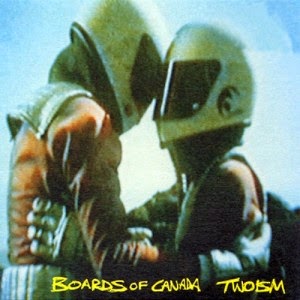
Boards Of Canada: Twoism

BOARDS OF CANADA: TWOISM (1995)

1) Sixtyniner; 2) Oirectine; 3) Iced Cooly; 4) Basefree; 5) Twoism; 6) Seeya Later; 7) Melissa Juice; 8) Smokes Quantity.

The full, unabridged discography for Boards Of Canada begins at least as early as Catalog 3, a tape-only recording produced circa 1987; Twoism, an EP released on tape and vinyl in 1995, is usually counted as the beginning of a «proper» recording career, since it was the only one of these early releases to have been later reissued in CD format. In any case, there's hardly any need to seek out those early rarities unless one is a seriously specialized fan of Michael Sandison and his slightly younger brother Marcus Eoin Sandison, and I am not, so...

Anyway, here is the deal. Melodically, Twoism is Brian Eno: minimalist electronic music with a deeply conservative harmonic structure — deconstructed Bach on transistors. The melodies are pretty, moody, and may create a feeling (perhaps illusionary) of serious depth with very limited means. However, the more precise genre is «chill-out», since on top of these ambient melodies we get dance beats, indicating practical club and party usage. (One of the tracks even bears the title of ʽIced Coolyʼ, as if they were inviting us to pigeonhole them). Subsequently, there are several possible responses: (a) ignore the beats and enjoy the atmospheric melodies; (b) ignore the atmospheric melodies and kick in to the beats; (c) try to kick in to the beats and enjoy the atmospheric melodies at the same time; (d) kill somebody because you find options (a) and (b) mutually exclusive and totally ruining your day.

Perhaps I am not all that qualified to make a comprehensive judgement here, but, honestly, I find myself closer to category (d) than the other three ones. I do not enjoy, nor really «get» the idea to combine music whose essence is so static and contemplative with programmed robotic beats whose essence is thoroughly dynamic and energetic. Contrasts and oppositions can be cool as heck in all forms of art, but this particular one I find irritating. Every once in a while, the beats disappear for a short spell, and I get to enjoy the duo's pretty (though, at this stage at least, not particularly innovative) iceberg-cold textures on their own, but very quickly, they reappear — and for a guy who has relatively little interest in dancing, well...

Sometimes they get a dark trip-hop groove going on, reminiscent of Portishead (ʽSeeya Laterʼ), with a deeply serious bassline giving more substance to the beat, but in those cases, the electro­nic canvas itself becomes a little more agitated, as the synthesizer loops are arranged in mini-crescen­dos and you can imagine the two background parts representing a calm sea with a host of scree­ching seabirds hovering over it. (Then the rhythm section could be your boat, calmly, but sternly crossing the waters). That's okay, but most of the time (ʽSixtyninerʼ, ʽOirectineʼ, etc.) the beats add nothing and detract from everything.

My favorite track on the entire record is the ultra-short ʽMelissa Juiceʼ — not only are the beats there reduced to a small, barely noticeable rhythmic tap, but it also features a quirky little pseudo-recorder melody with an empathetic, «whiny» twist that somehow feels very warm and humane next to all the cold-beauty-stateliness of the general melodic content. This should not be viewed as a reproach to the rest of the album, though — a drop of whiny warmth is exactly the correct amount that is needed to put the final touch on the album, like a tiny spot of yang in a huge swirl of yin. The beats are a reproach, though — and, I mean, it's not even as if they were any sort of special beats. Just your run-of-the-mill drum machine stuff that's been superimposed over the ambience at the last moment. If you are one of those chill-out types, though, you will probably enjoy it; me, I don't get it, and at this point in my life, I probably never will.