Search This Blog

Showing posts with label Butterfield Blues Band. Show all posts

Thursday, January 14, 2016

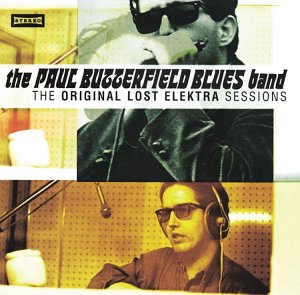
The Butterfield Blues Band: The Original Lost Elektra Sessions

THE BUTTERFIELD BLUES BAND: THE ORIGINAL LOST ELEKTRA SESSIONS (1964/1995)

1) Good Morning Little Schoolgirl; 2) Just To Be With You; 3) Help Me; 4) Hate To See You Go; 5) Poor Boy; 6) Nut Popper #1; 7) Everything's Gonna Be Alright; 8) Lovin' Cup; 9) Rock Me; 10) It Hurts Me Too; 11) Our Love Is Driftin'; 12) Take Me Back Baby; 13) Mellow Down Easy; 14) Ain't No Need To Go No Further; 15) Love Her With A Feeling; 16) Piney Brown Blues; 17) Spoonful; 18) That's All Right; 19) Goin' Down Slow.

Although the posthumous legend of The Butterfield Blues Band mainly lingered on in circles of «aficio­nados» and «connaisseurs», it was strong enough to trigger a large series of archival re­leases in the mid-Nineties — and for understandable reasons: most of these releases, like Straw­berry Jam or East-West Live, were culled from live shows recorded while Bloomfield was still in the band, so as to satisfy the demand for Mike-era live material and have something to com­memorate the band's finest incarnation on stage, rather than its latter day version with the brass players replacing the original guitarists. Unfortunately, all of these releases are bootleg quality: for some reason, the original band did not care much about being recorded professionally while in live flight, and most of this stuff is barely listenable, let alone reviewable.

In the end, the only archival release by the original band that is worth owning and talking about is the very first one — their failed first attempt at recording an LP, which they made as early as De­cember 1964, immediately after signing up with Elektra. Not all of the 19 songs included here date from those very sessions, but most of them do, and since the band was already fully formed and included Bloomfield, and the recordings were made in a professional studio, this here is an indispensable acquirement for The True Fan.

The problem is, I can sort of see why the people at Elektra were not impressed. From a certain angle, these covers of classic blues and R&B numbers are not significantly different from the contents of The Paul Butterfield Blues Band — indeed, a few would later be re-recorded for that very album. The subtle difference is that in late 1964, this really was «The Paul Butterfield Blues Band», with Paul's vocals and harmonica always taking center stage and always being much higher in the mix than everything else. Basically, ladies and gentlemen, we come here to listen to the amazing Mr. Paul Butterfield do impersonations of Muddy Waters, Howlin' Wolf, Sonny Boy Williamson II, Elmore James, and particularly Little Walter — and there are a few sidemen playing, uh, on the sides, but they're quite dispensable.

There are only a few spots where Bloomfield is allowed to shine, and they're cool and important: instrumental rave-ups like ʽNut Popper #1ʼ and R&B dance numbers like ʽLovin' Cupʼ are pro­bably the earliest known examples of the classic Bloomfield style, and even a small handful is enough to say that for that brief moment in late 1964 / early 1965, Mike Bloomfield may have been the coolest axe player in the West, and the only real competition to Mr. Slowhand of the Yardbirds' fame as the finest (white, at least) blues-rock guitarist known to mankind. But it is a really, really small handful — and it betrays jealousy, since on ʽMellow Down Easyʼ, for instance, Butterfield does not even allow him a proper solo: all the lead parts are played in the background and convenietnly muffled by the much louder harmonica parts. (On the 1965 re-recording, that would change, and Mike would get to slip in something purely his own).

To serious admirers of Paul's harmonica-blowing talents, this should not be a disappointment; on the contrary, I'd say that not a single «proper» BBB album features as much harmonica playing as these early tapes — where Paul is simply all over the place. But honestly, unless you really, really take your time thinking about how to use your harp in various creative / expressive ways, depen­ding on the structures, tonalities, moods of the individual songs, a blues-rock «Listen To Me Blowing» type album is ultimately bound to sound boring, and I can suggest that the people at Elektra thought so, too. As competent as these covers are, Butterfield here is the all-pervasive imitator, and only Bloomfield is the occasional innovator — because at least several Chicago blueswailers played better harmonica than Paul (let alone singing), but no Chicago lead guitar players ever played a guitar solo the way Bloomfield does it here on that ʽNut Popperʼ thing.

For some reason, many accounts of the album try to increase its status by claiming that it was «one of the first blues-rock albums», which is supposed to boil up our admiration and at the same time to forgive the record its rawness, unevenness, and harmonica-heaviness. But the true ex­pression should be «one of the first white American blues-rock albums» — British invaders like The Yardbirds and The Animals, let alone lesser heroes like Alexis Korner, had already been doing this thing for at least a couple of years; and in basic terms of instrumentation, there's really no reason why one couldn't apply the term «blues-rock» to the Chicago sound — I mean, Howlin' Wolf's recordings from the late Fifties / early Sixties certainly «rock» just as hard, if not harder, than these ones. A thinner drum sound, perhaps, but that's about it.

Still, there are enough historical and other reasons to at least be happy that the tapes were not completely lost, and that it is possible to trace Butterfield's story way back into late 1964. And, heck, when they really speed up the tempo and Paul is blowing away and the rhythm section is rolling and grooving, like on ʽPiney Brown Bluesʼ, for instance, it takes a mighty (anti-)intellec­tual leap to not get caught up in the excitement — at least a little bit.

Thursday, January 7, 2016

The Butterfield Blues Band: Sometimes I Just Feel Like Smilin'

THE BUTTERFIELD BLUES BAND: SOMETIMES I JUST FEEL LIKE SMILIN' (1971)

1) Play On; 2) 1000 Ways; 3) Pretty Woman; 4) Little Piece Of Dying; 5) Song For Lee; 6) Trainman; 7) Night Child; 8) Drowned In My Own Tears; 9) Blind Leading The Blind.

Although by 1971 just about everybody completely lost interest, I actually think that The Butter­field Blues Band's last LP is a slight improvement, in terms of energy and focus at least, over Keep On Moving. Of course, it was much too late. The «roots» market was wide open at the time, but it was occupied by a variety of fresh new faces, and Butterfield neither had the intimate sentimentality of Californian folkers like James Taylor, nor the purported depth and wisdom of The Band; and even if he made a serious effort to gain any of these, it would probably make no difference — he was already kicked off that train.

So this Smilin' record has no historical significance other than representing a last farewell, pronounced with a certain amount of musical dignity. There's a little less jazz here, a little more blues, and a lot more gospel-soul, with «Brother Gene Dinwiddie» (as he was now known) pos­sibly responsible for pushing Mr. Butterfield further in that territory. Occasionally, they have ig­nition, like on the opening track ʽPlay Onʼ, where bass, guitar, and brass succeed in locking them­selves in a tight groove, and it is in fact possible to get caught up in the excitement — when the brass section emerges in grand mode at the end of the track and gets diffused across the lead and backing vocals, the band almost manages to cross that invisible border between musical perfor­mance and spiritual celebration. Not quite, but almost.

(Amusing note: for some reason, many Web sources list the song as «co-written» by Butterfield with Kerry Livgren and John Elefante of Kansas! Of course, it's just a mix-up because of the latter two having a song with the same title on the Vinyl Confessions album from 1982, but apparently the mistake has virally spread over to dozens of sites — nobody even bothered to check that John Elefante was 13 years old at the time and had nothing to do with Kansas. And I'd be sad to find out that Butterfield ever co-wrote any­thing with Mr. Livgren, although, of course, that wouldn't be totally out of the question).

A couple other funky pieces here are worth hearing at least once, too: ʽ1000 Waysʼ builds up a slower, moodier, but still perfectly danceable groove, and shows that Paul's harmonica skills could be well adapted to funk from their blues origins; ʽLittle Piece Of Dyingʼ is a bit flabbier, but continues in essentially the same style, and if only the groove had some development to it in­stead of simply serving as a background for Paul's apprentice attempt at spiritual exorcism, it could perhaps hold our interest a little longer.

The rest is fairly non-descript as usual: needless covers of Albert King's ʽPretty Womanʼ (as de­void of eerie voodoo magic as their earlier toothless take on ʽBorn Under A Bad Signʼ) and ʽDrowned In My Own Tearsʼ (Paul has never been a certified member of the «I have covered Ray Charles and lived» club), jazz-rockish instrumentals that hurry past you like particles of office plankton on their way to work (ʽSong For Leeʼ, ʽNight Childʼ — beware, this song, too, in the world of virtual irreality often features a credit by «Oscar Peterson», even though Oscar Peterson wouldn't issue his ʽNight Childʼ until 1979), and competent, but lackluster gospel singalongs like ʽTrainmanʼ (which begins with a really silly invocation to NYC: "New York, New York... the bi-i-i-i-i-g APPLE!..") and ʽBlind Leading The Blindʼ, which at least ends the album on an upbeat note, rather than dissolving it in a yawny puddle of slow wailing.

The best thing I can say about all this stuff is that Rod Hicks is a really good, interesting, under­rated bass player — even on the boring songs, I find my attention consistently privatised by his nimble, adventurous lines. If only the rest of the band followed his lead and took similar flight at least half of the time, things would have been different at least in terms of energy and musical freedom. As it is, he did his best to save the band's swan song from being an embarrassment, but he was not enough of a magician to turn all his bandmates into inspired virtuosos — leaving them with little choice other than to split for good, once the record had sold its predictable fifty copies; and that was the quiet, humble, barely noticed demise of The Butterfield Blues Band.

Tuesday, December 29, 2015

The Butterfield Blues Band: Live

THE BUTTERFIELD BLUES BAND: LIVE (1970)

1) Everything Going To Be Alright; 2) Love Disease; 3) The Boxer; 4) No Amount Of Loving; 5) Driftin' And Driftin'; 6) Intro To Musicians; 7) Number Nine; 8) I Want To Be With You; 9) Born Under A Bad Sign; 10) Get Together Again; 11) So Far, So Good.

The very idea of the Butterfield Blues Band releasing their first live album without Mike Bloom­field — or Elvin Bishop, for that matter, if we want to be chivalrous about it as well — seems so revolting to me that, you know, these guys would have to work real hard to compensate for the affront. And they did not work that hard. Live seems like a realistic picture of Paul Butterfield and his bluesy/jazzy friends at the time: a band that plays it tight, intelligent, and safe to the point of boring. The fact that the record came out the same year as Live At Leeds and Get Yer Ya-Ya's Out!, not to mention all the fresh blood like Led Zeppelin or Jethro Tull shaking down the walls, does not exactly speak much in its favor, either.

The main problem, however, is not that the Butterfield Blues Band does not sound «tough» when it gets out on stage — kicking ass and rockin' the roof are not, after all, obligatory requirements for a good show, not even in 1970. The main problem is that they give the impression of trying to sound «tough», without truly rising to the task. Case in point: ʽNumber Nineʼ, a lengthy, speedy funk-rock jam, with the brass section in full flight and Paul playing Aeolus, Lord of Winds, on the harmonica. You can literally feel the buckets of sweat coming off the players, but to no avail: Sly & The Family Stone or James Brown would have blown them off the stage in a minute. There is a certain level of tightness and coordination, but it does not feel natural, and eventually the brass section just begins going to hell, with the players falling out of sync with each other and almost hinting at free-form jazz — but then, neither is this too free-form to genuinely compete with, say, Eric Dolphy. It's all neither here nor there: a whoppin' big mess that becomes a real chore when you realize you have to endure ten minutes of it.

Naturally, most of the songs are taken from the band's latest albums: ʽEast-Westʼ is not an option, and there is not even a single fast, short, catchy blues-rocker from their past — mostly these ex­cursions into jazz-pop and funk territory, with a little gospel on the side (the awful singalong number ʽGet Together Againʼ, which, for some reason, strives to establish a black church atmos­phere in an L.A. club). ʽThe Boxerʼ, by the way, is not a Simon & Garfunkel cover (that would have been at least novel), but rather a new funky composition by Rod Hicks that provides the drummer with a soloing opportunity (the drummer is the boxer, see?), and the brass section with a chance to replicate the meticulous punctuality of The Family Stone (which they fail). The other tunes aren't even worth discussing.

What is worth discussing is the split that the public had with the critics — most of these latter day Butterfield albums, and this live one in particular, have always received a serious share of aca­demic admiration, yet sales were drastically slow, and if East-West still finds support among the connoisseurs these days, everything after 1966-67 seems to have completely fallen out, no matter how much the critics try to revive it (see Bruce Eder's truly glowing account of the Live album at the All-Music Guide, for instance). The reason, I guess, is that The Butterfield Blues Band play their program formally right. There are no serious lapses of taste here (other than in the ʽIntro To Musiciansʼ bit, which Paul delivers as if he were stoned, or dead drunk — maybe he was), there's energy, there's some originality, there's not a lot of pretense and quite a lot of humbleness. But there is never a sign that this is a band that's ready to «go all the way», you know. Ultimately, they just sound like any average blues-rock band with enough determination to go on practicing, no matter how much time it takes. And the decision to expand into jazz-rock and funk — genres that absolutely require that one «goes all the way» if one wants to make a difference — was pro­bably the single silliest decision of Butterfield's entire career. As a jazz musician, he's too sterile; as a funk player, too stiff. He was born in Chicago, and that is where he should have stayed.

Tuesday, December 22, 2015

The Butterfield Blues Band: Keep On Moving

THE BUTTERFIELD BLUES BAND: KEEP ON MOVING (1969)

1) Love March; 2) No Amount Of Loving; 3) Morning Sunrise; 4) Losing Hand; 5) Walking By Myself; 6) Except You; 7) Love Disease; 8) Where Did My Baby Go; 9) All In A Day; 10) So Far, So Good; 11) Buddy's Advice; 12) Keep On Moving.

God, how boring. By 1969, both Elvin Bishop and Mark Naftalin had left the band, feeling that the ship had sunk low enough — but, of course, «The Butterfield Blues Band» may function under that title as long as it has at least one Butterfield in it. Keep On Moving features at least ten different players in addition to Paul, and I am not even completely sure who of them was «of­ficially» a band member and who was not at the time. Most importantly, the quality of the music hardly stimulates me to find out.

Basically, at this point they are acting as a weak, dis-focused substitute for Blood, Sweat & Tears. Lots of brass, lots of swinging' and funky rhythms, lots of swagger and agitation, but practically nothing by way of memorable tunes. Somehow, they have gradually entered a «loungy» phase of existence, where vibe and atmosphere are created by the players' tones and personalities rather than compositional findings — and other than a few more nice bits of Paul's harmonica, there is nothing particularly fascinating about these particular tones and personalities. For me at least, the «three listen test» was failed here 100%: glancing back at the song titles, I have not the faintest memory of how any of them originally went, other than a general vague remembrance of how much noise the brass section made and how Paul Butterfield worked so very hard to pass for a natural «soul screamer» and it still didn't help.

Now, with the help of the «play» button, just a few quick remarks: ʽLove Marchʼ is undescribably dippy and silly — and its organ-led gospel bridge, culminating in a "I know... THERE'S GOTTA BE A CHANGE!", is the biggest embarrassment in Butterfield history up to that date, just about everything about it being a poorly executed cliché. ʽWalking By Myselfʼ is the only song that even remotely tries to rock, and new guitarist Buzz Feiten adds a decent lead part, but he's defini­tely no new Mike Bloomfield. His only songwriting contribution, ʽBuddy's Adviceʼ, probably has the best brass riffs on the album, but they fall on a totally empty stomach anyway.

For objectivity's sake, I should probably state that the album is very well produced (by Jerry Ragovoy, the author of ʽTime Is On My Sideʼ and ʽPiece Of My Heartʼ), that the brass, keyboard, and guitar players are tightly coordinated, that at least some thought is included in most of the arrangements, and that Robert Christgau gave the album an A, saying about Butterfield that "he just gets better and better". Well, this ain't the first and ain't gonna be the last time that we don't exactly see eye-to-eye with Mr. Dean, and just so that this fact can be properly reflected, I'm going all out here and awarding the album a decisive thumbs down. Okay, honestly, this deci­sion has nothing to do with Christgau — I just thought that you should be aware of alternate opinions, no matter how puzzling or irrational they are.

Tuesday, December 15, 2015

The Butterfield Blues Band: In My Own Dream

THE BUTTERFIELD BLUES BAND: IN MY OWN DREAM (1968)

1) Last Hope's Gone; 2) Mine To Love; 3) Get Yourself Together; 4) Just To Be With You; 5) Mornin' Blues; 6) Drunk Again; 7) In My Own Dream.

By the time this album came out, nobody really cared any more, and only the most astute listeners and critics may have noticed how desperately The Butterfield Blues Band was trying to rebrand itself. Running on covers, it seems to have been agreed, was pretty much equivalent to suicide; but neither Butterfield nor Bishop had a lot of songwriting talent, and so it is up to new bass player Bugsy Maugh to fill in the glaring gap and steer the Butterfields away from interpretation and improvisation and into the treacherous waters of creativity.

The big problem with this is that Bugsy was apparently a major fan of contemporary R&B, and his songs basically sound like sincere, but never outstanding imitations of Wilson Pickett, Otis Redding, and whoever else was riding the Atlantic wave of success at the time. Jazzy rhythms, poppy choruses, lots of brass and vocal exuberance (and, what's more, the vocals were to be pro­vided by Bugsy himself — Paul either did not want to mess around with other band members' songs, or found them unsuitable to his own style). And yes, the problem is not that this does not at all sound like classic BBB (who'd really care?), but that the songs only barely stand competi­tion. ʽGet Yourself Togetherʼ, for instance, takes the old and well-worn ʽCan I Get A Witness?ʼ groove, but adds nothing particularly new to it — probably the most «novel» aspect is the way their brass section crosses paths with Butterfield's harmonica, but then I'd rather just see the whole thing turn into a fast, punchy, harmonica-driven instrumental (much like the Stones had originally done with this groove, turning it into the awesome — for 1964, at least — ʽNow I've Got A Witnessʼ). Actually, Bugsy is not a bad singer: he does quite alright on ʽMornin' Bluesʼ, a snappy chunk of whitebread soul, showing good range, fluent modulation, and respectable re­straint. And still, I cannot get rid of the feeling that something is just not there. Probably because they take all these familiar structures, refuse to populate them with extra hooks, yet do not have enough balls to make them sizzle and kick proper ass in performance.

There are altogether two songs on the album that rise above the likes of «nice» and «okay» and «wish I'd had an extra ninety years to my life». The opening number, ʽLast Hope's Goneʼ, is a moody, subtle piece of blues made special by a very unusual bass «zoop» at its core and a chao­tic mish-mash of brass and woodwinds at the edges; it is hardly a coincidence that the rising star of David Sanborn is credited here as one of the co-authors. And Bishop's only contribution to the record, ʽDrunk Againʼ, is a hilariously realistic example of how to make an authentically «drun­ken blues», with a large part of it taken over by a loosely coherent rant of the «protagonist walks into a bar...» variety. Not much to do with pure music (although Butterfield does a pretty good job on the harmonica in the background), but hits home all the same.

Butterfield's only solo composition here — the title track — is featured at the end and was pro­bably supposed to be the climactic finish, what with all those gospel harmony overtones, but it is stunningly weak: musically, just sort of a ghostly shuffle, limping along like a three-legged dog, and vocally, with nothing but the pure power of one man's soul to guide it to its conclusion (and it doesn't even have a conclusion — it just indecisively fades away after almost six minutes of try­ing to understand what it is supposed to do).

So yes, I respect that the fact that they at least tried to change, and even develop some sort of hybrid musical genre, wobbling between blues, jazz, and R&B, rather than just throwing in a few more mediocre Albert King covers. But there's really nothing here that couldn't be done better by either Traffic, or Grateful Dead, or Blood, Sweat & Tears in their prime — and there's no­thing but sheer curiosity, I think, that might make you want to check it out. Oh well, at least it's all over in just 36 minutes — very respectful of them, since it wouldn't have been too difficult to shove twenty more minutes of comparable mediocrity into the pot, and then I'd really have to hate 'em.

Tuesday, December 8, 2015

The Butterfield Blues Band: The Resurrection Of Pigboy Crabshaw

THE BUTTERFIELD BLUES BAND: THE RESURRECTION OF PIGBOY CRABSHAW (1967)

1) One More Heartache; 2) Driftin' And Driftin'; 3) Pity The Fool; 4) Born Under A Bad Sign; 5) Run Out Of Time; 6) Double Trouble; 7) Drivin' Wheel; 8) Droppin' Out; 9) Tollin' Bells.

If I ever had a nickname like «Pigboy Crabshaw», I'd probably have to join the Church in re­pentance, but Elvin Bishop seemed okay with it, and his pals in the band liked it so much that with the departure of Bloomfield they put it in their album title to commemorate the beginning of Bishop's brief rule as the Butterfield Blues Band's only guitar player. Brief and, may I add, some­what inessential. Elvin was neither the band's frontman nor its stuntman — he just played that guitar and never seemed to think all that much about leaving his mark on the world.

It would be cool as hell for me to say something important like «There was so much more to the original Butterfield Blues Band than Mike Bloomfield», and follow it up by saying «and this is effectively shown on the band's third album, where they effortlessly demonstrate how they can get by without Mike's talents», and then justify this further by pointing out that «Bloomfield was, after all, 50% talent and 50% showman flash — without him, Butterfield, Bishop, and Co. are finally able to concentrate directly on the music and sacrifice their egos for the benefit of the mu­sic». But hey, what can I do? All said and done, I'm a fan of egos. And the most successful sacri­ficers of egos are, in a way, the biggest egotists of them all — like J. J. Cale, for instance.

The Resurrection Of Pigboy Crabshaw is just a regular electric blues album now, abandoning all the genre-crossing, tradition-marrying pretense of East-West. To «compensate» for Bloom­field's departure, Paul brings in a whole new brass section — a good one, to be sure, including none other than the soon-to-be-legendary David Sanborn on alto sax; but the big band approach to their source material is neither new nor revelatory. Furthermore, the album title seems to sug­gest that previously, Bishop's talents were at the least undervalued and underused, and that now is his chance to shine; but the guitar parts are very subdued throughout the album, and when it is over, it will most likely be remembered as a sonic field dominated by Butterfield's harmonica and the brass section, never the guitar. And maybe it's logically cool, but most of the arrangements leave me cold, bored, and almost amazed that they would dare offer something like this in the middle of 1967 — what with Cream and Hendrix setting completely new standards.

The record consists almost entirely of covers, with just two short Butterfield originals for an ex­cuse: ʽRun Out Of Timeʼ, co-written with sax player Gene Dinwiddie, is a playful fast R&B groove ruled by nimble brass flourishes, but it fades out way before it could evolve into anything mind-blowing; and ʽDroppin' Outʼ, co-written with songwriter Tucker Zimmerman, is... a playful fast R&B groove ruled by nimble brass flourishes? Okay, it's soulful enough, but Butterfield is still unconvincing and unexceptional as a vocalist.

The covers are hardly any more exciting — particularly the unterminable, mindnumbingly slow ʽDriftin' And Driftin'ʼ, whose tortoise tempo and thick brass layers attempt to build up an atmos­phere of solemnity, but don't do much in that respect other than the fact of their existence. Butter­field and Bishop do deliver a couple of harmonica and guitar solos where it seems like they are really trying, but by the time they get around to them, the song has already long since outlived its usefulness. ʽDouble Troubleʼ is unworthy of both the shorter, far more focused and ten times as bleeding Otis Rush original and a later Dire Straits-style reinvention by Eric Clapton; ʽBorn Under A Bad Signʼ is totally expendable in between the Albert King original and the grizzly Cream cover; and the list may be continued.

Bottomline is that this record, while not stereotypically «bad», is just very, very boring. You have to have a really subtle appreciation for Butterfield, one that goes deep beyond the surface and maybe even adds an imaginary touch or two, or a very rigid, academic type of respect for electric blues to truly enjoy The Resurrection as something above background music; and I have neither, so I just have to rate it as a thumbs down. Especially in the overall context of 1967, when, you know, it was almost shameful to release a record of such profound mediocrity.

Tuesday, December 1, 2015

The Butterfield Blues Band: East-West

THE BUTTERFIELD BLUES BAND: EAST-WEST (1966)

1) Walkin' Blues; 2) Get Out Of My Life, Woman; 3) I Got A Mind To Give Up Living; 4) All These Blues; 5) Work Song; 6) Mary, Mary; 7) Two Trains Running; 8) Never Say No; 9) East West.

Butterfield's second album is often regarded as the band's high point — not just because it would be Bloomfield's last as a band member, but because, due to his instigation, this is as close as the BBB come to breaking the generic blues-rock mold. Just like Cream, already mentioned in the previous review, started out with the aspiration of doing a «pure blues» thing (at least, Clapton had that intention — maybe Bruce wanted them to do a «pure jazz» thing), but almost immediate­ly got caught up in the winds of time and drifted towards heavy rock and psychedelia, so it was almost inevitable, with the BBB's pool of talent, that they wouldn't be settling cozily in their sta­tus of «Muddy/Elmore cover band». At least, not in 1966 they wouldn't.

There is still plenty of pure blues here, of course, but even here they are experimenting, no longer content with merely covering the songs the way they were, but trying to reinvent them in a diffe­rent idiom. The results aren't particularly awesome — more like «curious», like when they do Robert Johnson's ʽWalkin' Bluesʼ as some sort of blues tango, or when they take Muddy's former­ly slow, threatening ʽTwo Trains Runningʼ and transform it into a boogie: unfortunately, they did not have the idea to conduct a sparring guitar match between Bloomfield and Bishop, which would have fit right in with the song title. In the end, my favorite «pure blues» song on here emer­ges as ʽI Got A Mind To Give Up Livingʼ, Butterfield's first attempt at generating a deep soul atmosphere, with Bloomfield playing straight from the heart, making the guitar choke with tears of rage rather than just go all fussy and crazy. Sharp, poignant, convincingly tragic, this is America's answer to The Animals and in this case, it might even be better, since Butterfield, un­like Burdon, never comes across as a theatrical poseur (sorry Eric — you are more interesting and gifted as a singer, but not as a haunted human being).

A brief mention must be made of such an oddity here as ʽMary, Maryʼ, which most of us usually know from the Monkees' second album — indeed, Mike Nesmith originally gave the song away to But­terfield before making use of it for his own band. It would be curious to know what the demo looked like, because the Butterfields present it as a swampy blues jam, all ragged and torn, whereas the Monkees naturally made it into a tight, jaunty pop number; the respective cherry-on-top is a shrieking, frenetic Bloomfield solo in Butterfield's version, and Davy Jones' smooth vocal harmonies in the Monkees' version. Neither of the two is greatness incarnate, but I like both, and I'm not altogether sure if I'd even want to make a preference.

Still, that's just the potatoes: the meat of the album, as any critic will tell you, are the two exten­ded, jazz-influenced instrumental jams. Wait a minute, influenced? ʽWork Songʼ is jazz — a stretched cover of Nat Adderley's most famous composition — and ʽEast-Westʼ, following in the footsteps of the Byrds' ʽEight Miles Highʼ, is rock's attempt to incorporate free-form soloing and modal jazz elements into its very soul. Mike Bloomfield may have made his reputation as a fla­ming guitar punk in Bob Dylan's 1965 entourage, but he had an intellectual drive as well, and ʽEast-Westʼ is as intellectual as you ever get with these guys. And considering how repetitive, drone-heavy, free-flying, and energetic ʽEast-Westʼ is, it is arguably the most closest predecessor to the Velvet Underground and their jamming feats a year later.

What is even more interesting, though, is that ʽEast-Westʼ actually has a cool, well thought out structure — over its thirteen minutes, it gradually moves from swampy blues into a decidedly Eastern raga section, then into something more close to country-western, and ultimately culmi­nates in a set of pop-rock riffs, starting with a variation on ʽMemphis Tennesseeʼ. This means that they took the name seriously, and consciously tried to integrate Eastern and Western traditions, to the best of their abilities, within the same composition. I have no intention of overrating ʽEast-Westʼ like so many American critics desperately hunting for proof that American bands were just as rigorously pushing boundaries in 1966 as their British counterparts, but this is a major mile­stone, and for what it's worth, as a lengthy jam, it makes a stronger point than Cream's jams, since its scope is wider and its ambitions are higher from the start.

Unfortunately, the happiness did not last long — apparently, this new direction and its conflict with the old one created too much tension in the band and finally split apart the Butterfield / Bloomfield partnership for good. In fact, it probably couldn't have been any other way — one more record like this and Bloomfield would be taking Butterfield's band away from him, despite not knowing how to sing or play harmonica. In a world that was less and less interested in retro Chicago blues, I guess, the only way you could still play retro Chicago blues would be to alienate yourself from fellow players who were only too happy to mix Chicago blues with Indian ragas. As it turned out, though, Bloomfield wouldn't be able to get too far on his own — all his attempts to create bands for himself (such as Electric Flag) failed, proving that he was far better off as a masterful sideman than a clumsy leader. Fortunately, East-West still proudly stands as a small, but exciting testa­ment to one of the finest talent pools in America and simply one of the best non-standard blues-rock albums of its era, so a thumbs up is inevitable.

Tuesday, November 24, 2015

The Butterfield Blues Band: The Paul Butterfield Blues Band

THE BUTTERFIELD BLUES BAND: THE PAUL BUTTERFIELD BLUES BAND (1965)

1) Born In Chicago; 2) Shake Your Money Maker; 3) Blues With A Feeling; 4) Thank You Mr. Poobah; 5) I Got My Mojo Working; 6) Mellow Down Easy; 7) Screamin'; 8) Our Love Is Drifting; 9) Mystery Train; 10) Last Night; 11) Look Over Yonders Wall.

Eric Clapton had said in interviews that when Cream crossed over to America and began looking around, they basically just thought all those new bands were shit — with the exception of the Butterfield Blues Band, which, he admitted, was the only real competition that the haughty Brits had over there. Whether he was exaggerating or not, and what this was really supposed to mean, is up to you to determine, but the curious fact is, when you come to think about it, there weren't really that many «blues-rock» type bands in the States circa 1964-66. Folk rock, yes, with the Byrds serving as godfathers of the genre; psychedelic jamming, yes; garage-pop, yes, plenty of it, but the blues were largely left over for the British invaders to take. Strange, isn't it, when you come to think about it? As if all these white kids were afraid that The King Gang (Albert, Freddie, and B. B.) would start smashing their windows at night and putting holes in their tires if they tried stepping on their local turf.

Thus, in a way Paul Butterfield (and, coming a wee bit later, The Blues Project, who were their principal and not very successful competition) was filling an empty niche in his own native country — of course, few people were more qualified to do it than Butterfield, who was so much born in Chicago that the first song on his first album was appropriately named ʽBorn In Chicagoʼ, the second song covered Elmore James, the third song covered Little Walter, and by the time the fourth song came along, you were pretty much all set. And having been born in Chicago, and having spent his younger years soaking in the blues atmosphere of the city, and having a good ear for music, there was no way that Paul Butterfield could not have matured into a solid blues singer who could also blow some real mean harp, perhaps a little less creatively than his mentor Little Walter, but not any less passionately.

However, the real reason people still continue to listen to these early Butterfield Blues Band re­cords certainly is not Paul, likeable as he is — it is young prodigy Mike Bloomfield, whom most people first hear on Dylan's Highway 61 Revisited and only few people bother to check up fur­ther, despite the fact that he may, indeed, have been the... let me phrase this carefully... single best white blues guitar player in mid-Sixties' America? yes, something like that. At the very least, Clapton did consider him his chief over-the-ocean competitor for a brief while.

The thing about Bloomfield, of course, was that he was really a young punk who somehow got stuck in the blues — a genre that, unlike so many other white kids, he was totally refusing to treat boringly-reverentially. He would play fast, loose, flashy, ecstatic. He could be the Jerry Lee Lewis of the guitar one moment, the Coltrane of the guitar the next moment, and swing in and out of the generic 12-bar mode at will. He clearly loved all these big Chicago dudes a lot, but he was not at all set to imitate them — well, maybe Buddy Guy could have taught him something spe­cial, but then there might also have been things Bloomfield could teach him back. In any case, the guy's crazy leads are the goddamn reason to own and enjoy this record, period.

Because outside of that, the album would mostly hold up as a historically important one — if not the first bona fide American blues-rock album, then certainly one of those that first comes to mind when you think about American blues-rock as a whole. Butterfield is a nice professional guy, but not much more than solid — he does not have that much of a distinctive personality, and he can't even pull off a perfect, Muddy-approved "got my brbrbrbrbrbrbr working" on ʽMojoʼ, which means that drummer Sam Lay gets to sing it instead (!). I certainly couldn't elevate Butter­field as a singer over, say, Mick Jagger (who may have been not as technical on the harmonica, but made a far better job of making your hair stand on end as a singer in those early bluesy days, for good or bad). And consequently, there's not much reason to prefer him over Elmore, Walter, and Muddy, or even think that he brought something extra to the table (he's not a particularly good songwriter, either, and he would never be able to acquire the same «lonesome schizophrenic genius» tag as his future British correlate, Peter Green).

With Bloomfield afoot and aloof, though, even the most straightforward Elmore James covers here, like ʽShake Your Moneymakerʼ and ʽLook Over Yonders Wallʼ, acquire an arrogant boyish fervor that makes them, I dunno, somewhat more rock'n'rollish in nature than the originals — not «dangerously» rock'n'rollish, like the Stones presented their blues, but «ecstatically» rock'n'rollish, just ripping through the stratosphere like there was no tomorrow. Likewise, he is capable of making the slow blues numbers interesting and exciting, sometimes even playing those scorching melodic lines simultaneously with the vocals, without caring whether they take your attention away from the singing or not (they usually do, for instance, on the «original» composition ʽOur Love Is Driftingʼ, which is really just one more 12-bar blues, but with more stinging on it than around a bear-attacked beehive). The two instrumentals, ʽThank You Mr. Poobahʼ and ʽScrea­min'ʼ, have Bloomfield and Butterfield competing, but as shamanistic as Paul sometimes gets on his instrument, he just can't match Bloomfield when he strikes real hard.

We should probably drop in a kind word for the rest of the band as well — Elvin Bishop on se­cond guitar (usually rhythm, but I guess he takes a few leads here and there), Mark Naftalin on organ, Jerome Arnold on bass, and Sam Lay on drums (the latter two were drawn over from Howlin' Wolf's own backing band) — but the best word that can be dropped in, I guess, is that they all manage to put enough swing in the music so that it don't sound too stiff and reverential. Lay, in particular, creates far more fuss with his drumset than your average Joe, and is also seri­ously responsible for the above-average energy quotient of the album; but the role of the drum­mer on a by-the-book blues-rock album is not too enviable by definition.

In any case, as far as «whiteboy blues» stuff from the Sixties goes, there are few records out there to beat out the charm of The Butterbloomfield Blues Band (as it should have been called) — Eric Clapton With The Bluesbreakers might be the only competition in terms of scorching fierce­ness (and certainly not those early pre-ʽAlbatrossʼ Fleetwood Mac albums with Peter Green that strange people tend to rave about). Even if the band would really find its own voice with the next album, this one is still very respec... no, wait, I meant to say «quite kick-ass, really», because, well, if your blues-rock doesn't kick at least some ass, you must be doing something wrong — like confusing it with a 17th century court dance, for instance. Thumbs up.