Search This Blog

Showing posts with label Box Tops. Show all posts

Wednesday, May 13, 2015

The Box Tops: Tear Off!

THE BOX TOPS: TEAR OFF! (1998)

1) Flying Saucers Rock'n'Roll; 2) Wang Dang Doodle; 3) Ain't That A Lot Of Love; 4) It Tears Me Up; 5) Last Laugh; 6) Treat Her Right; 7) Soothe Me; 8) I'm In Love; 9) The Letter; 10) Trip To Bandstand; 11) Little Latin Lupe Lu; 12) Keep On Dancing; 13) Last Bouquet; 14) Big Bird.

I suppose that even fewer people are aware of this surprising Box Tops comeback than those that know about the Big Star comeback — then again, maybe not, since I really have no idea whether «old school power pop» still remains more popular among the knowledge-seeking youngsters today than «old school blue-eyed soul». Anyway, this particular comeback was actually quite a proper comeback, since it did reunite all the original band members from 1967, right down to the rhythm section (not that the rhythm section had much to play in 1967). The resulting album, how­ever, was downright odd.

I mean, you could rightfully expect the guys to go nostalgic, but Tear Off! goes way beyond simple nostalgia — it plays out like a consciously assembled encyclopaedia of pop music forms in the pre-Sgt. Pepper era. Putting together a jumbo-combo of golden oldies, forgotten oldies, and some pseudo-originals, these Elderly Box Tops begin with stereotypical rockabilly (ʽFlying Saucers Rock'n'Rollʼ), continue with some rockin' Chicago blues (ʽWang Dang Doodleʼ), follow that up with gritty R&B (ʽAin't That A Lot Of Loveʼ), throw in some torch ballads (ʽIt Tears Me Upʼ), heat it up with some hard rock (ʽTreat Her Rightʼ), mix it with pop-soul (ʽSoothe Meʼ), spice it up with late Fifties' novelty-comedy stylistics (ʽTrip To Bandstandʼ), bring on a bit of twistey innocence (ʽKeep On Dancingʼ), remind us how country music used to sound when Hank Williams was king (ʽLast Bouquetʼ), and finally, end things with a loud, overdriven garage-rock jam (ʽBig Birdʼ) that seems to suggest — «yes, boys and girls, and then, eventually, the angry, crazy, distorted rock guitars took over and swallowed them all, and they all lived happily ever after in the satiated belly of the heavy rock guitar».

Oh, I forgot: in the middle of it all comes a re-recording of ʽThe Letterʼ, because otherwise, I guess, the record label wouldn't let them release the package. Come on now — what good is a Box Tops album in 1998 if it doesn't have ʽThe Letterʼ? It's like a Sgt. Pepper with no ʽYes­terdayʼ on it!... oh, never mind. Anyway, this new version sounds almost like the original, except that Chilton's voice, retaining its gruffness, has lost much of its frailty and vulnerability, and that makes them sound like their own inferior tribute band.

Anyway, on the whole this is a totally harmless, perfectly fun, and completely useless record. Very cleanly and wholesomely produced, which is the only thing that betrays its date of origin (sort of like Clapton's From The Cradle), but little more than a respectable tribute to all those heroes of long ago — nobody is going to cherish this version of ʽWang Dang Doodleʼ over How­lin' Wolf or this version of ʽSoothe Meʼ over Sam Cooke. This is disappointing in that Chilton had gone a long, long way since the Box Tops last saw each other, and with their legacy that, after all, goes a little deeper than generic rockabilly and twist numbers, this may have been a more meaningful album. Instead, it's just like a gathering of old friends for old times' sake — stick around, have some drinks, play a couple songs we used to play when we were thirteen, except we do it like professionals now.

In the end, the lengthy ʽBig Birdʼ cover happens to be the only place where they seem like they're trying to do something — even if that something largely amounts to kicking up a ruckus, and is not very successful even as a ruckus (the exaggerated screaming is way too «acted»: all these "OH BIG BIRD!" and "TAKE THE BIG BIRD HOME!" and all the ooh-aahs seem sort of point­less). And everything else is just a nostalgic souvenir — and it's not even the kind of nostalgic souvenir you'd most likely expect from these former soulsters. But yeah, everything sounds kinda cool. If you were a directionless teen in 1998 and you saw this in a used bin and had your first acquaintance with ʽI'm In Loveʼ and ʽSoothe Meʼ by donating fifty cents, it would at least give you a fairly good understanding of the essence of Sam Cooke and Wilson Pickett. Wouldn't let you understand too much about Alex Chilton, though.

Wednesday, May 6, 2015

The Box Tops: Dimensions

THE BOX TOPS: DIMENSIONS (1969)

1) Soul Deep; 2) I Shall Be Released; 3) Midnight Angel; 4) Together; 5) I'll Hold Out My Hand; 6) I Must Be The Devil; 7) Sweet Cream Ladies, Forward March; 8) The Happy Song; 9) Ain't No Way; 10) Rock Me Baby.

The final album by The Box Tops does not have all that much to recommend it. It is formally notable by featuring no less than three Alex Chilton originals — none of which is particularly im­pressive on its own, but collectively they show that the man is trying his hand at several different directions at once: ʽTogetherʼ is blue-eyed soul in the same vein as all those hits that Penn, Old­ham, and Thompson were writing for the band, ʽI Must Be The Devilʼ is dark piano blues remi­niscent of early Animals, and ʽThe Happy Songʼ is a short, fast, upbeat country-rocker. Of these, ʽDevilʼ is the only song that gets occasionally remembered, though, and only because its doom-laden lyrics always bring on associations with Chilton's ill-fated life and career — but in 1969, he probably just wrote all these "I can't bear to see my face, wrong's done I can erase" lines because, well, that's sort of how blues stuff usually gets written, you know.

The primary album single was ʽSoul Deepʼ, another Thompson contribution that earned them the last bit of chart success, but with Van Morrison's Astral Weeks having rewritten the rules on «blue-eyed soul» a few months earlier, you could tell that anything like ʽSoul Deepʼ already sounded a bit behind the times in 1969 — indeed, no melodic or «semantic» progress here, just two and a half minutes more of catchy soulful pop, and furthermore, the song is jubilant rather than mournful, which is not a very good thing for Chilton, to whom «sad» always seemed to come more naturally than «happy» (for that matter, ʽThe Happy Songʼ, despite the title and the lyrics, ends up sounding bitterly ironic the way he does it).

More interesting, if not necessarily better written, is another single, ʽSweet Cream Ladies, For­ward Marchʼ, which has nothing to do with the recently deceased Cream, but is instead a Brit­poppy march (proper brass backing included) dedicated to lovely ladies of the night and the use­ful services they provide to society. It's... uh... ironic, I guess, but I am not sure Chilton himself understood all that well whether it should have been sung with more sneer/irony or more em­pathy/compassion, and his delivery is kinda bland — somebody like Ray Davies, perhaps, would have been able to turn it into one more of his lovable social portraits, but here it just sounds like a novelty number.

In addition to other minor disappointments (such as a completely pointless cover of ʽI Shall Be Releasedʼ, following The Band's arrangement but smoothing out all the pain-stuffed edges that Richard Manuel brought to our attention so expressively), it is clear that the band did not have enough material — so, to bring the record to a proper conclusion, they recorded ʽRock Me Babyʼ once again, this time in a nine-minute (!) version taken at two different tempos (mid- and slow) and featuring extended guitar and piano solos that must have sounded totally amateurish by this time in rock's instrumental journey. For a band that began its career by having session musicians play most of the instruments, this was a rather ironic way to end that career. (Not that it's a bad sound or anything, and I know Gary Talley has a rather high reputation in some circles, but there is nothing in this playing that would strike me as specifically individualistic).

On the whole, though, the worst thing about Dimensions is that, if you play it back to back with the band's debut, you won't hear any significant difference — and no band that sounded the same way in 1969 as it sounded in 1967 was deemed worth to live, or at least to thrive, at the time. So, naturally, as Jesus Christ said, «to conquer death, The Box Tops only had to die», and so The Box Tops went ahead and did the right thing to do, upon which Chilton could finally reboot his career, shake off the «young promising blue-eyed soulman» tag, and put his talents to more efficient use.

Wednesday, April 29, 2015

The Box Tops: Non-Stop

THE BOX TOPS: NON-STOP (1968)

1) Choo Choo Train; 2) I'm Movin' On; 3) Sandman; 4) She Shot A Hole In My Soul; 5) People Gonna Talk; 6) I Met Her In Church; 7) Rock Me Baby; 8) Rollin' In My Sleep; 9) I Can Dig It; 10) Yesterday Where's My Mind; 11) If I Had Let You In.

Maybe this one was rushed out a little too quickly after Cry Like A Baby, because even repeated listens with an extra spoonful of attention do not do much in the way of excitement. Two things are immediately noticeable, neither of them auspicious — first, the Penn/Oldham partnership only contributes two songs, and second, there are way too many horns here, as if somebody were intentionally pulling The Box Tops away from their dabblings in the «baroque» and the «psyche­delic» and urging them to compete with the newly formed Blood, Sweat & Tears (or the not-yet-formed Chicago, in an act of artistic prevention).

I would not say that this latter move is completely wrong — sometimes the results are amusing, for instance, on their cover of Hank Snow's ʽI'm Movin' Onʼ. That one used to be a no-frills country song (which The Rolling Stones had already managed to transform into an ass-kickin' rhythm'n'blues killer machine in their early live shows), and here, too, it starts out all country-like, but then midway through the horns kick in, the bass zoops move closer to hard rock territory, the vocals disappear altogether, and we witness a smooth, natural-sounding transformation from quiet country to loud, anthemic, gritty R&B.

Unfortunately, surprises like these are fairly rare throughout the album. The same horns can sound pedestrian and formulaic just as often as they can sound useful and inspiring, and on the whole, it seems as if once again they were using Chilton here as their main attraction — on some of the songs, his voice is even more wild and gravelley than before, so much so that if I did not know how smooth and clean Tom Waits sounded in his early youth, I'd easily have mistaken Alex for a young Tom on his own ʽI Can Dig Itʼ and particularly on the dark folk ballad ʽYes­terday Where's My Mindʼ, written by Jon Reid and Bill Soden. For this song, the Box Tops earned numerous comparisons with the Doors that came one album too late — musically, this one is very much rooted in traditional Britfolk, which the Doors didn't play much, and is more in line with the Grateful Dead or the Jefferson Airplane; also, Chilton's vocal impersonation is much more «earthy» than Jim Morrison's not-of-this-world lizard-king promenades.

(Sidenote: for a really, really bizarre version of ʽYesterday Where's My Mindʼ, check out the recently uncovered Paint A Lady album by odd-folk singerine Susan Christie, shelved in 1970 and critically savored only around 2006. She doesn't necessarily do a better job than Chilton, but her tacked-on three-minute free-form introduction gotta rank as one of the most bizarre perfor­mances of its epoch).

None of these songs were considered for release as singles: instead, that honor fell to ʽChoo Choo Trainʼ, a fairly ordinary tune of longing for one's baby. Apparently, they were once again trying to recreate the «yearning / travel» theme of ʽThe Letterʼ, replacing the aeroplane with a more grounded form of transportation, but for some reason, decided to give the song a slightly «vulga­rized», pub-rock atmosphere. The trick did not work — the single charted much lower than ʽCry Like A Babyʼ, and then it all went further downhill when they tried to remedy the situation with ʽI Met Her In Churchʼ: not only was the title of the song probably not the most appropriate thing to capture the hearts of the single-buying market, but the song itself, though technically ambitious (with a little «mini-serenade» in the place of the instrumental break), brings them into the sphere of anthemic «gospel pop», in which sphere you usually get your ass kicked by the likes of Maha­lia Jackson unless you do something totally mad and unpredictable. In this case, though, Chilton just does not sound as if he's all that into it.

Throw on all sorts of stuff that is just plain boring — for instance, these guys have no business whatsoever covering ʽRock Me Babyʼ (nobody really has, not after Jimi), and ʽRollin' In My Sleepʼ actually puts me to sleep, despite being superficially pretty — and the lack of anything truly outstanding, and there remains little mystery about why this is indeed the beginning of the end. That said, Non-Stop is not a «bad» record: it is simply too self-conscious for its own good, trying way too hard to «do it right» by looking at what everybody else around is doing, comple­tely forgetting the need to cobble together its own face. In this, it is far from being alone, and it is still much better than a lot of the competition — the «Neanderthal model of Alex Chilton» alone is worth a couple visits. But probably not much more than a couple.

Wednesday, April 22, 2015

The Box Tops: Cry Like A Baby

THE BOX TOPS: CRY LIKE A BABY (1968)

1) Cry Like A Baby; 2) Deep In Kentucky; 3) I'm The One For You; 4) Weeping Analeah; 5) Every Time; 6) Fields Of Clover; 7) Trouble With Sam; 8) Lost; 9) Good Morning Dear; 10) 727; 11) You Keep Me Hangin' On.

This is a rather typical example of the «sophomore» approach: a record that is intentionally (and also rather hastily) designed to follow up on the preceding success, formula-wise, and almost inevitably one small or one large notch below its predecessor, depending on the amount of talent and resources involved. Here, we have the same players (or the same «non-players»; I am not sure how much was left to session musicians this time around), the same focus on the lead singer, the same team of songwriters, the same styles, the same mechanisms to prolong the band's com­mercial success. So — minus the «freshness» of 1967. Any pluses?

No «special» pluses, but some good songs. The title track, written by the Dan Penn / Spooner Oldham team in a rather tense brainstorming session, was right on target and almost ended up re­turning The Box Tops to the top of the charts, stalling at #2; today, it is often considered a blue-eyed soul classic, and even veteran R&B artists like Arthur Alexander would later cover it with verve and admiration. It is undeniably catchy and has a fun electric sitar lead part, but the match between lyrics and melody does not seem to be nearly as perfect as in the case of ʽThe Letterʼ — its main chorus hook triggers the «happy» nerve with its resolution, whereas the words are un­deniably tragic (and the song would sound even «happier» in Alexander's rendition; at least Chil­ton does everything in his power to impersonate a broken-down human being despite the melodic odds being so seriously against him). I do believe it would have worked much better if the «cry like a baby» chorus were to imply tears of joy and happiness rather than tears of loss and loneli­ness — but then, that might be the very reason why ʽCry Like A Babyʼ would ultimately be a tad less popular than the perfectly self-adequate ʽLetterʼ.

Then again, this raises the chances for the rest of the tracks — what with the quality gap between the lead single and everything else diminishing and all, I actually like the second track, Bill Davidson's ʽDeep In Kentuckyʼ, more than the first one: a subtly and eerily arranged folk-pop gem, thoughtfully stuffed with oboes, trumpets, chimes, electric pianos, strings, ghostly hushed backing vocals — far more complex, actually, than ʽCry Like A Babyʼ, and with all of its ele­ments working in coordinated tandem to convey a general feeling of gloomy rejection. And the third one, ʽI'm The One For Youʼ, is one of those perfectly executed «consolation tunes» ("I'll come running to you", etc.), with a wonderful series of epic-tragic "no, no, no, no" flourishes winding up each chorus — unfortunately, the authors of the tune failed to fully capitalize on this «now I'm being so protective and chivalrous... and now I'm being so paranoid and desperate» mood shift, and ultimately the "no no no"'s do not go anywhere. Still, really good song.

Eventually, the tunes do begin to merge together, as it often happens with blue-eyed soul records, and the moods, chords, and bags-o'-tricks begin repeating themselves: there is even another «aeroplane song», ʽ727ʼ, clearly written by Penn and Oldham as a «sequel» to ʽThe Letterʼ, but this time a much fluffier and happier one. As a rule, they are pulled out, one by one, mainly through the charisma of Chilton's voice, but even that one only goes up to a certain limit.

So it is quite a shock when the band finishes its pleasant, but tiring program with a surprisingly heavy-rocking ʽYou Keep Me Hangin' Onʼ, adapted from the Vanilla Fudge version rather than the Supremes original. Chilton goes all-out Gargantuan on the track, and I'd say he pulls it off fairly well, but the key moment comes at the end — as the band braces itself for the frantic noisy coda, Alex drops off a single ad-libbed phrase, "and he walked on down the hall", which, perhaps, was not immediately understood by the recording supervisors, but in this context, worked like a sign of allegiance: they may be covering Vanilla Fudge all right, but Chilton's real heart lies with Jim Morrison, as would later be reconfirmed time and time again with Alex whenever he'd be in one of his dark periods, and this surreptitious quote from ʽThe Endʼ (confirmed moments later with a chaotic raga-like guitar solo which, too, sounds suspiciously influenced by ʽThe Endʼ) is one of these first quirky signs.

In any case, on the whole it's a good record, perhaps deserving of a slightly less enthusiastic thumbs up than the first one, but as you can see, at least there's enough going on here to hold detailed discussions on several of the songs — not every «sophomore effort» by a band that does not write its own songs has that kind of good luck. And don't you forget that Alex Chilton was still only 17 years old! (They told me that every mention of the Box Tops in a popular source has to have at least one reference to Alex Chilton's age, until he gets old enough to drink).

Wednesday, April 15, 2015

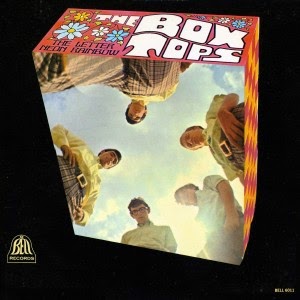
The Box Tops: The Letter/Neon Rainbow

THE BOX TOPS: THE LETTER/NEON RAINBOW (1967)

1) The Letter; 2) She Knows How; 3) Trains & Boats & Planes; 4) Break My Mind; 5) A Whiter Shade Of Pale; 6) Everything I Am; 7) Neon Rainbow; 8) People Make The World; 9) I'm Your Puppet; 10) Happy Times; 11) Gonna Find Somebody; 12) I Pray For Rain.

In late 1967, The Box Tops consisted of Alex Chilton on vocals and guitar, Danny Smythe on drums, John Evans on keyboards, Bill Cunnigham on bass... actually, I am not even sure if any­one on that list other than Chilton actually matters, since on most of these tracks The Box Tops did not even play their instruments, but were replaced in the studio with unknown professional players, courtesy of producer Dan Penn who, apparently, had little trust in the playing skills of these white youngsters from Memphis.

The only trust, so it seems, was placed in the vocal gift of Alex Chilton, who was only sixteen years old when he got to record Wayne Carson Thompson's ʽThe Letterʼ during his band's first recording session at American Sound Studio in Memphis. Now if your first genuine exposure to Alex Chilton has been via his later, more revered band Big Star, and if you have somehow missed out on the ubiquitousness of ʽThe Letterʼ in its original version, you might very well be stricken by the difference in vocal styles. For Big Star, Alex would sing clearly and cleanly, putting the same youthful gloss on his vocal chords as he would on his guitar sound. But here, despite being five years younger, he sings as if he were fifty years older — there's a rasp and a gurgle in his throat that implies «soulful world-weariness», and it certainly does not sound like he's faking it: by all means, this is not the kind of voice that would be naturally associated with 16 years of age. (Unless you start smoking at age four and catch your first STD at age twelve, of course).

I do not count myself as a big fan of Chilton's «blue-eyed soul» voice, but the very fact that a 16-year old white kid was so readily accepted in the heart of the soul kingdom of Memphis sort of speaks for itself. As a song, ʽThe Letterʼ is quite a moving composition, but perhaps not as nearly deserving of its sky-high reputation as the immense number of succeeding cover versions would have us believe — after all, it is a very short, simple, and straightforward number that accurately conveys the link between love and insanity, but that's about it. Mad props to Thompson and Chilton, though, for being able to turn the line "my baby wrote me a letter" into a haunting hook for generations to come.

Actually, I might be even more partial to the band's second single, also written by Thompson: ʽNeon Rainbowʼ does a great job taking a verse melody reminiscent of Simon & Garfunkel, one of those quiet, boppy, slightly childish folk-pop ditties, and letting it effortlessly flow into a full-fledged R&B chorus, with optimistic brass backing and Alex really belting it out. The difference is that ʽThe Letterʼ is a dark and paranoid song, while ʽNeon Rainbowʼ is a light, colorful, opti­mistic song — and people tend to remember darkness and paranoia for longer periods of time, especially musical critics. But on their respective scales, both tunes, I think, should occupy com­paratively respectable spots in the busy ledgers of 1967.

Of course, by late 1967 the «LP era» was not yet properly recognized in the USA — and so, in­stead of giving The Box Tops and their songwriting partners enough time to put together a pro­per, cohesive record, their label made them quickly scramble together a full-fledged follow-up, for which they did not even dare suggest a more interesting title than the names of the two hit singles (the same tasteless strategy that also marred The Left Banke's debut album from the same year, and God knows what else). Since the songwriting partners weren't total hacks, and since, if you had any talent at all, it was pretty damn hard to put out a complete suckjob in 1967, The Letter / Neon Rainbow came out much better than it could have been — still, it certainly ain't The Doors or any other such 1967 debut that had a cohesive «plan» behind it, let alone «concept».

The main contributing team for the album were Dan Penn himself (who, other than producing, was a major songwriter and even singer in his own rights) and his partner Spooner Oldham — in between the two, they place no less than four originals in the hands of Chilton here, including one catchy, fast, prickly soul-pop number (ʽHappy Timesʼ — and by «prickly» I mean that its main hook, the vocal-call-brass-response of "times!.. times!" makes some of your brain neurons jump in excitement) and three slower, bleeding-heart-mode soul confessions, of which ʽI'm Your Pup­petʼ is probably the best known one, since it had already been an earlier hit for the duo of James & Bobby Purify — and it works better for The Box Tops, since it makes more sense for one guy to sing "I'm your puppet" than two guys at the same time (not to mention that Chilton slurs the words a bit as if in a druggy haze — getting into the puppet character, no doubt).

These are good songs in good hands, mostly. More questionable is the inclusion of ʽA Whiter Shade Of Paleʼ, a great song with which, however, Alex cannot do anything that Gary Brooker has not already done — other than, perhaps, popularize early British prog-rock and J. S. Bach a little bit among the local Memphis crowds. Then there are some truly questionable inclusions, such as the laid-back country-rock ditty ʽBreak My Mindʼ, in a style to which Chilton's voice is not suited at all, or Burt Bacharach's ʽTrains & Boats & Planesʼ, which has the misfortune of finding itself way too close to ʽThe Letterʼ to count as an equally mind-blowing song about one's means of travel. But even the questionable inclusions aren't cringeworthy as such, it's just that they do not exploit the band's (actually, the lead singer's) talents to full capacity.

On the whole, the album ain't no masterpiece, and I can even picture myself a serious Big Star fan who could be seriously disappointed in these first steps of Alex Chilton's career — no original material, a distinctly different vocal style, rather perfunctory musical backing from anonymous session guys, etc. But the presence of two strong singles, the lack of anything particularly dread­ful, a generally sensible taste in covers, and the auxiliary fact that THIS IS 1967!! altogether make it well worth a friendly thumbs up.