Search This Blog

Showing posts with label Big Star. Show all posts

Thursday, January 30, 2014

Big Star: Keep An Eye On The Sky

BIG STAR: KEEP AN EYE ON THE SKY (2009)

[Track listing limited to titles that do not appear on regular Big Star albums.]
CD I: 1) Psychedelic Stuff [Chris Bell]; 2) All I See Is You [Icewater]; 3) Every Day As We Grow Closer [Alex Chilton]; 4) Try Again [Rock City]; 7) In The Street (alt. mix); 8) Thirteen (alt. mix); 10) The India Song (alt. mix); 11) When My Baby's Beside Me (alt. mix); 12) My Life Is Right (alt. mix); 13) Give Me Another Chance (alt. mix); 15) Gone With The Light; 16) Watch The Sunrise (single version); 17) ST 100/6 (alt. mix); 18) The Preacher (Rock City); 19) In The Street (alt. single mix); 20) Feel (alt. mix); 21) The Ballad Of El Goodo (alt. lyrics); 22) The India Song (alt. version); 23) Country Morn; 24) I Got Kinda Lost (demo); 25) Back Of A Car (demo); 26) Motel Blues (demo).
CD II: 1) There Was A Light (demo); 2) Life Is White (demo); 3) What's Going Ahn (demo); 9) Mod Lang (alt. mix); 10) Back Of A Car (alt. mix); 14) Morpha Too (alt. mix); 16) O My Soul (alt. version); 17) She's A Mover (alt. ver­sion); 18) Daisy Glaze (rehearsal version); 19) I Am The Cosmos (Chris Bell); 20) You And Your Sister (Chris Bell); 21) Blue Moon (demo); 22) Femme Fatale (demo); 23) Thank You Friends (demo); 24) Nightime (demo); 25) Take Care (demo); 26) You Get What You Deserve (demo).
CD III: 1) Lovely Day (demo); 2) Downs (demo); 3) Jesus Christ (demo); 4) Holocaust (demo); 5) Big Black Car (alt. demo); 6) Mañana; 25) Till The End Of The Day (alt. mix); 26) Nature Boy (alt. mix).
CD IV: 1) When My Baby's Beside Me; 2) My Life Is Right; 3) She's A Mover; 4) Way Out West; 5) The Ballad Of El Goodo; 6) In The Street; 7) Back Of A Car; 8) Thirteen; 9) The India Song; 10) Try Again; 11) Watch The Sun­rise; 12) Don't Lie To Me; 13) Hot Burrito #2; 14) I Got Kinda Lost; 15) Baby Strange; 16) Slut; 17) There Was A Light; 18) ST 100/6; 19) Come On Now; 20) O My Soul.

A short-lived band like Big Star is an ideal proposition for a comprehensive boxset — 3 or 4 CDs can easily digest everything that it has released officially, as well as offer an exhaustive tour through the vaults of demos, alternate versions, outtakes, and even samples of «band-related» work that was not officially credited to it upon release. Keep An Eye On The Sky, released just a year before Chilton's death (nice to know he was able to take one last look at his collected le­gacy before finally heading out to his Big Star), proclaims to be doing just that. The perfect box, right? «Drop everything and run», right?

Well, not quite. First and foremost, if you think that buying this boxset eliminates the need to buy the albums, pay closer attention. It does include all of the completed recordings for all three clas­sic Big Star records (and completely ignores the embarrassment of In Space, which is a plus as far as I'm concerned), but at least a third part of them comes in «alternate mixes», which some­times include a few extra seconds of studio talk or noise before the song comes in (not necessa­rily a good idea) and do, indeed, mix the tracks slightly differently. Whether the old mixes or the new mixes sound better is a debatable issue which you could easily debate without my participation (I am definitely no «Mr. Mix Guy»), but the fact is, if you are a dedicated fan, this means you will have to have the boxset and the separate albums as well. In fact, I am fairly sure that the «alter­nate mixes» were little other than an intentional bait to raise interest on the part of fans who, na­turally, already owned all the CDs.

Suppose, though, that you are a newcomer to Big Star, and that you do not own any of their al­bums — would it make sense, then, to go straight for the box? I do not think it would, no. All three albums put together are cheaper, and the bonuses... well, this is where the interesting part begins, though, frankly speaking, it is not that interesting.

Truthfully, one may Keep An Eye On The Sky for as long as it plays on, but the sky hardly seems to hold a lot of surprises in store. Arguably the best additions here are Chilton's acoustic demos, particularly of songs recorded for Radio City and Third. Most of them work very well on their own, with solid, inspired playing and singing, although, frankly speaking, only a few of them are actual «demos» — in the case of Third, we generally hear just the basic tracks laid down in preparation for the overdubs. Even so, ʽHolocaustʼ has its own eerie minimalistic charm when it's just Alex and his piano.

As for the small bunch of previously unavailable songs, they are no big deal. Early pre-Big Star tracks from the solo careers of Chilton and Bell are basically the work of inexperienced Beatles apprentices. Thus, ʽAll I See Is Youʼ by Icewater (one of Bell's early bands) is nothing that you won't hear in a much better rendering by Badfinger; actually, the chorus sounds suspiciously close to Lennon's "all I want is you" from ʽDig A Ponyʼ, but since the song was admittedly recorded in 1969, when Let It Be had not yet come out, I have to assume a bizarre coincidence. (On the other hand, ʽGone With The Lightʼ, an outtake from Big Star's early sessions, does rip off ʽGood Nightʼ, which, as I assume, they realized just in time to keep it off the album). Bell's ʽPsy­chedelic Stuffʼ, which opens the chronology, predicts nothing particularly enlightening with its title, and, sure enough, it is psychedelic, but nothing else.

Later outtakes also include ʽMotel Bluesʼ, of whose existence we were already aware through its inclusion on the Live album — this version is neither better nor worse; ʽGot Kinda Lostʼ, a rather grayish pop-rocker in the style of Rubber Soul, but without much passion; and several alternate versions of well-known songs with different sets of lyrics (ʽCountry Mornʼ is really ʽWatch The Sun­riseʼ). Furthermore, there are also two singles from Chris Bell's solo album, I Am The Cos­mos, which, in 2009, acted as a «teaser» for the upcoming re-release on CD — showcasing his own journey into the realm of ambitious art-pop, far more disciplined than the paranoid ramble of Third, but also somewhat less haunting, and making one regret even more that Bell and Chilton only had the space of one LP to work on with each other.

Disc 4 of the package is probably the one that might have the fans salivating: a complete recor­ding of a live show played at Lafayette's Music Room in Memphis in January '73, right after Bell's departure, but with Hummel still in the band. The show is most notable for the setlist — predictable entries from #1 Record and previews of Radio City numbers are then followed by an interesting set of covers, as the boys promote the Kinks (ʽCome On Nowʼ), Todd Rundgren (ʽSlutʼ), T. Rex (ʽBaby Strangeʼ), and even The Flying Burrito Brothers (ʽHot Burrito #2ʼ) — in­structive, since Gram Parsons is probably not the first person one would associate with Big Star's sound, image, and atmosphere, but now that they bring it on themselves, there most certainly has to be an influence. Unfortunately, the downside of the recording is poor quality: audience noise does not interfere for the simple reason that there were probably something like ten or twelve people present altogether, but the equipment must have been piss-poor. And as for those covers, well, you've heard them once for educational reasons, you probably won't feel any need to hear them again. (Unless you simply want to show your admiration for a band that can cover the Kinks, Todd Rundgren, T. Rex, and Gram Parsons in one gig, and I do admit that bands like these are not always easy to localize in one's neighborhood).

All in all, this is simultaneously a great boxset (with particular care given to packaging and liner notes) — and a serious disappointment. If anything, it would have made better sense if the whole shenanigan was just put together as the three original albums, cleaned up and remastered, each CD accompanied by a large set of bonus tracks, plus the Live album with bonus performances of the Kinks / Rundgren / Bolan / Parsons tunes from the Memphis show. In this particular form, Big Star's legacy looks somewhat fussy, chaotic, and «gappy». Then again, who knows? A band as fussy and chaotic as Big Star might actually look more adequate with a fussy and chaotic box­set to go along. It's up to you to decide.

Check "Keep An Eye On The Sky" (CD) on Amazon
Check "Keep An Eye On The Sky" (MP3) on Amazon

Thursday, January 23, 2014

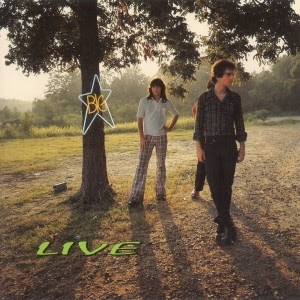
Big Star: Live

BIG STAR: LIVE (1974/1992)

1) September Gurls; 2) Way Out West; 3) Mod Lang; 4) Don't Lie To Me; 5) O My Soul; 6) Interview; 7) The Ballad Of El Goodo; 8) Thirteen; 9) I'm In Love With A Girl; 10) Motel Blues; 11) In The Street; 12) You Get What You Deserve; 13) Daisy Glaze; 14) Back Of A Car; 15) She's A Mover.

Arguably the most symbolic, and the saddest, moment of this album is when, in a short interview that links the two parts of the radio concert (recorded at Ultrasonic Studios in NYC), the an­nouncer/interviewer says, "...I just came across a review of your new album called Radio City, and the guy started off the review by saying, ʽhere it is only January, and we already have the album of yearʼ... you're getting an awful lot of critical acclaim for your new album, it's really good!". "Yeah, that's, uh, nice", replies a quite transparently lemon-faced Chilton, "I hope it sells. We've had critical acclaim before".

Whether this internal panic is somehow reflected in the band's actual live performance is deba­table, but it is hard not to perceive this archival release from that particular point of view — a tense, nervous Chilton, having to cope with the recent loss of yet another band member (Hummel quit right after the recording of Radio City, briefly replaced by John Lightman, who is captured live on this album) and with worried anticipation of whether they might be able to make it this time around. Nowhere does this tension show as strong as on the solo acoustic performance of ʽThe Ballad Of El Goodoʼ, a song that I'd never have thought could work without all the psy­chedelic-gospel harmo­nies and cool flanging guitar effects, but it does work very well, with just a slight extra drop of desperation in each of Alex's "ain't no one going to turn me round", as the man slowly comes to realize that, soon enough, he might be facing a choice of agreeing to be turned round — or to be turned down by circumstances beyond his control and determination.

On the whole, this is not one of those great lost live albums of all time, since Big Star was first and foremost a studio band, only as perfect as the harmonies, the overdubs, and the mixing on each of their songs. But it is still well worth hearing, if only to admire how closely their «mini­malist» lineup (one guitar, bass, drums) comes to recapturing all the essence of their best songs. Even the short acoustic set that Alex generates all on his own in the middle of the performance is fully adequate — I have already mentioned ʽEl Goodoʼ, but ʽThirteenʼ with just a six-string is every bit as gorgeous as the fuller arrangement on #1 Record. (ʽMotel Bluesʼ, a rather whiny folk ramble, is not as good, a song written more for its plaintive lyrics than anything else, and wisely left off the original albums).

A few of the numbers are somewhat botched: I am speaking particularly of the very disappoin­ting choice of ʽSeptember Gurlsʼ for the opening number, since Alex was not able to reproduce that caramelly tone of the original which constitutes about 50% of the song's success, and that is one song that really cannot work with just one guitar and no harmonies. But ʽO My Soulʼ, on the other hand, is terrific, with Lightman in full control of Hummel's quirky bass zoops, Alex playing the funky rhythm parts with perfect precision, and Stephens firing away with as much excitement as he displayed in the studio. Most of the rock-oriented material from Radio City is, in fact, be­yond complaining, particularly when the original songs themselves were good (because no amount of raw live rock'n'roll energy can save something as pointless as ʽMod Langʼ).

My only sorrow is that the material focuses too much on Radio City rather than #1 Record, but this is predictable — with Bell long since out of the band, and the whole radio concert basically serving as a promotional spot, and the «rockier» material of Radio City being altogether more suitable for a live performance, complaining is futile. And who would dare to complain, really, when listening to an obviously troubled musician who can still play his fairly complex guitar lines and sing on key and in tune at the same time? Unless you are a Big Star maniac or some­thing, you probably will not find yourself listening to this all the time, but even one listen may generate some serious extra respect for Chilton both as a human being and as a master craftsman, and from that point of view, Live is an essential archive release, fully deserving of a thumbs up.

Check "Live" (CD) on Amazon

Thursday, January 16, 2014

Big Star: In Space

BIG STAR: IN SPACE (2005)

1) Dony; 2) Lady Sweet; 3) Best Chance; 4) Turn My Back On The Sun; 5) Love Revolution; 6) February's Quiet; 7) Mine Exclusively; 8) A Whole New Thing; 9) Aria, Largo; 10) Hung Up With Summer; 11) Do You Wanna Make It; 12) Makeover.

What a sweetly awful album — well worth hearing, actually, if only to procure oneself a prover­bial example of how everything can go utterly wrong when one thinks way too much about getting everything just right.

When Chilton and Stephens were making Third, they may have been wasted, but one thing they were not trying to consciously make was a «Big Star recipé». The album simply reflected the state of Alex Chilton's head at the time, give or take a few neurons. Fast forward to 2005 now, by which time a revamped, strictly nostalgia-oriented «Big Star», consisting of Chilton, Stephens, and two members of The Posies, a new-school US power pop band with plenty of their own en­tertainment value, had been touring the local circuits for more than a decade, concentrating al­most exclusively on a #1 Record/Radio City setlist. With the Big Star legend riding strong and re-gaining in popularity among the hipster crowds, somebody must have come up with the idea of giving people a little bit more of what they want — and this is how In Space, a collection of 12 bona fide power pop songs co-written by Chilton, Auer, and Stringfellow, was born.

First things first: do not believe those that say «this does not sound like Big Star at all!» (and pay even less attention to those who retort with «well, times change, don't they, why should you ex­pect this to sound like the Big Star of old?»). Because In Space does sound very much like Big Star. The idea was, by all means, to make an album that sounded very much like Big Star, and since it is not tremendously difficult to make an album that sounds like Big Star, unless you are a complete musical moron, there was no way In Space would not end up sounding like Big Star. Pop rhythms; guitars that glitter and jangle; guitars that play colorful distorted pop rhythms; psy­chedelic vocal harmonies; lyrical themes of sun, summer, and sentimentalism; occasional break­throughs into more rocking territory; retro-oriented production values — what have I missed?

The correct criticism to make is not that In Space «does not sound like (classic) Big Star»; the correct criticism is that it tries too hard to sound like classic Big Star, and concentrates so much on the form that it totally forgets about substance. The absolute majority of these songs — nay, all of these songs, without a single exception — are melodically bland, three-times derivative, and completely devoid of any artistic sense. Ballads, pop rockers, hard rockers, whatever, every­thing here is a cliché, pulled out of the dusty storage box full of Beatlisms, Beachboyisms, and, somewhere at the bottom, Marcbolanisms and a few other ism-ism-isms. Sometimes those isms are fully intentional, which does not make them any better: for instance, ʽTurn My Back On The Sunʼ begins with a «deceptive» quotation from ʽWouldn't It Be Niceʼ, which would be acceptable if the song itself were any good, but it isn't, so it wouldn't.

As for original hooks, there simply aren't any. None whatsoever. Which is actually quite amazing: so maybe Chilton's gift for songwriting had gone down the drain as a combined result of too much stress in the 1970s and largely laying off the business in the subsequent decades, but Auer and Stringfellow weren't too bad as main songwriters for the Posies — so I will just have to assume that they inadvertently drove their songwriting instincts into the wall when operating un­der the self-imposed command of «write a Big Star album». For every song that is crafted even a wee bit more exquisitely than the average mass (ʽLady Sweetʼ has a whiff of genuine elegance about it), they compensate with something honestly terrible (ʽLove Revolutionʼ is one of the chee­siest chunks of pop-funk ever put to tape by a non-R&B artist; even if it were intended as a parody, its immediate effect is simply that of a bad song) — but the average mass sim­ply elicits no emotional response whatsoever. Dull, empty shells of songs, which neither the nice guitar tones nor the pretty harmonies can help to save — even though I am fairly sure that it is exactly the nice guitar tones and pretty harmonies that have tricked many a power pop fan into accepting or even admiring In Space, as seen from multiple Web reviews.

Do not waste money on this pathetic cash-in, if it can be helped at all; most likely, the very exis­tence of this album will go down in history as just a minor unfortunate footnote to the legacy of Big Star. My biggest regret is that Chilton did not live long enough to remedy the situation — in 2010, he died of a heart attack, remembered, respected and loved by all those who (I hope) were willing to look past his latest failure, a disgraceful thumbs down if there ever was one. Take a lesson here, kids, and don't ever let nostalgia rule the day when it comes to writing music. Influ­ence — yep, inspiration — for sure, but never nostalgia. It'll only make you look stupid.

Check "In Space" (CD) on Amazon
Check "In Space" (MP3) on Amazon

Thursday, January 9, 2014

Big Star: Third/Sister Lovers

BIG STAR: THIRD/SISTER LOVERS (1975/1978)

1) Kizza Me; 2) Thank You Friends; 3) Big Black Car; 4) Jesus Christ; 5) Femme Fatale; 6) O, Dana; 7) Holocaust; 8) Kangaroo; 9) Stroke It Noel; 10) For You; 11) You Can't Have Me; 12) Nighttime; 13) Blue Moon; 14) Take Care; 15*) Nature Boy; 16*) Till The End Of The Day; 17*) Dream Lover; 18*) Downs; 19*) Whole Lotta Shakin' Goin' On.

Lord knows I am far from the world's biggest Big Star fan, and I am even farther away from be­ing the biggest fan of their third and strangest attempt at world domination, but man oh man is ʽHolocaustʼ a terrific song — one of the most unique and greatest ever recorded. There have been many different ways tried out in the history of pop music to make musical pictures of «human wrecks», and there have been tons of experts on human wreckage, from Ray Davies to John Len­non to Bob Dylan to Pete Townshend etc., but none of them ever scaled such odd depths of, well, let's call it «darkly haunting romanticism», as Alex Chilton on this particular song.

I do not know if this was the first ever usage of the word ʽholocaustʼ in a pop tune, let alone a metaphorical usage: Chilton himself prudently saves it for the last line of the song, as if every­thing that came before was just an atmospheric buildup to the culmination — "you're a wasted face / you're a sad-eyed lie / you're a holocaust" (and thank God the song never became a huge hit, or he would have imminently been forced to eat shit from idiots who would accuse him of calling the Holocaust a sad-eyed lie). Anyway, if it was, it is a well-deserved first, a daring move that is perfectly adequate for such a musically daring composition. The piano/guitar duo alone would be worth any musical prize, as the faraway slide licks, cooing, weeping, or wailing like small packs of seagulls, are upheld by the romantic piano — then there is the grim cello part, hanging over it all like a dark cloud, occasionally spilling some ice-cold rain — then there are the vocals: bitter­sweet, detached, caring and tender on the surface, but emotionally dead deep inside.

When it all begins — "your eyes are almost dead / can't get out of bed / and you can't sleep..." — that is exactly the message that we are getting. Unlike Syd Barrett, Chilton did not drive himself to genuine madness or any drug-induced cerebral coma, but he sings the song as if he were frozen in space, locked forever in a state of semi-functional dismantlement. Was he justified in this? Did the clumsy flop of his previous two albums, in which he had invested so many hopes, really trig­ger this state, or was it an artistic put-on? As usual, it does not matter — what does matter is that his personal troubles unexpectedly uncovered and enhanced his greatest talent, that of creating haunting moods out of incoherent, sometimes downright chaotic musical fragments.

If Big Star's first album opened in «sexually frustrated teenager» mode, and the second album in «idealistically exuberant adult» mode, with both ʽFeelʼ and ʽO My Soulʼ setting much of the tone for whatever would follow, then Third opens in dangerously disturbed maniac mode. Chilton's relationship with Lesa Aldridge, who is the ʽLesaʼ of the song and to whom it is obviously dedi­cated, was said to have been stormy, and it shows: dating a guy who sings "I want to feel you deep inside" with all the passion of a Buffalo Bill from Silence Of The Lambs is not a very wise thing to do. ʽKizza Meʼs schizophrenic piano part is like a bunch of brain cells set in some random Brownian motion, and what does "I want to white OUT!" even mean? In a way, this might really be one of the scariest love confessions ever recorded.

In between ʽKizza Meʼ and ʽHolocaustʼ, opening and closing the first side of Third/Sister Lo­vers as «properly» reconstructed by producer Jim Dickinson when the album was finally released on CD in 1992, lies a small world of weirdness and unpredictability. The recordings themselves were made in 1974, almost immediately after the flub of Radio City, but already after the depar­ture of Andy Hummel; in fact, Chilton did not even think about them as «Big Star» material, which allowed him to break away from the «power pop» formula. But since he did record it with Jody Stephens on drums (and a host of session musicians on bass, extra guitars and keyboards), and since Jody contributed at least one song (ʽFor Youʼ), the name «Big Star» was retained after all — now doubly ironic, since both #1 Record and Radio City at least had some actual «big star potential», whereas Third had no commercial prospective from the very start. Which is exactly what the record executives decided: upon hearing the freshly pressed promotional copy in 1975, they immediately shelved it for posteriority. The album was not released until 1978, on the PVC label, in a differently running track order. Whether it sold more than ten copies, I have no idea.

As far as the first side is concerned, Third fully deserves its cult-legend reputation. Besides the two already mentioned highlights, there is ʽThank You Friendsʼ, which may be one of the finest demonstrations of how important the proper intonation and modulation can be to whatever you are singing — the lyrics per se do not give out a single hint, but just listen to the way Alex sneers at us with his "thank you friends / wouldn't be here if it wasn't for you" and you will almost feel sorry for his so-called «friends». There is ʽJesus Christʼ, where he does pretty much the same thing by sending up the idea of a Christmas carol — although in this case, there are several layers to the song, as if Chilton were truly rejoicing at the beauty of the story of Christ while at the same time satirizing its time-worn clichés and the associated brainless traditionalism. (Nice guitar lines, too ­— the closest they actually get to the good old «power pop» here). There is a faithful, very much à propos cover of the Velvets' ʽFemme Fataleʼ (with pretty backing vocals from Lesa), and an oddly hysterical, near-crying «folk-soul» number (ʽO Danaʼ) with Chilton babbling out non­sense in an utterly heartbroken manner.

Second side of the LP does not hold nearly as many thrills, in my opinion: too often, these termi­nally ill «songs» drift off into pure atmosphere (ʽKangarooʼ), which can still be delightful be­cause of all the odd combinations of different melodic bits played by different instruments (ʽStroke It Noelʼ is like a mix of Vivaldi and acoustic Neil Young), but lack proper hooks and, too often, seem to lack intellectual or even emotional interpretation — as if, at some points during the sessions, Chilton would let his unhappiness, disillusionment, and paranoia completely over­rule his artistic wit and just carry him wherever his subconscious would go, and, despite what we are so often told by music critics, letting your subconscious directly in the pilot seat rarely, if ever, results in solid, long-lasting art. Still, even the worst material on this album, despite sounding like chaotic sketches of bizarrely mixed ideas, is always arranged with taste, and fans of «experi­mental baroque pop», whatever that means, will find everything to their delight.

Rock critics usually love «broken albums» recorded by «broken artists», the madder the better, and consequently tend to overrate Third. Like its predecessor, the album could have benefited from longer sessions, better planning, and more catchiness — none of which would be incom­patible with wallowing in self-pity and reveling in madness. But if you happen to be wallowing in self-pity yourself, and need a trusty companion, Alex Chilton is your man on this happy occasion. Scare away your girlfriend, viciously trash all your friends, insult your religious neighbors, have your mum call for the paramedics — Third does all that and more, and for this psychological help alone deserves a clear-cut thumbs up.

PS. On a further technical note, the CD edition contains five «bonus» tracks, recorded at the same sessions, some of which used to appear before on some of the multiple versions of the album (e.g. ʽDownsʼ and a completely out-of-place cover of ʽWhole Lotta Shakin' Going Onʼ, so very bad that its only function here is that of an oxymoron — find the song that is as far removed, mood-wise, as possible from the overall theme of the album, and throw it in with the rest). Of these, ʽDream Lo­verʼ is of essential value — like a blueprint for about 50% of the total output of trendy indie art-pop bands of the 2000s: twisted, bizarre, moody, pretentious, and if you learn it by heart, you may easily be excused for missing out on the entire career of, say, Deerhunter. Well, yes, I am exaggerating, but you can't really make an efficient point these days without a hyperbole.

Check "Third / Sister Lovers" (CD) on Amazon
Check "Third/Sister Lovers" (MP3) on Amazon

Thursday, January 2, 2014

Big Star: Radio City

BIG STAR: RADIO CITY (1974)

1) O My Soul; 2) Life Is White; 3) Way Out West; 4) What's Goin' Ahn; 5) You Get What You Deserve; 6) Mod Lang; 7) Back Of A Car; 8) Daisy Glaze; 9) She's A Mover; 10) September Gurls; 11) Morpha Too; 12) I'm In Love With A Girl.

By the time Big Star got around to recording its second album, it had already gone through the loss of a founding member (Bell), the return of a founding member (Bell), another loss of a foun­ding member (Bell again), disbandment, and reunion. All of which means: if, somehow, ʽO My Soulʼ happens to sound to you like a rusty, creaky, patched-and-mended old engine ready to fall to pieces at any second, but still puffing away and doing its job — well, this is no coincidence. Chilton, Hummel, and Stephens are learning to play as a trio, and it shows.

The absence of Bell logically leaves Chilton as the primary songwriter (Hummel wrote ʽWay Out Westʼ and gets songwriting co-credits on a number of other songs; also, Bell's input has been ack­nowledged for two of the album's best songs — ʽO My Soulʼ and ʽBack Of A Carʼ, even though he has not been officially credited), and opinions on that turn of events happen to differ. Personal­ly, I lament it: Alex may have been a talented, sincere, and «visionary» songwriter and performer, but he lacked the self-discipline and patience necessary to shape all those ideas in a proper musi­cal form. At the same time, his mental health was certainly stable enough so as not to make him eligible for the «mad genius» category where we put people like Syd Barrett and Skip Spence; neither Radio City nor its even more bizarre follow-up really qualify as «schizophrenic» albums. Radio City, in particular, shows a fairly conventional understanding of melodicity, and its lyrics and basic emotions are not all that different from the ones of #1 Record. Essentially, these are all simple pop songs, and their uniqueness stems as much from «personal untidyness» as it does from one-of-a-kind artistry.

This explains why, no matter how much I listen to Radio City, there are probably only three or four songs that stay with me when the music's over. Take something like ʽMod Langʼ, for in­stance — there may be some potential here for an impressive glam-rocker, but neither its distor­ted blues-rock riff nor its vocal melody ever manage to come together in a proper hook. These chords really sound like something a Pete Townshend could have stumbled upon in one of his 15-minute long live improv pieces, fussed around with for a few seconds, then dropped in favor of some other ideas — and here we have Chilton trying to build an entire song around it, but he can­not find anything better than a repetitive snap of "how long... can this go on?" for the chorus hook. Stuff like that is, at best, okay for some bonus demo outtake.

It does not necessarily get better on the moody sentimental stuff: a song like ʽWhat's Going Ahnʼ may have plenty of sad autumnal atmosphere, but its guitar lines and harmonies seem dis­con­nected and under­worked, while its lead vocals seem artistic, but simply telling a sad story rather than drawing the listener in with the same tricks of inflection and modulation as, say, ʽGive Me Another Chanceʼ or ʽTry Againʼ. Worst of all, every once in a while Alex comes across as a pa­thetic, annoying whiner rather than a noble broken heart — so maybe there is something to be said about extra spontaneity and «honesty», but then this is supposed to be art, not life, doggone it, and I'd rather hear «heartbreaking polish» than «irritating rawness». (That is not to say that raw­ness cannot be heartbreaking, or that polish may not be irritating, of course — it's just the way it seems to work with Big Star in particular).

Naturally, these complaints should not be extrapolated to the high points of the album. ʽO My Soulʼ, in particular, be it by accident or not, sounds like nothing else ever written — the funkiest power pop song ever made, or was that the poppiest power funk song?... whatever, the interaction between Hummel's «surf-style» twangy bass swoops, Chilton's merger of jingle-jangle with chicken-scratch, and Stephens' exuberant «look-at-me I'm-so-power-trio gonna-be-Keith-Moon- for-a-while» assault on his drumset creates a completely unique sound. Probably accidental — they never did anything even remotely close to this one ever again. No proper vocal hook, which is one of several reasons why the single flopped commercially, but it could just as well be an instrumental number — the vocals are the least interesting aspect of this maniacal celebration of the wonders of life.

It is less interesting to rave on about ʽSeptember Gurlsʼ, as that song has long since left the lower stratosphere where it could be affected by criticism — «hating it» would be telling more about the hater than the song, and «praising it» would bring no new stimulus to this world. Clearly, its legend is all about that guitar tone — candy-sweet compression with an aggressive punch, jangle and power all in one, «Roger McGuinn meets Pete Townshend», the sound that launched a thou­sand bands. Everything else is secondary: the lyrics do not match the mood (the protagonist may have been "crying all the time", but it hardly shows), the Byrdsey solo, as usual, is as crudely thought out as they come, and the line "I was your butch and you were touched" really only makes sense now when the Bangles sing it, but who cares? That song is immortalized by its first twelve seconds, and everyone knows that the first twelve seconds are always the most important ones in any song, unless it's a sidelong or something. Or, if not everyone, then at least the Beatles knew that, and weren't Big Star trying to... well, you know?..

I mean, they obviously were on ʽBack Of A Carʼ, whose title resembles a then-recent McCartney song from Ram but whose overall mood is certainly closer to the fumes of Rubber Soul, except that it sounds more like the unruly, shirt-out, pants-down, heavily ungroomed younger brother of ʽNowhere Manʼ and ʽIf I Needed Someoneʼ than a disciplined copy-cat effort — which, I will admit that, may be an essential part of its charm: if you are going to rob your idol's apartment, at least do not forget to rip up the bedsheets and piss in the closet for extra spice.

Altogether, this ramble-tamble certainly deserves a thumbs up, if only for being such a great candidate for the title of «messiest power-pop album ever released». Many people actually love this mix of fabulous guitar tones with green-banana pop hooks, forming the liberal «Radio City Party» in opposition to the similarly influential conservative «#1 Record Party» (and the much less popular, somewhat extremist «Sister Lovers Party») — since both albums are usually sold on the same CD these days, it makes no sense to formally recommend one over the other, but my own opinion is on record: Chilton is good enough, but Chilton/Bell is better, and if we are talking influence, well, the Chilton/Bell example of how to add good form to your pop instincts should have been much more influential than the solo Chilton example of how to flash your pop instincts while avoiding good form. Unfortunately, it wasn't — and I am pretty sure I would have a much more favorable general opinion of modern indie pop bands if they were taking their clues from #1 Record than from Radio City.

Check "Radio City" (CD) on Amazon

Thursday, December 26, 2013

Big Star: #1 Record

BIG STAR: #1 RECORD (1972)

1) Feel; 2) The Ballad Of El Goodo; 3) In The Street; 4) Thirteen; 5) Don't Lie To Me; 6) The India Song; 7) When My Baby's Beside Me; 8) My Life Is Right; 9) Give Me Another Chance; 10) Try Again; 11) Watch The Sunrise; 12) ST100/6.

The legend of Big Star, the proverbial «out-of-time underdog», radiates such a strong field that for each of Big Star's three «classic» albums, there is its own group of champions — and then there is a fourth one that claims all three are equally great, but my understanding is that these guys are mostly poseurs, because there is no way one could have equally strong feelings for #1 Record, Radio City, and Sister Lovers, so different are they in terms of songwriting, production, attitude, and cohesiveness. Personally, I have always belonged to the #1 Record camp, and the more I listen to this album, the more I feel that the band's legendary status may be fully justified by it and it alone. Speaking of Big Star in clichéd terms of «the greatest band you have never heard of» is an uninteresting occupation, but, fortunately, one does not need to do that in order to just sit back and enjoy some of this wonderful music.

The actual «wonder» is generated by a brief, happy collaboration period between two talented songwriters — Alex Chilton, formerly of the Memphis-based blue-eyed soul combo The Box Tops; and Chris Bell, formerly of Rock City and Icewater, also Memphis-based but incomparable to The Box Tops in terms of chart success or overall notoriety. Chilton's original idea was to es­tablish a Simon & Garfunkel type of partnership, but Bell convinced him to retain the rock'n'roll band format, and, fortunately, good sense prevailed, or else we'd have no power-pop aesthetics and millions of aspiring indie kids and hipsters would be deprived of their biggest idols.

Of course, «power pop» is an extremely vague term, and if you think of it in purely musical terms («pop songs with hard rock guitar riffs» or something like that), #1 Record hardly even qualifies. There might be, like, just two or three «power pop» songs like that on the entire album — ʽFeelʼ, ʽIn The Streetʼ, probably ʽWhen My Baby's Beside Meʼ (ʽDon't Lie To Meʼ has more of a blues-rock feel to it, not a proper «pop» tune). Most of the songs are quite soft, with acoustic founda­tions, owing much more to the folkie idioms of the West and East coasts than to the Kinks, the Small Faces, or Cream. This, by the way, is the source of much misguided disappointment: plenty of people come to #1 Record, expecting «power», and come away disappointed because all they got was some sissy acoustic strumming and whiny vocals.

But the real trick of #1 Record is not «power». Its real trick is a mix of emotional simplicity, naïve idealism, musical honesty, and melodic talent. Chilton and Bell sounded just as passionate and convinced about what they were doing as the craziest prog rock stars of the time, but saw no need for infusing that passion into ever-more-complicated musical formats. On the other hand, they saw no need to pander to ongoing trends and fashions, either, eschewing excessive sentimen­talism or artificial sweetness à la Carpenters — everything on #1 Record sounds totally healthy and organic, no sappy strings or cheap Broadway inference allowed.

The second side of the album has been especially frequently subject to criticism by «power pop fans» — a silly thing to do, really, because, to my ears, it contains one of the finest sequences of beautiful ballads ever committed to tape. How they managed it is something I cannot understand, and can only ascribe to a great big positive influence that Chilton and Bell had on each other, and which neither of them could subsequently recreate on their own. ʽGive Me Another Chanceʼ deals with a fairly simple and well-studied topic — guy gets mad at girl, girl throws guy out, guy repents and begs forgive­ness — but each and every line of the vocal melody is so totally realistic (this may be the sorriest "I'm sorry, I'm sorry" I've ever heard) that one cannot help but be remin­ded of all those Lennon ballads, late in his Beatles or early in his solo career, that operated along the same lines: take a simple theme of love / repentance / sadness / anger, etc., and strive to make it sound like you really mean it.

Or ʽTry Againʼ — isn't it a wonder how its melodic twists so meaningfully echo its lyrics? "Lord, I've been trying to be what I should...", done in a slightly lazy, twangy, hammocky country mode (so you already get a feeling that maybe the hero hasn't been trying that hard). Chord change, a touch of tenseness and darkness, "but each time it gets a little harder", a Harrison-esque "I feel the pain" (and he does, he does), "but I'll try again" — loop, revert back to the beginning. ABC-level simple, 100% efficient. Then the vocal melody is lended over to the guitar, and they repeat the same stuff without words — to exactly the same effect. Chillin'.

When it comes to loudness and, well, «power», Chilton and Bell are equally capable. Look at how ʽFeelʼ is all based on descending chord patterns — echoing the «personal apocalypse» mood of lines like "you're driving me to ruin" and "I feel like I'm dying, I'm never gonna live again" — even though, in general, the song is so loud and rock'n'rollish and even has a brawny brass section during the instrumental breaks. Conversely, the main riff of ʽIn The Streetʼ is always rising and going in circles, well adapted to the song's «cruising anthem» stylistics. And ʽWhen My Baby's Be­side Meʼ is their equivalent of ʽI Want To Hold Your Handʼ — repetitive, triumphant, obli­vious to everything other than that overwhelming love wave.

But the album's magnum opus, no doubt about it, is ʽThe Ballad Of El Goodoʼ. A young pop boy's impression of a deep gospel-soul anthem — a song about standing up for oneself, with just a little help from God — it sounds particularly ironic in the overall context of Big Star's misfor­tunes, yet at the time it was written, the future did look promising, and Chilton's performance here is totally credible. The hooks are actually very simple: the song does not «properly» pick up until the chorus / bridge part, and, basically, all they do is hammer the same two-part message in your subconscious — "ain't no one going to turn me round" and "hold on" — but the first part is determination incarnate, and the second part gets by not through shouting, but through stretching out the "hold" part so as to actually convey the impression of hooooooolding on to something. So simple, so clever, so unforgettable. If ʽFeelʼ does not succeed in making you a lifelong friend of this band, ʽEl Goodoʼ will complete the task with a flourish.

Even though I have not mentioned all the greatness of this album (ʽThirteenʼ and ʽMy Life Is Rightʼ deserve their own extended kowtows), the things that have been said probably suffice — #1 Record is a product of spontaneously, perhaps even accidentally, generated melodic genius, and the first in a never-ending, though slowly dwindling, series of great records that kept the simplistic pop idealism of the Sixties alive and kicking through the following decades. From that point of view, there was no competition whatsoever for this sort of style in 1972, since the other two ends of the «holy power pop» triangle of the early 1970s, Badfinger and The Raspberries, did not have Big Star's ambitions. Chilton and Bell were «pretentious», yes, and it shows up not only in their chosen band name or their chosen album title, but in their playing style, in their vocal harmonies, in their quasi-religious attitudes, but all of that, when coupled with said melodic genius, is to their advantage. Pretentious, but simple; trivial, but bombastic; always accessible, but never «fluffy», #1 Record is certainly not an album that could be brushed off as mere light entertainment — it does lay a serious claim to the status of #1 record for the year 1972, at least in the «simple pop» department. (Although, for the record, I do wish they would have kept bassist Andy Hummel's ʽThe India Songʼ off the album — it is superficially pretty, but not only does it have nothing to do with India, being all acoustic guitars and flutes, it actually sounds like a se­cond-rate flower power era outtake from some long forgotten Frisco hippie band).

On a historical note, rumors saying that #1 Record was either ignored or maligned at the time are grossly exaggerated: most of the critical reviews recognized the album's genius (and how could anybody with ears not recognize it?), and, with proper marketing strategies, at least its rocking numbers, such as ʽIn The Streetʼ or ʽWhen My Baby's Beside Meʼ, could have been major hit singles like anything else at the time. Unfortunately, Stax Records, responsible for the distribu­tion, somehow flunked at it, and even though the record got sufficient airplay, it was simply un­available for purchase throughout the States, or so it has been said — a proverbial tale of bad luck and the importance of good management for great art to find its way. On the other hand, really great art will always find its way, eventually, even without proper management, so I am happy to know that #1 Record does not need my thumbs up endorsement in the slightest to help it achie­ve «classic» status: like the even less-selling Velvet Underground's debut, it is one of those al­bums that launched a thousand ships anyway.

Check "#1 Record" (CD) on Amazon