Search This Blog

Monday, February 15, 2010

Arthur Crudup: Look On Yonder's Wall


ARTHUR CRUDUP: LOOK ON YONDER'S WALL (1969)

1) Look On Yonder's Wall; 2) Questionnaire Blues; 3) Keep Your Hands Off That Woman; 4) That's All Right; 5) Rock Me Mama; 6) Katie Mae; 7) Dust My Broom; 8) Landlord Blues; 9) Coal Black Mare; 10) Life Is Just A Gamble; 11) Walk Out On My Road; 12) I'm All Alone; 13) You'll Be Old Before Your Time; 14) Ramblin' Blues; 15) When I Lost My Baby.

Finally, for those who would want to check out the utterly modernized, up-to-date Big Boy, there is this disc, assembled from Arthur's late Sixties — I'm guessing around 1967-69 — sessions for Del­mark Records. Willie Dixon, who did accompany Arthur on at least some of his late Sixties sessions, is apparently not present — two different bass players, one of which I do not know, and the other one of which is Ransom Knowling, Arthur's original bass player for 'That's All Right', are listed among the credits — and there is also regularly a second guitarist, assuming all the «melodic» duties as Big Boy simply slices up the growling rhythm chords. This is a nice change, but the se­cond guitarist is no Elmore James or Albert King, so it does not affect the situation much.

The only bit of variety is that some of the songs are accompanied by a little studio banter, letting you know that Big Boy's singing style did not vary all that much from his talking one. Otherwise, it just makes up for the finest sounding, but least intriguing version of the Crudup Groove for those who do not like the vibe of the late 1940s hollow-body electric (or, more properly, «electri­fied») guitar. Nothing else. Soon afterwards, he would once again stop recording, and soon after that, he would die, as that was pretty much the last productive option to choose. But he lived a good life, and left behind two good records — The Slow One and The Fast One. That is, after all, two good records more than most artists in this world have ever produced.

Sunday, February 14, 2010

Beach House: Beach House


BEACH HOUSE: BEACH HOUSE (2006)

1) Saltwater; 2) Tokyo Witch; 3) Apple Orchard; 4) Master Of None; 5) Auburn And Ivory; 6) Childhood; 7) Love­lier Girl; 8) House On The Hill; 9) Heart And Lungs.

HE is Alex Scally, grown up in Baltimore, Maryland, where there are no beaches, and playing guitar and some keyboards when he feels like it. SHE is Victoria Legrand, grown up somewhere around the same place, and playing keyboards and singing when she feels like it. Together they are Beach House. Why Beach House? No one knows for sure.

What we do know for sure is that these days, it does not take much to be able to create psychede­lic-ious otherworldly magic. The duo's debut album was recorded in Scally's home, released on a tiny indie label, and still sounds like it has travelled to us all the way from Wonderland. Certainly, there are signs of cheapness all over the place — the most obvious and ugly of these is the syn­the­sized pshht-pshht percussion, which can spoil much of the fun; sometimes I find myself wish­ing they hadn't included any rhythmic support at all — or at least bothered to install a mini-drum set. Then again, these days it is not that hard to synthesize a «proper» drum sound either, so I guess we have to take this as an intended part of the picture. Apparently, there are people in this world who like pshht-pshht percussion, believe it or not.

Nevertheless, many were charmed with this strange mix of sonic magic and DIY attitude, and I can see why — the music is, at the same time, complex enough to understand that this is not just another couple of starry-eyed amateurs overpricing their egos, and yet simple enough, with even a touch of child­ish naïveness, to disarm the potential haters. Plus, although many possible influ­en­ces come to mind, it is hard to directly trace the sound that they achieve to a single source, so as to be able to say «Anyone who is already a fan of [insert some big name here] will find listen­ing to Beach House a waste of time». In fact, some of the standard comparisons were downright misguided — the most common comparison of Legrand's singing, for instance, that you will find is to that of Nico, which would miss the point entirely. For one thing, Nico is (was) German; Vic­toria is American, of French descent. For another, think of all the implications.

(I would, of course, favor a comparison with Cocteau Twins — but only as yet another example of a creative male-female duo with their own conception of a musical cosmogony, because musi­cally, there is very little in common between the two, and technically, it would take Beach House a long, long time to catch up with the advanced level of the Twins).

Beach House do not strive for diversity, nor for catchiness; their aim is to set up one specific mood, wire the listener up to it and keep him electrified for about thirty five minutes. The typical Beach House song is a three-four-minute mid-tempo drone, consisting of a moody synth hum in the background, a fairy-tale synth melody in the foreground, and sliding guitar flourishes in the middle. And the vocals, of course, whose only technical similarity to Nico's lies in their slightly mechanic flavour — Legrand often keeps the same note for the entire line — otherwise, they are far more «human» and closer to the listener. In fact, for all the parallel-reality-quality of this kind of music, one rarely gets the feeling that this other world is impenetrable. It isn't exactly inviting, but its constituency is something that you will probably crack quite easily. There is nothing on here that makes me go: «What the hell was that?» or «How in the world did they come up with this aura?» Of course, it is partially due to the cheapness of the production, but also, probably, to the lack of excessive ambition. And it works.

The songs flow so gently and, more often than not, unnoticeably into one another that it is impos­sible for me to choose favorites or attempt multiple individual descriptions. 'Apple Orchard' and 'Mas­ter Of None' are probably the best known tracks, and the double drifting of the lazy old-fashioned or­gan and the sweet old-fashioned slide guitar is as emblematic of the band's whole approach as anything else. Why did I say «old-fashioned»? Probably a subconscious call trigger­ed by a glance at the lyrics: 'Let's lie down for a while, you can smile, lay your hair in the old old fashion'. Which, pretty much, sums up the basic message of the album.

Beach House is far from a masterpiece, yet it is friendly, lovely, and graceful. It is also immu­table, monotonous, and boring. But I find that it helps if you think about it as a lovingly hand-made musical box, produced to accompany some retroish phantasmagoric show — a hint at which may actually be provided by the duo's official video to 'Master Of None'. And, just like any such show, it will hardly charm and bewilder the jaded listener, but it will make his life a little brighter, if he happens to be in need of a bit of extra brightness. As long as we do not expect these guys to rip our confined world apart, this is by all means a thumbs up.

Saturday, February 13, 2010

Alice In Chains: Jar Of Flies


ALICE IN CHAINS: JAR OF FLIES (1994)

1) Rotten Apple; 2) Nutshell; 3) I Stay Away; 4) No Excuses; 5) Whale & Wasp; 6) Don't Follow; 7) Swing On This.

As early as the fall of 1991, the band demonstrated their flexibility by recording an EP called Sap that con­tained five acoustic songs — originally intended as demos for subsequent metallization, but then deemed self-sufficient as they were. (Technically, they were not entirely acoustic, with at least some electric guitar overdubs, but all the backbones remained acoustic). After Dirt, they de­cided to return to this practice, and the next EP, Jar Of Flies, already had seven songs, some of them lengthy enough to guarantee a running length over thirty minutes. For some reason, al­though this would seem an utterly natural thing to do, Sap and Jar Of Flies have yet to see a sin­gle-CD re-release, which would most likely prompt the curious music lover into adding it to his collection and gaining a new type appreciation for the band.

None of the songs are as immediately striking as the blitzkrieg of Dirt, but there is no reason why they should be. This is, finally, the moment when one should put some subtlety back into the proceedings, replace nervous breakdown with melancholia, follow the terrifying epileptic fit of Dirt with the quiet recuperative depression of Jar Of Flies. Not that things will get any easier; not a chance, as the very first track, suitably called 'Rotten Apple', tells you that 'Innocence is over, ignorance is spoken, confidence is broken, sustenance is stolen, arrogance is potent'. They will just get... subtler. Think of the difference between putting a bullet through your brain and la­zily and hazily gazing as the blood drips from your freshly opened veins. Whichever scenario looks more pacifying and relaxing to you?

Now, to bring you back from these unsettling thoughts, Jar Of Flies may be the best spot to check out Jerry Cantrell's amazing musical versatility. Some of this sounds a hell of a lot like James Taylor (!), e. g. the soft Fido-on-the-porchstep country-western rumination of 'Don't Fol­low' (actually sung by Jerry himself instead of Layne, giving the song extra accessibility). Some sounds like lounge jazz, e. g. 'Swing On This', propelled by new bassist Mike Inez's traditionalist rhythmics — before it starts justifying the title and mutates from 'swing' to nasty hard rock in its mid-section. And some sounds like mid-Seventies British progressive rock à la Camel and the like, e. g. the instrumental 'Whale & Wasp' with its deep, painful guitar moaning.

'Rotten Apple', occupying more space than anything else on here and, thus, intuitively understood as the album's major piece, is itself enhanced with a talkbox effect — which is, fortunately, just as creepy as it is on Pink Floyd records and not at all as silly as it is on Peter Frampton ones — and represents the perfect example of creative collaboration between Inez, responsible for the song's morose bassline pivot, Cantrell, fleshing it out with the ugly, but eerie talkbox, dark folk acoustic rhythms, and a set of other warped electric effects, and Staley, who somehow comes up with the perfect lyrics for it all: 'Eat of the apple, so young / I'm crawling back to start'. Come to think of it, not that we know how old Adam was himself when he tasted the fruit, so perhaps it is a bit too presumptious for Layne to equate his sins with those of the forefather — but it is not as if he sounded unocnvincing or something.

Jar Of Flies sold pretty well upon release, but, partly due to its shortness, partly due to its «aty­pical» portrayal of the band, has not managed to accumulate the same classic status as Facelift and Dirt. No surprise: in between the flashy and the subtle, we always tend to drift towards the flashy — at first, at least. But each and every fan of good music should check it out, not to men­tion that many people who cannot stand heavy brutal rock because of blood group incompatibi­lity will find Jar Of Flies a much more natural way to appreciate and enjoy the greatness of Alice in Chains. Thumbs up from every direction — what a brave, scary, talented band.

Friday, February 12, 2010

A-ha: Stay On These Roads


A-HA: STAY ON THESE ROADS (1988)

1) Stay On These Roads; 2) The Blood That Moves The Body; 3) Touchy!; 4) This Alone Is Love; 5) Hurry Home; 6) The Living Daylights; 7) There's Never A Forever Thing; 8) Out Of Blue Comes Green; 9) You Are The One; 10) You'll End Up Crying.

A couple listens into A-Ha's third album, I have decided to convince myself that 'Stay On These Roads' is one of the most gorgeous synth-pop ballads ever written, and one of the best pieces of evidence for the genre not being so utterly worthless. However, I do not quite understand the rea­sons that drove me to such action, and I am not even sure that I have the proper strength to per­form it.

For one thing, the «synth-pop» aspect of this song totally sucks: there have been cases when Ei­gh­ties-style adult contemporary arrangements managed to contribute to a true atmosphere of lush­ness and beauty (Enya!!!), but, by the time A-Ha's third effort rolled along, it should have been perfectly clear that their music gets progressively better when these arrangements are muted and muffled in favor of real instruments, and vice versa. 'Stay On These Roads' is no exception.

But what does work in its favor is the utterly gorgeous vocal delivery. Harket literally pulls all the stops: there is the tender falsetto, there is the towering scream, there are the hushy interludes, and there are just about all the transitional states there could be. Over and over again I wish they'd re­corded the whole thing completely acappella, or in a more «classical» style, never feeling entirely secure that the song would have benefited from that, but secretly hoping it would. My senses are too jaded and withered for the song to completely re-awaken the idealistic romantic in me, but maybe there is still some hope for those whose favourite Sixties' artist is Scott Walker (not that I dare to compare the genius of Scott with the machinery of A-Ha, but this is the exact reason why I like so much to concentrate on the vocal gift of Harket while trying very, very hard to sonically erase the surround sound from the accompanying acoustic waves).

Other than the title track, though, there is little to praise about the album. Most people know 'The Living Daylights', a fairly common synth-popper used as the title theme to one of the least suc­cessful James Bond movies ever (probably not due to A-Ha's involvement in it, but one can never tell), and some may know the other two singles — 'The Blood That Moves The Body', mid-tempo and boring, and 'Touchy!', fast and ugly. Back in 1988, they coped with their duty of stimulating the average white male's biorhythms fairly well, but today, they have been replaced with other (not always better) ways of stimulation, and seem completely useless.

Two moodier, less psychologically comfortable tracks arguably stand a better chance: 'Hurry Home' is a relatively convincing portrayal of a prodigal husband aching to make things right once again, and, likewise, the epic 'Out Of Blue Comes Green' also puts Harket in a hysterically con­fessional mood and somehow works, despite the length. Overall, I would say that «Harket the Repenting Sinner» appeals to me better than «Harket the Disney Lover» — not only because that role is less clichéd in general, but also because Harket himself seems to get into his tormented mood with more spi­rit and dedication than into his sweet and soothing one. Somehow I would not want to take a peep at the hidden corners of his soul, even if an offer were made, not even out of pure curiosity.

Thumbs down: too little of this solid enough melodically to get the same attention as Scoundrel Days, and on my Top Ten Thousand, 'Stay On These Roads' probably hits something like #9,876, if we are to strive for useless accuracy. Still, like almost every A-Ha album, it is at least listenable and shows that the band still cares for a certain degree of artistic integrity to go along with the big bucks (and even the bucks were not that big in 1988, to tell the truth).

Thursday, February 11, 2010

AC/DC: Flick Of The Switch


AC/DC: FLICK OF THE SWITCH (1983)

1) Rising Power; 2) This House Is On Fire; 3) Flick Of The Switch; 4) Nervous Shakedown; 5) Landslide; 6) Guns For Hire; 7) Deep In The Hole; 8) Bedlam In Belgium; 9) Badlands; 10) Brain Shake.

The idea behind Flick Of The Switch was that the band had become much too bloated and over-polished — the blame for which, unsurprisingly, was pinned on Mutt Lange, who had already ful­filled the important task of securing the band a happy old age, anyway. Subsequently, Malcolm and Angus fired the man and decided to produce the record on their own.

The changes are not huge, but important. The brothers do retain the «full» sound of the previous records, making the songs very bass-heavy and the riffs over-distorted, getting a much more metallic sheen than they used to in the Seventies. Accordingly, they stick Brian Johnson way over there in the corner, so that on each single song he has to struggle tremendously in order to out­shout the guitars. This is where you start to notice the differences: Mutt would solve the problem by emphasizing the vocals with a bit of echoing, so that, on their best songs of the early Eighties, Brian would be hovering over the musical waves like a supernatural evil presence. On Flick Of The Switch, he goes back to being the big nasty sweaty bulldog in the corner.

But they do achieve their goal — that way, the album is indeed much rawer and more «imme­diate» than its predecessors. And, as if rejuvenated and re-inspired by this approach, the brothers, this time around, complement it with yet another set of kick-ass riffs. Gone are the sleepy power chords of For Those About To Rock; in their place, we once again have perfect musical phra­sing — the melody that opens 'Rising Power' may not be one of their best, but it is a simplistic, catchy, fun hard rock riff, and there is nothing wrong with it that wasn't equally wrong with a song like 'Dirty Deeds Done Dirt Cheap', for instance.

Other tunes show a renewed interest in the band's blues roots — 'Badlands' most obviously so, where Angus, armed with a distorted slide guitar, extracts a «sample part» of a 12-bar riff and somehow transform it into a head­banger's paradise (the mid-tempo build), but 'This House Is On Fire' sounds like it might have originally been conceived with the help of a slider as well. And, finally, they reward the fans with at least one breakneck speed anthem — 'Landslide' — with an unusually complex build-up from verse to bridge to chorus and quite a difficult picking pattern in the main melody, which, I think, Angus only topped with 'Thunderstruck' seven years later.

The lyrics are the album's weakest point: admittedly, Johnson never liked writing them all that much, and not only are all the subjects fairly typical, there is not even any effort to make their descriptions stylistically polished; lines like 'I'm a pistol-packing man with a gun in my hand, looking for a woman who will understand' have always left me wondering what exactly the woman is supposed to understand — for instance, why the hell does the man need one gun in his pack and another in his hand at the same time? Big exception: 'Bedlam In Belgium', not only a phonetically delicious song title, but actually a coherent, well-put account of an unhappy accident the band happened to run into on their latest European tour. Not exactly their 'Smoke On The Wa­ter', but pretty smouldering all the same.

Amazingly, there is not a single song on here that does not work in at least some way. The album yielded no hits at all, because nothing is particularly anthemic or immediately striking — this will probably explain the all too commonly encountered negative attitude, since, in AC/DC and gene­ral rock'n'roll lore, Flick Of The Switch is frequently singled out as the start of the decline, the turning point where AC/DC became «generic» and «stale» and «irrelevant». Such is the general critical consensus, at least, and even some non-hardliner fans have stated that this is where they jump ship in indignation.

Rubbish, as far as I am concerned; AC/DC have always been generic, but as long as they were fun, they were never irrelevant, and this is their secondmost funnest album of the Eighties. That ascending guitar line on the title track? FUN. 'Guns for hire, shoot you with desire'? FUN. 12-bar blues turned stoner rock on 'Badlands'? FUN. The way Brian howls 'Yonder she walked...' from inside a tin can at the start of 'House On Fire' and then immediately follows it up with a full-vo­lume 'Yow!' as if he'd crossed a large distance in one second? FUN. The way it takes 'Landslide' a whole minute of confusing ad-libbed blabber before it cuts to the main lyrics? FUN. There's lots of such amusing touches on the record — which, to me, prove that the band were in pretty high spirits indeed when making it, and that is the only thing that counts. Thumbs up all the way. And remember, this is the last time in history when you can hear Brian Johnson's voice in all of its primal glory.

Wednesday, February 10, 2010

Alice Cooper: Zipper Catches Skin


ALICE COOPER: ZIPPER CATCHES SKIN (1982)

1) Zorro's Ascent; 2) Make That Money (Scrooge's Song); 3) I Am The Future; 4) No Baloney Homosapiens; 5) Ada­p­table; 6) I Like Girls; 7) Remarkably Insincere; 8) Tag, You're It; 9) I Better Be Good; 10) I'm Alive.

By this time, the alcohol problem was seriously catching up with Alice once again — to the point that he subsequently stated he had no memories whatsoever of recording this and the next record. Too bad: they happened to be, respectively, his weirdest/funniest and his most honest/personal al­bums to date — yet neither of them had a tour behind it, and no material has, even later on, been in­corporated into an Alice live show.

For Zipper Catches Skin, Dick Wagner returns full-time, playing on many of the songs and even co-writing a couple. This means that the New Wave overtones are somewhat hushed down (good news for all the old-fashioned fans who hated the Cars-like synthesizers), but does not make the record rock any harder than its immediate predecessors. Oh, there is a decent rock sound through­out, sure, but the most important goal here is to raise the stakes in the humor department, and serious humor does not go hand in hand with too much headbanging.

Predictability has never been one of Alice's major sins, but Zipper, in all of its weird splendor, nearly returns us to those crazy days of the late 1960s when the original Alice Cooper band was trying so hard to apply their garage muscles to the construction of Zappa's bizarre panopticum. Of course, the songs are songs, not disconnected atonal snippets, and their non-trivial messages do make certain sense — but other than that, this is sheer madness that certainly goes way beyond spec­tacle, vaudeville, and parody. Who else but a seriously deranged person could have written a song called 'I'm Alive (That Was The Day My Dead Pet Returned To Save My Life)' whose lyrics actually justify the title?

No one will ever be able to explain, least of all the amnesia-suffering Alice himself, why he tho­ught it commercially and artistically viable to write a song about the death of Zorro, or how he happened to come across lyrics like 'Yeah, I'm a Sony, you're Panasonic, I'm heavy metal, you're philharmonic', or why most of Side 2 rushes past the listener as if each individual song had a very serious individual bladder problem. Some things have slightly better motivation: 'No Baloney Homosapiens', for instance, pokes slow, ponderous fun at the human race in general, which is ra­ther typical of Alice, while 'Tag, You're It', first time in years, brings back the «scary» Alice, al­beit in grossly overdone form — the song may drop a reference to Halloween, but it is a comic performance, not a thrilling one.

None of the songs are too memorable; the goal is, at the most simplest, to amuse, and, at the most complex, to stupefy, certainly not to make you hum such catchy lines as 'If I ain't cool, my daddy gonna send me to military school, if I ain't nice, my girlie gonna freeze me with cold shoulder ice'. This is probably why, despite Dick Wagner, there is not a single distinctive riff, and why Alice never actually sings anything, rapping out all the lyrics like Groucho Marx's lost twin. But this is also why, in spite of these shortcomings, the record works. All the schizophrenically shifting ideas, all the misguided creativity, like a firehose gone out of control — none of this is truly mea­ningful or instructive, but it sure gets your attention like nothing else. And better not concentrate on the fact that it was alcoholism that drove the man to such dubiously delirious artistic heights, because you just might want to try this at home, without being a professional.

To sum it up — both the brain and the heart department had firmly settled upon a thumbs up from the very first time they heard this record; but up to this day, they are still having a hard time explaining what the hell made them persist in this decision.

Tuesday, February 9, 2010

The Animals: Ark


THE ANIMALS: ARK (1983)

1) Loose Change; 2) Love Is For All Time; 3) My Favorite Enemy; 4) Prisoner Of The Light; 5) Being There; 6) Hard Times; 7) The Night; 8) Trying To Get To You; 9) Just Can't Get Enough; 10) Melt Down; 11) Gotta Get Back To You; 12) Crystal Nights; 13*) No John No.

«Third verse, different from the first», as Joey would say. For the Animals' last attempt at a mea­ningful and productive reunion, they finally decided to shift their sound. Unfortunately, the deci­sion happened to be taken at a time when geometry-defying hairstyles were only the second worst thing after the current trends in music-making, and it is not a pretty sight witnessing one of the world's former champions in white R&B go all synth-pop on their audiences.

Frankly speaking, it is not even clear how much of a true «reunion» this is. In addition to all the regular band members, there are at least four additional people, two of which — Zoot Money on keyboards and Steve Grant on guitar — seem to have a much stronger hand in the playing and ar­rangement departments than the «true» Animals. The songwriting, this time around, is mostly ori­ginal, with the exception of the old blues number 'Trying To Get To You', but Burdon is the only Animal that gets any credits; the rest go to corporate songwriters. In short, it is more like a solo Burdon album with nice surprise cameos from his old pals (and no one would guess that anyway without looking closely at the liner notes).

Furthermore, it looks like Eric had finally gulped down the last drops of the old «creativity and experimen­tation» elixir. Before We Were... could at least be understood as the result of a simple desire to take it easy and go back, for a sec, to being the old careless rambunctious boys of the days of yore, playing simple, but fun, entertainment for the crowd. Ark, on the contrary, is an al­bum filled with new songs and melodies, looking as if it had something new to say — but, when you get down to the bottom of it, it hardly says anything worth paying close attention to.

It is not a bad album. It could have been much worse. They could have gone to Diane Warren, who had just made a name for herself in 1983. They could have tried to sound like Rod Stewart. Instead, Burdon most definitely sounds like Burdon — his voice is still in great shape — and the outside songwriters at least take enough care so as not to ruin the classic Animals legacy entirely: no power ballads, no disco, no hair metal.

In fact, guitarist Steve Grant can write a mean tune: his two numbers, 'Loose Change' and 'My Fa­vorite Enemy', are the liveliest, catchiest, and least troublesome tunes on the album, and both have clearly been designed with Eric as the preferred vocalist in mind, especially the latter, which lights up rather slowly, but eventually does go up in smoke and propels Burdon back into all-out screaming mode as the rest of the band rally around him and clearly enjoy all the fun.

Less convincing, in my opinion, is the overtly MTV-oriented stuff like 'The Night', the album's lead single, molded into a sci-fi-ish New Wave pop tune. It's not even the silly keyboards — silly keyboards per se cannot spoil anything — it's that Burdon is simply uncomfortable when trying to adapt to this new style, about the same way that someone who has never worn a suit and tie would be uncomfortable when having to don them for an official reception. You know he'd rather sing 'Boom Boom' than shake his bum to these synthesized rhythms.

Naturally, there are missteps all the way: 'Love Is For All Time' puts the band into reggae mode, a first and, fortunately, last for them; 'Being There' seems to be a song about the movie Being There — great movie, piss-poor song; and, although 'Trying To Get You' is given a much more dramatic, desperate sheen than it used to have in the Presley era, it could certainly benefit from more blues guitar and less post-Kraftwerk keyboards. Etc. etc.

As an attempt to put the Animals back on the chessboard in the MTV era, Ark is a predetermined failure; at least the Rolling Stones had played back to back for the entire preceding decade, and were somewhat ready to face the upcoming challenge — these guys, on the contrary, had no re­gular bonding for more than fifteen years, and it would have been a marvel had they succeeded in «re-gelling» altogether, let alone in an Eighties fashion. But as a slight memento of the era, and as a record that features a bit of decent songwriting crossed with a bit of superior singing, it works, and, at the very least, 'My Favorite Enemy' has never left my best-of-all-time playlist ever since it got there, a long time ago. Therefore, although the brain keeps trying to plant a vicious thumbs down rating here, the heart still crosses it out with a thumbs up, if only moderately so.

Monday, February 8, 2010

Arthur Crudup: Mean Ol' Frisco


ARTHUR CRUDUP: MEAN OL' FRISCO (1962)

1) Mean Ol' Frisco; 2) I'm In The Mood; 3) That's All Right; 4) Standin' At My Window; 5) Angel Child; 6) Katie Mae; 7) Look On Yonder Wall; 8) Dig Myself A Hole; 9) If I Get Lucky; 10) Death Valley Blues; 11) I Love Her Just The Same; 12) Angel Child; 13) Rock Me Mama; 14) Ethel Mae; 15) My Mama Don't Allow Me.

Fire Records was a small independent black-owned label, set up in 1959 with the purpose of hol­ding up black artists — either old, struggling ones, or new, inexperienced ones — against the seas of troubles. Among the old, struggling ones, they happened to pick up Arthur, and Arthur respon­ded to the pickup by faithfully re-recording a bunch of avatars of the Slow One and a bunch of avatars of the Fast One.

The only reason to listen to Mean Ol' Frisco is, for those who really like «Big Boy» for his art rather than historic importance, the fact that he sounds pretty much the same as usual, but the pro­duction values are, naturally, much higher and the cracks and hisses are eliminated, so that one can assess and enjoy his blatantly poor guitar playing with no obstacles in sight. To be fair, it is a little different; in fact, he seems to have picked up a few more chords during the first decade of re­tirement — but certainly not enough to catch up on his superiors, nor even enough to make the Slow One and the Fast One significantly different from what they used to be.

Sunday, February 7, 2010

Art Brut: Art Brut Vs. Satan


ART BRUT: ART BRUT VS. SATAN (2009)

1) Alcoholics Unanimous; 2) DC Comics And Chocolate Milkshake; 3) The Passenger; 4) Am I Normal?; 5) What A Rush; 6) Demons Out!; 7) Slap Dash For No Cash; 8) The Replacements; 9) Twist And Shout; 10) Summer Job; 11) Mysterious Bruises; 12*) Just Desserts; 13*) Catch.

Finally, Art Brut and their idol/admirer Frank Black get to work together. Come to think of it, it is not exactly clear why this band would need a «producer» at all — as long as they can properly plug in their instruments and get a part-time recording engineer assistant to keep the tapes rolling, this is pretty much everything that an Art Brut album requires. But, on the other hand, if we are simply talking about a chance to hang out and exchange one or two creative ideas, then perhaps it was the presence of Black Francis that freshened things up a bit.

«A bit» is the strongest measure of degree that I can mention, because, as long as Art Brut hold on to their groove, it will always hover somewhere just below the level of 'Formed A Band' and 'My Little Brother'. But intuition does cautiously suggest that the melodies may be a little more memorable, and that the lyrics may be back to the same level of sharpness that we first saw from these guys; at the very least, this time around very few songs are about relationships — boring, boring, boring! — and many more are about mocking the average representative of the consume­rist society — fun, fun, fun.

Certainly It's A Bit Complicated had nothing approaching the simplistic genius of 'The Replace­ments', a song whose riff has fewer chords than the average Ramones song but which, for some reason, I do not remember having heard on any Ramones record, and whose lyrics adequately sum up the brainset of the intellectually challenged music fan, spoilt to utter hopelessness by rea­ding one too many bad reviews: 'So many bands are just putting it on / Why can't they be the same as their songs?.. / I can't believe I've only just discovered the Replacements / Some of them are nearly as old as my parents!'

Nor did it have anything of the caliber of 'DC Comics And Chocolate Milkshake' — a song that some reviewers have called the ultimate anthem of arrested development, forgetting, out of mode­sty, to mention that, with lyrics like 'DC comics and chocolate milkshake, some things will al­ways be great; DC comics and chocolate milkshake, even though I'm twenty-eight', this is really the ultimate anthem of about half of the first world's population. And finally, finally someone got the guts to come out and ask the Artist's Most Important Questions: 'How can you sleep at night when nobody likes the music we like? How am I supposed to sleep at night when no one likes the music we write? Record buying public, we hate them — this is Art Brut versus Satan!' ('Demons Out!'). So many times we heard people implying these questions in cryptic, convoluted forms; it is so refreshing that these guys at least do not beat around the bush like everyone else.

Whether the last song, 'Mysterious Bruises', deserves its seven minute length — an obviously in­tentional and provocative breach of the aesthetic norm — is debatable, given that it is essentially a repetitive account of the protagonist's unhappy party experience ('I've had one Zirtec, two Advil, with a drink that made me feel invincible'). But it did manage to supply the album's second-most quoted paraphrase: 'I fought the floor, and the floor won!' (The first-most is 'Cool your warm jets, Brian Eno!' off 'Slap Dash For No Cash').

So Art Brut Vs. Satan is hardly a kind of record one would use as a bait for new fans, but it works fine as a device to re-encourage the old ones and earn the band a couple extra critical po­ints. If these guys need to go on, and if you need to hear more of them, the album is a surefire thumbs up album; and if they do not, and if you do not, either, you should have stopped reading this a long time ago anyway.

Saturday, February 6, 2010

Alice In Chains: Dirt


ALICE IN CHAINS: DIRT (1992)

1) Them Bones; 2) Dam That River; 3) Rain When I Die; 4) Down In A Hole; 5) Sickman; 6) Rooster; 7) Junkhead; 8) Dirt; 9) God Smack; 10) Untitled (Iron Gland); 11) Hate To Feel; 12) Angry Chair; 13) Would?

Intellect, as soon as we acquire it to a sufficient degree, tells us that the ultimate form of «scary» is «subtle»; that properly done «suspense» is far more nerve-wrecking than in-yer-face horror and brutality; and that this works for all sorts of art, from literature to movies to music. Exceptions to this rule are few and in between — particularly in the world of rock'n'roll, where one oddball al­bum by madman Syd Barrett can easily outscare the entire output of any death metal band. But exceptions do occur, and, whenever I think of them, Dirt by Alice In Chains is the one example that springs to mind quicker than any other one.

Digging deep under the surface of Facelift, you could still smell traces of the lightweight hedo­nism of Eighties' metal, especially in its funkier numbers. On Dirt, Cantrell and Staley wipe these out to the last tiny spot. If there is one second of «light» on this record, it is a small fourty-second long interlude that now goes under the title 'Iron Gland' (it used to be altogether anonymous) — a collage of heavy riffs, shouts, and noises that sort of pays tribute to/mocks Black Sabbath's 'Iron Man'. Equally as heavy and brutal as the rest of the record, it is intentionally silly. And nothing else on Dirt is silly.

At the forefront of Dirt lies the drug problem: around half of the songs deal with it explicitly or implicitly, with Cantrell contributing the gloomy melodies and Staley describing his addiction with lyrics that may not be great poetry, but nor do they need to be great poetry when placed in their particular context. For instance, 'what in God's name have you done — stick your arm for some real fun!' has little poetic might all by itself, but is deeply empowered through Layne's deli­very — somehow you know he is not singing about somebody else — and Cantrell's nightmarish, «wobbly» wah-wah riff, the perfect musical impersonation of all that horrid muck circulating through your blood.

The most evil irony lies in how catchy all this stuff is. Twelve songs with excellent rock melodies — memorable riffs, catchy choruses, suitable song length, moderate amount of complexity. If only those were run through a different framework, Brill Building might have been glad to keep some of those. My only minor complaint is that, the farther we proceed, the more obvious is the band's way too heavy reliance on Black Sabbath and Zeppelin: the title track, for instance, bor­rows parts of its melody from 'Electric Funeral', and Staley's 'Hate To Feel' reworks the famous descending riff from 'Dazed And Confused'. Nevertheless, these are really reworkings rather than straightforward rip-offs, and what can there be against a little variation on a good theme?

Launching straight into battle with another short, compact (2:30) single, cheerfully entitled 'Them Bones' where Staley impressively plays the Hamlet of the grunge generation, the band proceeds to box the listener into the corner with one brutal punch after another. 'Dam That River', written by Cantrell after getting into a fight with drummer Sean Kinney, is essentially about venting one's frustration, but I would certainly hate someone venting his frustration over me with the kind of force contained in the song's riffs — this is some of the meanest, leanest, earth-rattling-est riffage ever put on record by anyone. The wah-wah riff of 'Rain When I Die' is the purest distillation of evil, and 'Sickman' was the result of Staley asking Cantrell to write him 'the sickest tune he could write' — personally, I think 'Rain When I Die' is sicker, but that is just a matter of opinion.

The album does have its moments of silence and subtlety that also work beautifully: 'Rooster', be­ginning with mildly psychedelic phasing on the acoustic guitars and falsetto harmonies, only gra­dually develops into a disturbed, terrifying picture of Vietnamese hell. Not that one requires to know that Cantrell wrote the song about his father's wartime experiences; it could as well refer to Staley himself, because, as he wails 'here comes The Rooster — you know he ain't gonna die!' through your speakers, it is possible to get the feeling that, perhaps, despite all the nightmarish at­mosphere, there may be hope ahead. Is he, or ain't he? But then the very next song is 'Junkhead': 'What's my drug of choice? — Well, what have you got?' No, he probably ain't.

Dirt may be «metal» or «grunge», but, first and foremost, it is simply one of the Nineties' greatest works of pure art, a straightforward depiction of inner torture and helplessness, an attempt at a screaming public confession that sends modesty and subtlety packing — with no regrets. Not eve­ryone is going to like it. Some will shy away from its brutality under the pretext of disliking hea­vy metal in general. Others will want to denounce its honesty as banal self-pitying. Some may say that it serves a purely pragmatic purpose of turning people off drugs; others may say that people are just as likely to be turned onto drugs, seduced by Staley's romantic torture. And they are all welcome to say it: Dirt is a record to be talked about, to be discussed for as long as possible, and the more controversy it stirs, the better it is. And yes, a big thumbs up from the very bottom of my conscience, which has never had any problems with drugs but which has been forced to relate through the sheer unprecedented power of the album.

Friday, February 5, 2010

A-ha: Scoundrel Days


A-HA: SCOUNDREL DAYS (1986)

1) Scoundrel Days; 2) The Swing Of Things; 3) I've Been Losing You; 4) October; 5) Manhattan Skyline; 6) Cry Wolf; 7) We're Looking For The Whales; 8) The Weight Of The Wind; 9) Maybe, Maybe; 10) Soft Rains Of April.

Regardless of one's overall feelings for synth pop, A-Ha's second album is a major improvement over their first in every department I can think of. The melodies are tighter and more emotional, the singing even more diverse, and, most important, the instrumentation is livelier — no longer are we pursued by synth loops on every corner, as real guitars steal part of their thunder, real strings arrangements sometimes arrogantly tread upon the sacred turf of «heavenly synths», and real, non-robotic drumming from actual drummers nurtures our souls on no less than four out of ten tracks! Now this is what I call good news.

In all honesty, Scoundrel Days is one of the highest points of the «New Romantic» movement. Its closing song may be erroneously called 'Soft Rains Of April', but its overall mood is decidedly autumnal (plenty of rain, though): a shade of elegant depression and desperation spread over ur­banistic landscapes. 'Manhattan Skyline' is a great title — most of the time, Harket truly sounds like he is singing from the top of a skyscraper, spreading his vibes throughout the city. But the safety harness is in its due place: A-Ha are not the Cure, and the sadness they sow is never suici­dal: you know for sure that, once the show is over, Harket is not jumping, but taking the elevator back to the ground floor's restaurant, for some champagne and caviar to soothe the aching heart.

With that reservation in mind, it is still not a crime to enjoy this mood and at least some of the songs that go along with it. On the title track, Harket goes into full-blown Bryan Ferry mode, and if only he had a clone of Eno and another of Manzanera to go along, together they could have re­created the magic of Roxy Music's Avalon; as things stand, this is a cruder, but still dramatic ex­perience, and the strings are a beautiful antidote for the generic keyboards. So is the melancholic brass backing for 'October', which, along with Harket's hushed vocals, makes me forget the silly pssht-pssht of the accompanying electronic percussion.

The upbeat, danceable singles — 'The Swing Of Things' and 'Cry Wolf' — are at least hardly any worse than concurrent Duran Duran hits; in fact, 'Cry Wolf' is probably the greatest hit Duran Du­ran ever missed writing, and 'The Swing' places Harket squarely back into David Bowie mood, with excellent results. The only serious misstep here is the overtly cutesy, ska-influenced 'May­be, Maybe' — two minutes of unnecessary schoolgirl sissiness that nearly ruins the atmosphere they had been so carefully constructing for the previous eight songs.

Fortunately, they then come back to their senses and end the record with one of their very best ballads — 'Soft Rains Of April', every second of which is meticulously calculated, but to great effect. Synth loops are almost drowned out by ominously synthesized orchestration, and Harket is hero again, going from a dreamy, «progressive» delivery on the vocals to a poppier chorus before abruptly ending it all with a gorgeous breathy 'over!' that sort of leaves you wishing it weren't over so soon. Not the kind of wish I would normally expect from an A-Ha album, but there it is.

It is only too sad that, today, most people will probably dismiss Scoundrel Days as just one more generic synth pop atavism, without giving its sophisticated textures the proper attention they de­serve. Hardly fair; there is no reason for a world that worships Frank Sinatra to forget about Mor­ten Harket. Or is there? Follow my thumbs up and then decide for yourself.

Thursday, February 4, 2010

AC/DC: For Those About To Rock


AC/DC: FOR THOSE ABOUT TO ROCK (1981)

1) For Those About To Rock; 2) Put The Finger On You; 3) Let's Get It Up; 4) Inject The Venom; 5) Snowballed; 6) Evil Walks; 7) C.O.D.; 8) Breaking The Rules; 9) Night Of The Long Knives; 10) Spellbound.

Back In Black certainly brought in a lot of money and, more importantly, a lot of confidence, but its success was arguably a bit too much for the band. There was no reason whatsoever for AC/DC to be turned into a household name: somebody who regularly puts out songs on the level of 'Hells Bells' can hardly be expected to become a permanent mainstay in the home of the average Joe. But the devil did play this ingenious trick on humanity, and, as if having woken up from a deep, semi-decade-long slumber, people were rushing out to stores for more AC/DC product. Back In Black did not even have enough time to go all the way to No. 1 in the US, but its follow-up, For Those About To Rock, did. Ironically so, because it is one of the band's worst records.

Since it only makes sense to measure AC/DC albums on the riff-o-meter, the verdict is inesca­pable: there is not a single great riff here, nowhere in sight. Nowhere. Most of the time, this is just lumbering mid-tempo bluesy sludge, not even properly fit for headbanging. At best, the cho­ruses are catchy — how can they not be catchy, when each one consists of repeating the song title four times in a row? — but the music is unimaginably unimaginative. Almost as if the band were simply too busy scooping up all the accolades, and decided, instead of a proper new record, to put out a bunch of outtakes from the Back In Black sessions.

Where Back In Black yielded at least three or four immortal classic tunes of the you-know-which genre, its follow-up has one — the title track, which picks up at the exact same spot where 'Rock'n'Roll Ain't Noise Pollution' dropped us off the train one year ago. And even that one is not so much immortal because of its melody (which is just as rote and unmemorable as everything else on the record), but because of its pompous, bloated anthemic character. Yes: Brian Johnson delivers the grand line 'For those about to rock — we salute you!' with plenty of flash, and the cannon blasts add a rare unexpected touch (particularly exciting when they bring them out onstage). But it is my deep conviction that rock anthems are one thing, and National Anthems are another, and that the aes­thetics of the two should not be mixed. Somehow, in the Bon Scott days, the band used to under­stand that, and made 'Let There Be Rock' into a classic example of a true rock anthem — one that speaks through kick-ass energy and ironic delivery, not through pom­pous screeching and generic power chords that do not add up to anything distinctly meaningful.

There is little desire on my part to discuss individual songs. Two that may, as far as my opinion goes, rise above the overall sludgy dreck are the ones that you have to wait for the longest time. Side A ends with 'Snowballed', the only — get this: the only — fast rocker on the entire album, far from their best, but definitely a highlight on this morbid collection. And Side B ends with the phonetically similarly titled 'Spellbound', which is also mid-tempo sludge, but unexpectedly dar­ker and grimmer than most of the Johnson-era tracks: for some reason, for this last track they pre­ferred to drop all the glaring sexual innuendos, all the show-off-ey worship of Rock'n'Roll, all the cartoonish Satanism, and simply write a song about internal torment. I am not sure that, during this moment of glory, Brian Johnson really felt 'spellbound, my world is tumbling down', but he is definitely convincing.

Everything else is decidedly for the seasoned fan only. But rest assured: the guitars are loud and crunchy, each song has a mad Angus solo, and this is the second of only three records in AC/DC history where Brian still had the full power of his sonic tank. Even Rolling Stone originally fell for the trick, finally pandering to the record-buying public's tastes and providing AC/DC with the first truly glowing review — and, what the heck, anyone would probably give For Those About To Rock a glowing review if it were the first or second AC/DC album he/she'd ever heard in their life. But were we to entirely ignore context, we might as well sit tight and cozy with our «Greatest Hits» and «Best Of» collections instead.

An almost surreal idea is that they may have intentionally recorded a sub-par LP in order to solidify and purify their fanbase, so that only the steadfast and loyal would remain, and all the desperate housewives expecting another 'You Shook Me All Night Long' would go back to their proper lives, feeding on Boston and Styx. If so, they succeeded admirably: once For Those Abo­ut To Rock hit its No. 1 and everyone actually started listening to it, their commercial sta­tus would start dropping immediately, while the quality of the music would, surprisingly, start grow­ing again. But that is just a mad, mad thought: the Young brothers are no Bob Dylan, after all. Consciously shunning the limelight? I must be crazy. But a decisive thumbs down in any case.

Wednesday, February 3, 2010

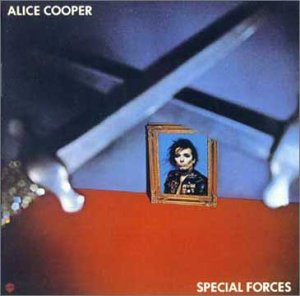
Alice Cooper: Special Forces


ALICE COOPER: SPECIAL FORCES (1981)

1) Who Do You Think We Are; 2) Seven & Seven Is; 3) Prettiest Cop On The Block; 4) Don't Talk Old To Me; 5) Generation Landslide; 6) Skeletons In The Closet; 7) You Want It, You Got It; 8) You Look Good In Rags; 9) You're A Movie; 10) Vicious Rumours.

When looked at in its proper context, there is only one thing that might be wrong with Flush The Fashion — it digests the sounds of the new age with care and intelligence, but perhaps a bit too obnoxiously. It's like: "I'm Alice Cooper and now I sound like all these new guys with funny hair­styles! Let me join the club, I'm worthy!"

Well, Alice did get a haircut around the time Special Forces came out, but, more importantly, he toned down the sci-fi keyboards a bit, retaining the New Wave elements that modernized his image but no longer putting them at the forefront of his melodies. And so, his new album is every bit as fun, catchy, and clever as the old one — and it sounds less dated today.

For the critics, it was another clear sign of how confused, out-of-touch and generally lost Alice Cooper became in the post-glam world. A «techno» reworking of Love's 'Seven & Seven Is'? A pseudo-live re-recording of 'Generation Landslide' that adds nothing (good) to the original? The idiot stutter on 'You Want It, You Got It'? Straightahead mockery of his old scary image in 'Ske­letons In The Closet'? Who needs all this in the wake of the Clash and U2?

For those who like their Alice Cooper confused and out-of-touch, though, most, if not all, of this record will be super-enjoyable. First, it contains at least two of his best written pop-rock melodies in 'Who Do You Think We Are?' (the question has two answers, the complex 'Special forces in an armored car!' and the more simple 'We don't care!') and 'You Look Good In Rags' — ter-riff-ic guitar line, hilarious anti-socialite lyrics and an outrageous coda. Maybe alcohol was affecting his creative vein — but, for all I know, in a positive way.

'You Want It, You Got It' is a crude, clown­ish, but doggone funny poke at superstardom's ex­cesses; 'You're A Movie' returns us to the issue previously tackled with 'King Of The Silver Screen', but in a campier, grinnier way; 'Prettiest Cop On The Block' is worth it for the title alone; and 'Skeletons In The Closet', with its harpsichord theme that transforms «creepy» into «kiddie-spooky», is just a masterful send-up of all the «va­lues» of Welcome To My Nightmare that I can only imagine how it could offend all those who used to take Alice Cooper way too seriously.

Not everything works, and the idea of reworking 'Generation Landslide' remains unclear — was Alice simply trying to say that everything the original band denounced in society back in 1973 was still actual in the society of 1981, or did he simply need to fill up some empty space on the LP? — but, overall, this is an inspired, well-crafted, and thoroughly funny piece of work. Yes, it is al­so the first piece of work for which Cooper has to take all of the credit: with Wagner, Hunter, Ezrin, and even the Elton John backing band gone, I have little idea of who the players on here are, apart from the names, and presume that most of the songwriting and arranging ideas came from the Coop himself.

In a certain way, although no one realized it at the time, Special Forces must have been a preci­ous drop of humor in a musical world that was taking itself way too seriously, what with all the new musical development and the renewal of the doomed struggle to heal the world's problems with the power of music. And, just as it was during the original band's peak years, here is Alice again, with satire and heavy grinning to show how fruitless this struggle can be. Maybe he over­does the «musical slapstick» bit a little, ensuring that Special Forces will never, ever be worship­ped on the level of Killer or Billion Dollar Babies, but it still proudly deserves its thumbs up.

Tuesday, February 2, 2010

The Animals: Before We Were So Rudely Interrupted


THE ANIMALS: BEFORE WE WERE SO RUDELY INTERRUPTED (1977)

1) Brother Bill (The Last Clean Shirt); 2) It's All Over Now Baby Blue; 3) Fire On The Sun; 4) As The Crow Flies; 5) Please Send Me Someone To Love; 6) Many Rivers To Cross; 7) Just A Little Bit; 8) Riverside Country; 9) Lonely Avenue; 10) The Fool.

Burdon dismissed the band soon after Love Is failed to make the big time, and for the next de­cade, there was no sign of the Animals, as Eric gravitated in and out of various projects, first with WAR, then on an entirely solo basis (not that the period did not have an excitement of its own, but this will be duly covered under the «Eric Burdon» section).

Eventually, nostalgia — or, perhaps, some earthlier feelings, such as cash pressure? — took over, and in 1977 Burdon and Price ended up reassembling the entire original line-up from 1965. Old time fans were rejoicing, but for the original five Animals, the studio hours must have been really hard, because what exactly were they to record? Obviously, there was no question about Burdon dominating the proceedings like he did on each record since 1967 — getting back the primordial line-up meant also going back to a more democratic kind of arrangement. On the other hand, what would be the point, in 1977, to return to the same brand of, by now, way obsolete R'n'B that used to be their main occupation?

These are tough questions, and, unfortunately, the resulting album does not manage to find the right answers. Like in the old days, they mostly revert to doing covers, and some of the covers are respectable oldies, like Ray Charles' 'Lonely Avenue', but they also do Curtis Mayfield and Jim­my Cliff and, most importantly, they try their best to not make it sound like an exercise in retro­spection. They do steer clear of all new trends — disco, punk, New Wave etc. — but neither do they sound like they are hopelessly stuck in the Sixties.

And it does not click. It goes down uneasy. The most transparent proof would be to compare their original recording of 'Just A Little Bit' (back then, called 'Don't Want Much' and easily available on the two-disc Columbia set) with the 1977 reworking. The aggression is toned down, Burdon trades his rock'n'roll growl for a moodier, «sexier» approach, Price mostly uses the organ for oc­casional flourishes, and I never manage to get the point.

Nor do they seem to recapture their blues glories all that well, either: 'As The Crow Flies' is com­pletely pro forma — where, in the past, Burdon and Price would be ripping each other's throats, competing for whoever was able to generate the higher excitement level, here they seem to com­pete for whoever is able to exercise the most restraint. It is odd to hear Burdon sing like Lou Reed, and it is even odder to hear Price trade in his organ for a tasteful, but minimalistic electric piano backing. Alan Price is really a phenomenal keyboard player; why do we have to hear him play like some anonymous backer in a late Eighties' Eric Clapton stage band?

This does not mean the record is unlistenable, or even boring. Eric does plenty of good screaming work on 'Lonely Avenue', reaches his highest «confessional» standards on 'Many Rivers To Cross', rocks out on 'Fire On The Sun', and does not let Bob down with 'It's All Over Now Baby Blue' (the latter is given a particularly minimalist arrangement, with Price not so much playing the piano as marking the time with it, so that we can give Eric our full attention. It is worth it, ac­tually). Plus, while evading the trends, it never once sounds like «generic Seventies soft rock» or something like that; play it without knowing and you will not be able to guess the year correctly, or even the decade — «retro-bands» or, simply, bands that laugh at trends are still recording simi­lar-sounding albums even today, except that not all of them are this good.

In the end, it is a moderate thumbs up and an enjoyable listen, but it did not prove the most im­portant point — namely, that The Original Animals had a solid reason to reconvene, much less waste time, money, and efforts on trying to hit the market again. Consequently, they went their own ways once again, and stayed that way for six more years.

Monday, February 1, 2010

Arthur Crudup: Complete Recorded Works Vol. 4


ARTHUR CRUDUP: COMPLETE RECORDED WORKS VOL. 4 (1952-1954)

1) Worried About You Baby; 2) Late In The Evening; 3) Lookin' For My Baby; 4) Nelvina; 5) My Baby Boogies All The Time; 6) I Wonder; 7) Baby I've Been Mistreated; 8) You Didn't Mean A Word; 9) Open Your Book; 10) Tears In My Eyes; 11) Tears In My Eyes (alternate take); 12) Gonna Find My Baby; 13) Make A Little Love; 14) I Love My Baby; 15) My Wife And Women; 16) The War Is Over; 17) Fall On Your Knees And Pray; 18) If You Ever Been To Georgia; 19) Help Me To Bear This Heavy Load; 20) I Love You; 21) She's Got No Hair; 22) Looka There, She's Got No Hair; 23) I Love Her Just The Same.

The last Crudup volume in the Document series covers two and a half more years in his career before he went into semi-retirement, supposedly out of disgust with the record labels cheating him out of hard-earned cash (frankly speaking, it is possible to understand the record labels — how many times over and over again can you pay an artist for recording the exact same song?). The catalyst might have actually been Elvis' recording of 'That's Alright (Mama)', for which Big Boy never got any royalties — but then he didn't really write it, either.

Anyway, this is probably the most «full-sounding» Crudup album out there, as he essays to diver­sify his act by trying on different melodies and instrumentation. The sessions that cover the stretch from 'My Baby Boogies All The Time' to 'Make A Little Love' add an aggressive harmo­nica player, and the whole shenanigan occasionally resembles a weaker version of Son House's voodoo ritual. Then, starting with 'I Love My Baby', the harmonica is either replaced or supported by sax, and some of the tracks start sounding as if they want to capture the light groove of Atlantic R'n'B — including perhaps the oddest song in the Crudup catalog, the comic romp of 'Looka There, She's Got No Hair' (present here in two versions, one light, with brass and harmo­nica and whiny clownish singing, one dark, with grittier electric guitar, no brass, and a much more growly performance).

None of this helped make Arthur a big star once again — in the blues world, people were hungry for edgier atmosphere (Muddy) or blistering guitar playing (Elmore), and in the world of flashy entertainment, early rock'n'roll was replacing jump blues, and «Big Boy», unfortunately, was not nearly as big as to be able to recast himself in any of these moulds. Little innocent tricks, like put­ting out a song called 'The War Is Over' as a present to Korean veterans, did not help either. So it is no big surprise that the Document series stops at 1954 — there was no place for Arthur Crudup in the musical world of 1955. And, despite all the attempts at change, this is probably the least es­sential chapter in the man's history.

Sunday, January 31, 2010

Art Brut: It's A Bit Complicated


ART BRUT: IT'S A BIT COMPLICATED (2007)

1) Pump Up The Volume; 2) Direct Hit; 3) St. Pauli; 4) People In Love; 5) Late Sunday Evening; 6) I Will Survive; 7) Post Soothing Out; 8) Blame It On The Trains; 9) Sound Of Summer; 10) Nag Nag Nag Nag; 11) Jealous Guy.

Second time around, the exact same groove will obviously not sound as fresh. With the element of surprise and shock gone, and nothing else taking its place, It's A Bit Complicated is a bit com­plicated to adore the same way it was possible to adore Bang Bang. As clever as Argos and company show themselves to be, too much cleverness can be dangerous; and since these guys' main strength is in their lyrics rather than in their loins, I mean, riffs — once the joke starts get­ting old, they are all over and done with.

And the joke does start getting a little old. At the very least, it starts getting less obvious and in your face, meaning that I, for instance, have to strain myself somewhat to get it, and what good is an Art Brut album where it is necessary to strain oneself to get it? 'Formed a band, we formed a band!' and 'My little brother just discovered rock'n'roll!' were ready-made slogans with near-uni­versal appeal, immediately forcing you to acknowledge the band's presence. On It's A Bit Com­plicated, in contrast, nothing is ready-made, you have to cook it yourself. Thirty three minutes, high temperature, constant survey and flipping required, results not guaranteed.

Some riffs are good — the anthemic U2-ish line that drives 'Nag Nag Nag Nag', the cute love theme of 'People In Love', the brutal stomp of 'St. Pauli' — but the overall quality is certainly not enough to make this any more stupendous musically than Bang Bang. As for the lyrics, they seem way too frequently to drift into more intimate territory, focused more on the grotesque sides of personal relationships than on the absurdities of society ('Jealous Guy', 'Late Sunday Evening'), etc. — and it does not help much that they continue strictly adhering to the principle of repeating each chorus (and, sometimes, each verse) as many times as it takes to get the Gumby effect. But it is not nearly as funny when the repeated chorus sounds something like 'There's nothing that's been done that can't be undone / You were sick, now you're better, there's work to be done' or 'People in love lie around and get fat / I didn't want us to end up like that' (admittedly, the latter is funny, but lots of things in life are funny).

Overall, this is not a good sign: the lyrics are more boring, the melodies are not improving, and the groove has been carved in stone. I do not want to officially tag this as a good or bad album, because, although on the surface it is not very pleasant, the Art Brut vibe still sort of transcends the line between good and evil — like one of their role models, the Ramones, whose only album worth of sacred admiration is the first one, but who never really ever made a truly bad record be­cause you could not put down or corrupt the vibe. But perhaps it's a bit too complicated, after all.