Search This Blog

Wednesday, May 9, 2012

Argent: Ring Of Hands


ARGENT: RING OF HANDS (1971)

1) Celebration; 2) Sweet Mary; 3) Cast Your Spell Uranus; 4) Lothlorien; 5) Chained; 6) Rejoice; 7) Pleasure; 8) Sleep Won't Help Me; 9) Where Are We Going Wrong.

Evolution happens. Where Argent could, more or less, be seen as the last true Zombies album in spirit, Ring Of Hands represents the crucial bend after which you no longer see the train (might still hear the echo). As the new band gains momentum and ensures its own stability, two new mu­sical directions are emerging. Russ Ballard is now officially the «rocker» of the band, leaning to­wards a louder, sweatier, more aggressive sound — an early brand of «arena-rock». Rod Argent, on the other hand, is taking his cue from contemporary progressive rock, exploring the world of complex structures and lengthy keyboard solos. Counterbalancing all of these tendencies is Chris White, retained as resident songwriter and contributing as many good old pop hooks as can with­stand the pressure of Ballard's Big Buffalo Riffs and Argent's Extended Toccatas and Fugues.

Does it work? How could it not work, when so much talent and freshness is involved? At the risk of occasional bits of corniness and silliness (yes, ʽCast Your Spell Uranusʼ is an unlucky title, and naming your songs after Tolkien toponyms never helps in the long run), the album as a whole is excellent, with nary a single genuine misstep. Neither Ballard's hard rock nor Argent's progres­sive experiments sound forced or boring, and almost every single song shows just how much fun it must have been for Rod to do this — he attacks the keyboard with the verve of a teenager at­tacking a brand new video game. There is no condemning Ring Of Hands, even if you don't like it: these guys are clearly excited, and an excited Rod Argent is beyond condemnation.

The troops are still marching behind hippie-idealistic banners: ʽCelebrationʼ opens the procee­dings on an exultate-jubilate folk-rock note that might just as well open a Crosby, Stills, & Nash record. But in reality, the song is not at all typical of the rest of the album: round-the-campfire idealism only serves as a formulaic bait, upon which the artists launch into either more personal or more heavily «intellectualized» ventures. It does stress the album's relative diversity, though: folk-rock anthems, heavy rockers, blues stylizations, romantic ballads, keyboard pop-sonatas — the band casts its net quite far and wide, even despite its main songwriters already patenting their own established songwriter styles.

Ballard is, of course, the weaker link here. He is not only incapable of matching Argent's talent and experience as player and composer, but also shows less taste, which would eventually doom the band. Most unpleasantly, he tends to overscream and kick up too much pathos where a slight­ly more tongue-in-cheek attitude wouldn't hurt (was there no one in the studio to let him know just how ambiguous the word URANUS may sound when it is made into a chorus hook?). Which, somehow, still does not prevent ʽUranusʼ from kicking some ass, mostly due to Argent's piano and organ parts that genuinely rock harder and sharper than Ballard's vocals.

Russ fares somewhat better on the more guitar-driven ʽChainedʼ, with a well-constructed solo and interesting work on the harmonies; but his best contribution is probably ʽWhere Are We Going Wrongʼ, which manages to end the album on a frenzied / paranoid note, in a disturbing manner that contrasts impressively with the rose-colored start of ʽCelebrationʼ. With psychedelic choral harmonies, an R'n'B-ish drive, fluent guitar and piano solos (Rod brings out his fastest jazziest licks for the latter), it's one of those «intelligent rockers» that requires a little sinking in to take full effect, but don't miss it.

Of the Argent/White collaborations, ʽLothlorienʼ is the most easily notable, if only due to the eight-minute length. Although the title may look provocative, the whole thing is really not so much a Tolkienist fantasy as it is a pretext for launching into some keyboard-dominated jamming: for the first time ever, Mr. Argent feels himself fully free to engage in anything he likes, swit­ching several instruments along the way and gliding from Bach into Art Tatum without effort. For the record, Tolkien's Lothlorien is the last place I would be associating with this kind of mu­sic, but it's nice to know J. R. R. can be so different for different people.

One should not miss ʽRejoiceʼ, either, a McCartney-inspired ballad with a sprinkling of gorgeous falsetto vocal hooks framed with even more Bach quotations (organ sound this time); ʽSleep Won't Help Meʼ, where Rod seems to be inspired by Ray Manzarek's solo on ʽRiders On The Stormʼ, playing highly similar patterns on the same electric piano (unfortunately, like any other «tribute», this one is emotionally inferior, even despite Argent's irrefutable technical superiority over Ray); and even the blues-boogie shuffle ʽSweet Maryʼ, potentially generic, boring, and ta­king one too many cues from ʽThe Night Time Is The Right Timeʼ, is lifted off the ground by an exquisitely tasty Ballard solo. (They never did this kind of material no more, which is a pity — some old-school blues-rock instead of Ballard's lumpy-leaden-metal on subsequent albums could actually help to enliven them).

In the end, Ring Of Hands is probably the best «proper» Argent album — only the debut hits me emotionally in a manner truly comparable with the best of the Zombies, but Ring Of Hands ex­plicitly tells us that this band is not the Zombies, and, well, we'd have to understand that: they didn't change the name for nothing, after all. And as far as a non-Zombies Rod Argent-led band is concerned, Ring Of Hands is tops, with a fair balance between simplicity and complexity, a co­herent attitude and plenty of diverse ways to realize it. And, historically, it is a good example of a great band doing its finest work before becoming destroyed by commercial success — Ring Of Hands didn't sell, and in this particular case of this particular band, we can only thank God for that. So, thumbs up.

Check "Ring Of Hands" (CD) on Amazon
Check "Ring Of Hands" (MP3) on Amazon

Tuesday, May 8, 2012

The Beatles: Magical Mystery Tour


THE BEATLES: MAGICAL MYSTERY TOUR (1967)

1) Magical Mystery Tour; 2) The Fool On The Hill; 3) Flying; 4) Blue Jay Way; 5) Your Mother Should Know; 6) I Am The Walrus; 7) Hello Goodbye; 8) Strawberry Fields Forever; 9) Penny Lane; 10) Baby You're A Rich Man; 11) All You Need Is Love.

This is a «fake» LP, originally assembled for US release by combining the British EP, containing six songs from the movie Magical Mystery Tour, with a bunch of non-LP A- and B-sides from 1967, including even the famous ʽStrawberry Fieldsʼ / ʽPenny Laneʼ single that chronologically preceded Sgt. Pep­­per. In other words, a blatant mish-mash with a vaguely conceptual first side and a totally incoherent second side. A non-album as such — but still one of the best albums of 1967. In fact, quite a few people even happen to prefer it to Sgt. Pepper, for reasons that include «anti-hype», but are not confined to it. But let us not jump to conclusions.

The movie, as we all know, was just one more in a series of Paul's «let's try anything» ideas that his brain was spitting out from 1967 to 1969 in a frenzy that most of his bandmates generally found irrita­ting. Why they decided to go along with his suggestion to hire one bus, one filming crew, several sets of dorky costumes, The Bonzo Dog Doo-Dah Band, and hop around the coun­try in search of filming inspiration, is anybody's guess. (Maybe some of them were too stoned to resist). The results could be predictable: some parts of the movie turned out interesting and chal­lenging, some did not, nobody could agree on which ones were and which ones weren't — by the Beatles' usual standards, this was startling enough to be branded as the band's first unequivocal failure. Imagine the critical relief — waiting four years for a chance to say the Beatles suck at something, with comparatively little risk of a rotten tomato in the back.

In retrospect, Magical Mystery Tour (the movie) absorbed a little more credit. Most people these days agree that the «music video» segments match the songs fairly well, despite the band's rather lacklustre dance moves on ʽYour Mother Should Knowʼ and rather cheesy-looking smoke over­cloaking George on ʽBlue Jay Wayʼ. John manages to remain cool for most of his onscreen time (which isn't all that much), Ringo is always Ringo, the Bonzo Dog Band «live» clip is mostly worth it for the stripper touch (great incentive to get your twelve-year old to watch the movie), and some of the «proto-Monty Python» gags/sketches, like the car race scene, are... provocative? Suggestive? Pre-post-modernistic? Whatever. Bottomline is, the movie does not make much sen­se, but few things in 1967 made much sense, and in that respect, it is a fairly diagnostic document of its time — and you get to see the Beatles in it. Back in 1967, it was just a Christmas special with the Beatles in it; nowadays, how much Beatles video footage from 1967 do we have?

As for the music, Magical Mystery Tour was as much of a straightforward sequel to Sgt. Pep­per as it was a departure from the formula. Sequel — because it is another trip to a fantasy world, even more crazy and surreal in some ways than Pepper's. Departure — because this time, there is frankly no concept whatsoever, other than the title track, whose purpose it is to announce, with bombast and fanfares this time, that what you are about to hear and feel is... different. As if any­body had any doubts about that. Just look at the album sleeve.

The thinly-conceptual framework once again belongs to Paul, who also dominates Magical Mys­tery Tour in sheer statistical terms (three out of six songs are his, and I have no idea who wrote the main theme for ʽFlyingʼ — intuitively, seems more Lennon-like to me, and it is John behind the dominating Mellotron, but no final word here). But the funny thing is, it is Paul's material that is the «sanest» on the soundtrack. The title track may announce a journey into the depths of the surreal, but it is just a statement — it could just as well announce a trip to the Taj Mahal. ʽThe Fool On The Hillʼ is existentialist-sentimental Brit-pop balladry. And ʽYour Mother Should Knowʼ is Paul's most retro-oriented music-hall send-up so far. Clouds? Wizards? LSD? Absurd­ism? Not for Paul, really, who provokes the whole band into conjuring mushroom imagery and then quietly backs out while there's still time.

Which does not imply these aren't great songs — on the contrary! All right, so the title track pro­bably does not qualify as «great», because its aim is modest; but within the scopes of that aim, it is as perfect a PR statement for the trip as there ever could be. The greatest bus commercial in the history of mankind for sure. As for the other two, both of which start out with solo Paul at the piano, and then evolve into something bigger, these may be even more poignant than anything «solo Paul» wrote for Sgt. Pepper.

It makes little sense to add my two cents on ʽFool On The Hillʼ, the finest Taoist anthem in Wes­tern pop music history, but I would like to specifically stand up for ʽYour Mother Should Knowʼ, which I frequently see condemned as «soft pap», «presaging the worst fluff of McCartney's solo career», etc. Anyone who perceives it that way should play it back to back with the Fred Astaire-dedicated ʽYou Gave Me The Answerʼ on Venus And Mars — and see what it is that separates major genius from minor. Because the latter is also melodic, memorable, and modestly charming, but in a «fluffy», «shallow» way, resulting in a sugary-sentimental mood (which is one of the major moods of The Songbook, though, so it's not as if the goal weren't reached).

Yet ʽMotherʼ is not just a «tribute» to any particular one of Paul's pre-war idols. Its A minor in­tro and thoroughly sad intonations throughout are really a lament — light tragic intonations here, just like on ʽFool On The Hillʼ, only even less noticeable because the minimalistic words do not re­flect any tragedy by themselves. But "though she was born a long long time ago..." — doesn't that sound sad? One of Sir Paul's greatest talents, as we know, is making us all feel for the lonely and the rejected, from ʽFor No Oneʼ and ʽEleanor Rigbyʼ through ʽJunkʼ and then all the way to ʽLo­nely Old Peopleʼ (also on Venus And Mars), and, although this one is much less obvious, it ac­tu­ally fits well in the same category. It's a «happy-sad» funeral march to days long gone by, and I do not care in the least if Paul's original intention was merely to toss off a trifle — trifles do not trigger tear-shedding mechanisms.

That said, ʽMotherʼ is not the least bit «psychedelic», either. The honours are delegated to the rougher Beatles — Mr. George «Please Don't Be Long» Harrison and Mr. John «GOO GOO GOO JOOB» Lennon. The former comes up with an unusually lightweight number: nothing to do with religion, philosophy, or the meaning of life in general, just an impressionistic account of get­ting lost in L. A. fog. Of course, nobody forces you to take the lines "There's a fog upon L.A. / And my friends have lost their way" literally — it is much more fun to take them figuratively, as an unveiled indictment of the hippie drug culture (which George genuinely disliked). But even if we pay no attention to the accounted details of the genesis of the song (presumably written while waiting for Derek Taylor to locate Blue Jay Way), it is still hardly possible to see the music as anything but a sonic impression of thick, dense fog that paralyzes normal activity. Drone, phasing, backward tapes, cold Hammond organ, uncredited cello — the whole song is one big, aggressive manipulation of the senses, the best example of this approach during George's very brief  «expe­rimental» period of late 1967 / early 1968 (others include ʽOnly A Northern Songʼ and a few bits of the Wonderwall Music soundtrack, all recorded during more or less the same period).

As for ʽI Am The Walrusʼ... well, the song probably deserves writing a whole novel about it some day (and not just because it was the song that originally introduced me to the band in all se­ri­ous­ness). For John, it was first and foremost a lyrical breakthrough: after "elementary penguin sin­ging Hare Krishna" and "crabalocker fishwife pornographic priestess", there were no more limits. But there is so much more. If ʽLucy In The Skyʼ was the man's tribute to «idealistic psychedelia», a kaleidoscopic paradise of surreal beauty, ʽI Am The Walrusʼ shifts to aggressive psychedelia, if not donwright militaristic. It is, to some degree, sarcastic and cynical, but mostly it just kicks ass, right from the gloomy intro and especially from the moment when Ringo butts in at 0:14. This is when you know that you are going to be ripped to pieces.

Meaning, really, that the true breakthrough may not be «textual», but «personal»: the words mean nothing in particular, but when taken all together, they form a string of brutal, ugly, gross ima­gery ("pigs in the sky", "let your knickers down", "yellow matter custard dripping from a dead dog's eye", "semolina pilchard climbing up the Eiffel Tower", etc.), all of it delivered in John's most sneering, sharpest tone, as if he'd just finally come out with an official, government-sealed permis­sion to spit as much venom as he is capable of. And the music? The string arrangements on the song alone inspired Roy Wood and Jeff Lynne to form Electric Light Orchestra — pop music, up to that point, had never seen cellos and violins swoop up and down like hungry vultures or hack away at the listener like razors and knives. And the climactic moments? Whoever said that the chorus of "GOO GOO GOO JOOB" was meaningless? It's all in the modulation — the way I've always felt it, in «walrus-speech» this means "FUCK YOU VERY MUCH", and I've always preferred the exquisite way it is expressed in walrus-speech over the way it is normally done in Standard Literary English.

In the movie, ʽI Am The Walrusʼ comes in the middle of things, whereas the forced ballroom dan­cing scene of ʽYour Mother Should Knowʼ rounds them up; and in the movie, this is logical, but the eventual sequencing of the American release, which shifted the running order, is more delicious these days — the soft sentimental sadness of the simple piano on ʽMotherʼ giving way to the ominous electric piano of ʽWalrusʼ is a fine transition, and the whole «magical mystery tour» now ends with a chaotic, unresolved fade-out that leaves no questions answered, rather than a strange suggestion that a trip to the world of the surreal should end on a «retro note». On the other hand, it also ensures that there really is no specific framework to this whole enterprise. Paul does Paul's thing, John does John's thing, and George's friends are lost in L.A. fog.

Then there is the second side, gathering most of the odds and ends from the rich harvest of 1967. ʽStrawberry Fields Foreverʼ and ʽPenny Laneʼ need no introduction: arguably the greatest «dou­ble A-side» in history, if only because there is no other example in the chronology of the Beatles' 45"s where one side would contain a «seminal» John classic and the other one an equally «semi­nal» Paul classic. (One could argue for ʽPaperback Writerʼ / ʽRainʼ or ʽHey Judeʼ / ʽRevolutionʼ, but in each of these cases it is Paul's song that wins over in terms of popularity — no matter if it's «right» or «wrong»). It's also a particularly great example in that the two songs are expectedly and admirably different in terms of personalities — John's psychedelic experimental introspection vs. Paul's illusionist ultra-melodic whimsy — but both songs are also somehow coherent themati­cally, taking their cues from both writers' childhood memories. It's as if they were both given a «homework task» for their late 1966 break, and each performed it in his own style. And who won? From the historical significance point of view, obviously, John, what with the bizarre multi-part structure and all. From the point of view of «catchiness» — Paul, hands down. But why should we really care? Both songs still blow our minds today the same way they did in early 1967.

ʽHello Goodbyeʼ works as a fine intro to Side B — Paul at his carnivalesque best, impossible to resist even for grouchy old people who never kids — and ʽBaby You're A Rich Manʼ is a bit of «filler» mostly worth it for the lyrics: when you stop to think about it, it works best as an earthy drop of antidote to the pathos of ʽAll You Need Is Loveʼ, and it might have been more fun if the silly American people actually put it where it belongs: after ʽAll You Need Is Loveʼ, not before, deflating the idealism in properly cynical fashion. Which is not to say that ʽAll You Need Is Loveʼ is not a great song, or that there is something wrong or harmful about its idealism. (The verses of the song actually run deeper than simplistic propaganda — "there's nothing you can do that can't be done" is slyly reminiscent of the much more straightforward "there's nothing that can't be done by you", but bears quite the opposite meaning; so Brian Epstein's comment that «the song cannot be misinterpreted; it is a clear message saying that love is everything» may really need a little bit of refinement).

In the end, if you give Magical Mystery Tour in its LP incarnation to an unsuspecting friend and ask him, «Is this a concept album or what?», he might well respond that it is — starting off with an invitation to explore the unknown, taking the listener to distant hills with fools, clouds spew­ing forth L. A. fog, eggmen and walruses, nostalgia mixed with fantasy, and finally culminating in the most bombastic anthem to L-O-V-E ever written. He might even remark that it is a concept album that is better grounded in reality than Sgt. Pepper, yet also more optimistic in its conclu­sions, with a happy grand finale as opposed to the mind-shattering explosion of ʽDay In The Lifeʼ. Then again, he may be more astute than that and guess the truth — that there is no concept here whatsoever — but I can only judge for myself, and I myself have always regarded the album as coherent, even if the Beatles themselves never intended such a coherence (and how could they, if the songs had been recorded all through the year?).

The album may be dominated by its colorful sleeve imagery — resplendent «yellow, orange and green», shooting stars, and the band in grotesque animal costumes (and we still have no true idea of who really was the walrus, no matter what John says) — and that, in turn, sometimes leads to the impression that they are now engaging in «psychedelia for kids», where Pepper was «psy­chedelia for adults». An impression that is not entirely untrue: from Paul's «fluffy» bits to John's ever increasingly demonstrated love for Lewis Carroll, there may be even more of those indivi­dual bits here that would make the album delightful for the little ones (and I never denied that it was the eye-and-ear-candy of MMT that led me to the Beatles as well). But, as it happens with every Beatles record, we have layers here — all sorts of. Musical, lyrical, ideological, personal, whatever. It's just another mini-world where leaping from tree to tree may be a goal in itself. And it is all the more admirable considering the hard, turbulent times when most of it was recorded — following up on Brian Epstein's death and all. With the father gone, you'd expect the kids to start growing up. Instead, they are making one of their kiddiest albums ever. Fascinating, right?

Check "Magical Mystery Tour" (CD) on Amazon

Monday, May 7, 2012

Blind Boy Fuller: Complete Recorded Works Vol. 5 (1938-1940)


BLIND BOY FULLER: COMPLETE RECORDED WORKS, VOL. 5 (1938-1940)

1) Stop Jivin' Me, Mama; 2) Long Time Trucker; 3) Big House Bound; 4) Flyin' Airplane Blues; 5) Get Your Ya Yas Out; 6) Jitterbug Rag; 7) Screaming And Crying Blues; 8) Blacksnakin' Jiver; 9) I Don't Care How Long; 10) You've Got Something There; 11) Baby, Quit Your Low Down Ways (take 1); 12) Baby, Quit Your Low Down Ways (take 2); 13) It Doesn't Matter, Baby; 14) Black Bottom Blues; 15) I Crave My Pig Meat; 16) Big Leg Woman Gets My Pay; 17) I'm A Stranger Here; 18) Red's Got The Piccolo Blues; 19) I Want Some Of Your Pie; 20) Jivin' Big Bill Blues; 21) Woman, You Better Wake Up; 22) Step It Up And Go; 23) Worn Out Engine Blues.

This one is going to be very short: although the fifth volume covers a longer time period than the fourth, it yields even fewer pretexts to write anything meaningful. Oh yes: this late 1938 session gave us the title of the best live album by the Rolling Stones — ʽGet Your Ya-Ya's Outʼ may be just another rewrite of ʽLog Cabin Bluesʼ, but it was well worth it in the end.

At the other end of the album, ʽStep It Up And Goʼ is probably the first recording of this song that actually uses this title, under which it would later be recorded by plenty of other people (Bob Dy­lan's version is what comes to mind first). But we cannot even give Fuller complete credit, since the merry little jug band dance tune dates back to at least 1932, when it was still called ʽBottle It Up And Goʼ. Fuller's variant is competent, but that's about it.

So, instead of trying desperately to write something about the music on here, let me just throw in a fun fact — apparently, it turns out that, due to his short prison term for the wife-shooting «acci­dent», Blind Boy Fuller never made it to the From Spirituals To Swing show that John Hammond presented in Carnegie Hall. Big Bill Broonzy did, though, and who knows if that event, which in­troduced jazz and blues music in an «academic» manner to «respectable» white audiences, was not partially responsible for future developments of popular tastes? Imagine music lovers not taking after Big Bill Broonzy (who flowed straight into Muddy Waters, who flowed straight into every­thing else), but after Blind Boy Fuller? The guy missed his little chance at world domination here: one drunken shot in the leg, and Piedmont blues was never the same after that...
 

Sunday, May 6, 2012

Andrew Bird: Break It Yourself


ANDREW BIRD: BREAK IT YOURSELF (2012)

1) Desperation Breeds...; 2) Polynation; 3) Danse Caribe; 4) Give It Away; 5) Eyeoneye; 6) Lazy Projector; 7) Near Death Experience Experience; 8) Behind The Barn; 9) Lusitania; 10) Orpheo Looks Back; 11) Sifters; 12) Fatal Shore; 13) Hole In The Ocean Floor; 14) Belles.

Well... this is another Andrew Bird album, make no mistake about it. In fact, it is so much an Andrew Bird album that I caught myself with a déjà vu feeling on just about every song, even if none of the melodies can be identified as direct carbon copies of past material (I think). Strange enough, though, this looked like a problem on Noble Beast, but not here. It does confirm my con­clusions, stated for that previous album: Andrew Bird is no longer interested in searching, having found exactly what he was loo­king for. But, on the other hand, any formula, no matter for how long you have been sticking to it, may always be perfected. And my own intuition, for reasons I am still trying to understand, whispers that Break It Yourself is a minor rebound upwards from the minor «sagging» of Noble Beast.

The album is padded. It runs for sixty minutes, and a significant chunk of them are donated to sheer atmospherics. To be honest, I think that ʽFatal Shoreʼ works rather well as a natural conclu­sion to the album, and that the lazy eight minutes of «chamber ambience» that constitute ʽHole In The Ocean Floorʼ, as well as the even more minimalistic chimes-and-crickets outro of ʽBellesʼ, are a useless waste of everything that can be wasted. Nor is the «bulk» of the album free from moments when Bird's subtle tension slips into subtle languidness — inavoidable, perhaps, when you place quiet introspective melancholia and soft, inobtrusive acoustic guitar and violin patterns at the heart of your sound.

But overall, Break It Yourself still does it right by focusing most heavily on Bird's vocals — the atmosphere is closer to «minimalistic» than it was on Noble Beast; the instrumental melodies are fairly simple and predictable; and the hooks are generally tighter, darker, and hit closer to the heart. The word «desperation» is already locked in the title of the first song; and while Bird is never «desperate» in the generic sense of the word, I wouldn't be surprised to ever find out that he was intentionally planning here to deliver the saddest album in his career. More than half of the songs are dirges — semi-obscure laments with lyrics so convolu­ted that they could be relatable to lost love or the downfall of society with equal success. More importantly, more than half of the dirges click like a good dirge is supposed to.

It is hard to pick out individual examples, but ʽLusitaniaʼ is one of the more immediate heart-tug­gers, a duet with singer-songwriter St. Vincent, a.k.a. Annie Clark, for which Andrew has saved up his best crooning intonations and a simple, but true conclusion — "we don't study this war no more", with both singers joining in on "go ahead, say something dumb boy, there's no shame". Not everyone will want to interpret Break It Yourself as a cry for humanity, but ʽLusitaniaʼ is one of the more explicit numbers, and these moments of explicitness color the whole record.

Come to think of it, while few of the songs reach the levels of complexity that Bird occasionally used to demonstrate, and practically none of them show you something you have not already seen before, they all manage to get by just on the strength of certain isolated lines or phrases. ʽLazy Projectorʼ moves slow and shuffly, and is really all about the subtly condescending "tell me how long till the paint starts to peel". ʽDanse Carribeʼ is all about "here we go mistaking clouds for mountains". ʽEyeoneyeʼ is all about how "no one can break your heart, so you break it yourself". ʽNear Death Experience Experienceʼ is totally about how "we'll dance like cancer survivors, like we're grateful simply to be alive". And so on. Through sheer groping around, he finds all these little bits and turns them into steady bolts that fasten the whole construction.

This, in turn, gives the whole album a certain epic, ultra-serious feel; Break It Yourself is neither lightweight/carnivalesque, nor surrealistic/psychedelic, as most of Bird's earlier albums are. Once you decipher the man's lyrics using whatever personal key you may find on your own, the album may not turn out to be telling us lots of things that we do not already know. But I do get the feel­ing that, having already established himself as an unsurpassed master of a certain musical form, Bird is now finally trying to inject that form with substance, or, at least, a little bit of philosophi­cal realism that goes along very nicely with his particular brand of music.

For those who will get their first taste of Bird with Break It Yourself, the record may well be a revelation. For those who have already thoroughly explored his career and found it worthy with­out developing a fanatical attitude, it may require a few additional listens — by the end of which you will probably get the feeling that these days, Andrew Bird is treating himself with an extra dose of self-admiration compared to the way it used to be. Which isn't necessarily a bad thing: to me, it made Break It Yourself a more interesting and challenging experience than Noble Beast, with a guaranteed thumbs up. On the other hand, this may also breed trouble for the future. We'll just have to wait and see.

Check "Break It Yourself" (CD) on Amazon
Check "Break It Yourself" (MP3) on Amazon

Saturday, May 5, 2012

Ash: Nu-Clear Sounds


ASH: NU-CLEAR SOUNDS (1998)

1) Projects; 2) Low Ebb; 3) Jesus Says; 4) Wildsurf; 5) Death Trip; 6) Folk Song; 7) Numbskull; 8) Burn Out; 9) Aphrodite; 10) Fortune Teller; 11) I'm Gonna Fall.

Girl presence detected! Or not detected, because new band member Charlotte Hatherley had been hired primarily for her guitar playing skills, thickening the sound during live performances and saving time for extra overdubs in the studio. She does add some backing vocals as well, but as far as I can tell, she does not get to sing lead at all (unless she can pose as Wheeler's double).

Nor does the lineup expansion result in any mind-blowing stylistic turn-arounds. Nu-Clear Sounds (a really awful title, if I might add; nothing that begins with «nu-» has ever proven to be good) starts off horrendously, with a bunch of songs that go, «Hey! We bring you the excitement of power pop baked in grunge guitar tones! Uncumbered with original chord changes — no more dan­ger of getting sidetracked by silly inventions like ʽmelodyʼ! Go with the flow, and the Force will always be with you!» The fast-kicking «rock» of ʽProjectsʼ, the slow-moving «meditative rhythmic balladry» of ʽLow Ebbʼ, and the third-rate Iggy Poppisms of ʽJesus Saysʼ are the kind of total garbage past which so many of the critics simply couldn't make it — which explains the overall cold reception in comparison with 1977. Dark, morose, nasty, and boring: an unbeatable combination for anyone desiring to sully the good name of rock'n'roll.

It does get somewhat better from there on. ʽWild Surfʼ is another in Ash's series of Ramones-in­spired bubblegum anthems, and even though it should have been played twice as fast for optimal effect, at least it has a friendly, funny, catchy chorus that slightly deflates the deadly, exaggerated seriousness of the first three numbers. Then they step back, regroup, take a deep breath, and let rip with ʽDeath Trip 21ʼ, which is probably the closest this album really gets to nu-metal, but at least it's faster, sharper, and flashier than ʽProjectsʼ.

But, as curious as it could be, Nu-Clear Sounds is at its best when Wheeler quiets the band down in order to inject some sentimentalism. The basic guitar picking of ʽFolk Songʼ, supported by a bunch of pseudo-strings in the background, is no more out­standing than anything else here, but, all of a sudden, Wheeler puts together a soft, cozy, naturally-sweet sounding vocal and applies it to a catchy chorus — his "springtime slipping away, my love, springtime slipping away" is just about the only moment on the album that has pledged to stay with me at least until the next mor­ning. Two tracks later, the trick is repeated with ʽAphroditeʼ, and it almost works, except that this time, they resort to the usual trick of «make that chorus louder! It's the CHORUS, goddammit!», and spoil much of the effect of the "all I know 'bout is desire baby" refrain with the same power chords that we have already had the chance to chew up, swallow, shit out, scoop up, repeat pro­cess etc. so many times.

In between these and other ballads, however, we still keep getting regurgitated trash like ʽFortune Tellerʼ, which has no instrumental melody that I am aware of, borrows its verse vocal melody from some other song that I am fairly sure I have heard many times before, and is not ashamed to actually quote from the other, much better known, ʽFortune Tellerʼ (Benny Spellman / Rolling Stones / Who, etc.) in the first line of its chorus vocal melody. I mean — come on, really, that is not how one is supposed to come up with new rock'n'roll songs, even if they have an explicit retro orientation. Really!

Clearly a thumbs down here overall: for a band that gets most of its acclaim for distorted guitar-driven rock thunderstorms, Nu-Clear Sounds produces a way too suspicious impression of an album written by an aspiring folk songwriter, a wannabe 1990s Donovan, cruelly mishandled by Fate and thrown into the lion den of rock'n'rollers with a stern order to prove yourself or die try­ing. And that's me attempting to put it in an interesting framework — when, really, the album is so dead boring that I am frankly amazed at my own self with that phrasing.

Check "Nu-Clear Sounds" (CD) on Amazon
Check "Nu-Clear Sounds" (MP3) on Amazon

Friday, May 4, 2012

Associates: Perhaps


ASSOCIATES: PERHAPS (1985)

1) Those First Impressions; 2) Waiting For The Loveboat; 3) Perhaps; 4) Schampout; 5) Helicopter Helicopter; 6) Breakfast; 7) Thirteen Feelings; 8) The Stranger In Your Voice; 9) The Best Of You; 10) Don't Give Me That I Told You So Look.

Post-Rankine era Associates are generally forgotten, since even the band name does not really make any sense when nobody is genuinely «associated» with Billy Mackenzie any more. Natu­rally, if your original image is built on the successful collage of «guy with guitar» and «guy with ego», critics and fans alike will not be impressed when the «guy with guitar» is gone, and you simply retain the original name for publicity purposes. Perhaps took a fairly long time to make — two years of recording only to get completely scrapped and restarted from scratch — and when it eventually came out, it fared poorly. Still reaching something like #23 on the UK charts, but it didn't stay there long, even despite the sexy suit on the front sleeve.

But you know what? I actually found it much more interesting than Sulk. At this point, nobody pretends any more that this has anything to do with a «rock» sound: the entire album is stereoty­pical synth-pop, with very few guitar overdubs of any importance — and, instead of having Ran­kine, a modestly inventive, but technically mediocre, player, handle the goods, Mackenzie hires expert player Stephen Betts, a.k.a. Howard Hughes, as a full-time member. The record is no lon­ger produced by Mike Hedges, too, removing and discarding most of The Cure associations; in­stead, there is a whole bunch of various synth-poppers responsible for production, and it seems to me that their chief task along the way was to steal away as much of Mackenzie's usual darkness and schizophrenia as possible. Much of it still remains — at his peak, Mackenzie was all dark­ness and schizophrenia, so you couldn't steal away everything, no matter how hard you tried — but overall, Perhaps is much less disturbing than Sulk.

So, it is synth-pop, it is relatively lighter and brighter than usual, it is a solo album masquerading as a band effort, a re-recording made at the record company's insistence — by all these parame­ters, it's a suckjob that doesn't even deserve its own review at the All-Music Guide. But its open­ing number, ʽThose First Impressionsʼ, happens to be the most beautiful song in Mackenzie's ca­reer. If you happen to be fond of stuff like Roxy Music's ʽMore Than Thisʼ and other Avalon-era creations, there is no way you won't be impressed by ʽImpressionsʼ — its more than tasteful mix of minimalistic piano chords, quiet horn and guitar perks, grumbly bass explosions, and, most important of all, a gorgeous vocal melody from Billy. It may not be entirely true to his personali­ty, but it is hard for me to believe that the entire performance could be «faked» when it is such a flawlessly executed vocal tour-de-force. Sweet, touching, danceable, immaculately produced (the voice is not lost in the mix even for one second, always dancing several feet above the instrumen­tal surface), a genuine gem of 1980s electronic pop.

None of the other tunes can keep up, but there is plenty of creativity anyway. ʽWaiting For The Loveboatʼ and the title track are hook-filled, memorable pop-rockers whose choruses can poten­tially annoy, but are definitely not senseless (ʽPerhapsʼ is at least as good as your average Depe­che Mode hit). ʽHelicopter Helicopterʼ is fast and crazy, not unlike a goofy Oingo Boingo num­ber with its robotic-funky horn and synth arrangements. ʽBreakfastʼ places its faith in a French-tinged piano and strings arrangement — it should be a particularly acquired taste, but it's interesting to see Mackenzie try out something completely different. ʽThe Best Of Youʼ has an excellent bass groove (although the vocals, courtesy of guest singer Eddi Reader, are questionable). And minor melodic attractions can be found just about anywhere.

All the way through, I kept pinching myself, but the truth is out: I am really, really quite impres­sed by the record. It does have one major flaw: almost all of the songs are drastically overlong — they are not that good to deserve five-to-six minute running times, so that a humble collection of just 10 numbers runs well over fifty minutes. This isn't really a «party» album to keep the guests on their feet, no matter how many technically danceable numbers there are — it is still an attempt to hew out some «art», and I would definitely feel strange dancing to songs that reference "dee­per days of quintessential innocence" and such. Hence, no need to keep the groove up and going once it has worked out its potential.

But other than that, it is an imaginative, diverse, and honest attempt to make a progressive synthe­sis of old school chamber pop and R'n'B with the new electronic inventory at hand. Like all such attempts done in the mid-Eighties, it remains thoroughly dated (the drum sound, in particular, is mostly horrible) — but repeated listenings let me look past that, and simply appreciate the record for all of its little inventions, the power of Mackenzie's voice, and the undeniable beauty of ʽThose First Impressionsʼ. Thumbs up.

Thursday, May 3, 2012

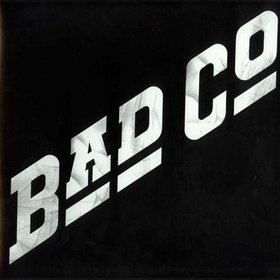
Bad Company: Bad Company


BAD COMPANY: BAD COMPANY (1974)

1) Can't Get Enough; 2) Rock Steady; 3) Ready For Love; 4) Don't Let Me Down; 5) Bad Company; 6) The Way I Choose; 7) Movin' On; 8) Seagull.

«Beware of bad company», they would warn us all in Victorian times, «nothing like bad company to bring shame and disrepute to the respectable, intellectually stimulating type of music they call hard rock». But did we listen? Hell no! And instead of ejecting ex-Free vocalist Paul Rodgers, ex-Free drummer Simon Kirke, ex-Mott The Hoople guitarist Mick Ralphs, and ex-King Crimson bassist Boz Burrell from the midst of our good company, we blessed them on their long road to­wards radio success, popularizing guitar distortion among truck drivers and competing with Frank Sinatra for the love of bored housewives. No longer would hard rock have to be associated with words like «scary» or «creepy». And while it would be unfair to put all the blame on Bad Com­pany, they share an impressive enough chunk of it to deserve this opening shot. It is extremely ironic, in retrospect, that the band was the first act to be signed by Led Zeppelin's new label Swan Song — considering that Bad Company stand for pretty much everything in hard rock that Led Zep usually stand against.

None of which should be interpreted as a flat-out condemnation of their self-titled debut, which is actually pretty good, as far as «soft hard rock» ever goes, and may be even better for those whose ears have not been punished in childhood through continuous exposure to mind-numbing «Clas­sic Rock Radio». The long-term fiasco of Bad Company could be predictable right from the start, but the start itself was respectable. All of the members came from vastly superior bands — Free were among the original pioneers of blues-based hard rock; Mott The Hoople were among the first outfits to blend hard rock with singer-songwriting and punk attitude; and King Crimson were... um, a band with a sitting guitarist — and even though the basic idea was to keep it simpler, stupider than their predecessors, their «supergroup» status at first helped minimize the trauma.

Of all the individual band members, in terms of sheer sonic contribution, nobody matters much here except for Rodgers. On a Free album, the man would always compete for attention with the guitar player and the bassist, both of whom were not only accomplished, but earnestly strived to flash and flaunt their accomplishments. On Bad Company, all of the musicians merely play — doing their best to simply keep a steady groove and lay down the basic chords. In his Crimson days, Boz Burrell was actually taught how to play bass by Fripp, and although they taught him well enough to lay down some fine playing on a few KC songs, by the time he ran away to Bad Company he'd already forgotten most of it. Mick Ralphs never was a guitar phenomenon even in his Mott days, much less here. Simon Kirke is a fine drummer, 'sall. All of which means — no competition for Paul: Bad Company belongs to him, fair and square.

The general policy of the album is announced immediately. A brief countdown, a gene­ric C po­wer chord, two more, off you go — and a greatest hit is born, a song that one could probably learn to play in five minutes, which is likely to constitute 0.0000001% of the total amount of time it has been played on radio stations around the world since 1974. I still cannot understand what it is about ʽCan't Get Enoughʼ that makes it stick, but somehow it does something for me that ten thousand similar songs, following in its wake, do not. Maybe it's just Rodgers' personal charm. It certainly cannot be any sort of «melodic impact».

That said, the only two songs from Bad Company that I would want to preserve for the perennial playlist are ʽRock Steadyʼ and ʽReady For Loveʼ, conveniently placed side-by-side. ʽRock Stea­dyʼ is like ʽFoxy Ladyʼ-lite, built around a similar chord sequence, but simplified, trimmed, lo­tioned, and meticulously integrated in The Establishment. Still, the guitar and bass retain some primal meanness which, when multiplied by Rogers' slightly threatening intonations, belies the band's nature as totally robotic and artificial. ʽReady For Loveʼ was brought by Ralphs over from his Mott days (it had already appeared two years earlier on All The Young Dudes), and even though the original was rougher and grittier, with a thick distorted rumble at the center of things, Rodgers is clearly the man to sing it, far more convincing than Ian Hunter with his lack of range and vocal power ever was. (Not that Hunter couldn't deliver a mean tune when one was available, but sizzly-steamy slowburners like ʽReady For Loveʼ honestly deserve a different fate).

Bad Company ballads are a whole lotta different story. I can handle the combination of «Paul Rod­gers + muscular hard rock groove», but «Paul Rodgers + wimpy country-rock mush» is a bit too much. Therefore, ʽDon't Let Me Downʼ (no relation to the Beatles song, fortunately), ʽThe Way I Chooseʼ (aren't they the exact same song, by the way?), and even the minimalistic acoustic ballad ʽSeagullʼ, which have nothing whatsoever to recommend them except for Rodgers' «ma­gic», may freely and without compensation vanish off the face of the planet for all I care. The only song that redeems the second side is the title track — a romantic outlaw painting tailor-made for Rodgers' persona, even distinctly echoing Elton John's Tumbleweed Connection in spots.

And still, a thumbs up. Bad Company is what we might call a ʽbad album gone goodʼ, to para­phrase one of the band's future titles: as lame as the basic idea behind the existence of Bad Com­pany may be in general, this particular realization of it exceeds expectations. The band's complete motto for 1974 actually read «keep it simple, but inspired». Over the next two years, with money, dope, and cheap fame rolling in, that motto would get short-circuited.

Check "Bad Company" (CD) on Amazon
Check "Bad Company" (MP3) on Amazon

Wednesday, May 2, 2012

Argent: Argent


ARGENT: ARGENT (1969)

1) Like Honey; 2) Liar; 3) Be Free; 4) Schoolgirl; 5) Dance In The Smoke; 6) Lonely Hard Road; 7) The Feeling's In­side; 8) Freefall; 9) Stepping Stone; 10) Bring You Joy.

As far as I know, the Zombies disbanded in 1968 not because the band members hated each oth­er's guts or anything, but generally out of desperation: for the average band in the 1960s, three years without a major hit single meant artistic bankruptcy, even if it still managed to maintain a cult following. The Almighty rewarded them with an ironic twist of fate, turning ʽTime Of The Seasonʼ into a big international hit one year after the band's demise. By that time, however, lead singer Colin Blunstone had already entered insurance business, and somehow the band members must have thought it uncool to make a hasty regrouping.

However, the success of ʽTime Of The Seasonʼ must have been enough for lead organist and one of the chief songwriters, Rod Argent, to believe that there was still a place in this world for him. Furthermore, by 1969 the record-buying world was slowly beginning to develop a better under­standing of that strange kind of music that the Zombies kept pushing ahead of their time: classi­cally influenced, complex, «pretentious» art-pop. Giving it one more try seemed natural. And while it may seem somewhat arrogant to slap your personal family name on the visit card of your four-piece band — give our regards to Santana — «Argent» was certainly a much more appropri­ate appellation for a late 1960s / early 1970s progressively-oriented art-pop team than «Zombies» ever was. (Which begs the question: did the actual Zombies ever sit back and think just how many non-bought records their name cost them in the long run?).

Although all the other official band members are new (Russ Ballard on vocals and guitar; Jim Rodford on bass; Bob Henrit on drums), original Zombies member and songwriter Chris White semi-officially remained on board as one of the band's major creative personalities — making the «Argent» brand a completely legitimate follow-up to «Zombies»: there can hardly be any doubt that, had the actual Zombies managed to keep their act together through the years, they would have turned into Argent even without any lineup changes. Proof? The self-titled Argent still sounds more like the Zombies than the «classic» Argent of ʽHold Your Head Upʼ — and it is this transitional, fence-straddling nature exactly that makes it my favorite Argent album.

It is probably just a coincidence that Argent opens out on pretty much the same simple arpeggio as the Beatles' ʽI Want You (She's So Heavy)ʼ, not a subtle arrogant hint that the band is ready to pick it up where the Beatles have just left it off. On the other hand, late-period Beatles are an un­deniable influence: Argent is «art-pop» that is not afraid to experiment with structures, arrange­ments, and genre-melanging, but still strives to be old-school commercial, with modest composi­tion length, catchy choruses, and generally transparent moods — most of the tracks are una­bashed love songs (with occasionally cringeworthy or clumsy lyrics: am I out of my mind or is the opening line "Like honey, you're sweeter" thoroughly ungrammatical? And what is "when night falls on rare wine" even supposed to mean?).

But never mind the lyrics: the Argent/White team, with just two years past their Odessey And Oracle peak, is still going very strong, and newcomer Russ Ballard is quite competent in the songwriting department as well: it was his own ʽLiarʼ, after all, that was turned into Argent's first hit... unfortunately, not before Three Dog Night covered it one year later, in an arrangement that was very close to the original, merely replacing Ballard's soft, McCartney-like, vocal for a rowdy barroom rasp (I am going to take it easy on 1970's record-buyers and believe that it had every­thing to do with better promotion, something Rod Argent never cared too much about).

Only one number points to the long road ahead, on which Argent would only embark with the subsequent album: a six minute long mystical circle dance, appropriately titled ʽDance In The Smokeʼ. The length finally gives Rod plenty of space to practice his half-Bach, half-Ray Charles organ chops, with lots of inspired, elegant passages that succeed far more successfully than the song in general — if, that is, the ambition behind the song was to come up with their own perso­nal ʽHey Judeʼ, because the overall atmosphere is just a bit too stern and reserved to match the supposed euphoric joy of "every branch we'll tie somebody's worry to it, we will burn it and dance in the smoke". Still a great sonic landscape, though.

Overall, Argent is extremely romantic: on subsequent albums, hard rock and darker-tinged pagan mysticism would seriously concur with heart-baring lyricism, but this debut, with the exception of ʽDanceʼ, almost reads like a focused assault on some particular young girl's heart. Songs like ʽThe Feeling's Insideʼ and ʽBring You Joyʼ are almost too beautiful for their own good, the for­mer written on a serious Bach organ kick, the latter more modernly R'n'B-ish / blue-eyed soulish, but both sung from the mental perspective of a medieval troubadour, no less. And why not? The vocal progression during the verse flow of ʽFeeling's Insideʼ easily ranks on the same level with the best Zombies material.

The «rockers» of the album are also quite clever in that they are almost exclusively keyboard-based (think of ʽLady Madonnaʼ as one of the chief inspirations), so there's speed, power, and energy, but no attempts to compete with hard-rockers that would be doomed from the start. ʽBe Freeʼ essentially flies by on the strength of its vocal arrangement, and Ballard's ʽLonely Hard Roadʼ is one song on here I could possibly see evolving into a long jam — the rhythm section is particularly tight, I wouldn't mind Argent practicing his razor-sharp organ solos some more while the groove is still on.

For some reason, my personal favorite on the album, for a long time, was Ballard's ʽSchoolgirlʼ — a clear attempt on his part to write a particularly simple, but effective pop tune in the classic early ʽShe's Not Thereʼ-era Zombies style. It's not quite up to those standards, but close, with an unforgettable falsetto resolution of the chorus melody, and Rod is playing these keys with classic restraint, exactly the way he used to around 1964. Other than that, there is not that much happe­ning in the song, but it is a touching retro gesture the likes of which, unfortunately, would not be seen on subsequent Argent releases.

The record is not problem-free, of course. The songs usually blast off their full potential on the first minute, so repetitiveness is an issue. Ballard's singing is generally tasteful, but sometimes over the top, especially when he succumbs to the temptation of hitting notes outside of his normal range (the coda flourish on ʽFreefallʼ is simply awful) or tries going into full-scale operatic mode (ʽBring You Joyʼ could definitely use a different vocalist). The permanently keyboard-driven arrangements can get wearisome after a while (although if you are a Zombies fan already, that shouldn't be a serious drag).

But, in addition to there being no genuinely «bad» songs on here (I'd say even the worst ones are still memorable), Argent is also a very important record — it is one of the very few examples of a «typically 1960s» artist managing to re-orient himself at a «typically 1970s» musical paradigm without sounding forced or fake. Very few, if any, «pop» people from the former decade could reinvent themselves as «prog» people for the latter; the usual tendency was either for 1960s «pop» peo­ple to go on being «pop» and gradually falling out of grace, or for 1970s «prog» people to emerge out of some obscure 1960s shadow. Of course, neither the Zombies nor Argent counted as «1960s giants» (not back then, at least) or «1970s idols», but both bands had moderately res­pectable careers, and Rod bears primary responsibility for both. Thus, good songs + certain his­torical uniqueness = thumbs up guaranteed for life.

Tuesday, May 1, 2012

The Beatles: Sgt. Pepper's Lonely Hearts Club Band


THE BEATLES: SGT. PEPPER'S LONELY HEARTS CLUB BAND (1967)

1) Sgt. Pepper's Lonely Hearts Club Band; 2) With A Little Help From My Friends; 3) Lucy In The Sky With Dia­monds; 4) Getting Better; 5) Fixing A Hole; 6) She's Leaving Home; 7) Being For The Benefit Of Mr. Kite!; 8) Within You Without You; 9) When I'm Sixty-Four; 10) Lovely Rita; 11) Good Morning Good Morning; 12) Sgt. Pepper's Lonely Hearts Club Band (reprise); 13) A Day In The Life.

There are currently two major, equally controversial, schools of thought on Sgt. Pepper, and I do not think I need to explicitly remind anyone of what they are. Both are entitled to prolonged ex­istence, both can be respectable from one angle and laughable from the opposite one. And, unlike certain other situations, the Beat­les bear direct responsibility for this one. In early 1967, they vo­luntarily and conciously undertook an attempt to make an album that would be the best album ever made — or, at least, would take the world places it has never ever seen before, opening a new age in popular music. Did they succeed? Did they fail? Begin trench warfare!

Part of the Sgt. Pepper problem is that, to a large extent, the whole thing was the brainchild of Paul rather than John. With the touring period over and all the band members suddenly finding themselves with lots of extra free time on their hands, they used it not only to grow additional fa­cial hair (adding the «wisened look», so obligatory for generation spokesmen), but also to evol­ve on individual levels, with the drive towards collective work gradually beginning to dissipate. As it turned out, Paul remained the most active defender of the teamwork approach — that is, as long as the others were ready to accept him as the unofficial coach. When it turned out they weren't, things got nasty. Fortunately, in 1967, they still were.

Fortunately and unfortunately, because Paul's increased role in the creation of Sgt. Pepper meant that the first side effect of the Beatles' new-found grandiosity and universalism would also be a balance shift towards the «whimsier» side. The «band within a band» concept that Paul introdu­ced is okay as such, but the «meta-band» in question is a retro-oriented military outfit, and many of the songs they sing are infested with influences of «granny music», as John would say. Many people complained that the record just didn't rock hard enough — with one or two exceptions, the loud electric guitar music of Revolver is nowhere in sight. (Of course, many of the same people also praise the completely non-rocking Pet Sounds as one of the greatest albums ever made, but that's what expectations are for: nobody expects kick-ass electric guitar rock from Brian Wilson.) Furthermore, the album sees George getting ever deeper in his love affair with Indian music, and John entering his most «nonsensical» period — two more grounds for discomfort.

Thus, whoever believes that good pop music should always keep both of its feet placed firmly on the ground will always have a nice ideological justification to dismiss Sgt. Pepper as the enfant terrible of the epoch — an unlucky bastard of combining too much acid, too much childish love for newly-developed studio technologies, and way too much adoration for corny pre-war music standards. And yet I think that the script authors for Yellow Submarine got it best of all: Once upon a time or maybe twice, there was an unearthly paradise called Pepperland...

Clearly, like many other people, I may be biased here, since it was Sgt. Pepper and Magical Mystery Tour that originally acqua­inted me with the Beatles as such, and, in fact, served as my point of entry into the wide world of rock and pop. But certain childhood memories and impres­sions wither and fade with age, whereas others remain incurable. What I clearly remember — in fact, I am able to relive that feeling each time I replay those records, even if only in my head — is the awesome, incomparable sense of magic and intrigue. Now that I think of it, even though the Beatles are in no way a «kid-oriented» band in general, the rightest age to get yourself exposed to these records is when you are ten to twelve years old — about the same age that works best for stuff like Alice In Wonderland. If, somehow, you only get to hear it later, when puberty and gruel­ing social pressure have already cured you of childhood innocence and idealism, the effect simply cannot be the same. But if you have let the magic permeate you at that tender age, you'd have to be way too corrupted by the outside world to ever let it dissipate and vanish.

It has been frequently stated that Sgt. Pepper is a «concept album» only from a formal point of view. You have the lush album sleeve, the Beatles in uniforms, the title song that introduces «the concert», and the reprise of the title song at the end. Nothing else ties in with the concept, and any of the other songs could have appeared on any other album, so that the whole «first conceptual al­bum ever» appraisal is just a fraudulent myth — records like Pet Sounds or Zappa's Freak Out! were ten times more «conceptual». True and false. Take the «concept» thing way too literally and there will, quite naturally, be nothing to tie together the «setlist» of the Lonely Hearts Club Band. But why the heck should you take it too literally? Should one also insist that ʽLucy In The Sky With Diamondsʼ is a song written about a girl called Lucy which John's son Julian had a crush on in nursery school? Or about LSD, for that matter?

Of course, Sgt. Pepper is a concept album, and if not the first, then at least definitely one of the best concept albums ever made. But it is not a concept album about a military band. It is a con­cept album about a parallel universe, a «Pepperland» of its own, in which things sometimes re­semble earthly reality but, in the end, are always different. Essentially, it is an escapist album — not the first one, because Pet Sounds was also quite escapist; but Pet Sounds was an «introvert escapist» album, seeking salvation from life's problems deep inside one's own mind, whereas Sgt. Pepper is much more «extravert», at least formally: at the bottom of it, it's all in the mind, as George's character from Yellow Submarine would say, but, want it or not, Sgt. Pepper creates a vivid, dynamic world, in which girls are leaving their parents, meter maids may be invited to tea, Mr. Kite flies through the ring, people run around at five o'clock, and, yes, tangerine trees and marmalade skies a-plenty. Brian Wilson may have not been born for these times, but he didn't really have a strong penchant for tangerine trees, either.

So, how does Paul's «granny-oriented» whimsy tie into this? What's a song like ʽWhen I'm Sixty-Fourʼ, which Paul allegedly wrote when he was sixteen, got to do with parallel universes and es­capism? LOTS, as it turns out. For one thing, its placement on record, right after the last echoes of George's cosmic-level sitar on ʽWithin You And Without Youʼ have faded away, forms one of the most awesome contrasts in history —forming the perfect light-hearted retro-oriented reme­dy for those who sat somewhat uncomfortably through five whole minutes of Harrison's deadly seri­ous Indian introspection. For another thing, what is ʽWhen I'm Sixty-Fourʼ if not an extra bit of idealistic escapism? Its happy, undisturbed, end-of-a-Dickens-novel-style lyrical dreamery, lo­vi­n­g­ly wrapped up in the bass clarinet arrangement, always seemed to me to be emanating from the exact same character who was also busy with «fixing a hole where the rain gets in». And its refe­rences to the Isle of Wight never had anything to do with the real Isle of Wight in my mind — this is not a Ray Davies type of song, tied hand and foot to British Empire realities. It is a drea­mer's dream, maybe even dreamier than the sitar meditation it cuts across. Had they recorded it in 1959, without the clarinets and the slightly sped-up tapes and whatever else, it would not produce this impression, of course — but they didn't, so the discussion is irrelevant.

The bottomline is that all of the songs here, whether they really want it or not, serve this en­tran­cing pur­pose; written, recorded, and produced in different times under different circumstances, they could easily lack the magic aura, but on Sgt. Pepper, they are all graced. ʽFixing A Holeʼ could be just a simple pop song based on routine mundane observations. But with its harpsichord intro, with its «ticking-clock» percussion, with its mystical-flavoured rise-to-falsetto ("where it will go..." — as if indicating the actual direction), with its funny alternations between the intro­spective-meditative verses and the near-hysterical bridge, with its echoey fuzzy guitar solo, with its overall Zen-like contrast between the protagonist and the «silly people» — it's a fuckin' epic. Come to think of it, with this song and ʽFool On The Hillʼ, 1967 was the peak year of McCartney driving a wedge between The Artist and Boring Outsiders, an elitist trick that he, even with all his «accessibility» and «popularity», could easily pull off even better than John. (And I have always preferred Paul's melancholic-loner side to Paul the anthem-writer).

If ʽFixing A Holeʼ is an escapist fantasy that borders on the psychedelic and ʽLovely Ritaʼ is an­other fantasy bordering on the comical, then, supposedly, ʽGetting Betterʼ, with its realistic (or maybe not very realistic) tale of exchanging violence for self-improvement, and ʽShe's Leaving Homeʼ, loosely based on a real story, should violate the «no-feet-on-the-ground» rule of Sgt. Pep­per. But do they? ʽShe's Leaving Homeʼ does not see the band play any actual instruments, relying exclusively on a large string section in the good old European Lieder tradition. The result is — no «grit», just a sad, poignant fairy-tale in which Paul accounts for the facts and John deli­vers the «Greek chorus» moral ("fun is the one thing that money can't buy"). I never bought it as «realism»: ʽFor No Oneʼ and even ʽEleanor Rigbyʼ, with their sterner, «mini-chamber» mood, as opposed to the blossoming «maxi-chamber» sounds of ʽShe's Leaving Homeʼ, belonged to this earthly world much more visibly than the Sgt. Pepper ballad.

Turning to John, the funny thing is that, years from then, he would be skeptical about the whole Pepper enterprise, and, on bad days, condemn it as a silly, insubstantial divertissement, blaming the whole thing on Paul. Yet in 1967, even despite being «trumped» by his pal in the leadership game, he was more than ready to take part in it, contributing songs that did not clash with Paul's, but instead agreed with them in general atmosphere and attitude. ʽLucy In The Sky With Dia­mondsʼ may not necessarily be a «drug» song — it is just a part of human nature to be attracted to the potentially scandalous side of things — but it is a Fantasy, big F and all, one of the most sur­realistic pieces in the band's career. Just one remark is enough: what the hell is the instrument that is playing the opening melodic lines? A Hammond organ with a special stop, it is sometimes said, that produced a celeste-like sound. Any proof of that? Did anyone ever try to recreate it? It genu­inely sounds like nothing else I have ever heard before or after, and, clearly, "tangerine trees and marmalade skies" are quite the perfect words to go along with it.

If the words for ʽBeing For The Benefit Of Mr. Kite!ʼ were really borrowed by John from a circus poster, we would still be hard pressed to find the music emanating from any «earthly» circus. Its instrumental sections, both the «waltz» in the middle and the musical carousel of the outro, would rather be a perfect soundtrack to our being strapped in a chair and fed images of a slowly rotating night sky picture during a meteor shower. It is almost mind-boggling when you realize that the sound effects on that final outro were essentially assembled at random from a scissor-chopped tape (and I cannot help thinking that George Martin was really pulling our leg here when he nar­rated the process — this kind of work attitude is fairly incompatible with his usual style). What­ever be, ʽMr. Kiteʼ far transcends the «carnivalesque atmosphere» John wanted for it, taking us out of the circus pavillion into open space very quickly.

More than one opinion I heard draws a very thick line between ʽA Day In The Lifeʼ and every­thing else on the record: in fact, most of the self-proclaimed Sgt. Pepper haters generally admit that «if not for that one song...» etc., while many of the Sgt. Pepper admirers go as far as to pro­claim ʽA Day In The Lifeʼ the best song ever written, a musical/spiritual revelation etc. I do not think, however, that ʽA Day In The Lifeʼ would have ever had nearly the same impact, had it be­en released separately, say, on a 45" like ʽStrawberry Fieldsʼ. It is a climactic moment, not only in the context of the album, but in the context of the Beatles' career as a whole, yet it belongs on Sgt. Pepper, where it fulfills its function just like everything else does.

The one big difference of ʽA Day In The Lifeʼ is that it is essentially a tragic song, performed in a «high register». The rest of the album has its share of sadness and melancholy, but it is either light and meditative (ʽFixing A Holeʼ), or contrastive (ʽShe's Leaving Homeʼ — tragic for one party, bright and optimistic for the other). ʽA Day In The Lifeʼ structurally comes on as an «en­core» from the Lonely Hearts Club Band — but it is almost as if an entirely different band appe­ars on the stage here, or, rather, this is the spot where the band justifies the «Lonely Hearts Club» moniker. It's not as if, on a formal, objective basis ʽA Day In The Lifeʼ made far more musical and lyrical «sense» than the other songs. It doesn't. It just makes a sudden dash at the foun­dations of your soul; a dash that you can hardly expect after thirty four minutes of music that guided you through the multicolored fields and forests of «Pepperland» — and now, suddenly, out of no­where, you are led to the shrine. And the shrine is a downer. 

Everyone knows and quotes the famous "I'd love to turn you on" line as if it were, at least, merely a hooli­ganry («let's throw this one and get some extra press coverage»), and at most, a sincere exhortation («let's get them to comply»). What I have always been hearing in that line is the dee­pest sorrow — it's like, «I'd love to turn you on, but it's completely hopeless». And the orchestral crescendo, to me, does not represent the process of «turning you on»; it is an energy outburst that serves to release all the hidden emotional tension in the verses. What is that tension, why it is the­re, what it all means, is another question. Why give an album as phantasmagorically radiant as Sgt. Pepper such a conscience-shattering conclusion?

One possible answer is that the bulk of Sgt. Pepper is utopian in nature. The ten main songs con­spire to show you what could have been in a perfect world — not «perfect perfect», as in comple­tely free of problems and issues, which would be very boring, but «perfectly interesting», as in full of surprises, revelations, inspirations, artistry, and absurd happenings. Then the illusionism is over, and ʽA Day In The Lifeʼ, alternating between John's mini-sketches of life's stupidity and senselessness and Paul's mini-sketch of life's routine, sweeps the whole circus show away. In other words, Sgt. Pepper builds itself up, slowly and expertly, only to self-implode in its last track. The final grand piano chord, all of its fifty seconds or so, solemnly accompanies the wind blowing away the debris.

Unsurprisingly, when I was just a kid, I hated ʽA Day In The Lifeʼ — loved it for its melodicity, catchiness, and depth, of course, but subconsciously hated it because, for a whole five minutes, it was telling me that the fun is over, and that Hollywood forgot to supply a happy ending. In a way, I still hate it, as much as that childhood feeling is still with me, feeling as sorry for Lucy In The Sky, Lovely Rita, and Mr. Kite as one may feel about one's favorite characters killed off at the end of a Shakesperian tragedy. But what is it, really, if not the firmest proof of the ultimate great­ness of Sgt. Pepper? Without this particular direction of the flow, the album on the whole could be no different, in attitude and atmosphere, from, say, a Moody Blues record. With it, it is simply one of the greatest «musical oratorios» ever made. To hell with the pretentious naysayers.

Check "Sgt. Pepper's Lonely Hearts Club Band" (CD) on Amazon