Search This Blog

Showing posts with label Broadcast. Show all posts

Sunday, March 31, 2013

Broadcast: The Future Crayon


BROADCAST: THE FUTURE CRAYON (2006)

1) Illumination; 2) Still Feels Like Tears; 3) Small Song IV; 4) Where Youth And Laughter Go; 5) One Hour Em­pire; 6) Distant Call; 7) Poem Of Dead Song; 8) Hammer Without A Master; 9) Locusts; 10) Chord Simple; 11) Daves Dream; 12) DDL; 13) Test Area; 14) Unchanging Window / Chord Simple; 15) A Man For Atlantis; 16) Minus Two; 17) Violent Playground; 18) Belly Dance.

This other compilation of Broadcast's «classic era» material nicely wraps up the rest of their odds and ends — a variety of tracks culled from singles, EPs, and various side projects that would be hopelessly lost otherwise. As it is, the assemblage makes for seventy minutes of additional mate­rial that is, at best, gorgeous, and at worst, just «nice».

There is a small whiff of deception, though. The first track on the album is also unquestionably the best one — ʽIlluminationʼ not only adds a stoner rock guitar line to the band's usual «magic organ» arrangement, but also has a vocal melody that is more Beach House than Broadcast, with Trish's voice pirouetting around and dropping from high to low pitch on a mesmerizing trajectory. It is so convincing in its majesty that, clearly, it was intentionally selected as the lead-in track — who could resist jumping in to check for even more of these hidden gems? Even if you suspect a trap, you will still be tempted to walk into it.

Well, «trap» might be a tad too harsh, but in terms of stand-out material, there will not be a lot waiting there for you further on down the road. Much, if not most, of the album is instrumental, meaning that if you are primarily into Broadcast for Trish, you might just stick to ʽIlluminationʼ. Even when she does sing, many of the tracks simply incorporate her voice in the background, in the form of a distant echo (ʽLocustsʼ) — merely one more atmospheric ingredient in an army of well-rehearsed tricks with the band's electronics.

More or less finished «vocal numbers», apart from the first and greatest track, include: ʽStill Feels Like Tearsʼ, a pleasant chunk of upbeat syncopated psycho-pop that still ends up drowning Trish in two rivers of feedback, each streaming out of one of the speakers; ʽWhere Youth And Laughter Goʼ, so light, fluffy, caressing, chimey, and echoey that not remembering Astrud Gilberto is a non-option; and ʽDistant Callʼ, where the dialog between the minimalistic bass guitar part and Trish's singing is thoroughly endearing, if not too memorable.

The further we go, though, the fewer «songs» there are, their places taken by impressionistic psy­chedelic sonic paintings — more and more of those old rhythms and progressions borrowed from classic Motown-and-the-like records and then heavily spiced, sugared, and peppered with archai­cally-sounding «baroque electronics». In other words, nothing unusual or atypical for Broadcast. Some of the tracks have a more defiantly avantgardist flavor (ʽDDLʼ; ʽMinus Twoʼ has so many beeps and bleeps that, if not for the occasional "aaahhh" on Keenan's part, you could mistake it for Autechre), but this is not totally atypical, either. There is also an alternate version of ʽUnchan­ging Windowʼ, adding little to the original.

Which all goes to say: the main problem of Broadcast was that they were way too much in love with their own sound for way too much time. An album like Tender Buttons strives to rise above «formula» and «background-ish-ness», and succeeds admirably well. But on normal average days the band was happy enough to just crank up the barrel and go along. We may think of it as a sign of modesty and humility, yet it definitely transforms the task of making people truly appreciate what they really did into a tough challenge. Whatever be, do not make the mistake of getting to know the band through this album — chances are that, even if ʽIlluminationʼ smites you, the rest of it will either bore or downright stupefy you. Needless to say, seasoned fans will not want to miss any of this — at the very least, this is far more genuine Broadcast than that wretched sound­track, or even that Focus Group collaboration.

Check "The Future Crayon" (CD) on Amazon
Check "The Future Crayon" (MP3) on Amazon

Sunday, March 24, 2013

Broadcast: Work And Non Work


BROADCAST: WORK AND NON-WORK (1997)

1) Accidentals; 2) The Book Lovers; 3) Message From Home; 4) Phantom; 5) We've Got Time; 6) Living Room; 7) According To No Plan; 8) The World Backwards; 9) Lights Out.

Officially released as early as 1997, this could be qualified as Broadcast's first LP, although in re­a­lity it was just a collection of several singles that the band originally made for several small la­bels (Wurlitzer Jukebox and Duophonic). Warp Records, which became their home in 1997 and stayed that way to the very end, was kind enough to acquire the rights and flesh out a nine-song mini-LP that lasted them all the way to their proper debut, but, of course, it still tends to fall through the cracks a bit.

From a historical perspective, the songs show that the basic conception of the band was all ready and boiling as early as 1996, when ʽAccidentalsʼ, in all of its lo-fi roughness and still in some debt to trip-hoppiness, introduced them to the world. Trance-inducing psychedelic roundabouts, Keenan's melancholic-somnambulist lulling voice, echoes of The United States Of America, em­phasis on the «electronic barrel organ» vibe, everything is in place.

From a less history-, more context-oriented point of view, though, Work And Non Work (and we could as­sume that the fully fleshed out songs like ʽThe Book Loversʼ could constitute «work», while the more chaotic mood pieces like ʽAccording To No Planʼ — indeed — constitute the «non» part) adds little to one's experience if one is already familiar with The Noise Made By People. ʽThe Book Loversʼ is probably the best song on here (so impressive in its combination of the modern and the retro that it was even borrowed for the soundtrack to Austin Powers), but there is nothing about its emotional powers — that magical-mystery vibe with an ice touch — that they would not do just as well on ʽCome On Let's Goʼ or ʽLong Was The Yearʼ.

Still, the songs are all good; even if the band's penchant for waltz tempos may seem irritating at times, repeated listens bring out subtle individualities in the songs — with all their overdubs and tonal varieties, ʽMessage From Homeʼ, ʽLiving Roomʼ, and ʽThe World Backwardsʼ are at the same time the exact same song (rhythmically, coarse-grained emotionally) and three different ones (ʽMessageʼ is a slightly more personalized lament; ʽLiving Roomʼ is a «take-my-hand-I'll-take-you-through-the-looking-glass» kind of joy-buzzer; ʽThe World Backwardsʼ, closing the album, focuses on beautiful folksy vocalizing to give the song a one-with-the-world feeling).

All in all, this is probably not the best way to start with Broadcast — the lo-fi crackling on ʽAcci­dentalsʼ may be a bit of a turn-off, the vocal hooks are less prominent than on the best songs from Noise, the experimental atmospheric parts do not properly guarantee their atmosphere, and it's all over way too quickly, if you remember your Woody. But for the intermediate/advanced fan, this is definitely more essential than anything released under the name of «Broadcast» since Tender Buttons. So, one more thumbs up, following up on the rest.

Check "Work And Non Work" (CD) on Amazon

Sunday, March 17, 2013

Broadcast: Berberian Sound Studio OST


BROADCAST: BERBERIAN SOUND STUDIO OST (2013)

1) A Breeze Through The Burford Spur; 2) The Equestrian Vortex; 3) Beautiful Hair; 4) Malleus Maleficarum; 5) Mark Of The Devil; 6) Confession Modulation; 7) Monica’s Fall; 8) Teresa’s Song (Sorrow); 9) The North Downs Dimension; 10) Collatina Is Coming; 11) Such Tender Things; 12) Teresa, Lark Of Ascension; 13) Monica’s Burial (Under The Junipers); 14) Found Scalded, Found Drowned; 15) Monica (Her Parents Have Been Informed); 16) The Fifth Claw; 17) Saducismus Triumphatus; 18) The Gallops; 19) They’re Here, They’re Under Us; 20) Collatina, Mark Of Damnation; 21) Treatise; 22) A Goblin; 23) The Equestrian Library; 24) The Serpent’s Semen; 25)Burnt At The Stake; 26) All Chiffchaffs; 27) The Curfew After The Massacre; 28) Poultry In Mind; 29) The Sacred Marriage; 30) Valeria’s Burial (Under The Fort); 31) Edda’s Burial (Under The Clumps); 32) The Game’s Up; 33) It Must’ve Been The Magpies; 34) The Dormitory Window; 35) Anima Di Cristo; 36) His World Is My Shed; 37) Collatina’s Folly; 38) Here Comes The Sabbath, There Goes The Cross; 39) Our Darkest Sabbath.

Trish Keenan's death from pneumonia at the odd age of 42 (way too late to join the «27 Club» — not that there would be any reason in the first place — way too early from every other possible point of view) would seem like a sufficient reason for James Cargill, as the sole remaining mem­ber, to retire the Broadcast brand. However, he is not in a visible hurry to do that: like the remai­ning Doors members after Morrison's passing, his chances at future notoriety without a charisma­tic frontperson are rather feeble.

Besides, the old vaults have not been completely emptied yet. First and foremost comes this soundtrack, on which the Broadcast duo had already begun working prior to Keenan's sickness and death — although Trish's vocals are only present on one of the tracks (ʽTeresa, Lark Of As­censionʼ), floating somewhere out there in the aether without actual words. The soundtrack is for some obscure, and generally poorly rated, arthouse movie by British director Peter Strickland, and has the odd distinction — odd even for a soundtrack — of containing more separate tracks than the actual time of its duration (39 tracks in 37.5 minutes, almost a personal record in my col­lection unless we're talking Napalm Death or something). And by «odd», I don't exactly mean «beneficial» — the overall effect is irritating rather than stunning.

Normally, Broadcast with their moody, repetitive organ-grinder panoramas would be an ideal band for some particular types of soundtracks — for movies like Scorsese's Hugo, for instance (if anything, they'd definitely beat Howard Shore). However, Berberian Sound Studio is simply not that kind of movie: it is a meta-film focused on the psychological problems of a foley artist en­gaged in creating sound effects for an Italian horror movie, or something like that — simply not the kind of topic that would be particularly suitable for a Broadcast score, so I'm fairly sure they just did it for the money (or maybe for food, since it is hard to imagine any significant revenue from this sort of movie).

Furthermore, although I have not seen the movie, nor do I plan to, it actually seems that the sound­track gives a highly distorted perspective of it. Mixed in with the many melodic and ambi­ent fragments are snippets of dialog that mostly stem from the «movie within the movie» — some generic Omen-style Satanist crap consisting of horrified whispers, shit-scared prayers, possessed babbling, hysterical screaming, the works — and the idea you get is that Broadcast, for no good reason whatsoever, simply produced a score for some trashy C-level movie, when, if I get this right, within the actual movie the «trashy C-level movie» only serves as a background setting for the real «drama», none of which translates understandably well onto the soundtrack.

Which brings me to the obvious constatation: it would have been much better if all the silly Ita­lian dialog ("Malleus maleficarum! what is it?", etc.) were scrapped, and the remaining voids were filled in by longer, fuller, more satisfying versions of the instrumental tracks — most of which barely exceed one minute in length, fleeing the listener's attention as if too modest to sur­mise that any of them really deserved it. Well, personally, I can't even tell. ʽLark Of Ascensionʼ is a pretty enough piece of «psychedelic church music» (think Catholic mass run through several successive waves of reverb), and ʽOur Darkest Sabbathʼ, closing the album, is a curious mix of the religious and the pastoral, what with the «church organ» and the «woodwind» themes inter­laced with each other so tightly. Both of these run over three minutes, which allows the dedica­tion of at least one phrase to each.

Everything else is in the same vein — medieval organ patterns and somber recorders / flutes domi­nate the scene in nine cases out of ten, which is not really what «genuine Broadcast» is all about, but is still done well enough to matter if any of these themes were given a chance to unfurl. As it is, you are basically looking at a large series of barely begun sketches, interrupted, every now and then, with stuff that did not need to be there (worst of the lot is ʽA Goblinʼ, which sounds more like a lame parody on a goblin than an actual goblin — of course, that is the way it was intended to be in the movie, but how are we to guess?).

If you adjust your antennae long enough, there is always a chance of transforming these 37 mi­nutes into a personalized trip, under the pretext of «Broadcast and Satanism — a once-in-a-life­time combo!». But as far as I'm concerned, some potential combos are best left alone, and this one, at least the way it has been molded into an album release, is a pointless oddity, particularly disappointing in its adding nothing to Keenan's legacy. Thumbs down.

Check "Berberian Sound Studio OST" (CD) on Amazon
Check "Berberian Sound Studio (OST)" (MP3) on Amazon

Sunday, March 10, 2013

Broadcast: Broadcast & The Focus Group Investigate Witch Cults Of The Radio Age


BROADCAST: BROADCAST & THE FOCUS GROUP INVESTIGATE WITCH CULTS OF THE RADIO AGE (2009)

1) Intro / Magnetic Tales; 2) The Be Colony; 3) How Do You Get Along Sir?; 4) Will You Read Me; 5) Reception / Group Therapy; 6) A Quiet Moment; 7) I See, So I See So; 8) You Must Wake; 9) One Million Years Ago; 10) A Seancing Song; 11) Mr Beard, You Chatterbox; 12) Drug Party; 13) Libra, The Mirror's Minor Self; 14) Love's Long Listen-In; 15) We Are After All Here; 16) A Medium's High; 17) Ritual / Looking In; 18) Make My Sleep His Song; 19) Royal Chant; 20) What I Saw; 21) Let It Begin / Oh Joy; 22) Round And Round And Round; 23) The Be Colony / Dashing Home / What On Earth Took You?.

«The Focus Group» is a glossy moniker concealing the identity of one Julian House, a graphic designer best unknown for painting album sleeves for Stereolab, Oasis, and, yes, Broadcast them­selves. In between visual feasts, he is also a big fan of library music, and «The Focus Group» is his way of awakening strange, mystical, previously unencountered and unexplored emotions and desires within... oh, never mind. He is doing sound collages.

This first, and last, musical collaboration between House and Broadcast is one of those ʽRevo­lution-number-ninishʼ records that splits audiences into one-star and five-star camps, depending on whichever neuron net brain configuration it comes in contact with. In other words, if you are the «neo-sensitive» kind of person, crying your heart out at the latest MoMA installations, these fourty eight minutes may turn into a Land of Oz trip. But if you have stricter rules about opening your soul to whatever new combinations of sound waves roll along, the experience will be frust­rating. It certainly was for me — feeling as if I were witnessing a good friend forcefully held with his head below the muck's surface, only occasionally coming up for fresh air. And yes, I am fully aware that nobody here was actually forced, but it does sound like it.

At its best, the album is typical Broadcast fare, more in the vein of HaHa Sound than Tender But­tons — ʽThe Be Colonyʼ is particularly salvageable, being both one of the first and one of the longest tracks on the album, a fake-teaser for the non-things to come; and every now and then, some beautiful Trish vocal launches into a midnight fairy dance (ʽI See, So I See Soʼ), a cute counting rhyme (ʽWhat I Sawʼ) or a magical lul­laby (ʽLibraʼ; the appropriately titled ʽMake My Sleep His Songʼ). When extracted, dusted off, and accurately re-spliced, they all make up for a tender, fragile, sympathetic, if already quite predictable EP, particularly valuable for hosting the last scraps of Keenan-era Broadcast material.

But these little gems are frustratingly rare incrustations in an overall sea of sound, concocted un­der the supervision of House, that, to me, sounds befuddling and confusing without being proper­ly evocative. The chimes, bells, whistles, ringing power chords, brain-melting fuzz, crashing cym­bals and haunted vocal overdubs are all in the psychedelic ballpark — ʽRitualʼ sounds not unlike the random wild experimental bit on Piper At The Gates Of Dawn or Axis: Bold As Love — but really, that ballpark closed ages ago, and you don't just reopen it with a set of equally randomly assembled collages. At least The Animal Collective, who engage in similar activities, tend to look towards the future somewhat, but this stuff has an explicit nostalgic scent to it, and nostalgizing about free-form tape-splicing seems rather silly, particularly when it borders on al­most religious fetishism.

Cutting it short, I refuse to take this stuff seriously. The regular psychedelic musical box of Broad­cast is one thing, but this here is a broken, or, rather, intentionally disassembled musical box where they subject you to all the technical aspects of the various forms of cog-grinding and spring-ringing and bell-clanging — interesting enough for a technician, perhaps, but tremendous­ly boring for everyone else. Even if there are a few useful musical ideas here, the average one-to-two minute length of the tracks prevents them from being explored or even just fixated in the listener's brain anyway. (Granted, since most of these ideas are quite useless, the short length usually saves rather than kills, but listening to brief flickering quanta of sonic silliness is only marginally better than listening to lengthy torturous tapestries of sonic silliness).

And this whole stuff is so retrogradishly passé anyway — they might as well have put a Jackson Pollock painting on the album sleeve. Thumbs down, although not before the few good examples of actual Broadcast songs have been carefully removed — the rest belongs in the trash heap, as far as I'm concerned.

Check "Investigate Witch Cults of the Radio Age" (CD) on Amazon
Check "Investigate Witch Cults Of The Radio Age" (MP3) on Amazon

Sunday, March 3, 2013

Broadcast: Tender Buttons


BROADCAST: TENDER BUTTONS (2005)

1) I Found The F.; 2) Black Cat; 3) Tender Buttons; 4) America's Boy; 5) Tears In The Typing Pool; 6) Corporeal; 7) Bit 35; 8) Arc Of A Journey; 9) Michael A Grammar; 10) Subject To The Ladder; 11) Minus 3; 12) Goodbye Girls; 13) You And Me In Time; 14) I Found The End.

By 2005, Broadcast were basically a duo, narrowed down to just Trish Keenan and James Cargill (if there is somebody else assisting them here, you won't be learning this from the credits list) — the instrumental ʽMinus 3ʼ is a sarcastic, but steadfast title implying that the spirit will still go on, no matter what. The most unpleasant consequence of all this desertion is that the «band» no lon­ger has a real drummer, and is forced to resort to «pssht-pssht» drum machines — I say «is for­ced to» in the faint hope that this was, indeed, a decision they reached due to pressing circumstances, and not to the newly widespread indie-kid love for those kinky Eighties' sounds (which were once so popular because they were so trendily futuristic, and now are regaining in popularity because they are so trendily retro).

But we can all probably tolerate some drum machines if they are only an unfortunate side effect on an album as magnificent as Tender Buttonseasily Broadcast's one and only masterpiece, that one record on which they manage to transgress their own formula and deliver something that is more than just «mood music». Through a creative mistake, HaHa Sound was nearly drowned in tinsel — its ear-candy may have been the epitome of «prettiness», but you really cannot go all the way with just «pretty». In contrast, Tender Buttons does everything it should be doing — it brings back both the hooks and the glaciality of Noise Made By People, and more than that: the hooks are polished and perfected, and the glaciality is somehow combined with the cutesiness of HaHa Sound in a synthesis that is now fully their own, belonging to nobody else.

Where ʽColour Me Inʼ introduced the vibe of HaHa Sound as a «ceremoniously jovial» one, here, ʽI Found The Fʼ spells trouble from the beginning — like a melodic folk dirge, with Trish's sad vocals riding on the twin support of a jangly electric guitar and an electronic harpsichord. The vo­cal melody, with its "bridge adjusting to the water, water, water, water..." twist, is unforgettable, and the modest arrangement is perfectly attuned to it. The lyrics are irrelevant (although the line "in all the logic I was lost" is important), like most psychedelic lyrics, but the vocal tones aren't — now that they have slightly gained in darkness and ominousness, Trish Keenan produces a far more hypnotic effect than when asking you to colour her in.

The formula is then immediately repeated on ʽThe Black Catʼ, which is where you understand that most of the album is going to carry on the same way: a psychedelic guitar riff, a futuristic synth loop, and that oddly reserved, superficially «colorless», entrancingly «matured» vocal on top. But does it really make the record monotonous? No — there is enough variety in the textures to ensure that you do notice the breaks between songs. On ʽBlack Catʼ, for instance, the instru­ments are notably fuzzier — burrowing deeper into your subconscious as Trish merges the black-cat cliché with the Cheshire cat image. "The black cat, the black cat, curiouser and curiouser", as the synths, guitars, and even these goddamn drum machines spiral deeper and deeper into your head — and the way she sings "awkwardness happening to someone... you love" is nothing short of genius. Okay, one genius, passing through. Here today, gone tomorrow. Still fabulous.

The title track is a drone where, apart from the main bluesy melody that they might as well have learned by listening to T. Rex's ʽGet It Onʼ or an AC/DC album, there are also spontaneous ele­ments of raga floating in and out of focus — so that, in the end, it is more reminiscent of early Velvet Underground, with Trish pulling a Nico (stern and impenetrable as always, but shorn of the occasionally annoying Teutonic haughtiness). Due to relative lack of vocal hooks, it is not as memorable or subtly overwhelming as ʽBlack Catʼ, but it shifts the mood once again — no sissi­ness, strictly business — workmanlike psychedelia for «real men», so to speak.

This is the way it goes on until the very end — there is no need to describe every song in detail, because eventually they run out of «new moods» (but never of «new hooks»), yet it would take relatively little effort to do so, considering how meaningful and «true-ringing» most of the melo­dies are. Even on the album's most lyrically crude number — ʽAmerica's Boyʼ, an «ironic» com­ment on US foreign policies that over-exploits clichés like "quaker toil and texan oil", "gun me down with yankee power", "cowboy corn and bugle horn", etc. — they still concoct a separate atmosphere: sprightly, upbeat, toe-tappy even... the song hardly works as a relevant social state­ment (although probably, like every progressive artist of the time, they just had to make one soo­ner or later), but it still works as a Broadcast song — where you only listen to the words for their form, not their meaning.

Other favorites include ʽCorporealʼ, driven by an almost rockabilly guitar line and a chorus that, be it captured in another age and in another world, would have been gross ("do that to me, do that to my anatomy" — I mean, really!), but is only used here to convey some world-weary melan­cholia mixed in with a bit of tenderness; ʽMichael A Grammarʼ, which sounds as if the enchan­ted / enchanting little girl of HaHa Sound has been replaced by her stern, but responsible mother, with all the magic remaining in place; and ʽSubject To The Ladderʼ, jogging on a one chord rhythm pattern and looking like the soundtrack to some weird druidic ritual.

As usual, the basic tracks, upon completion, are further decorated with electronic sawdust — in a «come-what-may», Sgt. Pepper-ish manner; not much actually comes, but not much goes, either, and the noisy effects may actually be doing the band a good service — without them, the overall sound would have been too thin, what with only two people left to man the controls. As it is, there is a difference between the occasional «quiet ballad» (ʽTears In The Typing Poolʼ, where Trish's only companions are a simple acoustic guitar pattern and something that sounds like a ʽStrawberry Fields Foreverʼ-style-tuned Mellotron — not breathtakingly, but beautiful) and the «pop rockers», not to mention the «experiments» — the codas to some of the tracks still preserve the legacy of HaHa Sound, guiding you out with jarring bursts of noise because, well, even Broadcast remember that «music» should not be restricted to «melody» and «harmony», no mat­ter how much your spirit is drawn towards soothing psychedelic pop.

In general, Tender Buttons got a slightly less admiring welcome than its two predecessors — HaHa Sound usually scores higher on the average critical rating meter — which probably has to do with the drum machines and the «thinner» sound: instead of an ocean, critics found themselves in front of a small sonic brook. But as far as my ear tells me, now that they no longer hide behind a huge wall of overdubs, and follow a well-pronounced «less is more» policy, the songs get bet­ter, and the music becomes more meaningful. It's all too bad that the two of them could not bring themselves to completing at least one more «proper» album — before it was too late. Hopefully, this one at least will stay with us for a long time. Totally delighted thumbs up here.

Check "Tender Buttons" (CD) on Amazon
Check "Tender Buttons" (MP3) on Amazon

Sunday, February 24, 2013

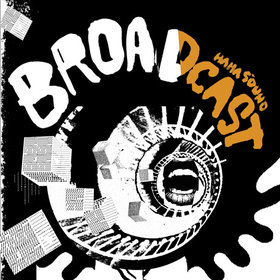
Broadcast: HaHa Sound


BROADCAST: HAHA SOUND (2003)

1) Colour Me In; 2) Pendulum; 3) Before We Begin; 4) Valerie; 5) Man Is Not A Bird; 6) Minim; 7) Lunch Hour Pops; 8) Black Umbrellas; 9) Ominous Cloud; 10) Distorsion; 11) Oh How I Miss You; 12) The Little Bell; 13) Win­ter Now; 14) Hawk.

This follow-up to The Noise Made By People is even more full of helium than its predecessor. The major difference is that the snow has melted away, and this, now, is spring come to replace winter, although everything still stays firmly within the confines of the same old magical barrel organ (and winter does come back at the end of the album, at least nominally). Contrary to the title, there are no actual «ha ha's» anywhere in sight — Broadcast do not have a sense of humor, at least, not an «earthly» one — but if the idea is simply to conjure an as­sociation with something lightweight and childishly innocent, that's okay.

The very first song, actually, is a kiddie song — a tune that could, with just a little bit of tweaking, easily fit on Sesame Street or the like: "I am grey, still on the page / Oh colour me in / Just an outline, sketchy but fine / Oh colour me in". The psychedelic electronic waltz that unfurls in the background complements the song's basic idea just fine — in fact, the song almost ends up intru­ding into «corny» territory, as Trish Keenan now metamorphoses into a Dusty Springfield for her generation. However, the complex overdubs still contain plenty of dissonance to satisfy both the introvert intellectual child and the grown-up indie hipster kid (not that there's a huge amount of difference between the two).

ʽPendulumʼ was already previously released on a short EP of the same name, which makes it the odd one out on the record — driven by a loud, bashing drum pattern instead of the usually soft percussion, and a rather cold synthesizer rhythm track that suggests a bit of dark mystique. But it is the album's equivalent of an ʽAmazing Journeyʼ — guiding the listener through a somewhat uncomfortable interdimensional corridor so that he or she may then revel freely in the multi­coloured pastures and forests of the remaining twelve tracks.

And this is where the problem lies: paradise, even one of a cool intellectual design, is actually a boring place to be. The Noise Made By People was fairly monotonous already, but not to this extent: now that Keenan has sacrificed most of the variety in her singing for a single-purpose «ethereal» delivery (hushy, echoey, mid-range, little to no modulation at all), listening to this stuff is like wandering through an endless art gallery of XVIIth century Italian painters — every­thing done in bright, professional, masterful, spiritual ways, but everything completely interchan­geable, dissuading you to focus on anything in particular.

However, on second thought, this is not really a «problem» as such. This fairy-tale world that Broadcast have constructed is effective and believable, even though it is so intentionally «fluffy» and «sugary», with only that slight melancholic ring in Keenan's voice to suggest that there may be a darker undercurrent to their «Land of Long-Lasting La-La». So if we have no individual me­mories of what it was that made ʽMan Is Not A Birdʼ fundamentally different from ʽOminous Cloudʼ, why should it matter? (I think the latter was in 3/4 tempo while the former was in 4/4, but that's about it, and anyway I might be wrong...).

This is mood music, to be played on a warm spring night or, perhaps, to set the mood of a warm spring night on a cold winter night. Or under a different set of circumstances, whatever. The textures are very pretty. A more serious analysis also reveals that, «under the covers», the band is conducting some experimental research — many of the tracks, while starting out quite conven­tionally, eventually resolve themselves as sonic explorations (for instance, the bizarre electronic drum solo at the end of ʽMan Is Not A Birdʼ, or the trance-inducing repetitive acoustic guitar pat­tern of ʽValerieʼ, eventually fusing with all the electronics in a thin wall of noise).

I do want to raise one complaint — there is a bit too much waltzing going on here. Dancing out with the moonlit knight, or with candlewick fairies, or with The Phantom of The Analog Synth is all fine and dandy, but why it so necessarily has to be done in the spirit of Johann Strauss Jr., is not as easy to understand. A minuet, anybody? An old reel? A tango? If they were waltzing all day long and into the night in my paradise, I'd lead a counter-cultural revolution.

Thumbs up, overall, but in terms of general trajectory, this is a slight letdown after the debut — too much attention on texture, not enough attention on composing, what with all the generic tem­pos and vocal melodies that, much too often, are reminiscent of conventional lullabies or nursery rhymes. But they most probably were not going for anything other than a specific atmosphere here, and they got that atmosphere all right.

Check "HaHa Sound" (CD) on Amazon
Check "HaHa Sound" (MP3) on Amazon

Sunday, February 17, 2013

Broadcast: The Noise Made By People


BROADCAST: THE NOISE MADE BY PEOPLE (2000)

1) Long Was The Year; 2) Unchanging Window; 3) Minus One; 4) Come On Let's Go; 5) Echo's Answer; 6) Tower Of Our Tuning; 7) Papercuts; 8) You Can Fall; 9) Look Outside; 10) Until Then; 11) City In Progress; 12) Dead The Long Year.

«Barrel-organ-pop» is not an actual term, but the more we see that old-time dream-pop fused with electronics, the more pressing the need for such a term becomes. Stereolab may be named as their immediate predecessors and mentors, and Beach House and many other bands may be striving for similar emotional effects, but, really, there are few bands around that deserve to illustrate that category better than Birmingham's Broadcast, who spent the first five years of their lives devising and honing that sound, and then rolled out this debut album which, arguably, they never sur­passed — not in terms of psychological impact, at least.

The Noise Made By People is a good title, but a bit self-deprecating: while a certain amount of «ornamental noise» is indeed present throughout, all the compositions respect melody and are completely «accessible», provided you are not in the specific mood for a dance album or some­thing (or, at least, not a fast, energetic dance album — slow, cool-tempered waltzing would be quite appropriate for much of this stuff). The «noise» itself usually comes in the form of various kaleidoscopic effects which rarely detract from the repetitive, but entrancing melodies — on the contrary, considering how Christmas-y the general atmosphere is, they just add tinsel flavor.

Most of the ingredients of the music are recognizable, but the overall synthesis is quite idiosyn­cratic. The idea of creating lightly psychedelic pop with (slightly antiquated) electronics may have been borrowed from The United States of America, as is sometimes noted, and then there are further analogies with just about every technology-obsessed dream-pop band from the Coc­teau Twins to Stereolab. On the other hand, lead singer Trish Keenan belongs to the cohort of chilly-voiced femmes mysterieuses, half-Snow Queen, half-Snow White, as Renaissance's Annie Haslam (to whom she bears a particularly striking resemblance every time she reaches for those high notes) or even Karen Carpenter (she doesn't have Karen's lower range, so the vocals sound more generally «air-conditioned», but she has the same introspective / melancholy ring) — and she also seems to have a serious taste for Sixties' vocal jazz fairies like Astrud Gilberto, going for that «deeply human, but utterly impenetrable» aura that used to mesmerize people back when it was so trendy to want to be mesmerized by the little strange wonders of the world.

You put it all together — the simple, repetitive melodies, usually formed by drums-and-bass pat­terns with prolonged, trance-oriented keyboard notes laid on top; the additional electronic and, sometimes, electric guitar effects; and those gorgeously cold «don't touch me, I'm spell-genera­ting here!» vocals — and you get yourself one of the finest atmospheric landscapes of the 2000s. In particular, it is a near-perfect experience for lonely wintery evenings, what with its bringing out all the potential beauty of «cold» and «dark» without slipping into banalities and trivialities and without concentrating on the negative sides of it all. You hate the cold season? Let Broad­cast warm it up for you. Never mind that the album was released at the end of March — it's a Decem­berist record if there ever was one.

If there is a problem, it's that everything basically sounds the same. ʽLong Was The Yearʼ opens the album on a «sterner» mood, with some stiff, quasi-Teutonic rhythmics and a darker, heavier vocal color from Trish. ʽUnchanging Windowʼ follows it up with a slightly more upbeat tempo, chirpier vocals and a more playful attitude (all strictly within the limits of good old British decen­cy, mind you). Once you are acquainted with these two sub-paradigms, everything else is mostly just further variations on them — including several completely instrumental tunes (the little «toy snowstorm» of ʽMinus Oneʼ is playful, while ʽTower Of Our Tuningʼ and ʽDead The Long Yearʼ are decidedly darker in spirit, though still nowhere near «dangerously dark»).

This, as well as the overtly «static» nature of most of the songs, which almost always end exactly the same way as they began, is an obviously self-imposed limitation — it carves out a stylistic niche for the band, but it also traps them in that niche (a feeling not wholly unfamiliar to connais­seurs of the indie market), and a side effect of that trapping is that I cannot discuss the individual songs, unless I really want to get into the peculiarities of all the chimes, bells, and whistles acti­vated in the recording process, or overanalyze the «moods-within-the-moods» reflected in Kee­nan's singing here and there. All I can say is that the melodies are different, and that there is plenty of tiny little nuances that come and go. Well, maybe some of the tunes are a bit jazzier than others — ʽCome On Let's Goʼ, or the waltzing ʽPapercutsʼ, for instance, both of which show that the generally immobile «friendly Snow Queen» can condescend to wiggling it up a bit, just to prove that she does consist of organic compounds. And then again, some are a bit more frozen than others — ʽUntil Thenʼ, for instance, where all the electronics sounds as if they were freshly blown out of a stalagmite or something.

On the positive side, the evenness of the material means that all the songs are about equally good, no particular low- or highlights — although some of the instrumentals are guilty of patience-try­ing, but even here it is understandable: «static musical landscapes» are supposed to be like that (for instance, the «who's gonna go and finally close that squeaky door?» bit at the end of ʽDead The Long Yearʼ). The ambitions of The Noise Made By People are lightweight and limited, but within those limits, they are perfectly adequate, and that guarantees a convinced thumbs up — for an album that is not so much «awesome» as it is «touchingly charming», and you know there are actually certain times in life when «touchingly charming» is needed more than «awesome».

Check "The Noise Made By People" (CD) on Amazon
Check "The Noise Made By People" (MP3) on Amazon