Search This Blog

Showing posts with label Chic. Show all posts

Saturday, July 7, 2018

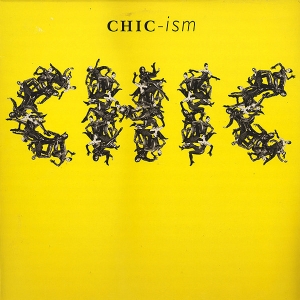
Chic: Chic-ism

CHIC: CHIC-ISM (1992)

1) Chic Mystique; 2) Your Love; 3) Jusagroove; 4) Something You Can Feel; 5) One And Only One; 6) Doin' That Thing To Me; 7) Chicism; 8) In It To Win It; 9) My Love's For Real; 10) Take My Love; 11) High; 12) M.M.F.T.C.F. (Make My Funk The Chic Funk); 13) Chic Mystique (reprise).

General verdict: A poor stab at modernization - long, languid, and lifeless.


In all honesty, I fail to understand any «artistic» appeal of dance-pop past its heyday — let us define it approximately as the time period from early Chic to early Madonna — because, once dance-pop completely loses that tiny precious spark of rebellion and defiance (stemming from the simple fact of the music doing something new and provoking) and becomes pure rhythmic enter­tainment for the feet, there is absolutely no reason to ever return to it. Those early Chic records, if you listen to them even today with open ears and open minds, all have that spark. Even if they did not know it, they were looking for freedom with those albums, and found it.

Fast forward now to the early Nineties, and witness Nile and Bernard, missing the good old days so badly, reforming Chic — with new leading ladies Sylver Logan Sharp and Jenn Thomas — and setting out to remind the world once again of how it used to be. From a nostalgic point of view, Chic-ism is everything you asked for: hot, funky dance grooves with powerful vocals, repetitive hooks, chugging bass, scratchy guitars, and a small infusion of sexy love ballads to complete the picture. Overlong, perhaps (sixty minutes is way too much for a Chic party), but such was the trend in the early CD era, and besides, they did have to somehow compensate to the fans for sitting out an entire decade.

The real problem is not the length, though; the real problem is that there is no spark. It might be hard to get that point across, considering that they really, really try to get all the classic ingredients right. But just throw on the opening ʽChic Mystiqueʼ, with its traditional title, tradi­tional bass groove, traditional walk-all-over-you horns, traditional singalong girl chorus, etc., and see if you can get the same thrill for it that you probably can from ʽLe Freakʼ or ʽEverybody Danceʼ. Guitar and bass are locked in mechanistic, never-changing patterns here, so typical of the new school of R&B that completely wipes out the player's identity — which is perfectly under­standable if we're talking Mary J. Blige, but not if we are talking about a couple of guys who, fifteen years earlier, set out to prove that disco music need not really be faceless. In all honesty, while you can certainly tell that this funky groove was played by professionals, ʽChic Mystiqueʼ is a track that totally does not warrant the presence of such greats as Rodgers and Edwards.

The reason why this album turns out to be so long is that the boys are hardly trying: more than half of its dance-oriented tracks sound exactly the same (ʽChic Mystiqueʼ segues directly into ʽYour Loveʼ without me ever noticing that), and the absolute majority sound as if Nile and Bernard hopped around some trendy clubs, listened to some hot dance acts, went "cool! these cats don't even have to write interesting melodies for the crowds to dig 'em", then proceeded to the studio to take advantage of this observation. The only thing necessary was to ensure that the old fans would be pleased, too, so we have all the gimmicks of old, including innumerable self-references like ʽChicismʼ, with fake audience noise and imaginary glitter falling from the sky.

Even the ballads (ʽOne And Only Oneʼ, ʽTake My Loveʼ) largely recycle the old templates. Jenn Thomas has a powerful set of pipes that she is not afraid to use on ʽTake My Loveʼ, but the song's only idea is to loop its title into an endless invocation that soon becomes annoying, and eventually — obsessive and creepy. An additional problem is that a powerful set of pipes, too, does not automatically transform into an interesting personality. At the very least, here was their chance to get back in touch with Norma Jean Wright, and they failed to deliver.

Of course, this would not be a properly contemporary album, either, if there was no flirtation with hip-hop on record: ʽSomething You Can Feelʼ features a properly urban delivery from a little-known rap starlet (Jennece S. Moore, a.k.a. «Princessa») — and if there is something I can feel, it is that the track feels even more forced and unfunny than the last time they tried to rap (on Believer). In the end, this is just a lose-lose situation: the nostalgic appeal of the record gets canceled out by the stiff production and the inability to make the best of recent trends in R&B (not that I could offer any helpful suggestions here), and the modern elements remain inefficient just because they really want you to kowtow before them simply because they're freakin' Chic, raised from the dead. Alas — no deal. 

Friday, May 4, 2018

Chic: Believer

CHIC: BELIEVER (1983)

1) Believer; 2) You Are Beautiful; 3) Take A Closer Look; 4) Give Me The Lovin'; 5) Show Me Your Light; 6) You Got Some Love For Me; 7) In Love With Music; 8) Party Everybody.

General verdict: A great bassist and a great guitarist rolled over by synthesizers. Same old story.

Chic's last pre-breakup album is not nearly as bad as you'd expect — compared to many other Seventies' R&B acts whose last gasps were not even properly pitiful insofar as they were instan­taneously forgettable, Rodgers and Edwards never ever stopped experimenting and trying some­how to evolve and stay passionate about their evolution. The Chic of Believer has very little in common with the Chic of Chic, yet the one thing in common is that vague feel that they are not really doing it for the money, they are doing it for the body-soul. The problem is, in doing so, they have to rely on methods that had been essentially designed for the money, and this makes it pretty damn hard to spot the difference.

This album, more so than before, relies on synthesizers and programmed drums and downplays Rodgers' guitar work to get to the point. With its last track, it also begins toying with hip hop, as Nile swaggily raps over the beat — and, once again, shows why things like these should better be left to younger competitors, because the swag comes across as phoney and silly, and with the word "party" making more appearances than in the entire discography of KISS, the atmosphere smells of gold chains, Cadillacs, and dope rather than having anything to do with the socially-conscious hip hop highlights of the decade; kind of embarrassing.

On the other hand, ʽGive Me The Lovin'ʼ, Chic's last entry in the US R&B charts in ten years, is a passable update of the ʽLe Freakʼ vibe for a new age (the verse melody of the two songs is almost the same), even though, other than a couple of nice funky licks from Rodgers, its only obvious attraction is the repetitive chorus, particularly when its vocals are neatly distributed between the male and female members of the band. The slightly less harsh and more romantic ʽYou Are Beautifulʼ is even better, giving Nile more room to stretch out and hearkening back to the posh-chic vibe of the disco era with its lyrics ("unlike Clark Gable, frankly, my dear, I give a damn"). The girls do their best to prove they are still chic as hell, and, in fact, as the feminist tide slowly began turning, it is clearly seen that they play the strong female personality card well — much more so than Norma Jean Wright, the seductive siren, did in 1977. It helps make the material more impressive and palatable. But still not enough to truly woo the listener.

The album still cannot help but get stalled with a couple of boring ballads, or with a couple of dance numbers that place minimalistic synth patterns at the center (ʽShow Me Your Lightʼ), and even the most energetic numbers, such as the title track, do not leave much of a trace when they are over. At best, I can say that the group was still tight enough to radiate power — even when shooting themselves in the foot with corny synth tones, or bashing their head against the wall while reducing the role of the guitar to auxiliary accompaniment. But power alone is not enough: you need to have fun, too, and, unfortunately, Chic could never properly re-learn having fun once the changing times commanded them to forget about it.

Friday, April 6, 2018

Chic: Tongue In Chic

TONGUE IN CHIC (1982)

1) Hangin'; 2) I Feel Your Love Comin' On; 3) When You Love Someone; 4) Chic (Everybody Say); 5) Hey Fool; 6) Sharing Love; 7) City Lights.

General verdict: More decent electrofunk grooves that do not play to the band's biggest strengths.


Continuing the by-then unstoppable slide into irrelevancy, the blatantly awfully titled Tongue In Chic stalled at #173 on the US charts and at #47 on the R&B charts — too bad, because the lead single, ʽHangin'ʼ, was actually one of the band's best grooves in the post-disco era. With a slight whiff of menace rather than one of sentimentality, it is sternly ruled by an amusingly «popping» funky rhythm track from Nile, and brings back the atmosphere of friendly swag that was sorely lacking on ʽStage Frightʼ. It's still not on the level of ʽLe Freakʼ (with disco in the dumps, nothing could ever be, though), and they probably should have the leading ladies do the vocals instead of Bernard, but the guitar/brass interplay is cool, especially when Nile comes in with that little squeaky-pitched jazzy solo at the end.

After that, though, it is very much a case of one's general attitude towards generic dance music of the early Eighties. Depending on that, ʽI Feel Your Love Comin' Onʼ may seem to be a forget­table piece of dancefloor fodder, or a curious exploration of the possibilities of the synthesizer in introducing that robot strain to traditional African-American dance patterns. Years earlier, I would probably have hated Bernard's synthetic bass sound on this one, but now I am able to appreciate its calculated cool — at the same time, every time I go back in my mind to Chic's first albums, it is hard to get rid of the feeling that they have pretty much traded in the joyful, life-asserting extravagance of their early dance tracks for the common exaggerated android futurism of the Eighties, which sort of puts synthetic implants in your bloodstream rather than organic stimulators. But hey, to each his own.

Elsewhere, there is a very dubious attempt to blend in with the hip-hop crowd (rapping on the pseudo-live ʽChic (Everybody Say)ʼ — along with nice orchestral swirls, but overall, probably their weakest self-referential composition); some Luther Vandrossian sleazy swill (ʽSharing Loveʼ — this bland and instrumentally unappealing piece could have come from the hands of any of the million R&B outfits existing in 1982); some okay balladry (I like the tense, insisting, near-epic bass riff of ʽWhen You Love Someoneʼ, and Alfa Anderson's vocal performance is some­what touching, but on the whole, it's just a ballad like so many others); and a fun closing instru­mental (ʽCity Lightsʼ) that will be highly appreciated by all fans of our favorite bass/guitar combo, but does not have a particularly strong hook to go down in history as a classic.

In short, the problems that they had to deal with on Take It Off persist and turn out to be insur­mountable — in this new age of musical and spiritual values, Chic simply cannot allow them­selves to let their hair down enough to attract a new generation of listeners; and their greatest strength, instrumental virtuosity, has to be (partially) sacrificed again in order to adapt to this new age. As far as taking a retrospective look at this stuff is concerned, I'd still rather listen to this kind of music than anything by Bruno Mars, for instance, but the real choice is not between early Eighties Chic and retro-style 2010s R&B, it is between early Eighties Chic and early Eighties Prince and Michael Jackson, or even Madonna, and there can be no debate here about which one remains more exciting to ears that have evolved past 2000. 

Friday, March 30, 2018

Chic: Take It Off

CHIC: TAKE IT OFF (1981)

1) Stage Fright; 2) Burn Hard; 3) So Fine; 4) Flash Back; 5) Telling Lies; 6) Your Love Is Cancelled; 7) Would You Be My Baby; 8) Take It Off; 9) Just Out Of Reach; 10) Baby Doll.

General verdict: An attempt to reroute the circuits from «disco» to «post-disco» that largely fails.


Chic's slide into mediocrity begins here. While Real People showed them moving away from disco formalities into a comfortable world of pop hooks and teasing, seductive excitement, Take It Off takes another step forward... and ends up spraining an ankle. Several sources classify it as «post-disco», a typically vague term that is, however, quite correct in this case — Bernard and Nile were obviously searching for ways to modernize and adapt their dance grooves, and on a purely formal level, they succeeded. The big problem, however, was that they were a couple of musical near-virtuosos applying their art to a musical age in which virtuosity no longer mattered; the sci-fi age was coming on, with more and more demand for robotic backing tracks that could provide a solid launchpad for one's futuristic dance moves. Take It Off is the band's first signi­ficant attempt to yield to those requirements, and it comes off as forced — no wonder, because how many stars of the disco age could actually adapt to changing musical values? The new decade required new faces.

A certain whiff of problematicity is felt here right from the opening lines: not only is "my stage fright holds back me all night!" syntactically hideous, but the hook is delivered in an odd manner, so that it is hard to tell if the singers want to get you all excited for the dance floor or if they are really feeling insecure and panicky. The bass/guitar interplay is technically solid, but somewhat perfunctory — neither of the two instruments is playing any particularly sharp or memorable lines, they are just busy syncopating like crazy. As time goes by, Luci Martin does nothing to make you more certain of whether she is happy or afraid, of whether the song should be taken socially or personally; the silly magic of ʽLe Freakʼ is just not there. I have no idea why this song was selected as the single and not the follow-up, ʽBurn Hardʼ, which is at least a much better defined dancefloor bitch of a tune — "slap your bass", "burn hard", "Brahms gonna do the charm" (indeed!), a bit of brass, some classy distorted riffage in the mid-section, all the works. Maybe they thought that this was too reminiscent of the vintage disco days for the tastes of 1981; if so, the time has come to set things straight and understand that the more Eighties' Chic sounded like Seventies' Chic, the better they were.

Unfortunately, there just aren't too many of these nice throwbacks. The title track has all those sexy-sleazy lyrics ("your package is nice, but I've got to look twice..."), but the vocals do not agree with them all too well, and all such tracks pale hopelessly next to contemporary younger artists like Prince — considering that Take It Off was released one month after Controversy, pretty much the only thing that these guys have on Prince now is the raw monster power of their bass lines, and indeed, the only thing that makes ʽTake It Offʼ (the track) still worth a listen is the sheer amazing strength with which Bernard keeps slapping these strings. Well, no, it's a solid groove overall, but there is very little fun in it, if you know what I mean.

Another problem is that sentimentality rears its boring head again: there are lots of dance-ballad stuff here (ʽWould You Be My Babyʼ, ʽJust Out Of Reachʼ, etc.), for which they have neither the proper vocal talent nor the right type of melodic hooks. Too much of it sounds like the band's former protegé  (and by 1981, a big star in his own right) Luther Vandross — stiff, plastic soul, poorly hidden behind a formalistic dance groove. It is possible to seek comfort in instrumentals or semi-instrumentals (ʽSo Fineʼ, a bit of simplistic vocalizing allowing Nile to stretch out with a nice jazzy solo; ʽBaby Dollʼ, a short vehicle for the band's brass section), but these are too few and too insignificant in the grand scheme of things to make a difference.

Still, in a way, any Chic album is salvageable and even lovable as long as it has Bernard's bass slapped all over it — they did not dare to de-personalize and mechanize their music to the degree when the players behind it would become completely insignificant. If you are a true sucker for funky rhythm, Take It Off belongs in your collection. But if you are just looking for the best-of-the-best in early Eighties' dance music, this is where you probably should definitively draw the line on these guys: much like all the early rock heroes of the Fifties who couldn't handle the transition into a new musical era, the Chic aesthetics was way too deeply rooted in the basement of Studio 54 to be able to survive into the next decade.

Friday, March 23, 2018

Chic: Real People


CHIC: REAL PEOPLE (1980)

1) Open Up; 2) Real People; 3) I Loved You More; 4) I Got Protection; 5) Rebels Are We; 6) Chip Off The Old Block; 7) 26; 8) You Can't Do It Alone.

General verdict: Some razor-sharp funky grooves here, despite the heavy consequences of the disco curse.

By the time Chic's fourth album came out, disco was legally pronounced dead  — and although dance-pop in general carried on, evolved, and in various forms thoroughly engulfed the Eighties anyway, artists that bore the disco stigma suffered anyway. Real People only got as high as #30 on the charts (still somewhat respectable compared to the drastic slide of whatever followed) and, more importantly, apart from a gracious pat on the back from disco apologist Robert Christgau, never got much critical attention. Such is the fleeting glory of commercially-oriented music genres — anything created according to their formula gets correlated with the time when said formula was en vogue. Risqué was made at the height of the disco movement, so it must be good. Real People was made when the wave had passed, so it must be bad.

Actually, I think that, purely in musical terms and in that elusive «fun quotient», Real People was an improvement over (Not So) Risqué. Most importantly, Real People is not even a disco album — not a single track here features the proverbial disco bass groove. It is funk, R&B, dance-pop, whatever, but it shows no signs of clinging to a stale old formula: Rodgers and Edwards seem to be well aware that the world of entertainment is changing around them, and while they might be somewhat slow to adapt to the changes, they are adapting enough to not totally look like sad old farts in the overall context. And — also importantly — Real People just sounds sharper, snappier, less overtly sentimental and romantic than Risqué, which put way too much soul in the dance-pop numbers at the expense of humor and quirkiness.

The change was heralded by ʽRebels Are Weʼ, a single whose title becomes much less threate­ning when you hear the song but whose ska-influenced groove actually sounds like it belongs in the 1980s, with all the dance-oriented New Wave outfits, rather than anywhere in the vicinity of Studio 54. The chorus sounds a bit silly — too much chest-pounding defiance and too little musical substance — but Rodgers lays down some nifty licks in the instrumental mid-section that are far more invigorating than any amount of "we are the rebels, rebels are we, we want to be free, my baby and me". For that matter, the lyrics are a fairly weak point on this album, a problem made far more serious when chorus lines like "I got protection / From your infection / I got pro­tection / Got to pass my inspection" act as major repetitive hooks. But what can one do if there is actually no protection against the infection of the groove? ʽI Got Protectionʼ is six minutes of pure Chic chic, with one of the sharpest clavinet riffs this side of ʽSuperstitionʼ and brilliantly overlaid guitar parts — one minute Nile is playing a smooth, expressive blues-rock solo, the other minute he is throwing out several interweaving riffs with super-robotic precision, and the whole thing rocks harder and crunchier than anything on Risqué.

The title track, with its gospel-influenced chorus, is closer to classic Chic, but precisely because it remains more infected with the smooth 'n' soulful spirit of Risqué, I find myself enjoying it less than ʽRebels Are Weʼ or ʽI Got Protectionʼ — at the same time, the short slow ballad ʽI Loved You Moreʼ strikes me as being sharper and more emotionally tense than ʽAt Last I Am Freeʼ and its ilk: Luci Martin gives a great vocal performance, and Nile wraps things up with another blazing and tasteful guitar solo... actually, one reason why I might be so seriously enthralled with this album is the sheer amount of Rodgers' lead guitar work — for some reason, more than half of the songs have him blasting off into space on his own, in stark contrast with Risqué where he intentionally blended into the woodwork most of the time. But that does not mean the band has no time left for musical experimentation in other spheres — for instance, the ʽOpen Upʼ instru­mental overture to the album has a brilliant orchestral arrangement, in which Bernard and Nile actually try to funkify the strings themselves rather than have them play the typical sentimental accompaniment to the disco groove.

The record does fizzle out towards the end: the Bernard-sung ʽ26ʼ is a catchy, but slight dance number whose silliness overrides its groove power ("on a scale of 1 to 10, my baby's a twenty-six"? why not a "sixty-nine"?), and the final dance ballad ʽYou Can't Do It Aloneʼ, sung by the band's not-too-expressive backing vocalist Fonzi Thornton, is boring schlock. But no Chic album has ever been perfect, and if you concentrate on the strong rather than the weak bits, I am pretty sure that Real People will hold more appeal for those who like their dance music sharp, snappy, and hot, whereas Risqué would be more comfortable for those who like it smooth, inoffensive, and a good pretext to woo the ladies rather than, well, turn them on. The real good news is, we are living in a world where it no longer matters if it's 1979 or 1980 — all the more reason to throw all the old rankings in the dumpster and re-evaluate these old records from a music-only, fuck-all-that-entourage position.

Friday, March 16, 2018

Chic: Risqué


CHIC: RISQUÉ (1979)

1) Good Times; 2) A Warm Summer Night; 3) My Feet Keep Dancing; 4) My Forbidden Lover; 5) Can't Stand To Love You; 6) Will You Cry (When You Hear This Song); 7) What About Me.

General verdict: The recipe is getting a bit too predictable, but the hits are still fun.

That's Risqué, not Risque, continuing the band's infatuation with all things French — though, admittedly, there aren't a whole lot of European references in the songs themselves this time around; largely, it's all in the accoutrements, if you know what I mean. Released eighteen days after the famous Disco Demolition Night, it still came about in time to give Chic their last bout of commercial and critical glory, being admired by general fans and Robert Christgau types alike; and while Christgau's love would still extend to some of their records past the «day disco died» deadline, the average public would never again welcome them with the same passion.

In all honesty, though, when you listen to the Seventies' trilogy of Chic, C'est Chic, and Risqué in politely accurate chronological sequence, you can sense that by 1979, the Chic formula had become... well, a formula. There are still plenty of awesome moments here, along with a few clunkers, but it seems evident that with C'est Chic, Edwards and Rodgers had done everything they could with the pattern, and now it is all about finding new variations on the same old basic grooves. Worse, Risqué cheats its own title because there is hardly anything «risky» or simply unpredictable on the record. I mean, you could, perhaps, cringe at the vaudevillian "yowsah, yowsah, yowsah!", or you could denounce the lengthy guitar showmanship on ʽSavoir Faireʼ as egotistic, but at least these little touches took away the factory-like aura of the endless dance­floor-oriented production. However, by mid-'79, fame, fortune, and coke were probably taking their toll, and it shows very few signs of any musical searching.

If we set all our preconceptions aside and simply embrace disco for what it is supposed to be, not for what it is supposed to transcend, then ʽGood Timesʼ, one of the most heavily sampled songs in the history of pop music, might indeed deserve the title of the quintessential disco tune. There are no taunts here, no ironic twirls or twists, no salaciously sexy challenges — just your bare-bones groove, a textbook case of guitar-bass weave between Nile and Edward, very lightly seasoned with sparse piano and string chords and with largely inobtrusive vocals from the band's depersonalized girl personalities. Catchy chorus, but on the whole, the piano chords and the vocals are a bit too much on the sentimental rather than the sexy side, which is why ʽLe Freakʼ will still remain a much better representative of this genre.

Likewise, restrained sentimentality hurts the overall effect of the second (and much smaller) dance-pop hit of the record, ʽMy Feet Keep Dancingʼ — but in pure melodic terms, it is the supe­rior song, not only because it has Bernard stretching out the most in the mid-section, but also because of some superb orchestral crescendos: concertmaster Gene Orloff and The Chic Strings almost manage to steal the song away from its writers with multi-layered overdubs, creating a near-perfect tribute to the art of dancing in the process.

The third big single was ʽMy Forbidden Loverʼ, a dance ballad that perfectly illustrates my gripes about the formulaic nature of the album — it's got everything that a hit needs to be a hit, but nothing above that requirement. Danceable groove, catchy chorus (catchy mostly because it is repeated a million times), musicianship impressive enough to make it listenable/respectable... and, I guess, musicianship is the only thing here that puts it above anything that could be recorded by Britney Spears or Shakira 20-25 years later.

As for the album-only tracks, there's some embarrassing crap here: ʽA Warm Summer Nightʼ, with its cheesy Latinisms ("papi!", "te quiero!") and interminably recycled slow groove, is an unimaginably lazy and trashy ballad — if this were ʽSavoir Faireʼ, we would at least get a great guitar solo, but here we only have the Chic girls spinning the same single verse-chorus over and over. ʽWill You Cryʼ at least has some proper verses and a more thrilling chorus hook (I like the odd contrast between the first, abruptly chopped "will you cry?" and the second, prolonged, apologetic "will you cry-y-y-y-y?"), but suffers from the same problem — being stuck between the rock of non-fun and the hard place of insufficient-soulfulness. And ʽCan't Stand To Love Youʼ and ʽWhat About Meʼ are fairly standard dance-pop — the former surprisingly slower and funkier (rather than disco-ier) than the rest, but the Rodgers-Edwards team is no Funkadelic, and Nile's guitar is way too clean and quiet to retro-fit them with the classic funk crowd anyway.

So, as you can see, my opinion is more along the lines that Risqué was not so much the artistic peak for Chic as the turning point where they switched from creation to craft — unintentionally, perhaps, since quite a few of those who had decided to choose disco for a living around 1976-77 had run out of fresh juice by 1979 (I know that many people still remain under the spell of the Bee Gees' Spirits Having Flown, for instance, but I continue to insist that most of the stuff there was uninspired, flaccid shit — provided shit can be flaccid — next to Main Course and Satur­day Night Fever). Still, millions of people who bought the record and Robert Christgau who praised the record can't be completely wrong all at the same time, right? It still plays out like charming nostalgic fun, just not as much so as the two albums that preceded it.

Friday, March 2, 2018

Chic: C'Est Chic


1) Chic Cheer; 2) Le Freak; 3) Savoir Faire; 4) Happy Man; 5) I Want Your Love; 6) At Last I Am Free; 7) Sometimes You Win; 8) (Funny) Bone.

General verdict: Some of disco's most immortal moments here, along with some evidence that disco sucks, too.

If you conduct a bit of investigation regarding the origins of ʽLe Freakʼ, you might actually be surprised to find out that the song was conceived as ironic — inspired by a silly turn of events when Nile and Bernard were refused admittance to Studio 54 because of miscommunication, the original chorus was not really "freak out!", but something quite similar phonetically and quite dissimilar semantically. For the non-inquisitive mind, though, the song will be anything but sarcastic: merely the anthem of fun-lovin' 1978-79, completely unburdened by white man's disco sentimentality à la Bee Gees and simply celebrating body language for all it's worth — with just a tiny bit of that «Frenchiness» thrown in for the sake of The Exquisite.

As in all such cases, ʽLe Freakʼ may be the band's biggest hit, but it never really shows the band at its absolute best. Most of the time, Rodgers is chained to a relatively simple (and not terribly original) funk riff; nor does Bernard ever get to tread all over that bass as he did on ʽEverybody Danceʼ; nor do the lady singers demonstrate any particularly mind-blowing vocal gymnastics. But there is clearly something about that chorus that commands your attention like nothing before, turning the song into a collective let's-go-crazy ritual a good two or three years before Prince learned to make such things on a regular basis. In its own way, it is just as defiant and rebellious as any classic punk rocker — and, after all, weren't punk and disco merely the flip sides of the same coin anyway?

Musically, though, much more interesting is the second single, where it makes sense to overlook the repetitive chorus (ʽI Want Your Loveʼ) and concentrate on the complex interplay between strings, horns, and Nile's guitar — the mid-section of the song sounds as if they'd invited ELO to guest on it, and, in fact, I wouldn't be at all surprised to learn that Jeff Lynne's move into dance-pop territory circa 1979 might be at least partially inspired by this track. However, dance-pop ballads of unrequited love were common at the time, whereas sexy, snappy, provocative anthems heralding the future were much less so — hence ʽLe Freakʼs big win at #1, while ʽI Want Your Loveʼ and all its tricky musical shenanigans only got to #7.

In between the two biggies, C'Est Chic has the usual mix of slow ballads and fast dance tracks, most of them conventional in basic terms, but uplifted and isolated from the pack by the playing talents of Nile and Bernard. Thus, ʽSavoir Faireʼ essentially sounds as a basis for a generic, sappy love confession — except that the boys leave it completely without vocals, instead of which Nile contributes five minutes of fluent jazzy / bluesy soloing, alternating soulfully sustained licks with fairly dazzling speed runs: the single longest and most complex demonstration of his guitar-playing skills so far. ʽSometimes You Winʼ only lacks a very slightly higher vocal pitch to be undistinguishable from a Bee Gees number, but there's a tight little trill that Nile plays against the "it don't mean nothing" part of the chorus that you will never see on a Bee Gees record — nothing like hard, hard funkiness to redeem and justify the sentimentality.

On the downside, ʽChic Cheerʼ should also have been an instrumental — its narcissistic chants far outdo the norm where ʽLe Freakʼ did it just right; Bernie kills it on the bass all right, but the endless "chic, chic" very quickly run the spectrum from cute to silly to annoying to unbearable. And while there are certainly much worse ballads than ʽAt Last I Am Freeʼ, I do not understand why this one had to be stretched out for seven minutes — the endlessly looped slow chorus does not evolve at all, and is not devastating enough in its own rights to warrant so much repetition. In other words, C'Est Chic suffers from the usual banes of dance-pop — regardless of whether your idea is good or bad in itself, it never hurts (or does it?) to replay it for as long as the listeners' legs can carry them. Personally, I'd prefer 12 tracks to 8 instead, but laws are laws.

In a minor quibble, the album also suffers from the loss of Norma Jean Wright, whose distinctive vocal talents on Chic ultimately led her to quit the band and start up her own solo career — she was replaced by Alfa Anderson, who had a much lower range and kinda just blended in with the band: perhaps Norma could have saved ʽAt Last I Am Freeʼ, but this lady simply did not have the same sex appeal and tension in her voice. Not that it's that much of a problem: everybody comes to Chic for the Rodgers / Edwards package rather than the sexy ladies — but hey, if you gonna do ballads, better to come fully equipped than risk not getting it up, right? (For that matter, Edwards takes lead vocals on two tracks here himself, but he, too, is clearly a better player than singer.) All of this means that, when seen in retrospect, C'Est Chic is not necessarily an advance over the self-titled debut — it simply had huger hits. But the time was still right, and the vibes still rang true. "Big fun to be had by everyone" indeed.

Friday, February 23, 2018

Chic: Chic

CHIC: CHIC (1977)

1) Dance, Dance, Dance (Yowsah, Yowsah, Yowsah); 2) São Paulo; 3) You Can Get By; 4) Everybody Dance; 5) Est-Ce Que C'est Chic; 6) Falling In Love With You; 7) Strike Up The Band.

General verdict: Very silly, sure, but still some of the best musicianship from when even lowly dance pop entertainers still played their sweaty instruments...

It has never been formally explained, I think, whether there are any significant general musical differences between «Euro-disco» and «American disco», other than merely a matter of geogra­phical disparity. Subconsciously, we would probably think that «American disco» is closer to its funk roots, emphasizing a livelier and slightly more free-form approach to performing, while «Euro-disco» is more robotic and more strictly disciplined, with even more emphasis on the mechanistic strings and no deviations from the formula. Think Gloria Gaynor vs. Boney M, or something like that. But is there some strict waterline dividing the two?

Chic are probably the best example of a band that took a big piss on that waterline, if you pardon the language. Guitarist Nile Rodgers and bassist Bernard Edwards, the group's perennial back­bone, were based in New York — the least American of all American cities — and while both were outstanding musicians, they were also quite open to the idea of musicians dissolving them­selves in the music, chained to and ruled by the supreme power of the immovable groove. The ideological emphasis is on being cosmopolitan: with Chic, you can name one of your tracks ʽSão Pauloʼ, give another one of your tracks a French chorus, and quote "it don't mean a thing if it ain't got that swing" on yet another one. But above everything else, Chic asks the question, "is it possible to exercise creative and spiritual freedom while writing some of the tightest, rigid-est dance music in the universe?" — and attempts to give a positive answer.

These songs ain't ʽHeart Of Glassʼ, and they ain't even ʽStayin' Aliveʼ — it would be useless to search for hidden meanings or subtle layers of irony or paranoia. This is dance-pop par excellence, whose primary purpose is to lighten up the life of a Tony Manero. But the coolness of Nile and Bernard is that, in between the endlessly repeating vocal hooks, they find plenty of space to assert themselves as a couple of merry, spritely, expressive spirits. ʽDance, Dance, Danceʼ, the album's lead-in track and the band's first successful single, is at its greatest not when they chant the enigmatic "yowsah yowsah yowsah!" refrain, but when the vocals die down and you get to lose yourself, with no strings attached, in the amazing bass groove — that bit when it's literally just Bernard laying on the zoops and Nile chicken-scratching his way through could go on endlessly, as far as I'm concerned. It is the sound of life itself.

Almost every track here works, one way or another, even if most people probably only remember the hits (ʽDance Dance Danceʼ and, uh, ʽEverybody Danceʼ — another case where I much prefer Norma Jean Wright's vocals on the verses to the corny chorus, and where Edwards' little bass solo blows everything else away anyway). ʽSão Pauloʼ, I guess, with its slightly more relaxed pacing, could be considered elevator-ish filler, and ʽEst-Ce Que C'est Chicʼ is almost impossibly ridi­culous with its French choruses and vaudevillian descending riffs, but it is hard to forget either the former or the latter. Perhaps the most obvious candidate for filler is the ballad ʽFalling In Love With Youʼ, very BeeGees-Olivia-Newton-Johnish in flavor and all, but its saving grace is the cooing delivery of Norma Jean Wright, the band's lead lady singer at the time — most likely, it will either irritate the living daylights out of you or seriously boost your sex hormones (regard­less of your gender identification). In other words, everything here is shallow, stupid, dated, and absolutely adorable nevertheless.

Most importantly, it is a textbook example of why it is wrong to generalize «disco» as an in­herent­ly inferior successor to «funk». Sure, at its core disco relies on simplification — like boogie-woogie — but with some effort and dedication, it can easily be re-complexified, as Mr. Edwards will be glad to show you on most of these tracks. I said «stupid», yet there is really no sense that any of this music was written and recorded with the direct goal of insulting our intel­ligence — most of the arrangements are multi-layered and melodic, and most musicians would kill to be able to lay down some of that mean, mean Edwards bass. It is largely the lyrics that have not stood the test of time ("strike up the band / makin' music is our plan" is bad enough when spoken once — and they just had to turn it into the song's main hook!); but now that it is not 1977 any more, and nobody remembers what Studio 54 was all about, Chic can be taken out of the glitzy context and simply enjoyed for the awesome musicianship. Like, who is the guy playing that terrific smooth keyboard solo on ʽDance, Dance, Danceʼ?..